AI Agent(智能体)

Search documents
千问打通阿里全生态,抢占全球AI超级入口
Hua Er Jie Jian Wen· 2026-01-15 02:16
Core Viewpoint - Alibaba's AI assistant, Qianwen, is transitioning from a simple chat tool to a functional AI capable of completing tasks, marking a significant shift in AI commercialization [2][5]. Group 1: AI Functionality and Integration - Qianwen has surpassed 100 million monthly active users and is now integrated with Alibaba's ecosystem, allowing users to place orders, book flights, and make purchases directly through AI commands [2][3]. - The new version of Qianwen connects with various Alibaba apps, enabling seamless transactions without the need for users to navigate multiple applications [3][16]. - This integration aims to create a commercial loop, addressing the previous limitations of AI models that only provided suggestions without facilitating actual transactions [5][7]. Group 2: Market Dynamics and Competition - The AI market has experienced a "virtual fire," where high parameter models failed to generate substantial transactions, leading to a reevaluation of their value [6]. - Competitors like ByteDance's Doubao are taking different approaches, with Doubao focusing on automated UI operations, while Alibaba leverages its existing app ecosystem for direct service execution [17]. - The competition is centered around who can establish user habits and dominate the next decade of AI-driven transactions [18]. Group 3: Global Trends and Comparisons - Similar trends are observed globally, with Google collaborating with Walmart to integrate AI capabilities into retail, mirroring Alibaba's strategy [19]. - Both companies aim to utilize their respective strengths—Google's AI and Walmart's retail network—to enhance user experience and streamline transactions [19]. Group 4: Future Outlook and Challenges - The transition from conversational AI to practical task execution is not unique to China, indicating a broader shift in the industry [20]. - Analysts suggest that while the integration of AI assistants within large ecosystems is a crucial step, achieving widespread adoption and monetization will require time and overcoming various technical and regulatory challenges [20][21]. - The ultimate goal is to stabilize the financial performance of AI models by ensuring they provide tangible services rather than merely generating high operational costs [21].


中国AI模型四巨头“激辩”AGI:差距未缩小 新突破口已在路上
Zheng Quan Ri Bao Wang· 2026-01-12 07:28
Core Insights - The AGI-Next Summit highlighted China's competitive edge in AGI development, showcasing advancements in large model capabilities, a thriving open-source ecosystem, and significant capital inflows into AI companies [1][2] - The summit addressed the core challenges of AGI, focusing on the next paradigm shift and the future direction of large models, emphasizing the need for China to establish its position in this evolving landscape [1][2] Technological Advancements - The summit participants discussed the importance of achieving multi-modal capabilities, where models can integrate various sensory inputs like vision and sound to create a unified perception [2] - A significant challenge identified was the development of memory structures that allow for long-term retention and reflection, which is crucial for advancing self-awareness in AI models [2][3] AI Agent Development - AI Agents were identified as a key area for future economic value creation, with expectations that 2026 could be pivotal for their commercialization [4] - The concept of AI Agents extends beyond models, aiming for systems that can autonomously define goals and execute tasks, addressing complex user needs [4] Market Dynamics - The successful commercialization of AI Agents hinges on three critical factors: value, cost, and speed, which must be balanced to transition from concept to scalable business solutions [4] - The Chinese AI industry is seen as having significant opportunities driven by innovative and risk-taking young talent, alongside a continuously improving business environment [5]
新点软件涨2.14%,成交额2333.66万元,主力资金净流入4.28万元
Xin Lang Cai Jing· 2026-01-05 05:23
Core Viewpoint - New Point Software's stock price has shown a slight increase of 2.14% as of January 5, 2025, with a market capitalization of 8.162 billion yuan, indicating a mixed performance in recent trading periods [1]. Group 1: Stock Performance - As of January 5, 2025, New Point Software's stock price is 25.35 yuan per share, with a trading volume of 23.3366 million yuan and a turnover rate of 0.29% [1]. - Year-to-date, the stock has increased by 2.14%, with a 5-day increase of 1.08%, a 20-day decrease of 0.86%, and a 60-day decrease of 10.17% [1]. Group 2: Financial Performance - For the period from January to September 2025, New Point Software reported a revenue of 1.053 billion yuan, a year-on-year decrease of 16.32%, and a net profit attributable to shareholders of -107 million yuan, a significant decline of 667.73% [2]. - Cumulatively, since its A-share listing, New Point Software has distributed a total of 0.597 billion yuan in dividends, with 0.432 billion yuan distributed over the past three years [3]. Group 3: Shareholder Information - As of September 30, 2025, the number of shareholders for New Point Software reached 10,100, an increase of 16.37% from the previous period, while the average circulating shares per person decreased by 14.07% to 32,673 shares [2]. - Among the top ten circulating shareholders, Zhonggeng Value Pioneer Stock (012930) holds 11.2587 million shares, a decrease of 393,600 shares compared to the previous period, while Zhonggeng Small Cap Value Stock (007130) holds 3.1992 million shares, down by 143,030 shares [3].

全民玩AI时代,能否催生下一场“技术革命”?
Tai Mei Ti A P P· 2025-12-30 11:31
Core Insights - The AI sector has experienced significant growth in 2025, with applications becoming increasingly popular among the public and businesses alike, leading to a surge in AI usage and investment opportunities [1][2][3] Group 1: AI Application Growth - The application of AI in China has seen a notable increase, with the proportion of large model applications rising from 19.9% last year to 25.9% this year, and the core AI industry is expected to exceed 1 trillion yuan [1] - The user base for generative AI in China reached 515 million by June, with a penetration rate of 36.5% [2] - Daily token consumption in China skyrocketed from 100 billion at the beginning of 2024 to over 40 trillion by the end of September 2025, indicating a dramatic rise in AI application activity [2] Group 2: Market Dynamics and Competition - Over 200 AI applications were launched in China between July and November, with 81.5% being AI application plugins, highlighting a surge in consumer demand [3] - The competition in the AI market is intensifying, with major tech companies like Tencent and Ant Group launching new AI products to capture consumer interest [3] - The AI model landscape is rapidly evolving, with new models frequently surpassing previous ones, indicating a fast-paced technological advancement [4] Group 3: Policy and Strategic Implications - The Chinese government is actively promoting AI integration across various sectors, aiming to enhance productivity and societal benefits through the "Artificial Intelligence +" initiative [5] - The strategic focus on AI is seen as crucial for maintaining technological sovereignty and competing globally, especially against the backdrop of U.S.-China rivalry in AI [6] Group 4: Global AI Landscape - Chinese AI models are gaining traction globally, with a significant increase in the download share of open-source models, surpassing U.S. models for the first time [6][7] - The adoption of Chinese AI models in the U.S. market demonstrates their competitive edge, with companies reporting substantial cost savings [7] Group 5: Challenges and Concerns - Despite the enthusiasm for AI, there are concerns about potential market overheating and the emergence of a "bubble" in the AI sector [8] - Many companies are still in the exploratory phase of AI deployment, with a significant portion not yet fully implementing AI solutions [10][11] - Issues such as data quality and availability remain significant barriers to effective AI application across industries [11][12]
腾讯元宝回应AI评论争议:背后没有人工运营
Xi Niu Cai Jing· 2025-12-18 07:44
Group 1 - Tencent's AI assistant "Yuanbao" is fully integrated into its core products, allowing users to interact with it across various platforms such as WeChat, QQ, and Tencent News [2] - Yuanbao's role is evolving from an independent AI application to a fundamental facility embedded in users' daily browsing and interaction scenarios [2] - The assistant can summarize up to 999+ messages in group chats, addressing information overload and enhancing practical utility [2] Group 2 - Tencent emphasizes compliance measures for AI-generated content, adding explicit and implicit labels in accordance with regulations [3] - The integration of Yuanbao into social applications like WeChat and QQ is aimed at cultivating user habits and maintaining Tencent's traffic advantage in the AI interaction era [3] - AI is becoming a new growth engine for Tencent, with plans to fully open AI capabilities and advantageous scenarios across various industries by 2025 [3]


确认!梯影传媒创始人兼CEO任斌将出席2026节点增长大会!
Sou Hu Cai Jing· 2025-12-11 14:21
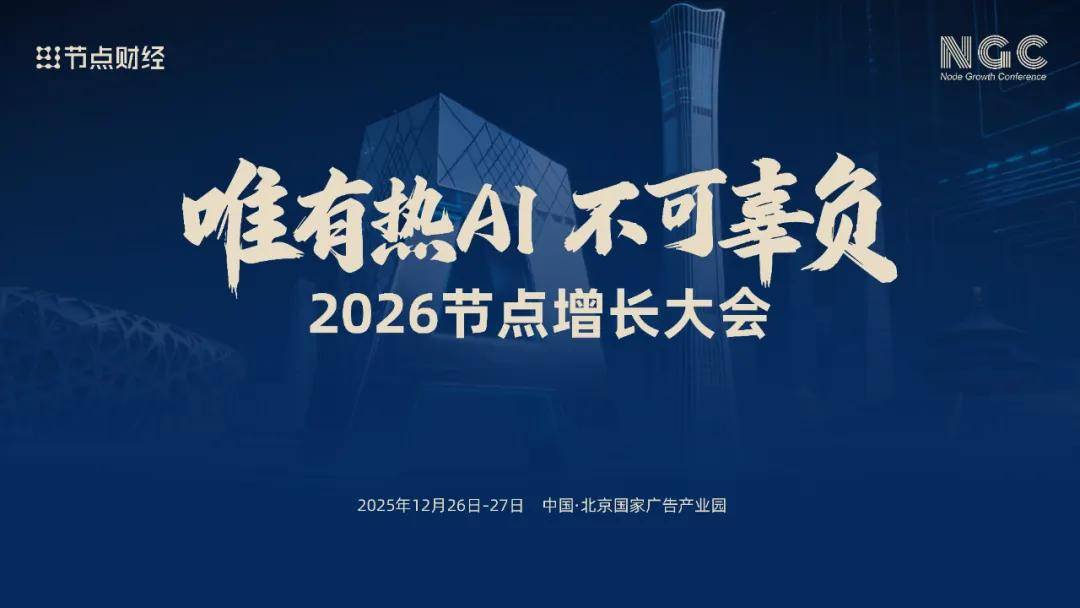
Group 1 - The core theme of the 2026 Node Growth Conference is "Only Hot AI Should Not Be Wasted," focusing on the transformative impact of AI as a new infrastructure in business operations and decision-making [1] - The conference will address critical questions regarding AI's role in cost reduction and efficiency improvement, the challenges faced by Chinese brands in a competitive landscape, and the search for long-term value amidst shifting capital trends [1] - Ren Bin, the founder and CEO of Tiying Media, will share insights during the conference's "National Brand New Prosperity" session on December 26 [1] Group 2 - Ren Bin has over ten years of entrepreneurial experience, with a strong focus on offline media and deep insights into new media marketing [2] - Tiying Media, founded by Ren Bin in 2017, innovates in elevator door imaging media, addressing challenges in traditional offline media through digital transformation and precision targeting [3] - The company has expanded its operations to cover 30 cities globally, impacting over 100 million urban residents daily, and has received investments from notable firms such as Baidu Ventures and Sequoia China [3]
AMD纪朝晖:AI智能体元年开启 边缘侧算力将重塑生产力范式
2 1 Shi Ji Jing Ji Bao Dao· 2025-12-06 11:41
Group 1 - The forum held in Guangzhou focused on the theme "Innovation Without Boundaries, Intelligence to See the Future," highlighting the significance of AI Agents in transforming work and life by 2025 [1] - IDC predicts that by 2026, 40% of jobs will be completed in collaboration with AI Agents, and by 2027, the usage of AI Agents among the world's top 2000 companies will increase tenfold, with a 1000-fold increase in workload [1] - AMD's Vice President emphasized that AI Agents will not completely replace humans but will enhance the competitiveness of those who can work collaboratively with AI [1] Group 2 - The emergence of the AI economy necessitates high-memory, high-computing edge devices as key infrastructure for businesses and individuals to achieve "AI+" transformation [2] - A mature AI Agent requires at least 50GB of memory to support large models and extensive knowledge bases, which AMD addresses with a new solution that reduces costs significantly [2] - This deployment model is transforming industries such as education and healthcare, with local deployments assisting young doctors and automating content creation processes [2] Group 3 - AMD has established a comprehensive AI strategy covering cloud, edge, and endpoint solutions, maintaining leadership in supercomputer CPUs while also expanding in consumer and workstation markets [3] - Under CEO Lisa Su's leadership, AMD has achieved significant capital returns and recognition for its technological direction, including being named CEO of the Year by Time magazine [3]

三六零涨2.15%,成交额1.41亿元,主力资金净流入383.88万元
Xin Lang Cai Jing· 2025-10-20 01:52
Core Viewpoint - The stock of 360 Security Technology Co., Ltd. has shown fluctuations in trading performance, with a recent increase of 2.15% and a total market capitalization of 73.215 billion yuan as of October 20 [1] Company Overview - 360 Security Technology Co., Ltd. was established on June 20, 1992, and went public on January 16, 2012. The company is based in Chaoyang District, Beijing, and specializes in internet security technology research and development, internet security product design, promotion, and related commercial services [1] - The main business revenue composition includes 92.00% from internet and smart hardware, 6.63% from security services, and 1.37% from other supplementary services [1] Financial Performance - For the first half of 2025, the company achieved operating revenue of 3.827 billion yuan, representing a year-on-year growth of 3.67%. However, the net profit attributable to shareholders was -282 million yuan, showing a year-on-year increase of 17.43% [2] - Since its A-share listing, the company has distributed a total of 3.535 billion yuan in dividends, with 2.1 billion yuan distributed over the past three years [3] Shareholder Structure - As of June 30, 2025, the number of shareholders decreased by 12.31% to 396,100, while the average circulating shares per person increased by 14.03% to 17,671 shares [2] - The top ten circulating shareholders include significant institutional investors, with Hong Kong Central Clearing Limited holding 208 million shares, an increase of 48.6999 million shares from the previous period [3]

辰安科技涨2.10%,成交额1.05亿元,主力资金净流出561.91万元
Xin Lang Cai Jing· 2025-10-13 03:17
Core Insights - The stock price of Changan Technology increased by 2.10% on October 13, reaching 24.80 CNY per share, with a trading volume of 1.05 billion CNY and a market capitalization of 5.769 billion CNY [1] Financial Performance - For the first half of 2025, Changan Technology achieved a revenue of 558 million CNY, representing a year-on-year growth of 27.99%. The net profit attributable to the parent company was -73.62 million CNY, showing a year-on-year increase of 37.24% [2] Stockholder Information - As of September 30, the number of shareholders for Changan Technology was 13,500, an increase of 0.39% from the previous period. The average circulating shares per person decreased by 0.39% to 17,266 shares [2] Business Segments - The main business revenue composition of Changan Technology includes: Urban Safety 36.29%, Equipment and Firefighting 28.82%, Emergency Management 24.58%, International Business 4.15%, Consumer Business 3.23%, Safety Education 2.53%, and Others 0.40% [1] Dividend Information - Changan Technology has distributed a total of 108 million CNY in dividends since its A-share listing, with no dividends paid in the last three years [3]

谷歌大神出手,免费发布《智能体设计模式》,AI Agent开发的终极秘籍
机器之心· 2025-10-08 04:13
Core Insights - The article discusses the rising trend of AI Agents, emphasizing the need for systematic design patterns to address challenges in developing reliable and stable intelligent systems [2][6][20]. Summary by Sections Introduction - The introduction highlights the evolution of AI from simple reactive programs to complex autonomous entities capable of understanding context and making decisions [14][15]. Book Overview - Antonio Gulli's book "Agentic Design Patterns" aims to provide a structured approach to developing AI agents, offering reusable solutions to common design challenges [4][6][22]. Structure of the Book - The book is organized into four parts, starting with fundamental operations and advancing to complex topics like multi-agent collaboration and safety measures [11][12][21]. Importance of Design Patterns - Design patterns are crucial in AI development as they offer proven templates to tackle common challenges, enhancing the structure, maintainability, and reliability of intelligent systems [20][21]. Key Features of Intelligent Agent Systems - Intelligent agent systems are characterized by autonomy, proactivity, and reactivity, allowing them to make decisions and act without continuous human supervision [19][17]. Practical Application - The book emphasizes practical application, providing code examples and encouraging readers to experiment with the concepts presented [22][23]. Conclusion - The book serves as a foundational resource for understanding and applying core design patterns in AI development, aiming to stabilize the rapidly evolving field [24][26].