BIM

Search documents
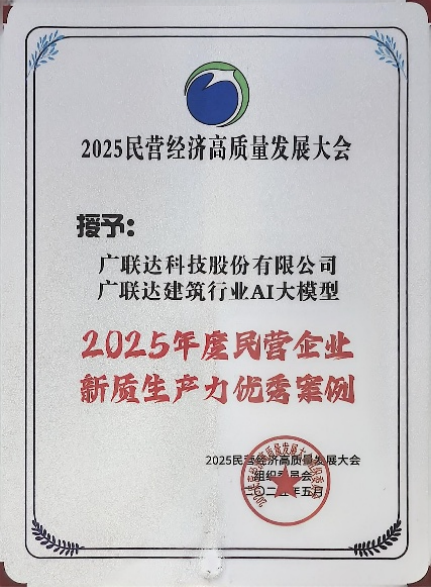
解决真实行业痛点 广联达AI交易大模型入选“2025年度民营企业新质生产力优秀案例”
Zhong Guo Chan Ye Jing Ji Xin Xi Wang· 2025-07-30 04:22
Core Insights - Guanglianda's AI trading model has been recognized as an "Outstanding Case of New Quality Productivity for Private Enterprises in 2025" at the "2025 High-Quality Development Conference of the Private Economy" [1][2] - The Chinese government is actively promoting policies to support the private economy, encouraging increased investment in technological innovation and enhancing core competitiveness [1] - Guanglianda is positioned as a leading enterprise in the digital construction sector, leveraging its technological advantages to drive industry upgrades [1] Group 1: AI Trading Model Features - The AI trading model, AecGPT, covers seven areas in the construction industry, including planning, design, trading, cost, construction, operation, and comprehensive management [2] - The model utilizes a "data + algorithm" dual-drive approach to promote "intelligent integration," continuously optimizing and training based on a vast knowledge base and experience pool [2][5] - The model supports various applications such as AI bidding, AI evaluation, and AI assistance, enhancing efficiency and accuracy in the bidding process [2][4] Group 2: Bidding Process Enhancements - In the bidding phase, the AI model automates and structures the analysis of bidding documents, providing professional support for document review [4] - The AI-assisted evaluation can quickly process and analyze bidding documents, extracting key information and ensuring compliance with bidding requirements, significantly improving evaluation efficiency [4][5] - The AI clearing service automates the rationality check of project quantity lists and compliance checks of technical standards, generating clearing reports to reduce bidding risks [5] Group 3: Industry Impact and Future Outlook - The AI trading model addresses core pain points in public resource trading, enhancing the digital upgrade of the entire bidding process and promoting intelligent governance [5] - Guanglianda's model has been successfully implemented in regions such as Hainan, Guizhou, and Tibet, gaining customer trust and market recognition [5] - The recognition of Guanglianda reflects a shift in China's construction technology from "catching up" to "leading," with potential to reshape the global construction value chain [5]


深度研究 |“十五五”房地产业数智变革的三大引擎
3 6 Ke· 2025-05-26 02:16
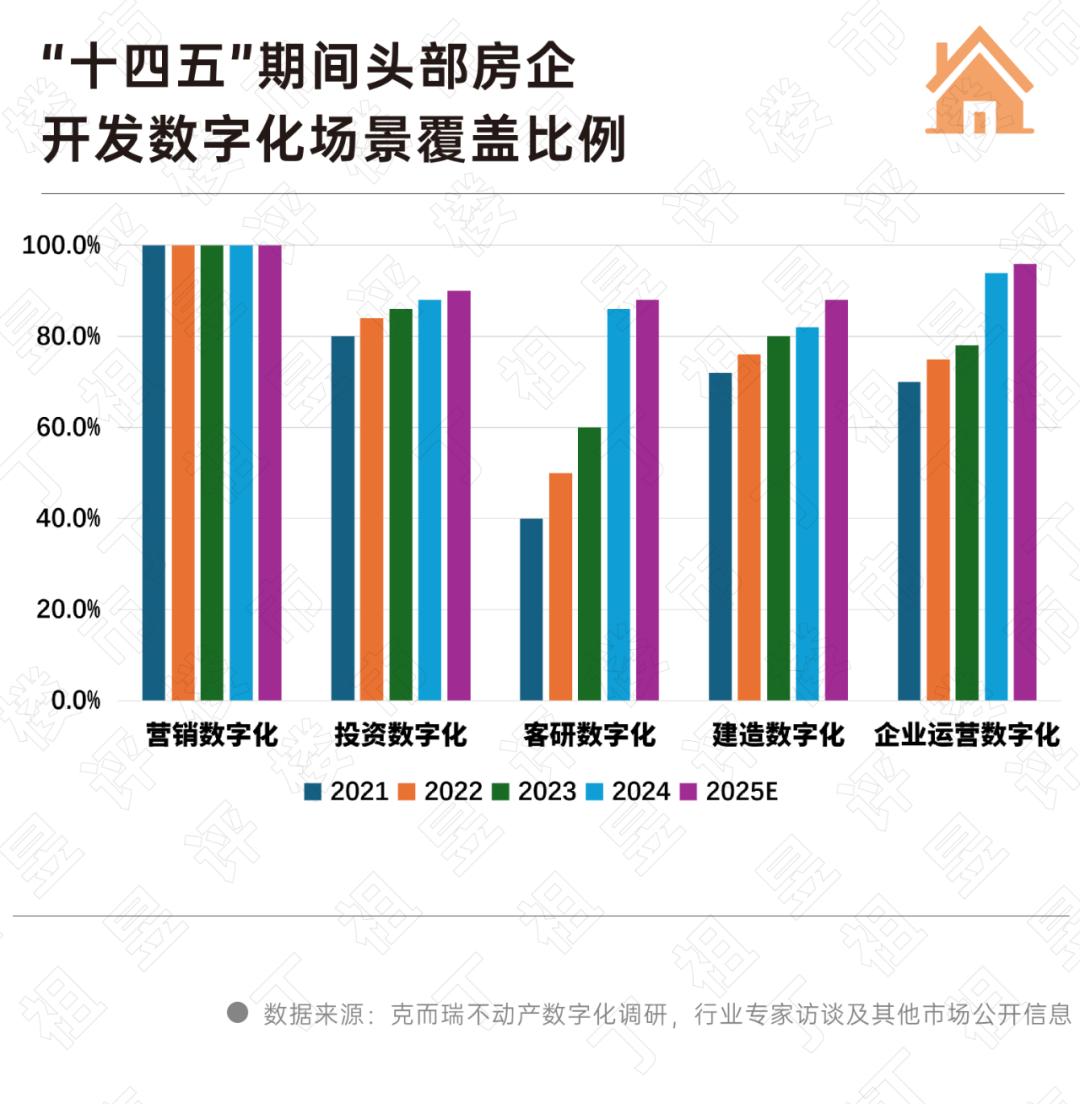
Core Insights - Digital transformation is becoming a core driver for high-quality development in China's real estate industry, especially during the upcoming "15th Five-Year Plan" period (2026-2030) [1] - The real estate sector is undergoing deep adjustments and transformations, with digitalization being crucial for enhancing competitiveness and achieving cost reduction and efficiency [1] Group 1: Digitalization Progress During the 14th Five-Year Plan - Leading real estate companies have established a comprehensive digital foundation, covering marketing, investment, customer research, construction, and enterprise operations [1] - Digital marketing has reached a 100% coverage rate, while investment digitalization is expected to rise from 80% in 2021 to 90% by 2025, and customer research digitalization is projected to increase from 40% to 88% [1] - Construction and enterprise operation digitalization are also expected to reach 88% and 96%, respectively, by 2025 [1] Group 2: Challenges and Strategic Focus - The tightening financing environment has led to a reduction in annual digital investment by leading companies, from 150 million yuan in 2021 to an estimated 60 million yuan in 2025 [4] - 88% of companies prioritize improving internal operational efficiency and reducing costs as their primary digitalization goals, while 71% emphasize the value of data assets [6] - Companies are increasingly focusing on practical benefits from digitalization, with 63% aiming to integrate multi-platform data for management and decision-making support [6] Group 3: AI and Digital Marketing Innovations - The acceptance of AI technology in the real estate sector is gradually increasing, with 72% of digital leaders in top firms expecting AI to have a substantial impact within 2 to 5 years [9] - The focus for the "15th Five-Year Plan" period will shift towards integrating customer lifecycle management with digital tools, moving from a tool-centric to a systematic approach [14] - AI-driven marketing strategies will enhance planning efficiency and customer management, allowing firms to build private customer pools and break down resource monopolies [14] Group 4: Structural Opportunities in Construction Digitalization - The "Digital Construction" initiative aims for significant breakthroughs during the "15th Five-Year Plan," with a focus on creating resilient and smart cities [24] - The integration of BIM (Building Information Modeling) and CIM (City Information Modeling) is expected to enhance project precision and operational efficiency, transforming real estate companies into urban service providers [27][28] - The deep integration of BIM and CIM will facilitate a comprehensive digital infrastructure that supports the entire lifecycle of construction and operation [28] Group 5: Long-term Strategic Planning - Companies need to adopt a systemic and long-term approach to digitalization, focusing on core capabilities rather than merely adding functionalities [29] - Digitalization should be closely aligned with business operations and industry ecosystems to maximize its impact on collaborative innovation and service enhancement [30] - By effectively leveraging digital opportunities, real estate firms can drive high-quality development and secure a competitive edge in the future [30]
华阳国际(002949):积极转型数字文化 布局微短剧业务
Xin Lang Cai Jing· 2025-04-29 02:48
Core Viewpoint - The company reported a significant decline in revenue and net profit for 2024, primarily due to substantial industry headwinds, leading to lower-than-expected performance [1][4]. Financial Performance - In 2024, the company achieved revenue of 1.17 billion, down 22.6% year-on-year, with a net profit of 125 million, also down 22.3%, falling short of the expected 189 million [1]. - For Q4 2024 and Q1 2025, revenues were 355 million and 264 million, reflecting a year-on-year change of -21.8% and +15.4%, respectively [1]. - The gross margin for 2024 was 35.1%, an increase of 2.87 percentage points year-on-year, attributed to a 22% reduction in workforce and a significant decrease in low-margin EPC business [1][2]. Business Segments - The architectural design segment generated revenue of 950 million in 2024, down 15.0%, with a gross margin of 36.4%, up 1.4 percentage points [2]. - The cost consulting segment reported revenue of 150 million, down 19.4%, with a gross margin of 37.9%, down 4.3 percentage points [2]. - The company established Huayang Digital Culture (Jiangxi) Co., Ltd. in September 2024 to expand into micro-short drama, covering key aspects of content, production, distribution, and copyright operations [2]. Expense and Cash Flow Analysis - The company’s expense ratio for 2024 was 16.6%, up 1.09 percentage points year-on-year, with variations in sales, management, R&D, and financial expense ratios [3]. - Operating cash flow for 2024 was 174 million, a decrease of 113 million year-on-year, with a cash collection/payment ratio of 107%/31% [3]. - In Q1 2025, the operating cash flow was -130 million, reflecting an increase in cash outflow of 35 million year-on-year [3]. Profit Forecast and Valuation - Due to ongoing challenges in the architectural design sector and the nascent stage of the digital culture transformation, the company has revised its net profit forecasts for 2025-2027 to 108 million, 97 million, and 93 million, representing a significant reduction [4]. - The company is expected to benefit from AI empowerment and its strong position in the construction design sector, leading to a target price of 16.47, based on a 30x PE for 2025 [4].

品茗科技2024年年报发布:信息化主业稳步增长,AI技术加快落地
Zheng Quan Shi Bao Wang· 2025-04-19 03:14
Core Insights - The company reported a revenue of 447 million yuan for 2024, representing a year-on-year growth of 2.69%, while the net profit attributable to shareholders reached 31 million yuan, up 153.27% year-on-year, driven by business structure optimization and effective cost control [1] Group 1: Business Performance - The architectural information technology software business generated revenue of 244 million yuan, accounting for 54.54% of total revenue, with a year-on-year increase of 11.98% [2] - The company maintained its main business stability through improved customer service and enhanced customer loyalty despite adverse industry conditions [2] - The company has successfully collaborated with major construction enterprises, increasing the repurchase rate among large consulting firms and construction clients [2] Group 2: Research and Development - The company invested 113 million yuan in R&D, representing 25.32% of revenue, and obtained 7 invention patents, 3 design patents, and 50 software copyrights during the reporting period [3] - The company has enhanced its technological reserves with a total of 60 patents and 336 software copyrights, with 43 invention patents under substantive examination [3] - The APaaS platform has integrated various products and established customized collaborations with several state-owned energy enterprises [3] Group 3: Future Outlook - The company will continue to focus on the digital transformation of the construction industry, improve its product system, and expand application scenarios [4] - There will be increased investment in key technology areas such as AI, big data, and BIM to strengthen the platform architecture and enhance operational efficiency [4]

智慧工地技术的现状及发展趋势(43页 PPT)
Sou Hu Cai Jing· 2025-04-16 21:09
Core Insights - The report discusses the current status and development trends of smart construction site technology, emphasizing its significance in enhancing efficiency and reducing reliance on human labor [1][2]. Group 1: Concept and Significance of Smart Construction Sites - Smart construction sites integrate construction processes with information technology to enhance operational efficiency and address the "last mile" issue in enterprise information management [1][7]. - The technology aims to reduce costs and improve management levels by utilizing emerging technologies such as IoT, big data, cloud computing, and BIM [1][10]. Group 2: Current Status of Smart Construction Technology - Numerous devices and information systems have emerged, covering major aspects of construction management, although most applications remain isolated rather than integrated [2][16]. - Applications include BIM-based site layout, progress planning, and simulation, which are widely used in construction planning stages [2][22]. Group 3: Development Trends of Smart Construction Technology - Future trends include the integrated application of emerging information technologies, enhancing management efficiency and accuracy in quality management [2][3]. - There will be a focus on organic integration with enterprise management information systems to achieve data interconnectivity and business collaboration [2][3]. - The application of big data will deepen, providing more scientific bases for decision-making [2][3]. Group 4: Conclusion - The document provides a clear explanation of the concept of smart construction sites, analyzes the current application status, and accurately predicts future development directions, serving as an important reference for the construction industry's transition to smart technologies [2].