
DTC模式

Search documents
湖南西子健康集团股份有限公司(H0295) - 申请版本(第一次呈交)
2026-01-07 16:00
香港聯合交易所有限公司與證券及期貨事務監察委員會對本申請版本的內容概不負責,對其準確性或 完整性亦不發表任何意見,並明確表示概不就因本申請版本全部或任何部分內容而產生或因倚賴該等 內容而引致的任何損失承擔任何責任。 Hunan Xizi Health Group Co., LTD 湖 南 西 子 健 康 集 團 股 份 有 限 公 司 於中華人民共和國成立的股份有限公司) 的申請版本 警告 本申請版本乃根據香港聯合交易所有限公司(「聯交所」)及證券及期貨事務監察委員會(「證監會」) 的要求而刊發,僅用作提供資訊予香港公眾人士。 本申請版本為草擬本,其內所載資料並不完整,亦可能會作出重大變動。 閣下閱覽本文件,即 代表 閣下知悉、接納並向湖南西子健康集團股份有限公司(「本公司」)、其獨家保薦人、整體協 調人、顧問或包銷團成員表示同意: 於 本 公 司 招 股章 程 根 據 香 港 法 例 第 32章 公 司( 清盤 及 雜 項 條 文 )條 例 送 呈 香 港 公 司 註冊 處 處 長 登 記前,不會向香港公眾人士提出要約或邀請。倘在適當時候向香港公眾人士提出要約或邀請,有 意投資者務請僅依據於香港公司註冊處處 ...
“老登”向左,“小登”向右:泡泡玛特的分歧时刻
Mei Ri Jing Ji Xin Wen· 2026-01-06 09:38
Core Viewpoint - The report by Bernstein predicts a significant decline in Bubble Mart's stock price due to potential sales drop and consumer interest decline in LABUBU, which they believe could lead to a vicious cycle affecting profitability and market performance [1]. Group 1: Market Analysis - Bernstein's conclusion about Bubble Mart's bubble is criticized as being overly simplistic and based on a misunderstanding of consumer behavior, as many buyers genuinely desire LABUBU products [2]. - The report misinterprets the importance of scarcity in Bubble Mart's business model, which relies more on market penetration than on artificial scarcity [3]. - The comparison to Beanie Babies is deemed inappropriate, as the consumer base and business models of Bubble Mart and Beanie Babies are fundamentally different [3]. Group 2: Business Model and Strategy - Bubble Mart's strategy focuses on direct-to-consumer (DTC) sales, which allows for better control over pricing and distribution, contrasting with traditional models that rely on multiple layers of distribution [13]. - The company has successfully cultivated multiple IPs, with LABUBU becoming a leading product in just five years, showcasing its efficiency in creating popular items [8]. - The product strategy is clearly divided into regular and limited edition items, catering to different consumer segments and enhancing brand loyalty [5]. Group 3: Consumer Behavior and Market Trends - A significant portion of Bubble Mart's consumers purchase products for emotional satisfaction and design rather than for investment purposes, indicating a healthier consumer base [5]. - The decline in search interest for LABUBU is interpreted as a sign of consumer transition from searching to purchasing, reflecting a solid user base with high repurchase rates [11]. - The operational adjustments made by Bubble Mart, such as optimizing store experiences, are aimed at enhancing customer satisfaction rather than indicating a decline in demand [11]. Group 4: Stock Performance and Market Perception - The recent stock price drop of 40% is attributed to broader market factors rather than a direct reflection of Bubble Mart's operational health [14]. - The market's tendency to apply traditional valuation metrics to a new business model like Bubble Mart's is seen as a misunderstanding of the company's unique value proposition [12][15]. - Historical parallels are drawn between Bubble Mart and Tesla, suggesting that misjudgments by analysts could lead to significant market opportunities for the company [16].



林清轩登陆港交所;Meta收购Manus;Saks Global CEO离职
Sou Hu Cai Jing· 2026-01-05 07:47
Investment Dynamics - Neeman's, an Indian DTC footwear brand, has completed a Series B2 funding round, raising ₹3.55 billion [3] - The brand, established in 2017, focuses on eco-friendly and sustainable materials, balancing comfort and design [3] - Neeman's is expanding its online presence while also growing its offline retail network, benefiting from increased investor interest in sustainable consumer brands [3] - Jiumaojiu plans to invest a total of $43 million (approximately ¥300 million) to increase its stake in North American restaurant chain Big Way Group Inc. from 10% to 49% [5] - This investment will double Jiumaojiu's North American store count and is a key step in its "going global" strategy, leveraging Big Way's established local model [5] Listing Dynamics - Shanghai Linqingxuan Cosmetics Group has officially listed on the Hong Kong Stock Exchange under the stock code "2657.HK" [7] - The company focuses on anti-wrinkle skincare products and aims to provide high-end solutions using natural camellia ingredients [7] - Linqingxuan's listing marks it as the first high-end domestic skincare stock in the Hong Kong market, boosting the domestic beauty industry's high-quality development [7] Acquisition Dynamics - LVMH has completed the acquisition of French media publisher Les Editions Croque Futur, increasing its stake from 40% to 100% [9] - The acquisition includes the leading business magazine "Challenges," and Maurice Szafran has been appointed as the president of the publisher [9] - LVMH's strategy to acquire media assets is aimed at gaining pricing power in the luxury sector, although it raises concerns about media independence and market concentration [9] - Meta has announced the acquisition of Chinese company Butterfly Effect, which develops the AI application Manus, for several billion dollars [12] - Manus, set to launch in March 2025, is a general-purpose AI agent that can break down complex tasks and utilize various tools to deliver complete results [12] - This acquisition is significant as it represents one of the largest purchases of a Chinese AI team in 2025, allowing Meta to enhance its AI capabilities [12] Brand Dynamics - Zhou Dasheng Jewelry has accelerated its entry into instant retail, launching 200 direct stores on Meituan Flash Purchase, with daily sales increasing approximately tenfold since launch [14] - The company plans to expand instant retail to over 5,000 franchise stores by 2026, aiming to capture the growing gift market [14] - Norwegian outdoor brand Norrøna is preparing to open its first store in Beijing at the high-end commercial landmark SKP, featuring a minimalist design that reflects its outdoor aesthetic [15] - The store will offer a range of products for skiing, climbing, and outdoor activities, catering to various outdoor exploration needs [15] Personnel Dynamics - Saks Global announced the departure of CEO Marc Metrick, with Executive Chairman Richard Baker taking over the role [19] - Baker's background in real estate suggests a shift in the company's strategy towards a dual focus on retail and real estate [19] - Shenzhen Ge Li Si Apparel Co., Ltd. has appointed Wang Dusen as the new general manager, following the resignation of former general manager Xia Guoxin [21] - This leadership change indicates a strategic shift within the company, allowing the founder to focus on long-term planning and development [21] - Zong Fuli has resumed her role as the legal representative of Hongsheng Group, consolidating her control over the company and facilitating the integration of resources across its beverage and packaging sectors [24] - This change is expected to accelerate the launch and channel expansion of new brands like "Wawa Xiaozong" [24]


一家另类深圳Ebike的低调故事:不融资不烧钱,年营收超1亿美金|Insight全球
36氪· 2025-12-23 10:13
Core Viewpoint - The article highlights the rapid growth of the global electric bicycle (Ebike) market, focusing on Shenzhen-based brand Heybike, which has achieved significant sales and revenue milestones in a competitive North American market while maintaining profitability without external financing [4][6][8]. Market Overview - The Ebike market has experienced explosive growth driven by environmental policies, consumer upgrades, and capital influx, but is now facing intense competition and industry consolidation [5]. - Heybike has managed to sustain growth amidst this competitive landscape, accumulating over 170,000 users and achieving annual sales of over 200,000 units, translating to more than $100 million in revenue [7][8]. Business Model and Strategy - Unlike many competitors reliant on external funding, Heybike has been profitable since its inception and has no plans for external financing, focusing instead on self-funding and resource allocation towards R&D and quality control [8][10]. - The company strategically entered the market with high-cost performance practical models, avoiding direct competition with established giants and leveraging platforms like Amazon for rapid user acquisition [11][12]. Product Development and Market Positioning - Heybike identified a market gap between low-end and high-end Ebikes, targeting two specific segments: commuting and light outdoor use, with products priced around $1,000 [21][23]. - The company has successfully positioned itself in the North American market, where it generates approximately 70% of its revenue, while also catering to European and Japanese markets with tailored product strategies [25]. R&D Focus - Heybike emphasizes real user experiences in its R&D efforts, investing several million yuan annually in developing its battery, motor, and IoT systems, rather than merely competing on technical specifications [27][30]. - The introduction of smart features, such as GPS tracking and remote locking, addresses user concerns about theft, particularly among its primary demographic of women and older adults [28][30]. Future Plans - Heybike aims to expand its product range to include high-end models priced between $4,000 and $5,000, targeting professional users and extreme sports enthusiasts, while also planning to penetrate emerging markets like South Korea and Singapore through localized strategies [31][32].
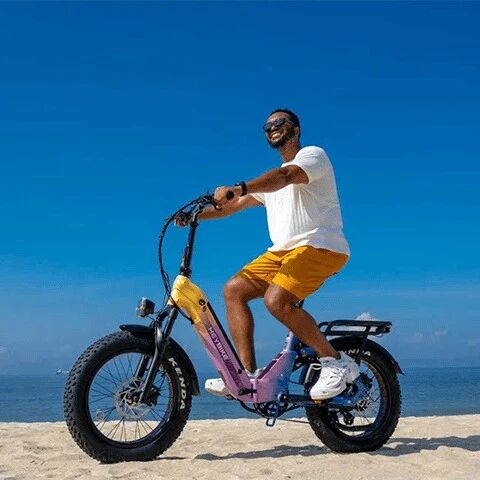
一家另类深圳Ebike的低调故事:不融资不烧钱,年营收超1亿美金|Insight全球
3 6 Ke· 2025-12-23 01:47
Core Insights - The article highlights the rapid growth of the global electric bicycle (Ebike) market, focusing on the success of Shenzhen-based brand Heybike, which achieved over 200,000 annual sales and more than $100 million in revenue within four years in the competitive North American market [1][4]. Industry Overview - The Ebike sector has experienced explosive growth driven by environmental policies, consumer upgrades, and capital influx, but it is now facing intense competition and a significant industry reshuffle [2]. Company Performance - Heybike has accumulated over 170,000 global users and has maintained profitability since its inception, without external financing, which is uncommon in the industry [4][5]. - The company has strategically focused on product development and quality control, avoiding the pitfalls of rapid market changes [5][6]. Market Strategy - Heybike initially entered the market with high-cost performance practical models, leveraging platforms like Amazon for rapid user acquisition while avoiding direct competition with established giants [7]. - Unlike competitors that pursued aggressive expansion and financing, Heybike has taken a measured approach, focusing on understanding user needs before expanding into new markets [8][9]. Product Development - The company identified a market gap between low-end and high-end Ebikes, targeting two specific segments: commuting and light outdoor use, with models priced around $1,000 [13][14]. - Heybike's user base primarily consists of women and older adults, emphasizing comfort and safety in their product design [16][20]. Technological Innovation - Heybike prioritizes user experience over technical specifications, investing significantly in R&D, particularly in battery systems and IoT technology [17][18]. - The company has introduced smart features like GPS tracking and remote locking to address user concerns about theft [18][20]. Future Plans - Heybike aims to become the leading Ebike brand in North America within 3-5 years, with plans to explore emerging markets like South Korea and Singapore through customized strategies [21].

新股消息 飞速创新再度递表港交所 为全球第二大线上DTC网络解决方案提供商
Jin Rong Jie· 2025-12-11 00:08
Company Overview - Shenzhen Feisu Innovation Technology Co., Ltd. has submitted an application to the Hong Kong Stock Exchange for a mainboard listing, with China International Capital Corporation, CITIC Securities International, and China Merchants Securities International as joint sponsors [1] - As of the last practical date, the company has served over 480,000 customers across more than 200 countries and regions, covering approximately 60% of the Fortune 500 companies [2] Business Model - Feisu Innovation is the second-largest online DTC (Direct-to-Consumer) network solution provider globally, with a market share of 6.9% based on projected 2024 revenue [1] - The company integrates network architecture design, multi-vendor procurement, and after-sales support into a unified platform, providing a complete experience for global customers [2] Financial Performance - Revenue for the fiscal years 2022, 2023, and projected for 2024 are approximately RMB 1.988 billion, RMB 2.213 billion, and RMB 2.612 billion respectively [3] - Profit for the same periods is approximately RMB 365 million, RMB 457 million, and RMB 397 million respectively [4] Industry Overview - The global network solutions market is projected to grow from USD 119.2 billion in 2020 to USD 162.8 billion by 2024, with a compound annual growth rate (CAGR) of 8.1% [5] - The market for high-performance network hardware (100G and above) is expected to grow from USD 14 billion in 2020 to USD 33.7 billion by 2024, with a CAGR of 24.6% [6]
伯希和二次IPO:“始祖鸟平替”的转型困局
Xin Lang Cai Jing· 2025-11-17 08:26
Core Insights - The outdoor sports sector, particularly the sales of jackets, has seen significant growth during the recent "Double 11" shopping event, with jackets ranking high on sales charts across e-commerce platforms [2] - The company BERSHIHE has submitted a listing application to the Hong Kong Stock Exchange, aiming to become the "first stock of high-performance outdoor lifestyle in China" [2] - BERSHIHE's sales of jackets are projected to reach 3.8 million units from 2022 to 2024, with a compound annual growth rate (CAGR) of 122.2% [2] Company Overview - BERSHIHE's primary products include jackets and footwear, with jackets contributing over 80% of revenue from 2022 to 2024 [3] - The company operates primarily through a direct-to-consumer (DTC) multi-channel sales model [2][3] - BERSHIHE's revenue for 2022, 2023, and 2024 is reported at 378 million, 908 million, and 1.766 billion respectively, with net profits of 24.3 million, 152 million, and 283 million [7] Market Position - The outdoor apparel market is experiencing a 16% annual compound growth rate, indicating a robust growth trajectory for brands like BERSHIHE [2] - BERSHIHE's market share in 2024 is estimated at 5.2%, indicating room for growth compared to competitors like ANTA and other established brands [5] - The company has a low asset-liability ratio of 36% and a gross margin of 59.6%, which are favorable compared to industry standards [8] Sales Channels - BERSHIHE heavily relies on online sales, with DTC sales expected to exceed 1.35 billion in 2024, while offline sales are only projected at 169 million, accounting for 9.6% of total revenue [8] - The company has been expanding its offline presence but has only opened 146 stores by the end of 2024, falling short of its initial target of 500 stores [9] Marketing and Branding - BERSHIHE's marketing expenses have increased significantly, from 120 million in 2022 to 587 million in 2024, representing over one-third of total revenue [10] - The company is exploring high-end product lines to enhance brand perception, with new products priced comparably to premium brands like Arc'teryx [10][11] - The challenge remains for BERSHIHE to balance cost-effectiveness with the establishment of a premium brand image [11]

工厂直供听着挺划算,实际藏着不少隐形消费,消费者一定要警惕
Sou Hu Cai Jing· 2025-11-14 05:21
Core Viewpoint - The rise of "factory direct supply" marketing in 2024 is misleading consumers into believing they are saving money by eliminating middlemen, while hidden costs may still be passed on to them [1][20]. Group 1: Marketing Trends - In 2024, a marketing trend of "factory direct supply" is emerging across major e-commerce platforms and live streaming channels, promoting slogans like "source low prices" and "eliminate middlemen" [1]. - Consumers are drawn to the idea that removing intermediaries will lead to significant savings, but this perception is often incorrect [3]. Group 2: Misconceptions about Middlemen - The disappearance of middlemen is a facade; their functions and costs have not vanished but have been transferred to brands and consumers [3][5]. - Middlemen play crucial roles in product selection, storage, transportation, promotion, and after-sales service, which are now the responsibility of brands [5][7]. Group 3: Cost Implications - The costs previously borne by middlemen are now reflected in new forms, such as advertising and customer acquisition expenses, which ultimately increase product prices for consumers [9][11]. - In 2024, the customer acquisition cost for beauty brands has risen by 32.7% year-on-year, with monthly advertising budgets now accounting for 18%-30% of GMV, up from 15%-25% in 2023 [9]. Group 4: Live Streaming and Advertising Costs - Live streaming has become a significant area for hidden price increases, with commissions and fees for influencers often reaching 35% of sales, tripling in the last three years [11]. - Brands are increasingly spending on advertising to attract customers, with 2024 internet advertising revenue in China projected to reach 650.9 billion yuan, including 183.2 billion yuan for e-commerce ads [14][16]. Group 5: Consumer Awareness - Consumers are encouraged to be cautious of "low-priced" offers, as excessively low prices may indicate hidden quality issues [18][20]. - The narrative of "no middlemen" is often a marketing ploy, and consumers should remain vigilant to avoid falling into consumption traps [20][22].

新乳业(002946):新乳业2025年三季报点评:产品结构优化,盈利改善延续
Changjiang Securities· 2025-11-12 23:30
Investment Rating - The investment rating for the company is "Buy" and is maintained [7]. Core Insights - The company reported a total revenue of 8.434 billion yuan for Q1-Q3 2025, representing a year-on-year increase of 3.49%. The net profit attributable to the parent company was 623 million yuan, up 31.48% year-on-year, while the net profit excluding non-recurring items was 647 million yuan, reflecting a 27.62% increase year-on-year [2][4]. - In Q3 2025, the company achieved a total revenue of 2.908 billion yuan, a year-on-year increase of 4.42%. The net profit attributable to the parent company was 226 million yuan, up 27.67% year-on-year, and the net profit excluding non-recurring items was 236 million yuan, an increase of 21.88% year-on-year [2][4]. Summary by Sections Financial Performance - The company's net profit margin for Q1-Q3 2025 improved by 1.57 percentage points to 7.39%, with a gross margin increase of 0.38 percentage points to 29.47%. The expense ratio decreased by 1.26 percentage points to 20.23% [5]. - For Q3 2025, the net profit margin rose by 1.42 percentage points to 7.78%, while the gross margin slightly decreased by 0.39 percentage points to 28.43%. The expense ratio also decreased by 1.46 percentage points to 19.12% [5]. Strategic Positioning - The company adheres to a strategy of regional deep cultivation and differentiated innovation, achieving alpha performance. It focuses on high-end fresh milk and active nutrition products, creating a competitive edge against leading dairy companies [6]. - The high-end product line caters to quality-sensitive consumers, while large-pack products meet cost-performance needs. The company strengthens its direct-to-consumer (DTC) supply chain system as a core competitive advantage [6]. Future Outlook - The company is expected to achieve net profits of 703 million yuan and 830 million yuan for 2025 and 2026, respectively, corresponding to current price-to-earnings (PE) ratios of 21 and 18 times [6].

HOKA的降速隐喻:「中产跑鞋」如何从赛场打到商场
Hua Er Jie Jian Wen· 2025-11-10 13:24
Core Viewpoint - HOKA, a rising brand in the outdoor running market, is experiencing a slowdown in growth despite a strong past performance, with net sales growth of 11.1% reaching $634.1 million as of September 30, indicating a decline from previous quarters where growth exceeded 20% [1][2] Financial Performance - HOKA's revenue increased from $150 million in 2018 to $1.81 billion in 2024, achieving a six-year CAGR of 51% and increasing its share of parent company Deckers Brands' revenue from 8% to 42% [2] - The brand's sales growth was only 10% year-over-year for the quarter ending March 31, with previous quarters showing growth rates of 29.7%, 34.7%, and 23.7% [2][3] - Deckers Brands forecasts a low double-digit growth of 10%-15% for HOKA's sales in the current fiscal year due to cautious consumer attitudes and pressures from tariffs and rising product prices in the U.S. market [4][5] Market Dynamics - The competitive landscape is shifting, with HOKA facing pressure from brands like ANTA, which maintained a growth rate of 37.2% in the first half of the year, particularly in the Asia-Pacific region [3] - Changes in market environment and channel structures, including increased collaboration between major brands like Nike and top retailers, have impacted HOKA's wholesale channel performance [4] Brand Strategy and Future Directions - HOKA's growth model is transitioning, emphasizing brand establishment and channel efficiency as key factors for future success [6] - The brand is focusing on expanding its apparel line and increasing direct-to-consumer (DTC) sales, with plans to enhance its presence in the Asia-Pacific market [7][10] - HOKA has established a significant first-mover advantage in the Chinese trail running market, with a market share among the top three brands in terms of footwear worn in events [9] Retail Expansion - HOKA is actively expanding its retail presence in China, with a focus on flagship stores in major cities like Shanghai and Beijing, and has opened the largest brand experience center globally [11][12] - The brand's strategy includes collaborating with local retailers to penetrate second-tier markets, reflecting a broader trend of outdoor brands increasing their presence in high-end shopping centers [13][14] Consumer Trends - The Chinese outdoor sports market is characterized by a bifurcation in consumer preferences towards "high cost-performance" and "high quality" products, with sports brands becoming important lifestyle and value expression tools for the middle class [15][16] - The market is shifting from outdoor trail running to urban road running, increasing competition among mid-to-high-end running shoe brands [18][19]