MaaS(模型即服务)

Search documents
智谱公司成功上市,彰显中国AI大模型持续进化
Sou Hu Cai Jing· 2026-01-08 13:05
Core Insights - The global AI model market is witnessing significant capital activity, highlighted by the debut of Zhipu as the "first stock of global large models" on the Hong Kong Stock Exchange, opening at HKD 120 per share and peaking at HKD 135, with a market capitalization nearing HKD 60 billion [2][49][99] - This event marks a competitive rush among Chinese AI companies, with another company, MiniMax, set to list shortly after Zhipu, reflecting a broader trend in global AI capital investment [50][145] - Zhipu's listing establishes a valuation benchmark for the AI model industry, indicating a shift in the narrative from capability validation to scale expansion in AI investments [4][100] Company Performance - Zhipu has achieved several technological milestones, including the release of China's first proprietary pre-trained model framework, GLM, in 2021, and the open-sourcing of the first 100 billion parameter model, GLM-130B, in 2022 [4][101] - The latest model, GLM-4.7, has topped both global open-source and domestic model rankings, outperforming competitors like GPT-5.2 in blind tests [6][102] - Zhipu's models have been recognized for their unique architecture, which emphasizes bidirectional context modeling, enhancing understanding in Chinese language tasks and achieving a low hallucination rate [8][105] Market Dynamics - The Chinese AI language model market is projected to reach approximately CNY 5.3 billion by 2024, with B-end clients contributing CNY 4.7 billion, indicating a focus on enterprise solutions rather than consumer-facing products [11][107] - Zhipu's business model, which includes a significant portion of localized deployment projects (85%), allows for a high gross margin of over 60% [12][114] - The company has established a dual-engine business structure combining localized deployment and cloud API services, positioning itself effectively in the B-end market [11][123] Competitive Landscape - Zhipu's growth trajectory is impressive, with revenues increasing from CNY 57.4 million in 2022 to CNY 1.91 billion in the first half of 2025, reflecting a compound annual growth rate of approximately 130% [39][136] - The company is expected to continue its rapid growth, with projections indicating a potential for exponential revenue increases similar to those seen by industry peers like Anthropic [41][139] - Zhipu's international expansion efforts include forming alliances with countries along the Belt and Road Initiative, enhancing its global presence and revenue, which is expected to reach nearly 12% from overseas by mid-2025 [33][130] Future Outlook - The global AI market is anticipated to grow from USD 189 billion in 2023 to USD 4.8 trillion by 2033, suggesting a vast opportunity for companies like Zhipu [37][133] - As Zhipu continues to innovate and maintain its technological leadership, it is well-positioned to compete with major players like OpenAI, which has identified Zhipu as a significant competitor [35][131] - The ongoing evolution of AI technology and market dynamics will likely lead to a comprehensive competition based on commercial capabilities, ecosystem development, and resource integration [40][140]

智谱上市:一场关于AGI商业化的资本测试
Bei Jing Shang Bao· 2026-01-08 11:32
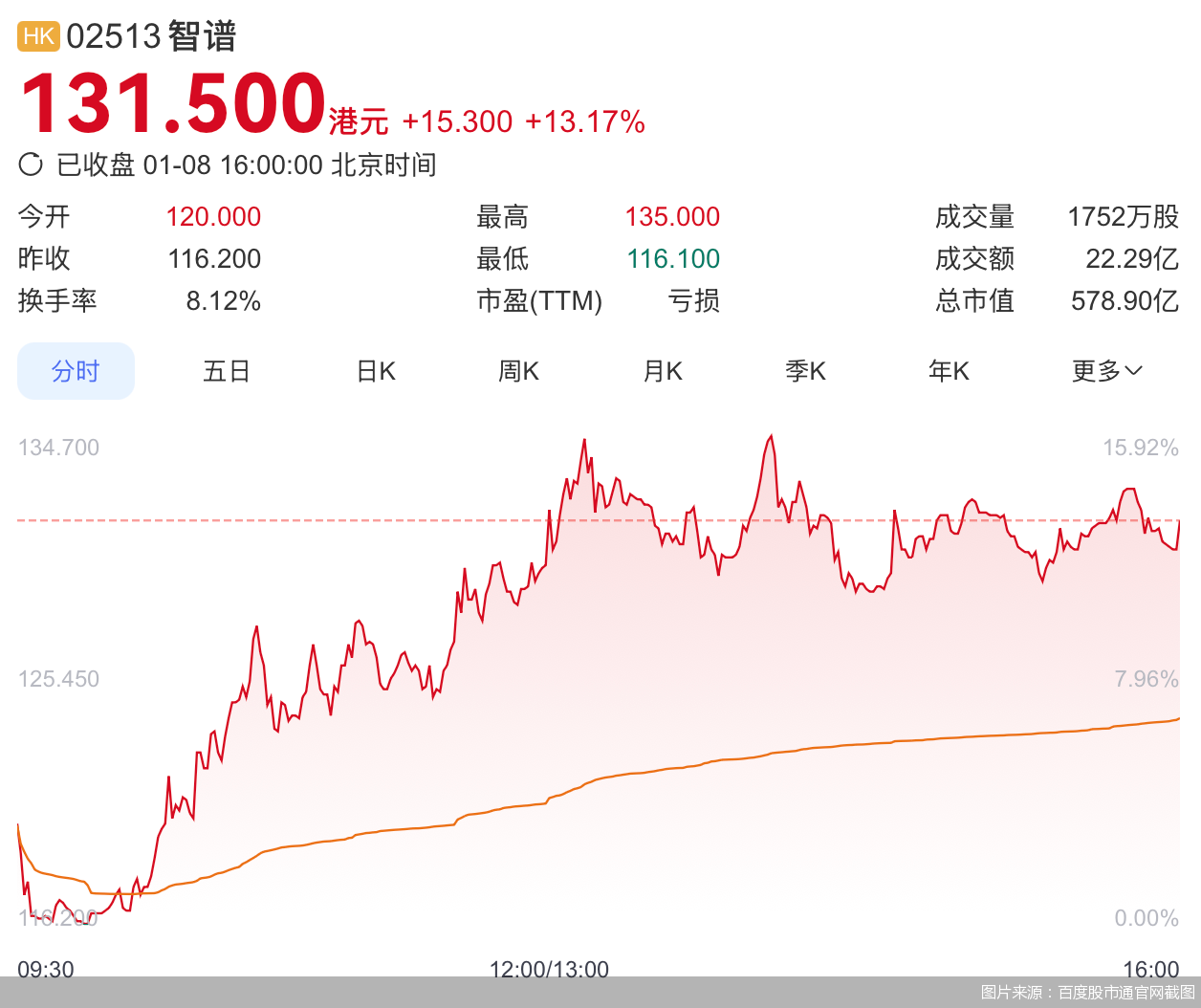
Core Viewpoint - The listing of Zhipu on the Hong Kong Stock Exchange marks a significant milestone as the first publicly traded company focused on large models, aiming for AGI (Artificial General Intelligence), attracting substantial market attention and scrutiny on the commercialization path of domestic large models [1][3]. Financial Performance - Zhipu's stock opened at 120 HKD, a 3.3% increase from the issue price of 116.2 HKD, and closed at 131.5 HKD, giving it a total market capitalization of 578.9 billion HKD [1][3]. - For the first half of 2025, Zhipu reported revenue of 191 million HKD, a 325% year-on-year increase, while the adjusted net loss was 1.752 billion HKD, a 70% increase compared to the previous year [1][5]. Revenue and Loss Trends - Zhipu's revenue from 2022 to 2024 was 57.41 million HKD, 125 million HKD, and 312 million HKD, with a compound annual growth rate of 130% [4]. - The adjusted net losses for the same period were 97.42 million HKD, 621 million HKD, and 2.466 billion HKD, with the first half of 2025 showing a loss of 1.752 billion HKD [5]. Research and Development Investment - Zhipu's R&D expenditures from 2022 to 2025 (first half) were 84.38 million HKD, 530 million HKD, and 2.2 billion HKD, totaling 4.4 billion HKD [6]. - The ratio of R&D spending to revenue has increased significantly, reaching 835.4% in the first half of 2025, indicating that for every 1 HKD of revenue, over 8 HKD is spent on R&D [6]. Market Position and Competition - Zhipu is recognized as the largest independent large language model provider in China and the second-largest overall, holding a market share of 6.6% [8]. - The competitive landscape shows a clear division among domestic AI model companies, with Zhipu leading the way in public offerings, while others like MiniMax and Yuezhianmian are also making significant moves [7]. Business Model - Zhipu's core monetization strategy revolves around the MaaS (Model as a Service) platform, which provides access to a matrix of models and intelligent tools [9]. - The local deployment model accounts for approximately 85% of Zhipu's revenue in the first half of 2025, while the cloud deployment model contributed 15.2% [9]. Future Outlook - The company is focused on advancing its technology and aims to achieve AGI, with ongoing developments in its GLM series models [4][12]. - Despite current losses, the emphasis on R&D and market expansion is seen as essential for long-term growth and sustainability in the competitive AI landscape [10][11].
“全球大模型第一股”智谱挂牌上市 以MaaS模式锚定未来增长
Zhi Tong Cai Jing· 2026-01-08 02:23
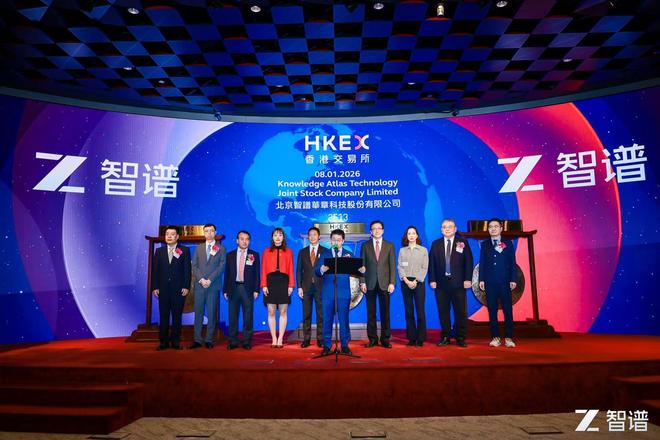
Core Viewpoint - Zhiyuan (02513) officially listed on the Hong Kong Stock Exchange on January 8, with an opening increase of 3.27% to HKD 120 per share, reaching a market capitalization of over HKD 52.8 billion [1] Group 1: Company Overview - Zhiyuan is the largest independent large model vendor in China, adopting a business model centered around MaaS (Model as a Service) rather than traditional enterprise AI routes focused on heavy delivery and strong customization [1] - The company has developed a standardized product system that delivers "general intelligence capabilities" to enterprises and developers through API calls, model subscriptions, and localized deployments, rather than focusing on single-use case applications [1] Group 2: Market Performance - The MaaS platform of Zhiyuan has attracted over 3 million enterprises and application developers, making it one of the most active large model API platforms in China [1] - The programming subscription product has shown particularly strong performance, achieving over HKD 100 million in annual recurring revenue (ARR) shortly after its launch [1] Group 3: Revenue Growth - Following the release of GLM-4.7, Zhiyuan's annualized revenue from MaaS surged from HKD 20 million to over HKD 500 million, marking a 25-fold increase within 10 months, aligning with the exponential growth seen by Anthropic [1] - The company is projected to achieve over 900% year-on-year growth in its MaaS revenue for the full year of 2025, significantly outperforming the growth rates of overseas industry leaders during the same period [1]
“全球大模型第一股”智谱(02513)挂牌上市 以MaaS模式锚定未来增长
智通财经网· 2026-01-08 02:12
Core Viewpoint - The article highlights the successful debut of Zhipu (02513) on the Hong Kong Stock Exchange, emphasizing its unique business model centered around Model as a Service (MaaS) rather than traditional AI delivery methods [1] Company Overview - Zhipu is recognized as the largest independent large model provider in China, focusing on a standardized product system that delivers general intelligence capabilities to enterprises and developers through API calls, model subscriptions, and localized deployments [1] Market Performance - On its first trading day, Zhipu's stock opened with a 3.27% increase, reaching HKD 120 per share, and its market capitalization exceeded HKD 52.8 billion [1] Business Model and Growth - Zhipu's MaaS platform has attracted over 3 million enterprises and application developers, making it one of the most active large model API platforms in China [1] - The programming subscription product has shown remarkable performance, achieving over HKD 100 million in annual recurring revenue (ARR) shortly after its launch [1] Revenue Growth - Following the release of GLM-4.7, Zhipu's annualized revenue from MaaS surged from HKD 20 million to over HKD 500 million, marking a 25-fold increase within 10 months, aligning with the exponential growth seen by Anthropic [1] - The company anticipates a year-on-year growth rate exceeding 900% for its MaaS in 2025, significantly outpacing the performance of overseas competitors during the same period [1]
智谱挂牌上市,ARR年化收入超5亿,实现25倍增幅
Ge Long Hui· 2026-01-08 02:09
Core Viewpoint - The debut of Zhipu (2513.HK) on the Hong Kong Stock Exchange marks the emergence of the first global large model stock, with an initial trading increase of 3.27% to HKD 120 per share, achieving a market capitalization exceeding HKD 52.8 billion [1] Group 1: Company Overview - Zhipu is recognized as the largest independent large model vendor in China, adopting a business model centered around MaaS (Model as a Service) rather than traditional AI routes focused on heavy delivery and strong customization [1] - The company has developed a standardized product system that delivers "general intelligence capabilities" to enterprises and developers through API calls, model subscriptions, and localized deployments, rather than focusing on single-use case applications [1] Group 2: Market Performance - Zhipu's MaaS platform has attracted over 3 million enterprises and application developers, making it one of the most active large model API platforms in the country [1] - The programming subscription product has shown remarkable performance, achieving over HKD 100 million in annual recurring revenue (ARR) shortly after its launch [1] Group 3: Financial Growth - Following the release of GLM-4.7, Zhipu's annualized revenue from MaaS surged from HKD 20 million to over HKD 500 million, marking a 25-fold increase within 10 months, aligning with the exponential growth seen in Anthropic [1] - The company anticipates a year-on-year growth rate exceeding 900% for its MaaS in 2025, significantly outpacing the performance of overseas industry leaders during the same period [1]
盘点2025:模型服务,成为基础设施
第一财经· 2025-12-30 10:15
Core Insights - The article emphasizes the rapid growth of the Model as a Service (MaaS) market, with major players like OpenAI, Google Cloud, and Volcano Engine capturing significant market shares by 2025 [1][3] - Volcano Engine has achieved a remarkable daily token call volume of 63 trillion, positioning itself as a leading Chinese player in the AI cloud market [3][6] - The introduction of the Doubao model has led to exponential growth in token usage, highlighting the increasing importance of MaaS as a foundational infrastructure in AI [4][11] Market Dynamics - By October 2025, OpenAI, Google Cloud, and Volcano Engine are projected to hold 65% of the global MaaS market, with respective shares of 31%, 19%, and 15% [1] - Volcano Engine's daily token call volume of 30 trillion places it third globally, following OpenAI and Google Cloud [3] - The MaaS market is still perceived as "thin" and "narrow," indicating potential for further growth and competition [3] Company Performance - Volcano Engine has reported a 100% year-on-year revenue growth, exceeding 20 billion, and has revised its revenue target for 2030 upwards by several percentage points [6] - The company has prioritized MaaS as its strategic focus, leading to significant investments in resources and technology [6][16] - The introduction of the Doubao model API service has drastically reduced pricing, marking a shift from "per count" to "per milligram" pricing, with a reduction of up to 99.3% [6] Technological Advancements - The launch of the DeepSeek-R1 model has further enhanced Volcano Engine's capabilities, allowing it to capitalize on the growing demand for model inference services [7][10] - Continuous iterations of the Doubao model have led to increased token call volumes, with new models being released every three months [10][11] - The company is focusing on optimizing AI application accessibility and cost-effectiveness through advanced tools like Prompt Pilot and Model Router [27][28] Future Outlook - Volcano Engine aims to maintain its leadership in the MaaS market while expanding into deeper industry applications, particularly in sectors like smart manufacturing and consumer electronics [27] - The company is developing a new architecture centered around agents, which will enhance the integration of models into existing workflows [28][30] - The potential market for agents is vast, with estimates suggesting it could significantly expand beyond traditional IT budgets into areas like global customer service and programming [30]

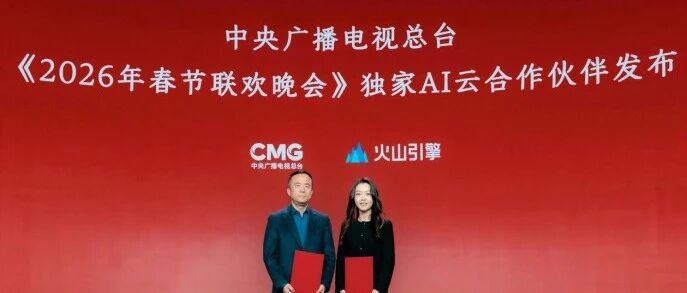
代表字节跳动上春晚的,怎么是火山引擎?
财联社· 2025-12-30 07:24
Core Viewpoint - ByteDance's decision to have Volcano Engine as the exclusive AI cloud partner for the 2026 CCTV Spring Festival Gala marks a strategic shift towards promoting its B2B services rather than its traditional consumer-facing products [1][6][12]. Group 1: Event and Market Positioning - The announcement of Volcano Engine as the partner for the Spring Festival Gala highlights its rapid growth, with daily token usage surpassing 63 trillion, maintaining its position as the leader in AI service usage in China [3][9]. - The event attracted significant attention, with over 5,000 attendees and many more unable to enter, indicating strong interest in AI applications and services [3][4]. - The collaboration signifies a departure from the norm where consumer apps like Douyin (TikTok) were typically featured, showcasing a new focus on B2B capabilities [4][6]. Group 2: Strategic Implications - ByteDance aims to position Volcano Engine as a foundational technology brand that can influence consumer perceptions, similar to how Intel and CATL have established themselves in their respective markets [16][17]. - The partnership is intended to communicate the advanced capabilities of Volcano Engine, emphasizing its role in supporting high traffic and AI applications during major events like the Spring Festival Gala [9][17]. - This strategic move reflects a broader trend in the AI industry where the competition is shifting towards the performance of underlying models and infrastructure rather than just consumer applications [8][10]. Group 3: Future Outlook - The collaboration is expected to enhance user trust in Volcano Engine as a reliable AI service provider, potentially influencing developers' choices for model infrastructure in the future [17]. - ByteDance's internal discussions indicate a recognition of the changing landscape in AI application competition, necessitating a focus on foundational technologies [13][14]. - The growth of Volcano Engine in the MaaS (Model as a Service) sector, with nearly 50% market share in China's public cloud large model market, positions it as a key revenue contributor for ByteDance moving forward [14][16].
一边亏一边冲!智谱MiniMax抢IPO,大模型赚钱难为何还扎堆上市?
Sou Hu Cai Jing· 2025-12-24 08:21
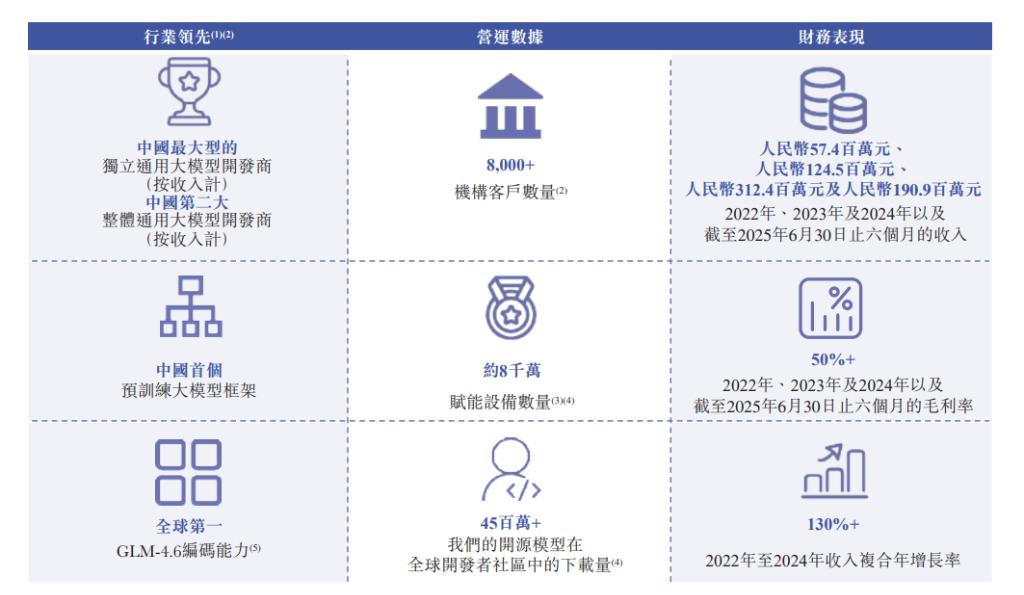
Core Viewpoint - The competition between Zhipu and MiniMax for IPO in Hong Kong reflects a shift in the large model industry from a technical race to a capital test, with both companies aiming to become the first in the market and capitalize on the financial benefits [3][13]. Group 1: Company Performance - Zhipu's revenue is projected to grow from 57.4 million in 2022 to 312.4 million in 2024, representing a compound annual growth rate (CAGR) of 130%, with expectations to double again by 2025 [5]. - The company has a strong backing from prestigious investors, including Hillhouse, Sequoia, Tencent, Alibaba, and Meituan, enhancing its market position [5]. - Zhipu is transitioning from a "heavy asset" model to a "light asset" model, moving towards a Model as a Service (MaaS) approach, which is expected to drive exponential growth [7]. Group 2: Competitive Landscape - MiniMax, another competitor in the same space, is also preparing for its IPO, expected to be listed in January 2026, creating a competitive race for market leadership [9]. - The competition is likened to a "tortoise and hare" scenario, emphasizing the urgency and stakes involved in the IPO process [9]. Group 3: Challenges and Risks - The high cost of computing power is a significant concern, with over 70% of research and development expenses allocated to GPU services, limiting funds for technological upgrades and talent acquisition [11]. - Global supply chain issues for high-end chips and U.S. sanctions pose risks to model iteration and development, impacting the company's operational capabilities [11]. - Despite rapid revenue growth, Zhipu is facing substantial losses, projected at 2.958 billion in 2024 and 2.358 billion in the first half of 2025, with research expenses exceeding eight times the revenue during the same period [11].
全球大模型第一股之争:中国AI,到底该先造底座还是卖爆款?
3 6 Ke· 2025-12-23 10:23
Core Viewpoint - The competition between two Chinese AI unicorns, Zhipu and MiniMax, represents a broader struggle in the AI industry regarding the ultimate value attribution, as they adopt fundamentally different approaches to their business models and market strategies [1][27]. Group 1: Company Strategies - Zhipu aims to establish itself as the "power plant" of the AI era by focusing on foundational infrastructure, developing its own GLM architecture, and providing stable, continuous AI capabilities to enterprises through a model-as-a-service (MaaS) approach [2][12]. - MiniMax, in contrast, adopts a consumer-oriented strategy, prioritizing the rapid development of popular applications to capture market attention and generate revenue quickly, resembling a typical internet company [4][6]. Group 2: Financial Performance - Zhipu's revenue model is primarily B2B and B2G, with projected revenues of 263 million RMB in 2024 and over 718 million RMB in 2025, benefiting from a high customer retention rate of 79% and maintaining a gross margin above 50% [9][12]. - MiniMax's revenue heavily relies on consumer products, with 71.1% of its income coming from applications, but it faces challenges with a low gross margin, which has not exceeded 25% since 2023, and high marketing expenses that are 2.8 times its revenue [15][18]. Group 3: Market Positioning - Zhipu's approach is characterized by high stickiness and sustainability, as its enterprise clients face significant switching costs once integrated into its foundational models, positioning it as a long-term player in the AI infrastructure space [12][21]. - MiniMax's rapid consumer market entry strategy, while effective for quick user acquisition, exposes it to intense competition from larger tech giants, making its long-term viability uncertain [25][26]. Group 4: Industry Implications - The ongoing evolution of the AI industry suggests that foundational technologies will ultimately dictate the success of applications, as seen in historical tech trends where infrastructure providers maintain long-term value [24][27]. - The current landscape indicates a high cost of customer acquisition and operational expenses, with both companies needing to ensure sustainable revenue and profit margins to survive in a competitive market [23][22].
AI大模型独角兽招股书深度拆解:MiniMax to C,智谱 to B
Hua Er Jie Jian Wen· 2025-12-22 03:57
Core Insights - Two Chinese AI unicorns, Zhiyu and MiniMax, submitted their IPO applications to the Hong Kong Stock Exchange within 48 hours, showcasing different commercialization paths in the AI large model sector [1] - The IPO documents reveal distinct business models: MiniMax focuses on consumer-driven applications, while Zhiyu emphasizes enterprise-level services [8][9] Group 1: Business Models - MiniMax's business model is centered around "AI Native Apps," with significant revenue growth projected from $758,000 in 2023 to $21.8 million in 2024, and reaching $38 million in the first nine months of 2025, accounting for 71.1% of total revenue [3][4] - MiniMax's average monthly active users (MAU) are expected to surge from 3.1 million in 2023 to 27.6 million by September 2025, with paid user numbers reaching 1.77 million and average revenue per paid user (ARPPU) increasing from $6 to $15 [4][5] - Zhiyu AI focuses on enterprise services, with local deployment revenue reaching 162 million RMB by June 2025, constituting 84.8% of total revenue [10][11] Group 2: Financial Performance - MiniMax's gross margin improved from -24.7% in 2023 to 12.2% in 2024, and further to 23.3% in the first nine months of 2025, indicating effective cost control and revenue growth [18][27] - Zhiyu AI reported a gross margin of 50%, with local deployment services achieving a high margin of 59.1% in the first half of 2025, although its cloud deployment business faced declining margins [20][25] Group 3: R&D Investments - Both companies are heavily investing in R&D, with Zhiyu AI's R&D expenses reaching 1.595 billion RMB in the first half of 2025, resulting in a staggering R&D expense ratio of 835.4% [25][26] - MiniMax's R&D expense ratio decreased from over 2000% in 2023 to 337.4% in the first nine months of 2025, reflecting improved operational efficiency as revenue grows [27] Group 4: Market Focus - MiniMax is highly globalized, with only 26.9% of its revenue coming from mainland China in 2025, while Zhiyu AI primarily targets the domestic market, focusing on state-owned enterprises and large institutions [30][32] - The shareholder structures of both companies include major tech players, with MiniMax backed by Alibaba and Tencent, while Zhiyu AI has a more diversified investor base including state-owned funds [32][33] Group 5: Future Outlook - Both companies have sufficient cash reserves to continue their technological advancements, with MiniMax holding approximately $1 billion and Zhiyu AI having 2.55 billion RMB in cash equivalents [34] - The IPO submissions signal a shift in the Chinese AI industry from a focus on technology to a more commercialized approach, with both companies vying to become leaders in the large model sector [34]