
期货套期保值

Search documents
亚太科技拟开展不超5000万元铝期货套期保值业务
Xin Lang Cai Jing· 2025-08-25 22:24
Core Viewpoint - Jiangsu Asia-Pacific Light Alloy Technology Co., Ltd. plans to conduct aluminum futures hedging business to mitigate the impact of raw material price fluctuations on its operations, with a maximum margin of RMB 50 million allocated for this purpose [1][2]. Hedging Business Overview - The company specializes in the research, production, and sales of automotive thermal management system components and lightweight system materials, with aluminum ingots as its primary raw material [2]. - The pricing principle for product sales is based on "aluminum ingot price + processing fee," referencing the monthly average high and low prices of A00 aluminum ingots from Shanghai and Yangtze River non-ferrous metal exchanges [2]. - Due to significant price volatility in the aluminum market, the company aims to lock in product sales prices and costs through the use of its own funds for aluminum futures hedging [2]. - The hedging transactions will be limited to aluminum futures contracts traded on domestic and foreign exchanges, with the business period set for one year from the board's approval date [2]. Implementation and Approval Process - The board of directors approved the hedging business on August 16, 2024, with a maximum margin of RMB 50 million [3]. - As of June 30, 2025, the investment amount for the hedging business was zero, and the matter was subsequently approved in the board meeting on August 22, 2025, without needing shareholder approval [3]. Risk Analysis and Control Measures - The company acknowledges risks associated with price fluctuations, funding, internal controls, technology, operations, and customer defaults [4]. - The maximum amount for this business represents approximately 0.62% of total assets and 0.90% of net assets as of June 30, 2025 [4]. - To mitigate risks, the company has implemented measures such as aligning hedging activities with production needs, prohibiting speculative trading, and strictly controlling the scale of funds used [4]. Business Impact and Disclosure - The hedging business will be accounted for according to relevant accounting standards, impacting the balance sheet and income statement [5]. - The business aims to lock in raw material price risks and hedge against price fluctuations [5]. - The company will disclose any significant losses related to the hedging business that exceed 10% of the audited net profit attributable to shareholders from the previous year, with a threshold of RMB 10 million [5].

锦州永杉锂业股份有限公司
Shang Hai Zheng Quan Bao· 2025-08-25 21:14
Core Viewpoint - The company has proposed several amendments to its governance structure and operational strategies, including the cancellation of the supervisory board and adjustments to its futures hedging business to mitigate risks associated with price fluctuations in lithium carbonate and raw materials [7][10][16]. Group 1: Amendments to Governance Structure - The company plans to cancel the supervisory board, transferring its responsibilities to the audit committee of the board of directors, which requires approval from the shareholders' meeting [7][8]. - The company has revised its articles of association to enhance governance and management practices, including the removal of the supervisory board section [10][11]. - The revised articles and management rules will be submitted for approval at the upcoming shareholders' meeting [3][11]. Group 2: Financial Reporting and Shareholder Meeting - The company approved its 2025 semi-annual report and summary during the board meeting, with all directors voting in favor [5][6]. - A second extraordinary shareholders' meeting is scheduled for September 10, 2025, to discuss the proposed governance changes and other matters [19][41]. Group 3: Futures Hedging Business Adjustments - The company intends to increase the margin for its futures hedging business to enhance its risk management capabilities, with a total margin not exceeding RMB 200 million and a maximum contract value of RMB 1 billion on any trading day [16][31]. - The adjustments aim to stabilize the company's operations against price volatility in lithium carbonate and its raw materials [31][32]. - The proposed changes to the futures hedging strategy will also be presented at the shareholders' meeting for approval [34][39].

永杉锂业: 永杉锂业第五届董事会第三十六次会议决议公告
Zheng Quan Zhi Xing· 2025-08-25 16:42
第五届董事会第三十六次会议决议公告 本公司董事会及全体董事保证本公告内容不存在任何虚假记载、 误导性陈述 或者重大遗漏,并对其内容的真实性、准确性和完整性承担个别及连带责任。 锦州永杉锂业股份有限公司(以下简称"公司")第五届董事会第三十六次 会议于 2025 年 8 月 25 日在公司会议室以现场表决结合通讯表决方式召开。本次 董事会会议通知已于 2025 年 8 月 20 日分别以专人送达、电子邮件或传真等方式 发出,会议应出席董事 7 人,实际出席 7 人,会议由董事长杨希龙先生主持。会 议召集及召开程序符合《中华人民共和国公司法》 (以下简称" 证 券 代 码:603399 证 券简 称:永杉锂业 公告 编 号: 2025-048 锦州永杉锂业股份有限公司 《公司法》")《中 华人民共和国证券法》(以下简称"《证券法》")等法律法规和《锦州永杉锂业 股份有限公司章程》的有关规定。会议审议并通过了以下决议: 一、审议通过《关于 2025 年半年度报告及半年报摘要的议案》 根据《公司法》《证券法》等法律法规及《公司章程》的规定,结合公司实 际经营状况,公司编制了《2025 年半年度报告》及《2025 年半 ...
永杉锂业: 永杉锂业第五届监事会第三十一次会议决议公告
Zheng Quan Zhi Xing· 2025-08-25 16:42
Group 1 - The company held the 31st meeting of the 5th Supervisory Board on August 25, 2025, with all three participating supervisors voting in favor of the agenda items [1][2] - The company approved the 2025 semi-annual report and its summary, with all three supervisors voting in favor [1][2] - The company proposed to abolish the Supervisory Board, transferring its responsibilities to the Audit Committee of the Board of Directors, pending approval from the shareholders' meeting [1][2] Group 2 - The company plans to increase the margin for futures hedging business to mitigate risks from price fluctuations of lithium carbonate and raw materials, with a total margin not exceeding RMB 200 million [2] - The maximum contract value held on any trading day will not exceed RMB 1 billion, and this amount can be rolled over within the effective period [2] - The proposed adjustments to the futures hedging business also require approval from the shareholders' meeting [2]
凯伦股份: 董事会决议公告
Zheng Quan Zhi Xing· 2025-08-25 16:19
Group 1 - The board of directors of Jiangsu Kairun Building Materials Co., Ltd. held its 19th meeting on August 25, 2025, with all 6 attending members, confirming compliance with relevant laws and regulations [1] - The board approved the 2025 semi-annual report and its summary, affirming the report's authenticity and completeness [2] - The board also approved a special report on the management and use of raised funds, confirming compliance with regulations and no harm to shareholder interests [2] Group 2 - The board approved the provision for asset impairment, aligning with accounting standards and reflecting the company's financial status as of June 30, 2025 [3] - A proposal for conducting futures hedging for raw materials was approved, with a maximum margin of RMB 10 million for a 12-month period [3] - The board agreed to nominate Chen Xianfeng as a non-independent director, pending approval at the shareholders' meeting [4] Group 3 - The board approved the appointment of Chen Jie as the vice general manager and board secretary, effective until the end of the current board's term [5] - A proposal to use up to RMB 80 million of idle funds for cash management in low-risk financial products was approved, with a 12-month usage period [5] - The board approved a guarantee for the operating needs of its subsidiaries, ensuring compliance with regulations and manageable risk [6] Group 4 - The board approved amendments to the company's articles of association to enhance governance and compliance with updated regulations [6] - The board approved the establishment, revision, and abolition of certain governance systems [7] - A proposal to hold the second extraordinary general meeting of shareholders in 2025 on September 11 was approved [8]
锡业股份: 2025年半年度报告
Zheng Quan Zhi Xing· 2025-08-24 21:08
Core Viewpoint - The company reported a significant increase in revenue and net profit for the first half of 2025, reflecting strong operational performance and market conditions in the non-ferrous metals industry [3][13]. Financial Performance - The company's operating revenue for the first half of 2025 was approximately 21.09 billion yuan, representing a 12.35% increase compared to the same period last year [3][13]. - The net profit attributable to shareholders was approximately 1.06 billion yuan, an increase of 32.76% year-on-year [3][13]. - The basic earnings per share rose to 0.626 yuan, up 30.25% from the previous year [3][13]. - The total assets at the end of June 2025 were approximately 36.86 billion yuan, a 0.59% increase from the end of the previous year [3][13]. Industry Overview - The company operates in the non-ferrous metals industry, specifically focusing on tin, zinc, copper, and indium mining, smelting, and processing [3][7]. - The non-ferrous metals industry in China is currently experiencing a phase of structural adjustment and innovation, with a focus on high-end development and green manufacturing [3][7]. - The overall industrial added value of the non-ferrous metals industry in China increased by 7.6% year-on-year in the first half of 2025, outperforming the average growth rate of the industrial sector [3][7]. Market Dynamics - Tin prices showed fluctuations in the first half of 2025, with an average price of 265,517 yuan per ton, up 5.70% year-on-year [3][7]. - The global supply of tin was unstable, influenced by geopolitical factors and changes in trade policies, affecting demand in various sectors such as consumer electronics and home appliances [4][6]. - The company holds a dominant position in the tin market, with a domestic market share of 47.98% and a global market share of 25.03% for 2024 [7][18]. Strategic Initiatives - The company is focused on enhancing its supply chain management and optimizing raw material procurement strategies to ensure stable production [12][13]. - Continuous investment in technology and innovation is a priority, with efforts to improve production efficiency and reduce costs [12][16]. - The company aims to strengthen its position as a leading supplier of tin and indium products globally, leveraging its comprehensive industry chain and resource advantages [16][20].

每周股票复盘:石大胜华(603026)召开股东大会及完成向特定对象发行股票
Sou Hu Cai Jing· 2025-08-24 00:14
Core Viewpoint - The company, Shida Shenghua (603026), is actively engaging in capital raising and risk management strategies, including a recent stock issuance and plans for futures hedging to mitigate raw material price volatility [1][2][3]. Group 1: Stock Performance and Market Position - As of August 22, 2025, Shida Shenghua's stock closed at 37.49 CNY, reflecting a 0.29% increase from the previous week [1]. - The company's total market capitalization is 8.724 billion CNY, ranking 53rd in the battery sector and 2119th among all A-shares [1]. Group 2: Upcoming Shareholder Meeting - The company will hold its third extraordinary general meeting on August 29, 2025, to discuss a proposal for futures hedging business [1][4]. - The meeting will be chaired by Chairman Guo Tianming and will utilize both on-site and online voting methods [1]. Group 3: Stock Issuance Details - Shida Shenghua is issuing 30,021,014 A-shares at a price of 33.31 CNY per share, raising approximately 999.999 million CNY in total [2]. - The net proceeds from the issuance are expected to be around 982.170 million CNY, aimed at business expansion and improving profitability [2]. Group 4: Shareholder Equity Changes - The issuance has led to a dilution of shareholding for major shareholders, with the controlling shareholder's stake decreasing from 24.70% to 21.51% [3]. - The total share capital of the company will increase from 202,680,000 shares to 232,701,014 shares following the issuance [3].

每周股票复盘:绿田机械(605259)股东户数减少,业绩大幅增长
Sou Hu Cai Jing· 2025-08-23 22:40
Core Viewpoint - Greenfield Machinery (605259) has shown significant growth in revenue and net profit in its 2025 mid-year report, indicating strong operational performance and financial health [2][3]. Group 1: Stock Performance - As of August 22, 2025, Greenfield Machinery's stock closed at 28.24 yuan, up 2.99% from the previous week [1]. - The stock reached a nearly one-year high of 30.24 yuan on August 21, 2025, with a weekly low of 27.24 yuan [1]. - The company's current market capitalization is 4.871 billion yuan, ranking 84th in the specialized equipment sector and 3431st among all A-shares [1]. Group 2: Shareholder Changes - As of June 30, 2025, the number of shareholders decreased by 85 to 6865, a reduction of 1.22% [1][5]. - The average number of shares held per shareholder increased from 24,800 to 25,100, with an average holding value of 492,700 yuan [1]. Group 3: Financial Performance - For the first half of 2025, the company reported a main revenue of 1.307 billion yuan, a year-on-year increase of 29.97% [2][3]. - The net profit attributable to shareholders was 140 million yuan, up 64.36% year-on-year, with a net profit margin of 10.7% [2][3]. - The second quarter alone saw a revenue of 669 million yuan, a 15.19% increase year-on-year, and a net profit of approximately 83 million yuan, reflecting a 70.41% increase [2]. Group 4: Corporate Announcements - The sixth board of directors approved the mid-year report and a proposal to engage in futures hedging activities, with a maximum margin of 10 million yuan allocated for trading related to raw materials such as copper, aluminum, and polypropylene [4][5]. - The company has established a management system for futures hedging to mitigate risks associated with raw material price fluctuations [4].

赣锋锂业上半年营收同比下降12.65%,净利润亏损收窄,锂电池营收增9.89% | 财报见闻
Hua Er Jie Jian Wen· 2025-08-22 13:48
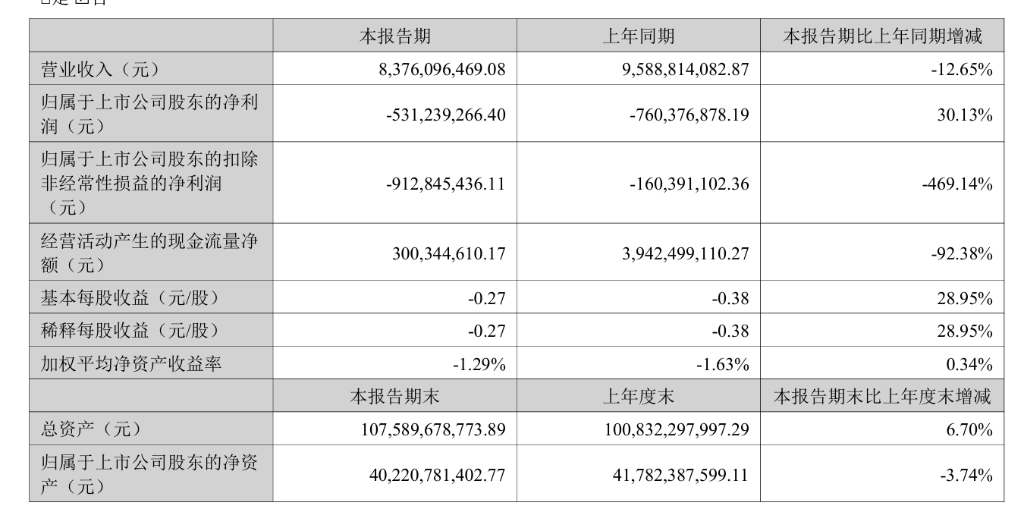
Core Insights - Ganfeng Lithium's revenue for the first half of 2025 decreased by 12.65% year-on-year, with a net profit of -531 million yuan, showing a 30.13% improvement compared to the previous year [1][4] - The lithium compound business accounted for 56.78% of total revenue, down 27.16% year-on-year, primarily due to falling lithium prices [2][4] - The lithium battery business saw a revenue increase of 9.89% year-on-year, contributing to 35.52% of total revenue [2][4] Financial Performance - Total revenue for the reporting period was 8.38 billion yuan, compared to 9.59 billion yuan in the same period last year [1][4] - The net profit attributable to shareholders was -531 million yuan, an improvement from -760 million yuan year-on-year [1][4] - The net cash flow from operating activities decreased by 92.38% to 300 million yuan [1][4] Market Conditions - The global lithium salt industry faced significant adjustments, with lithium compound prices dropping from 850-900 USD/ton at the beginning of the year to 620-640 USD/ton by June, a decline of 25%-31% [2] - Despite these challenges, the company maintained a gross margin of 8.36% through technological upgrades and process optimization [2] Resource and Technology Developments - The company has over 60 million tons of lithium resources, with projects in Mali and Argentina ramping up production [3][5] - The solid-state battery technology has made significant advancements, with high energy density batteries ranging from 320-550 Wh/kg [6] - The company expects a resource self-sufficiency rate of over 50% by 2025, which is significantly higher than the industry average [3][5]


赞宇科技(002637) - 2025年8月21日投资者关系活动记录表
2025-08-22 07:32
Financial Performance - In the first half of 2025, the company achieved operating revenue of 6.553 billion CNY, a 41.71% increase compared to the same period last year [2] - The net profit attributable to shareholders was 0.97 billion CNY, reflecting a growth of 6.35% year-on-year [2] - Total assets reached 8.586 billion CNY, up 8.29% from the beginning of the year, while total liabilities increased by 15.55% to 4.762 billion CNY [2] - The equity attributable to shareholders rose by 0.99% to 3.824 billion CNY, with a debt-to-asset ratio of 55.47%, an increase of 3.48 percentage points from the start of the year [2] Business Segments - The daily chemical business generated revenue of 2.987 billion CNY, a 56.14% increase year-on-year, with a sales gross margin of 5.31% [3] - The oil chemical business reported revenue of 1.34 billion CNY, up 30.36% from the previous year, with a sales gross margin of 34.21% [3] - The company has an annual production capacity of 1.1 million tons for OEM/ODM processing in personal care products [3] Risk Management - The company engages in futures hedging to mitigate risks associated with raw material price fluctuations, thereby controlling production costs [4] Strategic Development - The company aims to enhance its market share and competitiveness by focusing on the entire supply chain of surfactants, oil chemicals, and personal care products, while emphasizing customer-centric OEM/ODM services [5] - The company is committed to continuous technological innovation and process improvement, maintaining a leading position in product innovation and efficiency within the industry [5]
