
软件定义汽车

Search documents
当智能豪华重塑标准,中国研发成了奔驰的核心变量
Tai Mei Ti A P P· 2025-09-10 06:51
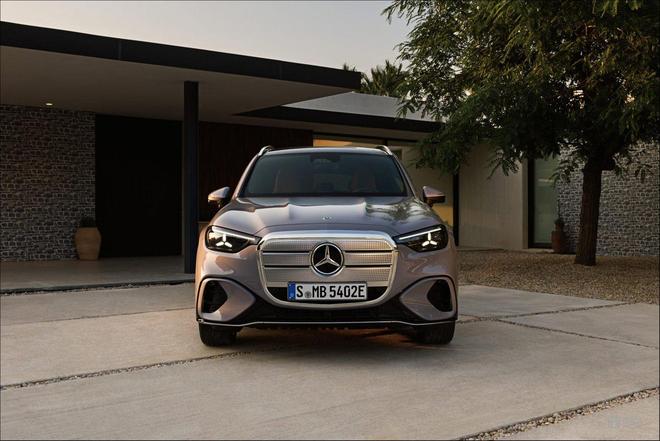
Core Insights - Mercedes-Benz is launching the new all-electric GLC SUV, aiming to address how traditional luxury brands can maintain their value in the era of smart electrification [2] - The global automotive landscape has shifted significantly, with China leading in electric vehicle ownership, prompting global automakers to accelerate structural transformations [2][3] - The new GLC represents a recalibration of Mercedes-Benz's strategy, focusing on both traditional brand values and the demands of Chinese consumers [2][5] Group 1: Product and Technology - The GLC SUV features the MB.OS architecture, developed through a collaboration between Chinese and German teams, aiming to redefine the luxury electric vehicle experience [3][5] - The vehicle will include advanced driving assistance systems tailored for Chinese urban environments, utilizing 10 high-resolution cameras and Orin X chips for enhanced functionality [3][4] - Mercedes-Benz's self-developed MB.OS system aims to integrate smart cockpit, autonomous driving, and vehicle comfort features, but faces challenges in keeping pace with the rapid innovation in the Chinese market [3][4] Group 2: Market Position and Strategy - In China, the installation rate of Level 2 and above driving assistance systems has reached 82.6%, with new entrants outperforming traditional brands in urban scenarios [4] - Mercedes-Benz is transitioning its Chinese R&D center from local adaptation to a global innovation engine, reflecting a deeper integration of Chinese engineering capabilities into its core values [5][8] - The new GLC will offer features such as a six-seat layout and increased OTA update frequency to cater to the preferences of Chinese consumers [5][8] Group 3: Competitive Landscape - The luxury automotive market is evolving, with competitors like Audi and BMW rapidly introducing new electric models, putting pressure on Mercedes-Benz to accelerate its product development cycle [6][8] - The definition of luxury is shifting from traditional metrics to user experience, including AI interaction and OTA responsiveness, challenging Mercedes-Benz to adapt its offerings [6][9] - The company is attempting to reclaim the definition of luxury through the GLC's launch, positioning itself as a proactive player in the electric vehicle market [8][9] Group 4: Future Outlook - Mercedes-Benz is committed to maintaining its core values of safety and reliability while embracing digital innovation, with plans to enhance local R&D capabilities in China [11][12] - The company is exploring solid-state battery technology and aims to convert innovations into market-ready products, emphasizing the importance of cost-effectiveness and production capacity [7][10] - The competitive landscape is intensifying, with Mercedes-Benz needing to balance its traditional strengths with the demands of a rapidly changing market [9][10]

全新问界M7爆单,余承东紧急“辟谣”
第一财经· 2025-09-07 04:08
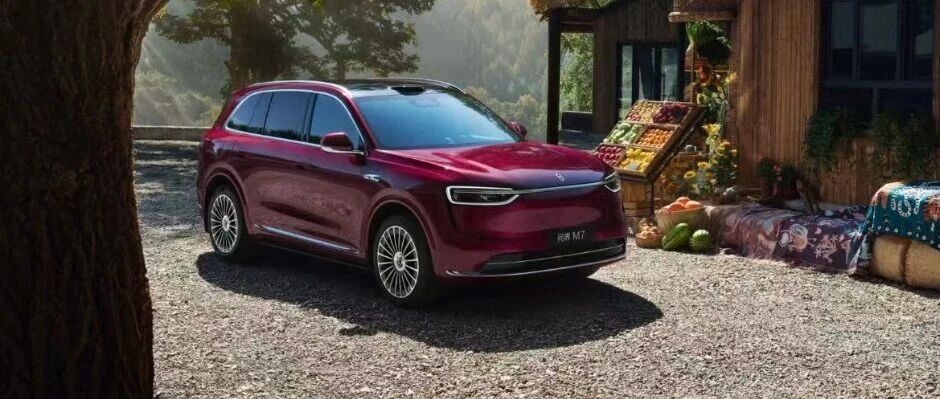
Core Viewpoint - The launch of the new AITO M7 has exceeded expectations, achieving significant pre-order numbers and showcasing a shift in the automotive industry towards high-value and high-experience products rather than low-cost competition [2][4][8]. Group 1: Product Launch and Market Impact - The AITO M7's pre-sale price is set at 288,000 yuan, with over 100,000 units pre-ordered within 43 minutes, indicating strong market demand [2][8]. - The M7 represents a complete overhaul of the previous model, moving away from minor updates to a comprehensive redesign that emphasizes technological innovation and user experience [4][14]. - The vehicle's launch is seen as a correction to the industry's trend of price-cutting strategies, encouraging competitors to focus on technology and user experience instead [8][18]. Group 2: Competitive Landscape - Traditional luxury car brands are facing declining sales and profits, leading to increased promotional efforts, with discounts reaching 27.2% in July [10]. - The market share of domestic brands has risen to 64.2%, reflecting a shift in consumer preferences away from traditional luxury vehicles [10]. - The AITO M7's high value proposition, including a 71.5% resale value, challenges the previously held belief that foreign luxury brands maintain superior resale values [12][18]. Group 3: Technological Innovations - The M7 features an industry-first cabin laser vision system, enhancing safety and driving experience by integrating laser radar with visual cameras [16]. - The vehicle is built on the iDVP electronic architecture, allowing for over-the-air updates and establishing it as a "software-defined car" [17]. - The introduction of advanced features such as the HUAWEI XMOTION system significantly improves driving safety and comfort, setting a new standard in the luxury vehicle segment [17]. Group 4: Industry Implications - The success of the AITO M7 is expected to stimulate technological investments across the industry, moving away from low-quality competition towards high-value innovation [18]. - The vehicle's performance is seen as a potential turning point for domestic brands, showcasing the possibility of technological breakthroughs in the automotive sector [18][19].
华为,最新签署
Mei Ri Jing Ji Xin Wen· 2025-09-07 01:31
Group 1 - SAIC-GM-Wuling and Huawei have upgraded their strategic partnership to deepen cooperation in areas of assisted driving, intelligent cockpit, and smart manufacturing [1] - The collaboration aims to jointly develop new models equipped with Huawei's advanced intelligent technologies, promoting high-quality development in the automotive industry's intelligence and connectivity [1] Group 2 - FAW Hongqi has officially partnered with Huawei, planning to launch models utilizing Huawei's full-stack solutions by 2026, starting with the Hongqi 9 series [3] - This partnership indicates that major state-owned automotive groups in China are joining Huawei's ecosystem, enhancing their competitive edge in the market [3] Group 3 - Traditional automakers possess mature supply chain systems and extensive vehicle development experience, but struggle to adapt to the fast-evolving demands of software-defined vehicles [4] - Huawei's strengths lie in its robust ICT technology foundation, including chips, computing power, operating systems, communication, and AI algorithms, enabling rapid software ecosystem development and iteration [5] Group 4 - The collaboration with Huawei is seen as a pragmatic choice for automakers in the current competitive environment, as failing to partner with a strong technology provider could lead to losing market share [5] - The long-term strategy regarding self-developed intelligent driving and cockpit technologies will depend on each automaker's strategic positioning and technological commitment [5]
长安启源A06全球首秀 金钟罩电池“四横三纵全面护航家庭安全出行
Zheng Quan Ri Bao Wang· 2025-09-06 04:44
Core Viewpoint - The fifth Chang'an Automobile Technology Ecological Conference showcased the company's technological innovations in the context of the smart automotive era, highlighting the launch of the intelligent brand "Tianshu Intelligent" and the global debut of the Chang'an Qiyuan A06 model, which aims to enhance user experience in smart mobility [1] Group 1: Product Features - The Chang'an Qiyuan A06 is designed to meet the diverse needs of mainstream family users by offering enhanced space, comfort, intelligence, and safety [1] - The vehicle achieves a space utilization improvement of over 10% through innovative material and structural integration [4] - The charging time is reduced by 65% compared to 1.6C and by 40% compared to 3C, with energy consumption lowered by 15.7% [4] - The vehicle features a pure software-defined architecture, with a 140% increase in computing power for the vehicle control chip, enabling millisecond-level safety responses [4][5] Group 2: Technological Innovations - The Qiyuan A06 is the first pure electric sedan on the SDA (Software-Driven Architecture) platform, equipped with advanced features such as a laser radar typically found in vehicles priced at 200,000 yuan [5] - The vehicle offers a charging experience of "1 second for 1 kilometer" with an 800V silicon carbide high-voltage platform and 6C fast charging capabilities [5] - The vehicle has a pure electric range of 630 km and an energy consumption of only 11.3 kWh per 100 km, allowing for a weekly charging frequency of once for daily commuting [5] Group 3: Safety Features - The Qiyuan A06 employs a "ten horizontal and nine vertical" Ark cage structure with a high-strength steel and aluminum alloy ratio of 82.9%, enhancing collision energy absorption efficiency by 70% [5] - The battery pack features a robust aluminum alloy structure with multiple layers of protection and 24-hour monitoring for safety risk alerts within 30 seconds [6]

开源拓界 众行致远 | 构建汽车软硬协同新生态!第四届中国汽车芯片大会在渝召开
Jing Ji Guan Cha Bao· 2025-09-05 07:39
(原标题:开源拓界 众行致远 | 构建汽车软硬协同新生态!第四届中国汽车芯片大会在渝召开) 8月28日—29日,2025智能汽车基础软件生态大会暨第四届中国汽车芯片大会在重庆渝州宾馆圆满举办。29日下午,以"构建汽车软硬协同新生 态"为主题的第四届中国汽车芯片大会顺利召开。来自产业链上下游的200余名代表,聚焦操作系统层如何高效对接芯片算力与应用需求、突破开 发效率瓶颈等问题,共同探讨如何实现"芯片-系统-应用"的纵向贯通与跨企业横向协同。 大会由中国汽车工业协会副秘书长李邵华主持,重庆市经济和信息化委员会二级巡视员张玻、中国电科集团产业部主任刘淮松等领导参会并致 辞。 张玻介绍,作为中国重要的汽车生产基地,重庆正全力推进汽车产业高质量发展。近年来,重庆车规级芯片产业生态持续优化,已初步构建起覆 盖材料研发、芯片设计、晶圆制造、封装测试至系统总成的全链条体系。面向未来,重庆将主动把握"软件定义汽车"的发展趋势,加速打造世界 级智能网联新能源汽车产业集群,为中国汽车产业从"汽车大国"向"汽车强国"跨越注入强劲"重庆力量"。 重庆市经济和信息化委员会二级巡视员张玻 刘淮松表示,中国电科将主动抢抓智能网联产业的战略 ...
赛力斯(601127):2025年半年报业绩点评报告:2Q25业绩环比修复,多维布局构筑长期竞争力
EBSCN· 2025-09-04 05:43
Investment Rating - The report maintains a "Buy" rating for the company, highlighting confidence in its luxury car brand positioning and Huawei's support [3][6]. Core Insights - The company's 2Q25 performance shows a significant recovery, with a 12.4% year-on-year increase in revenue and a 56.1% increase in net profit, primarily driven by the sales ramp-up of the Wanjie M8 model [1][2]. - The company is focusing on high-end models, with the Wanjie M8 and M9 becoming the main sales drivers, capturing significant market shares in their respective price segments [2][3]. - The company is pursuing a multi-dimensional strategy that includes deepening technological capabilities, global expansion, and advancements in robotics, which are expected to enhance long-term competitiveness [3]. Summary by Sections Financial Performance - In 1H25, the company's revenue decreased by 4.1% year-on-year to 624.0 billion CNY, while net profit increased by 81.0% to 29.4 billion CNY. In 2Q25, revenue rose by 12.4% year-on-year and 125.9% quarter-on-quarter to 432.5 billion CNY, with net profit increasing by 56.1% year-on-year and 193.3% quarter-on-quarter to 21.9 billion CNY [1]. - The company's vehicle sales in 1H25 fell by 15.8% to 199,000 units, with Wanjie sales down by 18.2% to 148,000 units. However, 2Q25 saw a 7.0% year-on-year and 90.5% quarter-on-quarter increase in vehicle sales to 130,000 units, with Wanjie sales up by 3.8% year-on-year and 122.3% quarter-on-quarter to 102,000 units [2]. Profitability and Growth - The company's gross margin improved by 3.9 percentage points year-on-year to 28.9% in 1H25, with a gross margin of 29.5% in 2Q25, reflecting a 2.0 percentage point year-on-year and 1.9 percentage point quarter-on-quarter increase [2]. - The report forecasts net profits of 92.5 billion CNY, 118.4 billion CNY, and 146.0 billion CNY for 2025E, 2026E, and 2027E respectively, indicating strong growth potential [3]. Strategic Initiatives - The company is enhancing its technological capabilities through a "software-defined vehicle" approach and has established a new paradigm for high-quality delivery with its "industrial brain + future factory" model [3]. - The company is actively pursuing global expansion, having established subsidiaries in Kazakhstan, Uzbekistan, and Mexico, and plans to issue H shares to support this strategy [3]. - A partnership with Beihang University to establish a robotics company is expected to leverage automotive manufacturing capabilities into the robotics sector [3].

押注"超级大脑",BMW豪掷百亿欧元开发Neue Klasse平台,挑战中国电车对手
Hua Er Jie Jian Wen· 2025-09-03 13:03
BMW的iX3将成为在慕尼黑展出的一系列"软件定义车辆"之一,中央计算机系统将取代硬件成为最重要 的特征,传统的欧洲、美国和日本汽车集团在软件开发方面长期落后于马斯克的特斯拉和新一代中国制 造商。 BMW于2021年公布了Neue Klasse平台的概念,并已投入超过100亿欧元开发相关技术。首席执行官 Oliver Zipse今年7月向投资者表示: 凭借Neue Klasse,我们在所有相关技术领域都取得了巨大进步。新BMW iX3将成为我们行 业的标杆。 向软件驱动车辆的转变将使汽车制造商能够在车辆售出后继续改善性能,并提供他们希望能创造新收入 来源的服务。 技术突破或带来性能飞跃 BMW正押注软件驱动的电动汽车技术,以"超级大脑"系统挑战中国竞争对手和特斯拉地位。 据媒体周三报道,这家德国汽车制造商已投入超过100亿欧元开发其雄心勃勃的Neue Klasse平台,试图 在传统车企面临激烈竞争的背景下实现技术突破。 新平台将提供超过当前车辆20倍的计算能力,并配备四个"超级大脑"系统,大幅提升车内通信、信息 娱乐显示、自动驾驶和其他车辆功能。分析师认为,BMW此举相当于"押注整个公司"在Neue Klas ...
从软件定义到AI定义,Arm如何加速汽车芯片商用?
2 1 Shi Ji Jing Ji Bao Dao· 2025-09-03 04:19
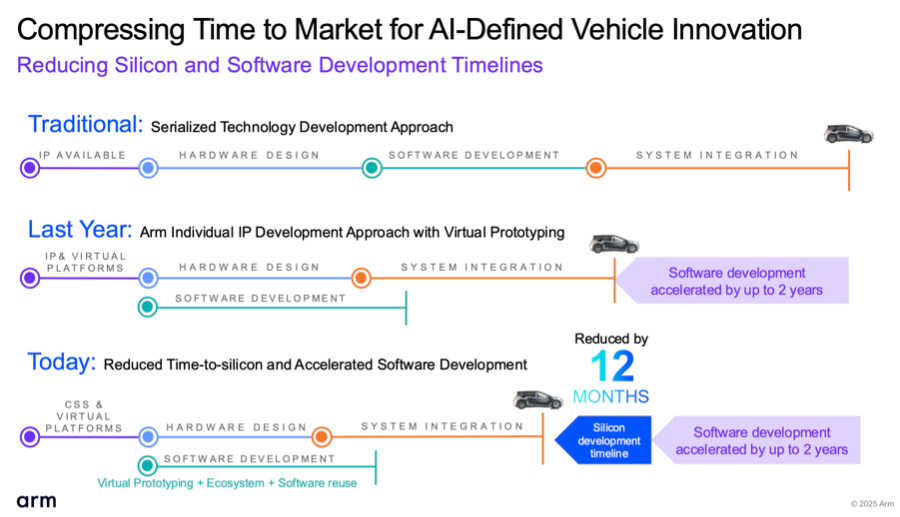
Core Insights - The automotive industry is entering the "AI-defined car" era, which significantly increases the demand for computing power in vehicles [1][2] - Arm has launched the Arm Zena Compute Subsystem (CSS), a standardized and pre-integrated computing platform that can help automakers shorten development cycles by up to 12 months [1][8] - Over 10 global partners, including automakers and chip designers, are collaborating with Arm, with some having obtained technical authorization for Zena CSS [1][2] AI-Defined Cars - The current phase of AI model development is early, leading to a gradual accumulation of functionalities in automotive applications [2] - Features previously exclusive to high-end models, such as real-time driver monitoring and adaptive in-vehicle infotainment systems, are becoming standard in new models [2] - The complexity of automotive development is increasing, necessitating a modular, secure, and high-performance computing platform to meet evolving safety standards and reduce integration risks [2][4] Zena CSS Features - Zena CSS is built on the Armv9 architecture and includes 16 Cortex-A720AE cores, with scalability options allowing for configurations up to 32 cores [3][9] - Arm emphasizes the importance of software capabilities, ensuring that AI tools, workflows, and software libraries are in place to support the latest AI applications [3][4] - The Arm KleidiAI software library has been expanded to optimize the performance of large language models on Arm CPUs [3] Accelerating Time to Market - The speed of vehicle updates has increased compared to traditional fuel vehicles, making it crucial to accelerate the commercialization of new models [5][8] - Arm has introduced virtual prototyping technology to allow software developers to begin work on platforms as soon as Arm IP is released, effectively reducing development delays by two years [5][8] - Zena CSS integrates hardware and firmware components, which can reduce chip development cycles by up to 12 months and lower overall development costs by decreasing the number of engineering resources required by approximately 20% [8][9] Chiplet Architecture - The chiplet architecture is seen as a key direction for reducing costs and accelerating the update and launch of automotive chips [8][9] - Zena CSS supports chiplet architecture and provides necessary standard interfaces for customers and partners to design based on this architecture [9][12]
环球时报:中国汽车的第二个“弯道”
Bei Jing Ri Bao Ke Hu Duan· 2025-09-02 03:53
Core Insights - The article emphasizes that the competition in the automotive industry has shifted from merely market presence to a technological leadership battle, particularly in the realm of intelligent assisted driving [2][4][10]. Group 1: Historical Context and Market Dynamics - In the 1990s, joint ventures in China's automotive industry, such as the introduction of the Santana, were seen as a way to exchange market access for technology, but this did not yield the expected technological advancements [1]. - By 1990, the localization rate of major joint venture brands in China was only between 13% and 60%, indicating a failure to achieve significant technological transfer [1]. - The emergence of electric vehicles (EVs) allowed Chinese manufacturers to bypass traditional barriers, focusing on electrification and intelligence, leading to a rapid market capture [1]. Group 2: Transition to Intelligent Driving - The automotive industry is currently undergoing a critical transition from electrification to intelligence, with expectations that by mid-2025, the penetration rate of L2 and above intelligent driving systems in China will reach 67.8% [4]. - The competition for intelligent driving is characterized by significant challenges, including the need for vast data collection, high computational power, and the ability to simulate extensive testing scenarios [4][8]. Group 3: Global Competitive Landscape - Global automotive players, including traditional manufacturers and tech giants, are heavily investing in intelligent driving technologies, with the U.S. and EU implementing supportive regulations and funding for advancements in this area [5][6]. - Traditional automakers are investing billions annually in R&D to build technological barriers, while tech companies like Google and Apple are entering the automotive space, increasing competitive pressure [5][6]. Group 4: Cloud Computing and Data Utilization - The demand for cloud computing resources is surging as automotive companies seek to enhance their AI capabilities for intelligent driving, with significant growth in the cloud computing market driven by this need [7][10]. - The shift towards cloud-based solutions allows for continuous updates and improvements in intelligent driving systems, enabling vehicles to benefit from the latest advancements without hardware changes [8][10]. Group 5: Huawei's Role in the Market - Huawei has positioned itself as a leading provider of cloud services for the automotive industry, with over 1 million vehicles utilizing its cloud solutions for intelligent driving [11]. - The company's CloudMatrix384 platform offers superior performance compared to competitors, addressing the growing computational needs of intelligent driving models [11][12]. - Collaborations with automakers like Changan demonstrate the practical application of Huawei's cloud services in enhancing intelligent driving capabilities [14].

赛力斯上半年净利润同比增长81.03%
Zheng Quan Ri Bao Wang· 2025-08-30 03:42
Core Viewpoint - Silyus Group Co., Ltd. reported significant growth in revenue and net profit for the first half of 2025, driven by a strong focus on software-defined vehicles and user-oriented market strategies [1] Financial Performance - The company achieved an operating revenue of 62.402 billion yuan in the first half of 2025 [1] - The net profit attributable to shareholders reached 2.941 billion yuan, marking an increase of 81.03% year-on-year [1] - Research and development investment grew by 154.9% compared to the previous year [1] Product and Market Strategy - The company adheres to a technology route focused on software-defined vehicles, enhancing its product offerings [1] - There was a significant increase in sales volume in the second quarter of 2025 compared to the first quarter, indicating strong market demand [1] - The gross profit margin improved in the first half of 2025 compared to the same period last year, reflecting enhanced profitability and operational quality [1]