AI革命

Search documents
做多黄金成“最拥挤交易”,你要上车吗
2 1 Shi Ji Jing Ji Bao Dao· 2025-10-16 14:45
Core Viewpoint - The international spot gold price reached a historic high of $4,220 on October 16, with a weekly increase of $200, raising questions about whether this is the peak [1] Group 1: Market Sentiment - A recent Bank of America survey revealed that 43% of investors consider "going long on gold" to be the most crowded trade, surpassing the 39% for "long on the seven major U.S. stocks" [1] - Despite the crowded trade sentiment, 39% of fund managers reported near-zero gold positions, with an average allocation of only 2.4%, indicating a potential for further investment in gold [1] Group 2: Driving Factors - The dovish stance of the Federal Reserve is a key driver for the influx of capital into gold, with indications that monetary tightening may soon end, leading to increased liquidity in the financial system [2] - Heightened geopolitical risks and uncertainties in trade, including the U.S. government's announcement of increased tariffs, have prompted investors to seek gold as a safe haven [2] Group 3: Market Dynamics - The phenomenon of "crowded trades" can create a self-reinforcing cycle, where rising prices lead to increased buying, further driving up prices [2] - Goldman Sachs has significantly raised its gold price target for the end of 2026 by $600 to $4,900 per ounce, reflecting renewed confidence in gold's resilience [2] Group 4: Dual Market Peaks - The simultaneous historical highs in both gold and U.S. stocks represent a complex market scenario, characterized by extreme optimism in tech growth and deep concerns over macroeconomic risks [3] - This "dual peak" situation may persist, but investors should remain vigilant regarding key indicators such as U.S. inflation, employment, and economic growth data, which could influence future market directions [3]
AI革命下的社会政策重构:基于阿吉翁与厉以宁理论的分配制度创新
Xin Lang Zheng Quan· 2025-10-16 12:09
Group 1: Core Insights - The article emphasizes the need for a human-centered and forward-looking social policy framework in response to the economic and social changes brought about by the AI technology revolution [1] - It highlights that technological revolutions do not necessarily lead to mass unemployment, as historical changes often result in more job opportunities after a brief adjustment period [2][4] Group 2: Automation and Employment - A 1% increase in automation in a factory can lead to a 0.25% increase in employment two years later and a 0.4% increase ten years later, indicating a positive correlation between automation and job creation [2] - Industries with the highest levels of automation tend to experience the most significant employment growth, suggesting that more automation is associated with more jobs [2] Group 3: Creative Destruction and Institutional Response - The transition from old to new general technologies can intensify the process of creative destruction, where new firms can enter the market without the burden of transitioning costs [4] - The article stresses that appropriate institutional frameworks are crucial for ensuring that technological revolutions lead to widespread prosperity [4] Group 4: Redefining Labor and Population Dividend - The traditional concept of "demographic dividend" needs redefinition in the AI era, as robots will replace some human labor while enhancing human roles in emotional and creative tasks [5][6] - The potential for a reduction in weekly working hours to 35 or fewer is discussed, allowing more time for family and emotional engagement [6] Group 5: Human-Machine Collaboration - It is essential to delineate areas where AI and robots should be encouraged or restricted, particularly in emotionally intensive fields like elder care and creative arts [7] - Legal measures should be implemented to limit AI's role in sensitive areas while promoting its use in sectors where it excels, such as data analysis and precision manufacturing [7] Group 6: Employment Structure and Training Systems - The article notes that technological revolutions will alter employment structures rather than reduce overall employment, necessitating enhanced training for workers to adapt to AI collaboration [8] - New job types will emerge from the AI revolution, similar to past technological advancements, requiring a focus on developing irreplaceable human skills [8] Group 7: Income Distribution and the Three Distributions Theory - The "Three Distributions" theory proposed by Professor Li Yining provides a framework for income distribution in the AI era, emphasizing the need for innovation in secondary distribution mechanisms [9] - The article suggests lowering taxes on human labor while adjusting corporate taxes to account for profits generated by robots, thereby improving the secondary distribution system [9] Group 8: Policy Design for Robot Taxation - Special tax policies for robots should differentiate between their usage stages, encouraging AI adoption during initial phases while ensuring normal tax contributions during regular operations [11] - The article references international experiences indicating that taxing robots directly may hinder innovation, advocating for existing tax structures to capture productivity gains from AI [11] Group 9: Human-Centric AI Governance - A new social security system is needed to adapt to the challenges posed by AI, as traditional employment and pension systems may not be suitable for an intelligent society [12] - The establishment of an AI benefit-sharing fund is proposed to support affected workers in transitioning to new roles, ensuring that productivity gains from AI benefit all members of society [12]
AI浪潮下,中企闯中东
Tai Mei Ti A P P· 2025-10-15 15:26
Core Insights - The Middle East is embracing advanced technologies, particularly in the field of AI and flying cars, showcasing a unique enthusiasm for futuristic innovations [2][4][5] - Chinese companies are actively exploring opportunities in the Middle East, with significant participation in events like GITEX GLOBAL 2025 [3][6][7] Group 1: AI and Technological Developments - The UAE is launching the "Stargate UAE" project, a next-generation AI infrastructure cluster in Abu Dhabi, supported by major tech companies like OpenAI and NVIDIA, with the first AI cluster expected to go live in 2026 [4] - The UAE's "National AI Strategy 2031" outlines four pillars for success: political leadership, AI education, world-class infrastructure, and global cooperation [4][5] - AI is being integrated into various sectors in the UAE, including urban management and healthcare, demonstrating a top-down approach to technology adoption [5] Group 2: Market Opportunities for Chinese Companies - Companies like Xpeng and Kuaishou are making significant inroads into the Middle East market, with Xpeng showcasing flying cars and Kuaishou's AI products gaining traction [3][6] - The AI market in the Middle East is projected to grow rapidly, with a compound annual growth rate of approximately 29% from 2025 to 2030 [7] - Chinese firms are adopting differentiated strategies to penetrate the market, with some focusing on vertical sectors while others target broader infrastructure projects [6][7] Group 3: Local Partnerships and Long-term Strategies - Successful market entry in the Middle East requires local partnerships and a deep understanding of regional dynamics, as highlighted by various companies' strategies [12][13] - The presence of over 6,000 Chinese companies in the UAE indicates a growing trend of investment across various sectors, including energy, technology, and e-commerce [13] - Companies are encouraged to respect local regulations and cultural differences while committing to long-term investments in the region [13]


答案就在问题里
Hu Xiu· 2025-10-15 07:30
Core Insights - The article discusses the importance of questioning and mindset in the context of career choices and entrepreneurship, emphasizing that defensive questioning leads to limited outcomes [3][4][12]. Group 1: Career Choices - Many individuals approach career decisions with a defensive mindset, focusing on job security and fear of layoffs, which limits their potential [3][12]. - The article highlights that a defensive mindset is prevalent among young people, influencing their choice of university majors and career paths, often leading them to seek stable government jobs rather than pursuing passion [12][14]. Group 2: Entrepreneurial Mindset - Entrepreneurship is framed not as a specific status but as a mindset, where individuals should work with an entrepreneurial attitude regardless of their job [6][7]. - The core of an entrepreneurial mindset is to work for oneself, similar to how NBA players strive for personal achievements while contributing to their teams [8][12]. - True entrepreneurs evaluate their current platforms and opportunities based on their potential for personal growth and value creation [12]. Group 3: Societal Observations - The article critiques the societal tendency to seek stability over ambition, noting that many young people pursue government jobs primarily for job security rather than a desire to serve the public [12][15]. - It argues that the best defense in a changing job market is a proactive approach, as technological advancements, particularly in AI, will amplify the capabilities of those who are willing to learn and adapt [14]. Group 4: Wealth Creation - The article emphasizes that the government does not create wealth but rather redistributes it, highlighting the role of private enterprises in exploring economic boundaries and generating wealth [17][19]. - It points out that leading companies in the new energy sector are predominantly private enterprises, illustrating the importance of market-driven innovation [21].
AI巨头的“无限流”订单,还能玩多久?
3 6 Ke· 2025-10-15 01:51
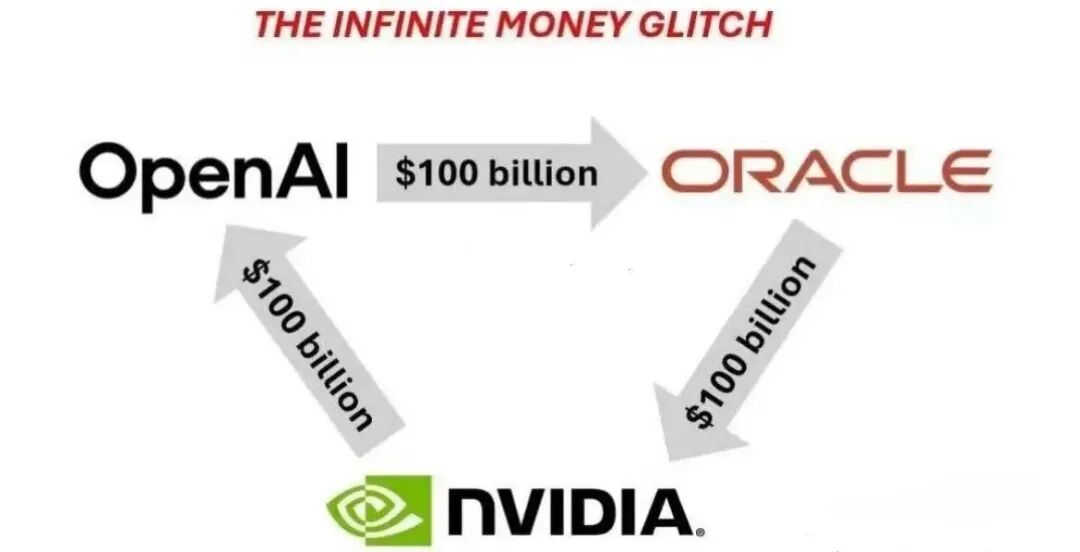
Core Insights - The article discusses the unprecedented capital frenzy driven by the soaring stock prices of tech giants and the valuations of AI startups, highlighting a complex capital loop rather than genuine market demand [1][6] - A triangular capital loop involving OpenAI, Oracle, and Nvidia exemplifies this internal capital cycle, where investments and contracts create a self-reinforcing ecosystem [2][5] Capital Loop Dynamics - Nvidia plans to invest up to $100 billion in OpenAI, which will be disbursed as OpenAI deploys its data centers [2] - OpenAI commits to paying Oracle $300 billion over five years for cloud services necessary for projects like "Project Stargate" [1] - Oracle, in turn, places orders worth hundreds of billions with Nvidia to meet OpenAI's computing needs, creating a closed-loop system where funds circulate among the three entities [2][5] Financial Commitments and Strategic Goals - The total commitments for AI infrastructure and chip supply from OpenAI and its partners exceed $1 trillion, indicating a massive internal capital cycle [5][6] - Key projects include "Project Stargate" with a commitment of up to $500 billion and chip supply agreements exceeding $200 billion [7] Growth Logic - The growth cycle begins with substantial capital injections from major players like Microsoft, Google, and Nvidia into leading AI companies [8] - AI startups utilize these investments to pay for expensive cloud services and hardware, which in turn boosts the revenues of cloud giants [9] - This results in rising valuations for AI companies and reinforces the narrative of an "AI revolution," attracting more capital into the market [10][11] Potential Challenges - There is a disconnect between computing supply and actual market demand, raising questions about the sustainability of the massive investments [13] - Regulatory scrutiny from bodies like the FTC and CMA may challenge the bundled investment and contract model, potentially stifling innovation [14] - Macroeconomic factors, such as high interest rates, could dampen investment appetite, putting pressure on AI startups reliant on external funding [15] Future Scenarios - The article outlines three potential outcomes for the current capital cycle: a "soft landing" with the emergence of profitable AI applications, a "hard landing" with market corrections, or "regulatory reshaping" that alters the competitive landscape [22][26] - Key indicators to monitor include the actual growth rates of cloud providers after removing internal cycle effects, adoption rates of AI applications, and developments in antitrust investigations [28][30]


有人提出疑问,美国的用电量量已经差不多10多年没有增长,而他们的GDP还在翻倍的长
Sou Hu Cai Jing· 2025-10-14 14:47
Core Insights - The article highlights a paradox in the U.S. economy where GDP has doubled from approximately $14 trillion in 2007 to $27 trillion in 2023, while total electricity consumption has remained relatively flat, increasing only from about 3.9 trillion kWh to 4.1 trillion kWh during the same period [3][5] Group 1: Economic Structure and Energy Consumption - The decline in the manufacturing sector's contribution to GDP from 16% in 2000 to below 11% today is noted, yet the service sector, including data centers, continues to consume significant energy [5] - Despite the growth in sectors like artificial intelligence and cloud computing, the overall increase in energy consumption does not correlate with the dramatic rise in GDP, raising questions about the sustainability of this growth model [5][7] Group 2: Inflation and Economic Metrics - The article discusses how inflation may be masking underlying economic issues, with productivity growth potentially overstated due to the inclusion of price increases in productivity metrics [7] - The reliance on credit and the ability to print money as a means of economic growth is emphasized, suggesting that this model may not be sustainable in the long term [9][11] Group 3: Global Trust in the Dollar - There is a noted decline in global trust in the U.S. dollar, with countries like Japan, Saudi Arabia, and China reducing their holdings of U.S. debt, leading to a decrease in the dollar's share of global foreign exchange reserves from 71% to 58% over the past 20 years [9] - The potential consequences of waning trust in the dollar could lead to a reevaluation of the U.S. economic narrative, which heavily relies on credit and financial instruments rather than tangible energy and resources [9][11]

这些辍学的00后,凭啥改写30岁以下创富榜? | F&M抢先看
虎嗅APP· 2025-10-14 13:39
Core Insights - The article highlights the emergence of a new generation of entrepreneurs born after 2000, particularly in the AI 2.0 era, with a significant portion of applicants for the "Top 20 AI Leaders Under 30" being from this demographic [2][11] - Many of these young founders are school dropouts, indicating a shift in traditional educational paths towards entrepreneurship in the tech sector [2][5] Group 1: Entrepreneurial Landscape - Approximately one-third of the applicants for the "Top 20 AI Leaders Under 30" are from the post-2000 generation, showcasing a trend of youth engagement in AI startups [2] - The fields of these young entrepreneurs include AI automation, AI sales, and AI programming assistants, with many having backgrounds from prestigious institutions like MIT and Stanford [3][4] - The article notes that these entrepreneurs often do not fit the mold of traditional "good students," with some openly discussing their controversial projects that led to academic consequences [5] Group 2: Motivations and Mindset - The advent of tools like ChatGPT has inspired many young entrepreneurs to explore AI's potential, leading to a surge in innovative projects and applications [6] - A common motivation among these entrepreneurs is the desire to create products that make a significant impact, with some expressing ambitions to develop groundbreaking technologies [6][8] - The acceptance of failure is notably high among these young founders, who frequently pivot their products in response to rapid technological changes [7] Group 3: Educational Perspectives - The article discusses the evolving nature of education in the context of AI, emphasizing the need for skills that foster collaborative, entrepreneurial, and interdisciplinary thinking [8][9] - It suggests that the current educational framework may need to adapt to better prepare future talent for the demands of the AI-driven market [8] Group 4: Future Outlook - The article concludes with a call to action for identifying and supporting these young innovators, as they are seen as key players in shaping the future of AI and its applications globally [11]

三次革命淬炼的远见:科蓝软件 AI 转型的时代级前瞻性
Quan Jing Wang· 2025-10-14 08:21
每一次革命都会颠覆传统分工体系:工业革命淘汰了手工业者,催生了工程师与产业工人;互联网革命 弱化了线下柜员,孕育了产品经理与数据分析师。AI 革命对金融行业的冲击更彻底 —— 后台审核、现 金调度等重复性岗位将大幅缩减,而 "AI + 场景" 的融合创新能力成为核心竞争力。科蓝软件的转型, 正是提前卡位了新分工体系中的关键节点。 面对银行 "降本增效 + 安全合规" 的双重需求,科蓝没有零散布局 AI 功能,而是打造了覆盖网点服 务、风控联防、跨境结算的全场景 AI 能力。"小蓝" 机器人实现 1:10 人力替代,看似是替代传统柜员, 实则是成为网点智能化的核心枢纽;无代码智能体框架将开发成本降低 70%,本质是为银行培养适配 AI 时代的自主创新能力。这种布局让科蓝从 "软件供应商" 升级为 "金融 AI 生态构建者",在新分工体 系中占据了不可替代的位置 —— 就像工业革命中的设备制造商、互联网革命中的平台服务商,成为连 接技术与行业的核心纽带。 绑定时代生态:在 "国产协同" 中筑牢护城河 技术革命的竞争最终是生态的竞争。工业革命中,围绕蒸汽机形成的机械制造生态决定了产业格局;互 联网革命里,依托操作系 ...


AI革命带来的第一轮资本泡沫,已经在路上了?
Hu Xiu· 2025-10-11 01:01
Core Viewpoint - The AI revolution has initiated a new round of global capital bubbles, reminiscent of the super bull market of the 1990s internet boom [1] Group 1 - The research topic discussed in the video will significantly impact wealth accumulation in the coming years [1] - A retrospective question is posed regarding asset purchases if the timeline were reverted to 1995, highlighting the importance of strategic investment decisions [1]
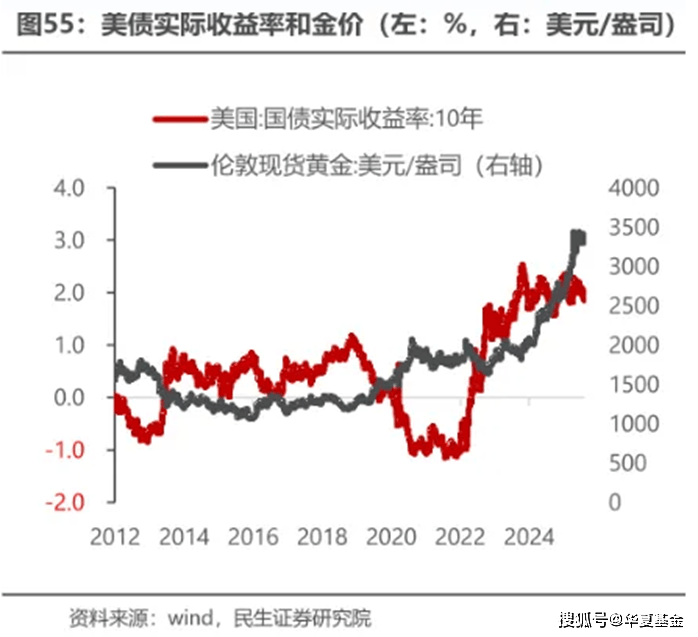
狂飙的金价,究竟在定价什么?后市如何布局?
Sou Hu Cai Jing· 2025-10-09 10:32
Core Viewpoint - The international gold price has reached a historic high of $4000 per ounce, marking a significant increase from $1614 per ounce three years ago, with a 27% rise last year and over 50% this year, indicating a rare upward trend in the market [1][3]. Group 1: Factors Driving Gold Prices - The surge in gold prices is attributed to a fundamental shift in its pricing logic, evolving from a mere safe-haven asset to a sovereign credit hedge [3][4]. - The first driving force is the wave of de-dollarization, with global central banks increasing their gold reserves, surpassing U.S. Treasury holdings for the first time in 30 years, and China's central bank has increased its gold reserves for 11 consecutive months, exceeding 2300 tons [4][6]. - The second driving force is the trust crisis stemming from de-globalization, where geopolitical uncertainties have led to a heightened demand for "hard currency," with gold being the most direct beneficiary [6][7]. Group 2: Market Dynamics and Future Outlook - The narrative surrounding the decline of U.S. hegemony and the dollar's status as the world currency has created a self-reinforcing cycle of belief and buying in the gold market [7][8]. - Historical data suggests that gold bull markets last an average of 32 months with a 172% increase, and the current bull market has lasted 34 months with an 88% increase, indicating potential for further growth [9][10]. - Short-term fluctuations in gold prices will be influenced by the Federal Reserve's interest rate decisions, while mid-term trends will continue to be supported by ongoing de-dollarization and geopolitical tensions [11][12]. Group 3: Investment Strategies for Individuals - Individuals are advised to avoid large-scale purchases at current high prices and instead consider gradual investments or dollar-cost averaging to mitigate risks associated with gold's lack of yield [16][18]. - A reasonable allocation of 5%-10% of household assets in gold is suggested to enhance portfolio resilience without causing significant disruption from price volatility [17]. - The focus should be on responding to trends rather than predicting specific price points, as the underlying logic for gold's value remains intact amid ongoing geopolitical and economic uncertainties [18].