人机协同

Search documents
数字转型驱动高等教育综合改革创新
Xin Hua Ri Bao· 2025-07-30 21:07
Core Insights - Artificial intelligence is becoming a significant driving force for reform in higher education, with a focus on integrating AI into educational systems and practices [1][4] Group 1: Teaching Structure and Methodology - The traditional "teacher-student" model is evolving into a "teacher-student-AI" model, fostering a new educational ecosystem characterized by human-machine collaboration [2] - Key issues in this transition include understanding the impact of human-machine collaboration on group behavior, establishing ethical frameworks for human-AI interactions, and addressing potential over-reliance on technology [2][3] - The integration of AI in education necessitates the development of digital learning capabilities and innovative thinking among students, while teachers must enhance their awareness of technology integration in teaching methods [3] Group 2: AI-Driven Learning Systems - AI can create personalized adaptive learning systems that help students bridge the gap between their current abilities and potential, leading to a spiral of cognitive development [4] - Compared to traditional systems, AI-driven learning systems offer customized content, dynamic feedback, and tailored learning paths, promoting efficient learning and self-directed study [4] Group 3: Management and Operational Efficiency - AI is facilitating the digital transformation of educational management by creating intelligent matching models for teaching resources, schedules, quality assessments, and program optimizations [5] - The predictive capabilities of AI can assist in student admissions, course adjustments, and program development [5] Group 4: Research and Industry Integration - The transition to an AI for Science (AI4S) paradigm is reshaping research methodologies in higher education, merging various scientific approaches and accelerating the integration of education and industry [6][7] - Collaboration between higher education institutions and enterprises is essential for developing curricula that reflect cutting-edge research and meet industry needs, enhancing students' practical skills through real-world projects [8] Group 5: Challenges and Considerations - The integration of AI in education presents challenges, including the risk of diminishing critical thinking and creativity among students due to over-reliance on AI solutions [9] - There is a need to cultivate AI literacy among learners to ensure they can effectively interact with AI and critically assess its outputs, preventing disparities in resource utilization [9]
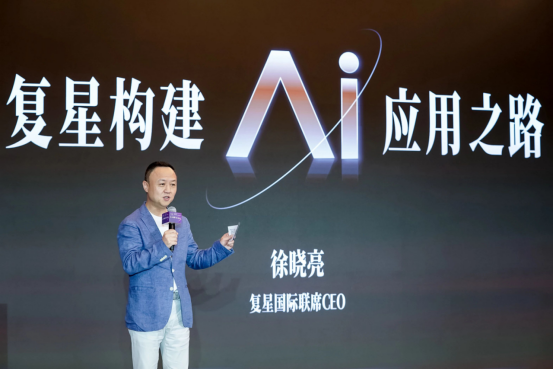
复星国际徐晓亮:全面拥抱AI不是选择题而是必答题
Shang Hai Zheng Quan Bao· 2025-07-29 12:21
Core Insights - The core viewpoint is that Fosun International is fully embracing AI as a transformative force, shifting from "business + AI" to "AI + business" to become a leading AI application company [1][6]. Group 1: AI Leadership and Transformation - AI leadership is essential in the current era, emphasizing the need for humans and machines to coexist as a community of fate rather than machines serving humans [3][8]. - The competition in AI is seen as a core battleground for technological sovereignty, impacting the fundamental competitiveness of nations and enterprises [3][4]. - The historical analogy of the Ford Model T illustrates the importance of embracing new technologies rather than optimizing outdated ones, as those who adapt will thrive [3][4]. Group 2: AI as Infrastructure - AI is defined as a revolutionary infrastructure that is indispensable and fundamentally reshapes economic and social operations, similar to past technological revolutions [4][5]. - The emergence of AI fundamentally reconstructs production relationships, transitioning decision-making from human-centric to human-machine collaborative processes, leading to exponential productivity increases [4][5]. Group 3: Strategic Positioning of Fosun - Fosun's strategy is to focus on being a leading AI application user rather than a developer of foundational large models, emphasizing practical applications of AI in industry [6][7]. - The shift from "business + AI" to "AI + business" is crucial, as it involves integrating AI into the foundational structure of business processes rather than merely enhancing existing systems [6][7]. Group 4: AI in Pharmaceutical Development - Fosun Pharma recognizes the potential of AI in drug development, utilizing AI to enhance decision-making and operational efficiency, exemplified by the PharmAID platform which improves information accuracy by 50% and efficiency by 30% [7]. - The development cycle for new drugs has been significantly reduced from 18 months to 5 months through AI applications, showcasing the transformative impact of AI on productivity [7]. Group 5: AI Leadership and Collaboration - AI leadership is characterized by three forms of symbiosis: human and machine collaboration, traditional and digital economies coexisting, and individual enterprises thriving within an ecosystem [8]. - The ultimate goal of AI leadership is to achieve "full participation" where all employees evolve collectively, fostering a partnership between humans and machines [8].


联影智能WAIC分论坛:医疗AI赋能肿瘤诊疗,智能体走进医疗多场景
IPO早知道· 2025-07-29 09:07
Core Viewpoint - Union Medical and AI technology is advancing in the healthcare sector, with a focus on enhancing diagnostic efficiency and accuracy through intelligent systems [2][12]. Group 1: AI Applications in Healthcare - Union Medical is collaborating with various medical institutions to develop intelligent systems for diagnosing multiple body parts, including the abdomen and brain [2][13]. - The AI application for cancer metastasis has been implemented in over 400 hospitals, indicating a significant expansion of its reach [3][5]. Group 2: Collaboration and Achievements - Since 2018, Union Medical has partnered with Sun Yat-sen University Cancer Center to develop important AI applications, including online adaptive radiotherapy and AI for metastatic tumors [4][5]. - The AI systems for brain and bone metastases have been successfully deployed nationwide, improving the efficiency and precision of cancer care [5][6]. Group 3: Enhancing Patient Experience - The collaboration has led to the creation of a smart consultation solution that streamlines patient information collection and reduces the burden of manual record-keeping for doctors [6][7]. - The AI pre-consultation system allows patients to describe their symptoms interactively and upload previous examination reports, enhancing the overall patient experience [6][7]. Group 4: Efficiency in Imaging Diagnosis - A human-machine collaboration challenge demonstrated that the chest multi-check AI system improved diagnostic efficiency by 25%, allowing for quicker identification of abnormalities [8][9]. - The chest multi-check AI system can automatically detect 73 common chest abnormalities with an average AUC value of 94%, showcasing its diagnostic accuracy [11][12]. Group 5: Future Developments - Union Medical plans to continue developing intelligent systems for various body parts in collaboration with medical institutions, aiming to provide stronger support for clinical diagnosis [13].

AI医生抢滩登陆:3000亿医疗市场迎来重构时刻
2 1 Shi Ji Jing Ji Bao Dao· 2025-07-28 11:14
Group 1: AI in Healthcare - The AI conference showcased the rapid advancements in AI technology within the healthcare sector, highlighting its potential to transform traditional medical practices into more intelligent and precise systems [2][4] - The application of AI in medical diagnostics is expanding, with a reported 92.6% coverage of AI technology in top-tier hospitals in China by 2024, up from less than 30% five years ago [2] - The Chinese medical AI market is projected to exceed 300 billion yuan by 2025, indicating significant growth potential in this sector [3] Group 2: AI Applications and Innovations - The collaboration between Zhongshan University Cancer Prevention Center and industry partners has led to the development of AI applications for detecting brain and bone metastases, which are now implemented in over 400 hospitals nationwide [5][6] - AI systems are enhancing patient interactions by streamlining the pre-consultation process, allowing patients to upload previous medical records and symptoms, thus improving the efficiency of medical consultations [6][7] - A challenge at the conference demonstrated the effectiveness of AI-assisted diagnosis, where AI-enabled doctors completed diagnostic tasks 25% faster than their non-AI counterparts [8][10] Group 3: Future of AI in Patient Management - The introduction of AI-driven tools like "Jack Anxin Intelligent Agent" aims to improve chronic disease management, particularly for cardiovascular patients, by integrating smart hardware for continuous monitoring [12][13] - The establishment of a standard system for AI doctors by AQ and the China Academy of Information and Communications Technology is set to enhance the reliability and application of AI in healthcare [14]
医疗AI的人机协同对战:医疗影像诊断整体效率提升25%,人工智能迎来出海风口
Hua Xia Shi Bao· 2025-07-28 09:51
Group 1 - The core viewpoint of the articles highlights the significant advancements in AI technology within the medical field, particularly in imaging diagnostics and patient interactions, showcasing the efficiency and accuracy improvements brought by AI [1][5][6] - A demonstration at the 2025 WAIC showed that AI-assisted teams completed imaging diagnostics and report writing 25% faster than teams relying solely on human expertise [1] - The collaboration between Zhongshan Hospital and AI companies has led to the development of AI applications for detecting brain and bone metastases, which are now implemented in over 400 hospitals nationwide, enhancing patient care [2] Group 2 - Traditional patient visits often involve cumbersome processes, such as carrying paper medical histories, which can lead to repeated tests and increased costs; AI solutions aim to streamline these processes [3][4] - The development of an electronic medical record AI system allows for real-time transcription of doctor-patient conversations, improving the accuracy and completeness of medical records [4] - The introduction of a chest CT AI system capable of detecting 73 types of abnormalities has achieved an average AUC value of 94%, indicating high diagnostic accuracy [7] Group 3 - AI technology is being integrated into healthcare in remote areas, such as Xinjiang, to enhance the efficiency of tuberculosis screening, addressing the challenges posed by limited medical resources [9] - The international response to Chinese medical AI technology has been positive, with reports from Indonesia highlighting successful case studies where AI identified conditions that local doctors missed, demonstrating the potential for AI to improve healthcare access globally [10][11]
“转人工客服”应该更方便些
Ren Min Ri Bao· 2025-07-24 22:22
Group 1 - The increasing reliance on AI customer service is leading to consumer frustration, as many find it difficult to reach human representatives when issues arise [1][2] - Companies are using AI to manage customer inquiries, especially during peak times, but this can result in inadequate handling of complex issues and customer emotions [2] - There is a call for businesses to improve "human-machine collaboration" by ensuring clear access to human customer service when AI fails to resolve issues [2] Group 2 - The performance of customer service teams is directly linked to the number of complaints they receive, creating pressure to manage inquiries efficiently [2] - AI customer service is better suited for structured and routine inquiries, but struggles with complex problems and emotional customer responses [2] - Recommendations include establishing a clear "transfer to human" option in AI systems and improving compensation and support for customer service personnel [2]
AI无悖论中欧第二期
Hu Xiu· 2025-07-24 12:12
Core Insights - Many business founders aim to leverage AI for cost reduction and efficiency improvement, but AI represents a systemic transformation in management thinking rather than just a simple efficiency tool [1] - The introduction of AI requires clear strategic positioning, organizational diagnosis, and infrastructure readiness; otherwise, it may disrupt existing order rather than deliver expected results [1] Group 1: Impact of AI on Organizational Structure - AI's influence on enterprise management is expanding from individual tasks to organizational structure [2] - Many companies are establishing positions like Chief AI Officer (CAIO) to emphasize the strategic importance of AI and to transition from decentralized applications to systematic management [3] - The emergence of CAIO roles indicates that companies view AI as a key component of future competitiveness [7] Group 2: Transformation of Management Models - AI is driving a shift from individual efficiency to organizational process optimization [4] - The evolution of job structures due to technological advancements is a common pattern observed since the Industrial Revolution, with AI expected to replace some roles while creating new ones [6] - AI Agents are impacting various management functions, such as HR, by automating processes and enhancing decision-making efficiency [9] Group 3: Employee Engagement and Cultural Change - Companies need to address employee resistance to AI by fostering a culture that emphasizes collaboration between humans and AI [17] - Clear communication about AI's purpose—such as enhancing productivity rather than merely reducing headcount—is essential for alleviating employee concerns [18] - Providing both material and non-material incentives, along with a supportive infrastructure, can encourage employees to embrace AI [19] Group 4: Data Ethics and Compliance - Shadow AI, or the unauthorized use of external AI tools by employees, poses data security risks and requires a structured management approach [21] - Companies should create internal AI platforms to ensure compliance and data security while allowing employees to utilize AI effectively [23] Group 5: Opportunities for Small and Medium Enterprises (SMEs) - SMEs can leverage AI to enhance management professionalism and resource allocation efficiency, potentially achieving competitive advantages [26] - AI democratizes access to knowledge and technology, enabling smaller firms to compete with larger enterprises [26] Group 6: Future of Human-AI Collaboration - The future will see a coexistence of carbon-based and silicon-based entities, necessitating new management strategies for AI Agents [27] - Organizations must redefine roles and trust mechanisms among humans and machines to ensure ethical and compliant AI operations [28]

森宇发力数字员工 探索大健康产业数字化转型的“森山模式”
Zhong Guo Chan Ye Jing Ji Xin Xi Wang· 2025-07-23 08:09
Core Insights - The article highlights the integration of artificial intelligence in agriculture, specifically through the introduction of digital employees by Senyu Holdings Group to enhance digital transformation in smart agriculture and the health industry [1][5][7] Company Overview - Senyu Holdings Group, founded in 1997, focuses on the entire industrial chain of Dendrobium candidum and is a leading agricultural technology enterprise with its "SenShan" brand dominating the industry [3] - The company has established nearly 10,000 acres of internationally certified organic cultivation bases and is involved in 153 research projects, including 9 national-level projects [3] - Senyu has invested 5.18 billion yuan in the SenShan Health Town, integrating health, education, tourism, and smart agriculture, serving as a model for rural revitalization [3] Digital Transformation - To address supply chain management challenges, Senyu has introduced digital employees to automate repetitive tasks in production, inventory, sales, logistics, and settlement processes [5] - The digital employees aim to enhance supply chain efficiency by 40% and reduce costs by 30%, establishing a benchmark for digital transformation in smart agriculture [5] Industry Significance - The digital transformation practices of Senyu are seen as a benchmark for the industry, aligning with the central government's focus on smart agriculture [7] - Senyu plans to explore more applications of the "SenShan model" for digital transformation in agriculture and the health industry, contributing to the rural revitalization strategy [7]

胡泳:AI造谣真假难辨,媒体要让事实在算法漩涡中重新浮现
Nan Fang Du Shi Bao· 2025-07-22 01:14
Core Viewpoint - The integration of AI in journalism emphasizes the importance of human judgment, questioning, trust-building, and narrative skills, which AI cannot replicate [3][4][5][6][7] Group 1: Human-Machine Collaboration - In the AI era, the role of human journalists is crucial for making judgments about news value and importance [3] - Good journalism requires the ability to ask insightful questions, a skill that AI struggles to replace [3] - The responsibility of journalists to ensure the credibility of news content is heightened, making authorship and accountability more significant [3][4] Group 2: Gatekeeping Role - The shift of agenda-setting power to algorithms necessitates a return to the traditional gatekeeping role of media to maintain information authority [4][5] - The media must resist being swayed by algorithms and instead focus on presenting diverse and important societal issues [5] Group 3: Urban Media and Aging Society - Urban media must address the needs of the aging population, recognizing that older adults are a significant demographic with specific content interests [6][7] - The development of content for older adults should focus on their interests rather than merely adapting technology for accessibility [6][7] Group 4: Intergenerational Connection - Urban media has a responsibility to foster intergenerational connections, allowing for shared experiences and understanding among different age groups [7] - Media should not only inform but also engage the public in critical societal discussions, enhancing their ability to think and act on social issues [7]

央视总台&阿里云发布最新 AI 报告,六大趋势必看!
Sou Hu Cai Jing· 2025-07-20 15:08
Core Insights - The report highlights the transformative power of AI as a "general-purpose technology" that is reshaping production methods and economic structures [1][30] - AI is expected to penetrate various industries rapidly, with generative AI projected to reach a market size of over $1.1 trillion by 2028 [2] - The report identifies six key technological trends and five core application scenarios that will guide personal and corporate transformation in the AI era [1][18] Technological Trends - Reinforcement Learning: AI is evolving from passive response to active problem-solving, significantly enhancing its reasoning capabilities [4][5][6] - Multimodal Fusion: AI is developing the ability to perceive the world like humans, integrating text, images, and sounds for comprehensive understanding [7][8] - Cloud-Edge Collaboration: This approach allows for efficient AI model deployment on limited-capacity devices, enhancing real-time responsiveness and global intelligence [9][10] - AI Agents: These are becoming pivotal in automating tasks, transitioning from instruction-based responses to goal-driven actions [11][12] - Embodied Intelligence: AI is moving into the physical world, enabling robots to adapt and perform complex tasks autonomously [13][14] - AI Infrastructure: The demand for computational power is expected to grow exponentially, necessitating advancements in hardware and software to support AI applications [15][16] Application Scenarios - Intelligent Efficiency: Generative AI is set to revolutionize productivity across sectors, with significant improvements noted in retail and healthcare [18] - Enhanced Services: AI is redefining service standards by deeply understanding user intent and providing personalized experiences [19] - Innovative Products: AI is driving the creation of new product forms and business ecosystems, significantly altering traditional market dynamics [20] - Smart Decision-Making: AI is transforming decision-making processes from intuition-based to data-driven approaches, enhancing operational efficiency [21] - Accelerated Research: AI is becoming a core component in scientific research, streamlining processes and improving outcomes [22][23] Strategic Directions - For individuals, key competencies will include data governance, scenario definition, and human-AI collaboration [25] - For companies, essential transformation directions involve AI-driven business process reengineering, agile organizational structures, and data asset optimization [26] - The essence of the AI revolution is not merely technological replacement but a comprehensive restructuring of productivity systems [27][28]