全国统一大市场

Search documents
政策支持和改革创新并举 确保“十五五”开好局
Zhong Guo Fa Zhan Wang· 2026-01-27 10:07
Core Viewpoint - The article emphasizes the achievements and future plans of China's economic development under the leadership of the central government, highlighting the importance of macro policies, technological innovation, and reforms to ensure a strong start for the 14th Five-Year Plan. Economic Growth and Policies - The implementation of proactive macro policies has led to a significant increase in economic strength, with the total economic output reaching 140 trillion yuan and a growth rate of 5.0%, maintaining a leading position among major global economies [2] - The focus on high-level technological self-reliance has resulted in breakthroughs in new productive forces, with advancements in AI, biomedicine, and robotics, solidifying China's position as a global leader in manufacturing [2] Reforms and Market Development - Efforts to eliminate bottlenecks in economic circulation have led to significant reforms, including the introduction of the Private Economy Promotion Law and over 120 meetings with private entrepreneurs to address development challenges [3] - The establishment of a unified national market has enhanced market advantages, with a 6.1% increase in exports and a total import value of 18.48 trillion yuan, representing about 10% of global imports [3] Urbanization and Social Welfare - The new urbanization strategy has resulted in an urbanization rate of 67.89% by the end of 2025, allowing over 10 million people to enjoy modern urban life [3] - Initiatives to improve public welfare have led to a stable urban unemployment rate of 5.2% and the implementation of various social support measures, enhancing the quality of life for citizens [4] Future Economic Outlook - The economic structure is expected to continue improving, with new growth points emerging in sectors such as renewable energy and quantum technology, and the digital economy projected to reach 49 trillion yuan by 2025, accounting for approximately 35% of GDP [5][6] - The focus on expanding domestic demand and enhancing the modern industrial system will drive economic growth, with an emphasis on innovation and the development of new industries [7][8] Policy Implementation and Effectiveness - The "Two New" policies have significantly boosted investment and consumption, with over 8400 projects supported, leading to an investment increase of 11.8% and a retail sales growth of 0.6% [9] - Strategies to improve the efficiency of fund usage and enhance policy effectiveness are being implemented, including lowering barriers for project applications and strengthening regulatory oversight [10][11] Unified Market Construction - The construction of a unified national market has made significant progress, with enhanced social consensus and improved market infrastructure, facilitating resource aggregation and economic growth [12][13] - Future efforts will focus on deepening institutional reforms, promoting high-quality development, and addressing competitive issues to ensure a fair market environment [13]
2025年1-12月工业企业盈利数据的背后:新质引领工业利润,传统仍有承压
ZHESHANG SECURITIES· 2026-01-27 09:22
Group 1: Industrial Profit Trends - In 2025, industrial enterprises' profits grew by 0.6% year-on-year, a recovery from the previous 0.1%[2] - December 2025 saw a profit increase of 5.3% compared to a 13.1% decline in November 2025[2] - The average two-year profit growth rate for December was -1.35%, indicating a narrowing decline[2] Group 2: Sector Performance - High-tech manufacturing profits increased by 13.3%, outperforming the overall industrial growth by 12.7 percentage points[4] - The equipment manufacturing sector contributed 39.8% to total industrial profits, a 2.6 percentage point increase from the previous year[6] - Profits in the smart consumer device manufacturing sector surged by 48.0%, with specific industries like smart drones and automotive devices seeing increases of 102.0% and 88.8% respectively[4] Group 3: Traditional Industries and Challenges - Traditional industries are experiencing a split, with sectors like biochemical pesticides and bio-based energy showing significant profit growth, while textiles and furniture remain under pressure[6] - The profit growth in traditional sectors with new productivity characteristics was notably higher, with biochemical pesticides growing by 20.7% and bio-based energy by 47.9%[6] Group 4: Market Dynamics and Policy Implications - The "anti-involution" policy aims to curb low-quality, low-price competition, supporting a stabilization of industrial profits[7] - The PPI for December 2025 recorded a year-on-year decline of 1.9%, but showed a slight month-on-month increase of 0.2%[3] - The forecast for 2026 suggests a gradual recovery in industrial profits, with an expected annual growth rate of 3.6%[9]
相互补台,才能好戏连台(评论员观察)
Xin Lang Cai Jing· 2026-01-27 03:20
令人热血沸腾的,不一定是大场面,或许是小瞬间。 当发展所需、技术所长,不断突破各自边界、不断跨界融入更多领域,看似补位的发展,实则会孕育出 更多新的增长点、激发出更多市场机会 来源:人民日报 补位发展还有一种高阶形态,那就是技术赋能、边界消融。看实践,智慧农业加快发展,依托网络、传 感器等,工作人员远程管控,实现"坐在办公室里种田";数字教育正在普及,甘肃乡村的学生,围坐在 多媒体教学一体机前,跟着屏幕远端的老师学英语,"远程家教"有效弥补教学短板;工业互联网助企升 级,实现个性定制、远程抽检、动态管控,既提升质量又降低成本…… 技术应用、平台合作,不再是"谁依附谁"的旧叙事,而是互相成就的新范式。"你的需求",恰是"我的 课题"。当发展所需、技术所长,不断突破各自边界、不断跨界融入更多领域,看似补位的发展,实则 会孕育出更多新的增长点、激发出更多市场机会。 进一步看,无论如何补位、如何协作,背后都有一个关键词——发展共同体。互相成就的背后,也都有 一个强大依托——全国统一大市场。 其实,补位发展不是拼图式的补空缺,而是规则、要素、监管、信用等的"精密焊接"。比如,《市场准 入负面清单(2025年版)》强化" ...
攻坚克难锐意进取加快郑州中心城市建设 在全省“十五五”发展中展现新担当新作为
Zheng Zhou Ri Bao· 2026-01-27 00:54
1月26日下午,省委书记刘宁来到他所在的郑州市代表团,与代表们共同审议政府工作报告,审查 河南省国民经济和社会发展第十五个五年规划纲要草案。 (据《河南日报》) 刘宁充分肯定去年郑州市经济社会发展取得的成绩。他强调,站在"十五五"开局之年的关键节点, 新形势新任务对古老又年轻的郑州提出了新的更高要求。要深入贯彻习近平总书记在河南考察时重要讲 话精神和关于河南工作的重要论述,攻坚克难、锐意进取,持续强化枢纽开放、科技创新、教育文化、 金融服务等核心功能,不断筑牢硬支撑、塑造新动能、增强辐射力、提升国际化,开创郑州中心城市建 设新局面,在全省"十五五"发展中更好发挥引领带动作用。要在融入和服务全国统一大市场上走在前, 巩固提升国际性综合交通枢纽能级,深入推进要素市场化配置综合改革试点工作,深度融入共建"一带 一路"和RCEP,持续做大做强郑州—卢森堡"空中丝绸之路"。要在推动高质量发展上挑大梁,坚持以科 技创新为引领,加快构建现代化产业体系,深入推进郑州都市圈一体化,推动协同创新和产业衔接。要 在实施高效能治理上作示范,持续抓好党建引领基层高效能治理,统筹做好安全生产监管、困难群众帮 扶、城市防洪排涝等工作,加强 ...
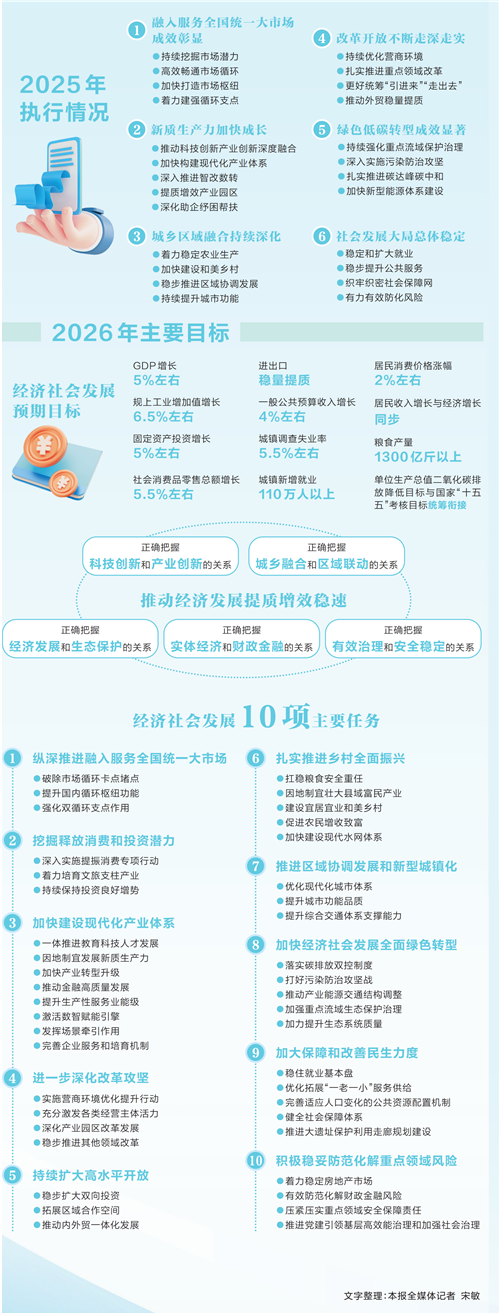
计划报告图解
He Nan Ri Bao· 2026-01-26 23:42
1 避入服务全国统一大市场 2 改革开放不断走深走实 成效影影 ●持续挖掘市场潜力 ●持续优化营商环境 ●高效畅通市场循环 ●扎实推进重点领域改革 ● 更好统筹"引进来""走出去" ●加快打造市场枢纽 ●推动外贸稳量提质 ●着力建强循环支点 6 绿色低碳转型成效显著 2 新质生产力加快成长 ● 持续强化重点流域保护治理 ● 推动科技创新产业创新深度融合 ● 深入实施污染防治攻坚 ●加快构建现代化产业体系 ● 扎实推进碳达峰碳中和 ●深入推进智改数转 ●加快新型能源体系建设 ● 提质增效产业园区 ● 深化助企经困帮扶 5 城乡区域融合持续深化 - 1 社会发展大局总体稳定 ● 稳定和扩大就业 ●着力稳定农业生产 ● 稳步提升公共服务 ●加快建设和美乡村 ● 织牢织密社会保障网 ● 稳步推进区域协调发展 ● 有力有效防化风险 ● 持续提升城市功能 2026年主要目标 GDP增长 居民消费价格涨幅 进出口 5%左右 稳量提质 2%左右 经济社会发展 一般公共预算收入增长 规上工业增加值增长 居民收入增长与经济增长 预期目标 6.5%左右 4%左右 同步 圆定资产投资增长 城镇调查失业率 粮食产量 5%左右 5.5% ...

两会热词连连看丨锚定枢纽与支点 激活水运新动能
He Nan Ri Bao· 2026-01-26 23:42
责任编辑: 秦臻 翻开今年的政府工作报告,"纵深推进融入和服务全国统一大市场"被列为2026年河南首要工作任务,而 内河航运作为"建设循环枢纽、打造循环支点"的重要支撑,引发代表委员的热议。 水运是最低碳、环保的运输方式。去年12月,周口港中心港区中心作业区正式开港,周口构建起"一港 十区一核心"港口体系,形成了长江以北规模最大、靠泊能力最强的现代化内河港口集群,助力我省加 快从"经济通道"迈向"通道经济"。 "内河航运不仅是物流通道,也是农业产业升级的黄金纽带。"省人大代表、周口市老磨坊粮油食品有限 公司总经理李永生深耕农产品加工领域,对此深有感触。他提到,全国芝麻加工业年产值达500多亿 元,年增长率10%左右。周口项城是中国白芝麻地理标志产区、全球优质芝麻核心种植区,但当地相关 企业多为手工作坊,规模小、技术含量低。他建议,政府应加大对芝麻加工、红薯加工等市场前景好的 涉农企业扶持力度,同时依托周口港建立农产品保税区和芝麻产业园。"依托周口港的航运优势,可贯 通芝麻种植、加工、出口全产业链,让'小芝麻'长成'大产业'。"李永生说。 作为港航产业从业者,省人大代表、周口市港航产业发展商会会长王文涛更关注内 ...
中国建成世界规模最大寄递网络
Ren Min Ri Bao· 2026-01-26 22:51
"大动脉"日益焕新。行业规模以上分拣中心基本实现自动化运营,无人机年运输量近400万件……2025 年,关于加快邮政业科技发展的意见印发,全行业从劳动密集型快步转向技术密集型,综合运输组合效 率、信息化组织化程度、服务范围和性价比稳居世界前列。 面对外部冲击和内需不足挑战,2025年,邮政快递业坚定动能向新、结构向优,行业发展稳中有 进,"筋络"作用更好发挥。 "强筋",以新技术助力"提高经济运行效率"。 "用新'国补'买新平板电脑,实惠得很。"今年1月10日10时,四川成都市民李莉点击下单,10多公里 外,京东物流的一场智能配送由此开启—— 智能仓库内,飞梯机器人、搬运机器人在货架间来回穿梭、精准拣选;打包完成后,包裹流向自动分拣 系统,称重、扫描、集包,最快仅需15分钟;及至末端,无人配送车与快递员协同配合,完成送货上 门。从下单到收货,全程不到2小时。 智能仓储、自动分拣、无人配送……新质生产力在多个寄递环节奔涌,成为快递业向新而行的生动注 脚。 科技编织经纬,一张世界领先的智能化物流网络正加速成形—— 清晨5时,湖北鄂州花湖国际机场,一阵轰鸣声中,顺丰航空一架全货机满载货物腾空而起。 各式货物中,来自 ...
规范税收优惠并非一味取消 有退有续重塑激励机制
Xin Lang Cai Jing· 2026-01-26 17:57
Group 1 - The core viewpoint of the article emphasizes the importance of standardizing tax policies and promoting fair competition through the adjustment of tax incentives, particularly focusing on the removal of outdated tax benefits in mature industries [1][2][3] - The recent tax policy adjustments include the cancellation of export tax rebates for solar products and a phased removal of battery product export tax rebates, reflecting a shift towards optimizing policies to avoid "involution" competition [1][2] - The adjustments aim to maintain support for public welfare and essential sectors while restructuring the relationship between central and local finances, thereby reshaping local government behavior [1][7] Group 2 - The recent tax policy changes have involved the elimination of certain tax incentives deemed outdated, such as the VAT "immediate refund" policy for wind and nuclear power, and a reduction in the vehicle purchase tax for new energy vehicles from full exemption to half [2][3] - The continuation of tax incentives for sectors like real estate and community family services indicates a focus on stabilizing market expectations and reducing transaction costs for residents [4][6] - The retained tax incentives are characterized by their strong public attributes and alignment with national strategic goals, making them easier to verify and regulate across the country [6][7] Group 3 - The adjustments in tax policies are not uniform but rather differentiated based on industry type and maturity, with clear timelines for phasing out certain benefits while extending support for others [5][6] - Future tax incentives are expected to focus on high-tech enterprises, small and medium-sized technology firms, advanced manufacturing, and green industries, with a preference for income tax support over indirect taxes [7]

刘宁参加郑州市代表团审议时强调 攻坚克难锐意进取加快郑州中心城市建设 在全省“十五五”发展中展现新担当新作为
He Nan Ri Bao· 2026-01-26 11:18
刘宁强调,要坚持不懈用习近平新时代中国特色社会主义思想培根铸魂,着力提高各级党组织领导经济 社会发展能力和水平,树立和践行正确政绩观,大力弘扬斗争精神,不断提高干部队伍现代化建设本 领,持之以恒推进全面从严治党,巩固拓展深入贯彻中央八项规定精神学习教育成果,营造风清气正政 治生态、干事创业浓厚氛围。 李亚、陈星参加。(记者 刘婵 张笑闻) 责任编辑: 何山 1月26日下午,省委书记刘宁来到他所在的郑州市代表团,与代表们共同审议政府工作报告,审查河南 省国民经济和社会发展第十五个五年规划纲要草案。 王全书、安伟、庄建球、田海涛、李党生、刘利、陈耀宗、李伟光等与会人员先后发言,大家表示完全 赞成政府工作报告、河南省国民经济和社会发展第十五个五年规划纲要草案,并围绕完善养老体系、发 展智能经济、中心城市建设、产业园区提质升级、基层治理、促进文旅消费、科技创新、扩大有效投资 等谈感受、提建议、话发展。 在参加代表团审议时,刘宁表示,王凯同志所作的政府工作报告,深入贯彻党的二十届四中全会和中央 经济工作会议精神,全面落实省委十一届十次全会和省委经济工作会议部署,总结成绩实事求是,工作 部署精准有力,是一个高举旗帜、求真 ...
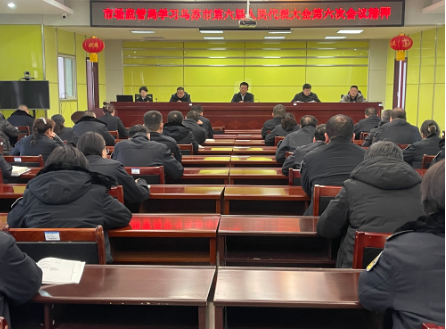
新疆乌苏市市场监管局学好市政府工作报告开好“十五五”之局
Zhong Guo Shi Pin Wang· 2026-01-26 09:27
乌苏市市场监管局党组副书记、局长隋新义说:"2026年是'十五五'开局之年。我们将紧紧围 绕'3+1+1'现代化产业体系和'五城建设'的发展思路,在围绕中心、服务大局中彰显市场监管价值追求和 使命担当,一要聚焦'走在前、勇争先、善作为'的目标要求,讲政治、强监管、促发展、保安全,积极 融入共建全国统一大市场,主动精准服务产业转型升级,充分激发经营主体发展活力,大力营造规范有 序市场环境,有效防范化解重点领域安全风险,将作风和廉政建设贯穿市场监管工作全过程,不断提升 市场监管能力水平,奋力实现'十五五'良好开局。二要重点开展好'八大行动',分别为:深化公平竞 争、'三强一基'建设行动、经营主体提质行动、知识产权赋能行动、消费环境优化行动、安全监管'筑 底'行动、监管效能提升行动、干部队伍融合行动。三要巩固向好态势,奋力向上突破,急经营主体之 所急,想经营主体之所想;急人民群众之所急,想人民群众之所想。把各项工作谋得更实、抓得更紧、 做得更好,努力实现'十五五'乌苏市市场监管事业新成效。选准目标,精心谋划,有效推进,及时总 结,树牢导向,推动工作实现从'说了'到'做了'的突破,从'做了'到'做好了'的跨越,从'做 ...