
关税谈判

Search documents
宏源期货品种策略日报:油脂油料-20250715
Hong Yuan Qi Huo· 2025-07-15 02:06
Report Industry Investment Rating - Not provided in the content Core Viewpoints - The demand for summer travel in the US is higher than expected, and the strong gasoline demand boosts market confidence. OPEC+ is optimistic about gasoline demand in the third quarter. The tariff negotiation is postponed to August, which postpones market concerns. PTA will see new installations put into production in the third quarter, creating a time mismatch with PX. Currently, PX inventory is at a historical low, providing strong bottom support. Whether PX profitability can continue to rise depends on unexpected factors. The PX supply side lacks positive factors, and with the off - season of polyester consumption and a significant decline in PTA processing fees, there is a strong expectation of a decline in downstream operating rates, and the fundamentals are weakening. The PTA market is affected by the strong crude oil market, and the downstream polyester operating rate is still higher than last year. The PTA spot basis has rebounded from the bottom. However, with new installations expected on the supply side and no improvement in demand during the off - season, it's difficult to boost prices. The polyester industry chain is driven by fundamentals, and due to weak supply - demand expectations, prices have fallen across the board. If polyester production cuts deepen, industry chain contradictions will intensify. The cost - side strength drives the profit distribution pattern to tilt towards raw materials again. PTA will fluctuate, with cost being the dominant factor. The polyester bottle - chip market has sufficient supply, and downstream buying enthusiasm is waning. The polyester industry chain has weak demand and is expected to fluctuate. [2] Summary by Relevant Catalogs Price Information - **Upstream**: On July 14, 2025, the futures settlement price of WTI crude oil was $66.98 per barrel, down 2.15% from the previous value; the futures settlement price of Brent crude oil was $69.21 per barrel, down 1.63%. The spot price of naphtha (CFR Japan) on July 11 was $584.25 per ton, down 1.14%. The spot price of xylene (isomeric grade, FOB Korea) on July 14 was $740 per ton, up 2.85%. The spot price of p - xylene (PX, CFR China Main Port) on July 14 was $852 per ton, up 1.83% [1]. - **PTA**: On July 14, 2025, the closing price of the CZCE TA main contract was 4,740 yuan per ton, up 0.85%; the settlement price was 4,726 yuan per ton, up 0.34%. The closing price of the CZCE TA near - month contract was 4,732 yuan per ton, up 0.72%; the settlement price was 4,726 yuan per ton, up 0.13%. The domestic spot price of PTA was 4,735 yuan per ton, up 0.45%. The CCFEI price index of domestic PTA was 4,735 yuan per ton, up 0.42%. The CCFEI price index of foreign PTA on July 11 was $624 per ton, down 1.58%. The near - far month spread was 0 yuan per ton, a decrease of 10 yuan per ton; the basis was - 5 yuan per ton, a decrease of 20 yuan per ton [1]. - **PX**: On July 14, 2025, the closing price of the CZCE PX main contract was 6,778 yuan per ton, up 1.25%; the settlement price was 6,748 yuan per ton, up 0.42%. The closing price of the CZCE PX near - month contract was 6,926 yuan per ton, up 0.44%; the settlement price was 6,926 yuan per ton, up 0.44%. The domestic spot price of p - xylene was 6,813 yuan per ton, unchanged. The spot price (mid - price) of p - xylene (CFR Chinese Taipei) was $851 per ton, up 1.67%; the spot price (mid - price) of p - xylene (FOB Korea) was $826 per ton, up 1.72%. The PXN spread was $267.75 per ton, up 8.99%; the PX - MX spread was $112 per ton, down 4.41%. The basis was 35 yuan per ton, a decrease of 84 yuan per ton [1]. - **PR**: On July 14, 2025, the closing price of the CZCE PR main contract was 5,920 yuan per ton, up 0.71%; the settlement price was 5,902 yuan per ton, up 0.27%. The closing price of the CZCE PR near - month contract was 5,948 yuan per ton, up 0.27%; the settlement price was 5,948 yuan per ton, up 0.27%. The market price (dominant price) of polyester bottle - chips in the East China market was 5,955 yuan per ton, unchanged; in the South China market, it was 6,020 yuan per ton, unchanged. The basis in the East China market was 35 yuan per ton, a decrease of 42 yuan per ton; in the South China market, it was 100 yuan per ton, a decrease of 42 yuan per ton [1]. - **Downstream**: On July 14, 2025, the CCFEI price index of polyester DTY was 8,600 yuan per ton, unchanged; the CCFEI price index of polyester POY was 7,050 yuan per ton, down 0.70%; the CCFEI price index of polyester FDY68D was 6,850 yuan per ton, down 0.72%; the CCFEI price index of polyester FDY150D was 6,850 yuan per ton, down 0.72%. The CCFEI price index of polyester staple fiber was 6,655 yuan per ton, unchanged; the CCFEI price index of polyester chips was 5,825 yuan per ton, unchanged; the CCFEI price index of bottle - grade chips was 5,955 yuan per ton, unchanged [2]. Operating Conditions - On July 14, 2025, the operating rate of the PX in the polyester industry chain was 78.98%, unchanged; the PTA industry chain load rate of PTA factories was 80.59%, unchanged; the PTA industry chain load rate of polyester factories was 87.15%, up 0.28 percentage points; the PTA industry chain load rate of bottle - chip factories was 71.93%, unchanged; the PTA industry chain load rate of Jiangsu and Zhejiang looms was 59.12%, unchanged. The sales rate of polyester filament was 37%, up 1 percentage point; the sales rate of polyester staple fiber was 74%, up 33 percentage points; the sales rate of polyester chips was 144%, up 83 percentage points [1] Device Information - Dongying United's 2.5 - million - ton PTA device was under maintenance from June 28 for 40 - 45 days. Yisheng New Materials' 3.3 - million - ton PTA device reduced its load by about 50% around June 15 and has now returned to normal. Yisheng Hainan's 2 - million - ton PTA device is expected to undergo technological transformation for 3 months starting from August 1 [2] Trading Strategies - PTA has slightly rebounded, with the TA2509 contract closing at 4,740 yuan per ton (up 0.64%), and the daily trading volume was 1.01 million lots. The PX price has returned to consolidation, with the PX2509 contract closing at 6,778 yuan per ton (up 0.86%), and the daily trading volume was 228,200 lots. PR follows the cost trend, with the 2509 contract closing at 5,920 yuan per ton (up 0.58%), and the daily trading volume was 53,700 lots. The international oil price has declined. The polyester industry chain has weak demand and is expected to fluctuate. PX, PTA, and PR are all expected to fluctuate (PX view score: 0, PTA view score: 0, PR view score: 0) [2]
深夜,全线下挫!关税,突传变数!
券商中国· 2025-07-14 15:03
Core Viewpoint - The article discusses the escalating trade tensions between the EU and the US, particularly in light of President Trump's announcement of a 30% tariff on EU and Mexican imports, which has led to increased market volatility and concerns over economic impacts [1][7][4]. Group 1: Trade Negotiations - The EU is preparing to strengthen cooperation with countries also threatened by US tariffs, including Canada and Japan, potentially coordinating response measures [2][6]. - EU Commission President Ursula von der Leyen stated that while the EU has paused retaliatory measures until August 1, it is preparing further countermeasures to ensure readiness [10][11]. - The EU's current countermeasure list could affect approximately €210 billion (about $245 billion) of US goods, with an additional list of around €720 billion being prepared [11]. Group 2: Market Reactions - Following Trump's tariff announcement, European stock indices fell, with the Euro Stoxx 50 index down 0.6% and the German DAX index down 0.7% on July 14 [3][7]. - US stock markets also experienced declines, with the Dow Jones down 0.15% and the S&P 500 down 0.2% [8]. Group 3: Economic Impact - Analysts warn that if the 30% tariff is fully implemented, the effective tariff rate on the EU could rise to 26 percentage points, potentially leading to a cumulative GDP decline of 1.2% in the Eurozone by the end of 2026 [4][24]. - The uncertainty surrounding tariffs may lead to increased inflation and volatility in interest rates and exchange rates, impacting risk assets and commodities [24]. Group 4: Political Responses - French President Macron expressed strong dissatisfaction with Trump's tariff threats, urging the EU to prepare credible countermeasures if no agreement is reached by August 1 [13]. - German Chancellor Merz indicated that failure to resolve the trade conflict through negotiations would fundamentally impact European exporters [14]. Group 5: Ongoing Negotiations - Key issues in the ongoing EU-US negotiations include automotive and agricultural tariffs, with discussions about a preliminary agreement that may involve a 10% tariff on most EU exports [16][17]. - There is skepticism among EU officials regarding Trump's commitment to the 30% tariff, viewing it as a negotiation tactic rather than a definitive policy [18].


国证国际港股晨报-20250714
Guosen International· 2025-07-14 05:22
Group 1: Market Overview - The Hong Kong stock market showed an upward trend, with the Hang Seng Index closing at 24,139 points, up 111 points or 0.46% [2] - The Hang Seng Tech Index outperformed the main index, rising by 0.61% [2] - The total turnover on the main board reached HKD 324 billion, a 31.3% increase from the previous day, marking the first time since May 12 that it exceeded HKD 300 billion [2] Group 2: Trade Policy and Economic Sentiment - The U.S. government has delayed new reciprocal tariff measures until August 1, with adjustments to tariff rates for various countries, leading to increased market volatility [4] - The probability of Federal Reserve Chairman Jerome Powell resigning has risen from 14% to 19%, reflecting market sensitivity to political news [4] - Investors are advised to monitor upcoming CPI, PPI data, and bank earnings, which will guide market expectations regarding interest rate policies [4] Group 3: Company Analysis - Lianlian Digital (2598.HK) - Lianlian Digital is a digital payment service provider primarily serving small and medium-sized merchants, especially in the cross-border e-commerce sector, with a total of 5.9 million merchants served as of December 2024 [6] - The company holds 65 payment licenses and operates in over 100 countries, supporting transactions in more than 130 currencies [6] - The total payment volume (TPV) for the company is projected to reach HKD 3.3 trillion in 2024, a 65% year-on-year increase, with digital payment services accounting for 88% of total revenue [7] - The company has achieved profitability, with total revenue of HKD 1.31 billion in 2024, a 28% increase, and an adjusted net profit of HKD 79 million [7] - Lianlian Digital has obtained a Virtual Asset Trading Platform (VATP) license, allowing it to engage in regulated activities related to securities trading and automated trading services [8] - The company plans to issue a stablecoin, targeting cross-border trade payments, which could significantly enhance its service offerings [8]
欧盟官员称将深化与亚洲国家的贸易协议以应对美国关税
news flash· 2025-07-14 03:21
金十数据7月14日讯,欧盟高级官员表示,欧盟正寻求深化与印度和亚太地区其他国家的贸易协定。欧 盟竞争事务主管Teresa Ribera周一说:"我们需要探索在太平洋地区与其他国家的合作能走多远、走多 深,比如与印度正在进行的这些对话就相当重要。"她指的是与印度的自由贸易谈判预计将在年底前完 成。此番言论正值特朗普在关税谈判最后阶段加大施压力度之际。Ribera暗示欧盟将继续谈判,但若关 税真正落地,集团将全力开拓其他市场。 欧盟官员称将深化与亚洲国家的贸易协议以应对美国关税 ...
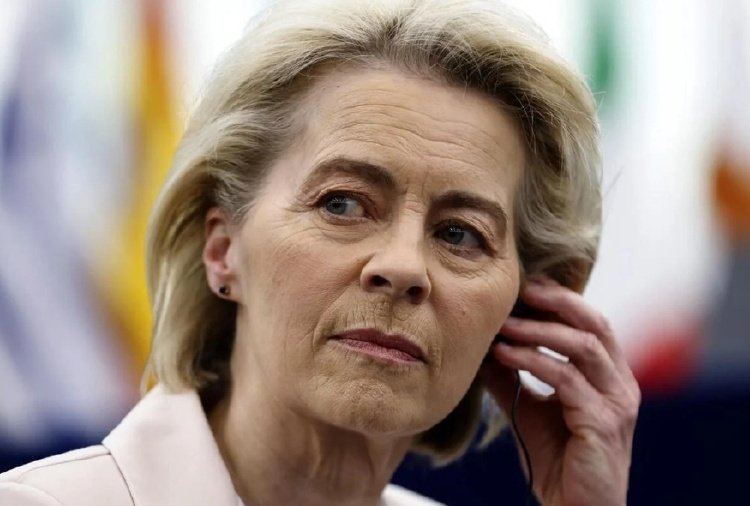
欧盟推迟反制美国关税,“计划与加拿大和日本进行接触”
Guan Cha Zhe Wang· 2025-07-14 02:13
Core Viewpoint - The EU is currently in critical negotiations with the US regarding tariffs, with President Trump threatening a 30% tariff on EU products, prompting a response from EU leaders who are seeking to negotiate rather than retaliate aggressively [1][4]. Group 1: EU's Response to US Tariff Threats - EU Commission President Ursula von der Leyen announced the postponement of retaliatory tariffs on $210 billion worth of US products, originally set to take effect on July 15, to early August, emphasizing a preference for negotiation [1][4]. - Von der Leyen stated that the EU will continue to prepare additional countermeasures while prioritizing negotiations with the US [1][7]. - The EU is planning to engage with countries like Canada and Japan to coordinate responses to the US tariffs [3][4]. Group 2: Internal EU Reactions and Criticism - Some European business organizations and politicians criticized von der Leyen's approach as weak, suggesting that failure to respond effectively to Trump's tariffs would be a significant setback [1][4]. - French President Macron expressed strong dissatisfaction with Trump's threats and urged the EU to prepare credible countermeasures if negotiations fail [4][9]. - Italian officials and agricultural organizations warned that the proposed tariffs could have devastating effects on Italy's food exports, estimating direct losses of around €2.3 billion [8][9]. Group 3: Economic Impact and Negotiation Dynamics - Germany, being the largest exporter to the US, reported a 7.7% decline in exports to the US in May, highlighting the economic impact of the tariff threats [5][7]. - EU leaders are divided on whether to pursue a quick trade agreement similar to the UK's or to continue negotiations for a better outcome [4][9]. - EU officials believe that Trump's threats may be a negotiation tactic rather than a definitive policy change, with expectations that a reasonable solution can still be reached [4][5].
洪灝:如何交易关税谈判大限
2025-07-14 00:36
Summary of Key Points from the Conference Call Industry or Company Involved - The discussion primarily revolves around the U.S. stock market and its recovery dynamics, influenced by tariff negotiations and macroeconomic factors. Core Points and Arguments 1. The U.S. stock market has experienced one of the fastest recoveries in its history, with indices reaching new highs in less than three months following a significant drop due to tariff negotiations [1][4] 2. The non-U.S. global index has reached historical highs, indicating a potential market and economic model shift, reminiscent of significant changes observed in the early 1980s [3][5] 3. Historical patterns suggest that the non-U.S. global index peaks often precede peaks in the U.S. stock market, highlighting the interconnectedness of global markets [3][5] 4. The U.S. stock market's performance is increasingly influential on the non-U.S. global index, suggesting that the current market dynamics are indicative of a broader economic transition [3][5] 5. The "Big America" bill passed by Congress is expected to significantly increase the U.S. government's debt burden, potentially leading to long-term economic instability [9][10] 6. The U.S. budget deficit is projected to remain around 7%, which is unusually high for a peacetime economy, raising concerns about future economic stability [10] 7. Despite the long-term concerns, the current liquidity conditions and the potential for interest rate cuts by the Federal Reserve may support risk asset prices in the short term [11][12] 8. Investor sentiment is complex, with high stock holdings contrasting with bearish sentiment in surveys, indicating a potential disconnect in market psychology [13][15] 9. The potential for a technical rebound in the U.S. dollar is noted, as it has reached a critical support level after a prolonged period of weakness [19][20] 10. The worst-case scenario of the tariff war is believed to have passed, although uncertainty remains high due to ongoing negotiations and potential policy changes from the Trump administration [21][22] Other Important but Possibly Overlooked Content 1. The historical context of U.S. stock market cycles suggests that the current market may be entering a more volatile phase, with significant implications for investment strategies [6][7] 2. The analysis of the Chinese stock market indicates a downward trend, with limited foreign investment opportunities, which could impact global capital flows [8] 3. The discussion emphasizes the importance of distinguishing between long-term economic views and short-term trading strategies, particularly in light of current market conditions [15][26] 4. The tightening of monetary conditions in Hong Kong and its implications for market sentiment are also highlighted, suggesting a regional impact on investment flows [23][24] This summary encapsulates the key insights and implications from the conference call, providing a comprehensive overview of the current market landscape and potential future developments.
墨西哥经济部长Ebrard:美国关税不公平。美国、墨西哥于周五成立了双边工作组。墨西哥正在谈判以避免美国的关税。
news flash· 2025-07-12 14:36
墨西哥经济部长Ebrard:美国关税不公平。 美国、墨西哥于周五成立了双边工作组。 墨西哥正在谈判以避免美国的关税。 ...
随着欧盟和美国致力于在未来几天达成一项临时贸易协议,汽车和农业关税水平已成为双方谈判中的关键症结。(彭博)
news flash· 2025-07-11 21:33
Core Insights - The EU and the US are working towards reaching a temporary trade agreement in the coming days, with automotive and agricultural tariff levels being key points of contention [1] Group 1 - The automotive tariffs are a significant issue in the negotiations between the EU and the US [1] - Agricultural tariffs are also a critical factor in the ongoing trade discussions [1]
巴西财政部官员梅洛:特朗普宣布关税后,有与美国谈判的空间。巴西对进口征收关税可能成为一种报复措施,但这一措施尚未确定。
news flash· 2025-07-11 13:07
Core Viewpoint - Brazilian Finance Ministry official Melo indicated that there is room for negotiation with the United States following Trump's announcement of tariffs, suggesting potential diplomatic engagement despite the tensions [1] Group 1 - Brazil may consider imposing tariffs on imports as a retaliatory measure, although this action has not yet been confirmed [1]
短评:特朗普关税谈判延期,新一轮关税威胁再起
LIANCHU SECURITIES· 2025-07-11 11:51
Group 1: Tariff Negotiations - On July 7, Trump extended the suspension of reciprocal tariffs originally set to expire on July 9, notifying 21 countries of tariffs ranging from 20% to 40% effective August 1[3] - The tariffs primarily target Asian and African countries, with Japan and South Korea facing a 25% tariff, while Laos and Myanmar face a 40% tariff[3] - Compared to the April 2 tariff list, the new tariffs show minimal changes, with Cambodia and Sri Lanka receiving lower tariffs by 13% and 14% respectively[4] Group 2: Trade Negotiation Objectives - The main goal of U.S. trade negotiations is to reduce tariffs imposed by other countries on U.S. goods, particularly in agriculture, energy, and automotive sectors[5] - The U.S. has made progress with countries like the UK, which agreed to increase beef imports from 1,000 tons to 13,000 tons, while the U.S. will reduce auto tariffs to 10-25%[5] - Ongoing negotiations with Japan have stalled due to strict agricultural protection policies, particularly regarding rice imports[5] Group 3: Market Reactions and Future Outlook - Following the issuance of tariff letters, the U.S. stock market reacted mildly, with a less than 1% drop on July 7 and a subsequent recovery on July 9[9] - The market's sensitivity to tariff negotiations has decreased since the easing of U.S. tariff policies from April to June, indicating a shift towards fundamental trading[9] - Future developments in tariff policies and their impact on the U.S. economy and corporate sectors will be closely monitored, especially with upcoming CPI data releases[9]