
品牌出海

Search documents
跨境电商近况更新
2025-12-01 00:49
Summary of Cross-Border E-Commerce Conference Call Industry Overview - The cross-border e-commerce industry is experiencing intensified competition, with traffic increasingly concentrated among leading sellers. Small and medium-sized sellers must focus on brand building and innovation to stand out in a market characterized by homogenization and price competition [1][2][3]. Key Trends and Insights - **Brand Expansion**: There is a significant trend towards brand expansion, with companies that have direct brand capabilities likely to benefit from quality advantages and potential blue ocean opportunities [1][3]. - **Economic Impact**: The economic downturn in Europe and the U.S. has led to a decrease in per capita consumption, pushing consumers towards online shopping. However, the influx of Chinese goods has intensified online competition [1][4]. - **Platform Dynamics**: Amazon is adjusting its fee policies to allocate more traffic to top sellers, aiming to eliminate unprofitable small sellers and enhance profitability amid economic pressures [2][8]. - **Emerging Platforms**: New platforms like Shein, Temu, and TK offer opportunities for low investment and high returns, but they require strong supply chain management and an understanding of target market demands [5][9]. Opportunities and Challenges - **Product Categories**: Traditional product categories are becoming saturated, leading to a focus on brand expansion as a critical phase. Companies with strong brand direct sales capabilities may find blue ocean opportunities [3][19]. - **Consumer Behavior**: The fourth quarter is typically a peak season for e-commerce, but this year has seen a decline in consumer spending, with many sellers reporting stagnant sales during traditional peak periods like Black Friday [4][15]. - **Regulatory Environment**: Changes in cross-border e-commerce tax policies are creating a more regulated environment, which may lead to price increases as companies adjust to maintain profit margins [11][15]. Platform-Specific Insights - **Amazon**: As a capital-intensive platform, Amazon requires significant investment and long-term planning to succeed. The platform is facing challenges from emerging competitors and is adjusting its policies to maintain its market position [5][8]. - **TikTok**: The platform presents opportunities for rapid sales growth through viral marketing, but many sellers face challenges related to supply chain management and inventory control [10][19]. - **Emerging Markets**: Chinese brands are optimistic about entering Southeast Asian markets, leveraging successful business models from domestic platforms [20][21]. Conclusion - The cross-border e-commerce landscape is evolving rapidly, with significant challenges and opportunities. Companies must adapt to changing consumer behaviors, regulatory environments, and competitive dynamics to thrive in this increasingly complex market [1][2][3][4][5].

从“产品出海”到产业扎根 冷链家电企业深耕东南亚市场
Zheng Quan Ri Bao Zhi Sheng· 2025-11-30 16:08
Core Viewpoint - Chinese cold chain appliance companies are intensifying investments in Indonesia, establishing production bases to tap into the Southeast Asian market, driven by favorable market conditions and strategic positioning [1][4]. Group 1: Company Investments - Qingdao Hairong Commercial Cold Chain Co., Ltd. has opened its first overseas production base in Indonesia with a total investment of 467 million RMB, covering over 70,000 square meters [1]. - Haier Smart Home has laid the foundation for its Indonesian refrigerator base, planning an annual production capacity of 1 million units, focusing on customized products for local families and commercial storage [2]. - Aucma has initiated a phased construction approach for its Indonesian smart manufacturing plant, with a planned annual capacity of 500,000 refrigerators, aiming for comprehensive coverage of household and commercial cold chain needs [3]. Group 2: Market Insights - Indonesia's dense population and high temperatures create strong demand for cold chain equipment, with a projected annual market growth rate exceeding 15% [6]. - The cold chain infrastructure in Southeast Asia is still developing, with commercial cold chain penetration below 30%, indicating significant market opportunities for companies [6]. - Localized production strategies are being employed by companies to enhance service response times and reduce delivery cycles by over 30% [2]. Group 3: Strategic Considerations - The shift from "product export" to "industry and brand export" marks a critical transition for Chinese home appliance companies, with a focus on local market integration [5]. - Companies are leveraging Indonesia's favorable investment policies and political stability to mitigate international trade risks and enhance supply chain resilience [4][5]. - The establishment of manufacturing bases in Indonesia is seen as a strategic move to transform the country from a cold chain product importer to a manufacturing hub [3]. Group 4: Competitive Landscape - As Chinese cold chain appliance companies expand their capacities, they face increasing competition from international brands like Samsung and LG, necessitating continuous innovation and localized operations to maintain market share [7].



化妆品医美行业周报:多品牌全球化+AI赋能,化妆品年会指明未来发展-20251130
Shenwan Hongyuan Securities· 2025-11-30 13:43
Investment Rating - The report gives a "Buy" rating for the cosmetics and medical beauty industry, highlighting potential growth opportunities in the sector [4][13]. Core Insights - The cosmetics and medical beauty sector is currently underperforming compared to the market, with the Shenwan Beauty Care Index rising by only 0.5% from November 21 to November 28, 2025, which is lower than the overall market performance [5][4]. - The sixth China Cosmetics Annual Conference emphasized the importance of multi-brand globalization and AI empowerment for future development, with industry leaders discussing strategies for growth and market adaptation [10][4]. - The report anticipates that domestic brands will thrive during the industry's consolidation phase, leveraging innovation and consumer demand to drive growth [11][4]. Summary by Sections Industry Performance - The cosmetics and medical beauty sector has shown weak performance, with the Shenwan Cosmetics Index increasing by 1.4%, which is 1.6 percentage points lower than the Shenwan A Index [5][4]. - Key stocks in the sector include Yanjiang Co. (+22.0%), Mingchen Health (+17.9%), and Lihe Technology (+9.9%) [6][4]. Market Trends - The report identifies trends such as the need for brands to localize when expanding internationally, the role of AI in upgrading the industry, and the focus on men's skincare and body care segments [10][4]. - The medical beauty market is expected to see growth driven by new products and consumer demand, despite some economic pressures [12][4]. Company Analysis - Qingmu Technology is highlighted as a leading player in the full-service e-commerce operation sector, with a strong focus on data and technology to drive growth [16][4]. - The report notes that the company has shown significant revenue growth, with projected revenues of 15.1 billion, 19.0 billion, and 23.4 billion yuan for 2025-2027, respectively [19][4]. Investment Recommendations - Recommended stocks include brands with strong channel and brand matrices such as Maogeping, Shuangmei, and Proya, as well as companies in the medical beauty sector like Aimeike [13][4]. - The report suggests focusing on companies with strong R&D capabilities and a broad product pipeline, particularly in the medical beauty segment [13][4].
25个顶级品牌,68款超级新品!TikTok Shop超级品牌日引爆黑五购物狂欢!
Sou Hu Wang· 2025-11-28 12:28
Core Insights - TikTok Shop's "Super Brand Day" has partnered with 25 top global brands, launching 68 new products, showcasing diverse marketing strategies both online and offline [1][6] - The collaboration between Fanttik and the Houston Rockets exemplifies effective cross-industry marketing, enhancing brand recognition in the U.S. sports culture [3][4] - TikTok Shop's unique approach encourages brands to focus on product differentiation and innovative content to drive consumer engagement and sales [8] Brand Collaborations - Fanttik's partnership with the Houston Rockets aligns the brand's image of "professional, reliable, and high-performance" tools with the team's values of precision and teamwork, enhancing brand integration into American sports culture [3][4] - TYMO BEAUTY launched its new hair straightening tool during Black Friday on TikTok Shop, leveraging celebrity partnerships to boost brand visibility and sales [4] - POP MART created an immersive Christmas-themed live stream to attract U.S. consumers, while EUHOMY expanded its reach through a food festival collaboration [6] Sales Performance - TikTok Shop achieved a record-breaking daily GMV of over $700,000 within just two days of the "Super Brand Day" event [6] - The collaboration strategies have led to significant increases in brand search volume and sales for participating brands during the Black Friday period [4] Marketing Strategies - TikTok Shop promotes a marketing model that combines offline events with online engagement, facilitating a seamless transition from exposure to interaction and conversion [8] - The platform encourages brands to move away from traditional sales pitches, focusing instead on content innovation that effectively communicates product value to consumers [8] - Successful brands are leveraging unique product offerings and engaging content to establish a competitive edge and avoid price wars [8]


关于美妆新增长,吕义雄/黄锦峰/唐毅等20+行业大咖给出了答案|品观2025中国化妆品年会
3 6 Ke· 2025-11-28 07:31
Core Insights - The beauty industry is entering a new life cycle characterized by a general decline, making growth a rare capability [3][4] - Understanding the new cycle's operational logic is essential for finding growth paths amidst industry fluctuations [4][5] Industry Trends - The 2025 China Cosmetics Annual Conference highlighted the industry's transformation and invited over 300 speakers to share insights on growth [4][5] - The event attracted over 2,000 attendees and 20,000 online viewers, indicating a strong desire for answers regarding growth in an uncertain environment [5] Company Strategies - UpBeauty's CEO emphasized sustainable growth based on quality scale, activated organizational mechanisms, and clear strategic layouts, targeting over 10 billion yuan in sales by 2025 [16][17] - Yatsen's CEO shared a threefold growth strategy focusing on global R&D systems, multi-brand operations, and resilient learning organizations, achieving positive growth for four consecutive quarters [19][20] - Shanghai Jahwa's strategy includes focusing on core brands, brand building, online presence, and efficiency, resulting in double-digit growth in the first half of the year [21][24] - Pechoin's CEO highlighted the importance of entering the medical beauty sector to overcome growth challenges, leveraging a comprehensive ecosystem for product offerings [25][27] - Weibo Haitai's founder discussed the necessity of adapting to change as a core driver for industry development, predicting a shift from ingredient promotion to effect-based payment models [30][34] Future Outlook - The industry is expected to see significant growth in aerosol cosmetics, with projections of 900 million units by 2030 [51][56] - The trend towards precision skincare driven by scientific methodologies is anticipated to reshape the market landscape [61][63] - The integration of AI in the beauty industry is expected to enhance innovation and efficiency, with many companies investing in AI technologies [65][67] Market Opportunities - The potential for Chinese brands to expand internationally is significant, with a focus on localizing products and establishing a strong brand presence abroad [40][45] - The emphasis on emotional and experiential aspects of consumer engagement is becoming increasingly important for brand differentiation and growth [81][82]

珀莱雅(603605):调整期&蓄力大促导致Q3短期业绩承压 关注环比改善节奏
Xin Lang Cai Jing· 2025-11-28 00:32
Group 1 - The company plans to list on the Hong Kong stock exchange, which is a key step in its global development strategy, providing funding to support supply chain and brand expansion, as well as facilitating overseas acquisitions and enhancing global brand image and recognition [1] - The company experienced short-term performance pressure in Q3 due to adjustment periods and promotional activities, with Q3 revenue at 1.736 billion, down 11.63%, and net profit at 227 million, down 23.64% [2] - Despite the short-term challenges, the company expects a sequential improvement in Q4, maintaining stable overall operations for the year, with projected net profits of 1.6 billion and 1.79 billion for 2025 and 2026, respectively, corresponding to PE ratios of 18x and 16x [3] Group 2 - In Q3, the company's gross margin was 74.68%, up 4 percentage points, driven by product mix optimization and cost reduction efforts, including lower freight rates and improved procurement negotiation capabilities [2] - The sales expense ratio in Q3 was 49.91%, up 4.5 percentage points, attributed to the early promotional activities for the Double 11 shopping festival and increased brand promotion expenses [2] - The company is currently in a steady adjustment phase, focusing on improving operational performance after the adjustment period [3]

速卖通品牌销售额、应用下载量超亚马逊
Zheng Quan Ri Bao Wang· 2025-11-27 07:45
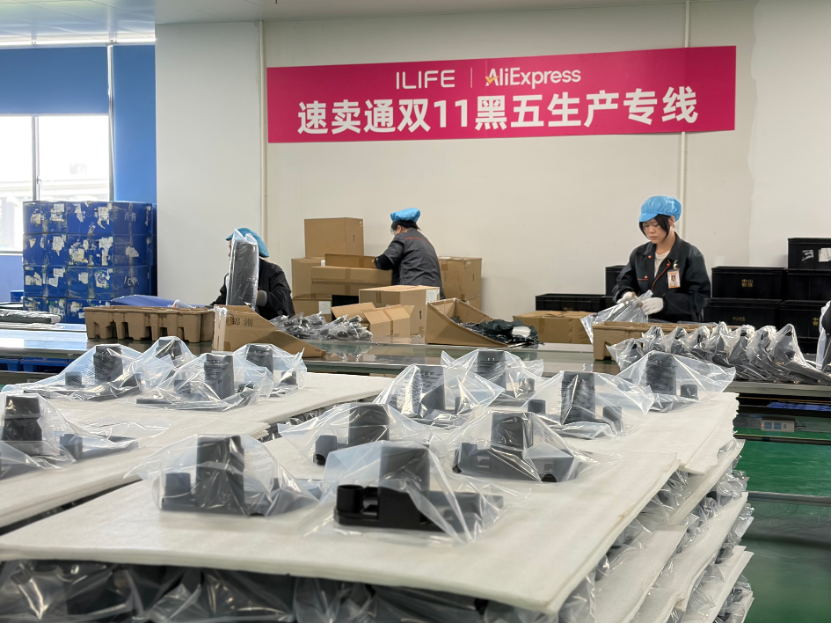
Core Insights - ILIFE has achieved significant sales growth in overseas markets, particularly on the AliExpress platform, with a 130% year-on-year increase during the overseas "Double 11" shopping festival, surpassing its sales on Amazon for the first time [1] - The brand's total sales on AliExpress have nearly tripled over the past year, with sales in Poland alone exceeding $10 million, establishing ILIFE as a "national-level" cleaning appliance brand in the country [1][2] Group 1 - ILIFE's growth is primarily attributed to its investment in AliExpress, which is expected to become its primary platform for international expansion [2] - The overall costs on AliExpress are about half of those on Amazon, with commission rates between 5% and 10%, significantly lower than Amazon's rates [2] - The brand's strategy includes leveraging local marketing capabilities and community engagement to enhance its presence in Poland [3] Group 2 - AliExpress is increasingly competing with Amazon in the European market, with over 300 brands doubling their sales on AliExpress compared to Amazon during the overseas "Double 11" [3] - A survey indicated that 65% of Polish consumers prefer to buy ILIFE's vacuum cleaners on AliExpress due to better pricing and satisfactory service, despite Amazon's faster logistics [3] - The cleaning appliance category on AliExpress in Poland has seen a 120% year-on-year growth during the "Double 11" period [3][4] Group 3 - The shift from OEM and distribution to brand establishment is evident in the Chinese home appliance sector, with brands like ILIFE utilizing platforms like AliExpress to reach global consumers directly [6] - AliExpress aims to help brands achieve higher sales at half the cost of Amazon, introducing initiatives like the "Brand+" channel to attract consumers [6] - Several brands have significantly increased their inventory on AliExpress ahead of major sales events, indicating a strategic pivot towards this platform [6]
深圳品牌出海已建上百独立站 单个独立站 最高奖百万
Shen Zhen Shang Bao· 2025-11-27 07:14
Core Insights - Shenzhen has established over 100 independent brand websites, which have become a crucial platform for brands to expand internationally [1] - The focus is on creating a competitive edge in independent site operations to enhance both sales and brand influence, which is a key concern for cross-border e-commerce and integrated trade enterprises in Shenzhen [1] Group 1: Independent Site Development - Shenzhen's independent site construction is accelerating, supported by government policies that encourage cross-border e-commerce companies to build their own marketing channels [1] - The Shenzhen Municipal Bureau of Commerce has outlined support policies for 2025, promoting the establishment of independent sites and offering financial rewards of up to 1 million yuan for qualifying sites [1] Group 2: Brand Strategy Shift - Companies are urged to shift from "traffic thinking" to "brand thinking," viewing independent sites as long-term operational bases rather than short-term traffic channels [2] - The integration of "independent site + platform" is recommended to create a complementary effect in traffic, users, brand, and operations [2] Group 3: Future Trends in International Expansion - The "Belt and Road" initiative is identified as a new growth area for independent sites, with lower advertising costs and increasing e-commerce penetration in regions like the Middle East, Eastern Europe, and Southeast Asia [3] - A combination strategy involving Meta testing, Google conversion, localized content, and logistics commitments is suggested to build high-trust and high-conversion brand experiences in emerging markets [3]
国盛证券:战略性、战术性看好A股资产 尤其是AI、新质生产力、自主可控、出海主线
智通财经网· 2025-11-27 05:38
Core Viewpoint - The report from Guosheng Securities suggests a strategic and tactical bullish outlook on A-share assets, driven by the anticipated rise of new economic drivers and forces in China during the "14th Five-Year Plan" period, particularly in advanced manufacturing and technology [2][3] Group 1: Investment Strategy - The report emphasizes the importance of investing in China, highlighting that each era has its core assets that reflect the macroeconomic environment, with the upcoming period expected to attract global resources and create a bull market in equities [2] - The focus is on four main investment themes: "All in AI, new productive forces, self-control, and going global" [1][2] Group 2: Asset Allocation - A-shares are viewed positively, with a focus on a "dumbbell strategy" where investments are concentrated at both ends: technology growth and dividend stocks, while rotating through mid-range assets [3] - The report identifies key sectors for investment, including technology related to self-control and domestic substitution, as well as long-duration low-yield assets like dividend stocks [3] Group 3: Market Conditions - The domestic bond market is expected to experience fluctuations, with the 10-year government bond yield projected to range between 1.5% and 1.9% due to various economic factors [4] - In the U.S. market, the report anticipates volatility in U.S. stocks, with a downward trend in U.S. Treasury yields and a weakening dollar, influenced by AI narratives and fiscal policies [5][6] Group 4: Commodity Outlook - The report notes a broad presence of bullish options in commodities, with precious metals like gold and silver benefiting from trends such as "de-dollarization" and "debt monetization" [6] - Specific commodities such as copper, aluminum, and rare earths are expected to gain from energy transition and technological advancements, as well as geopolitical tensions [6]

福瑞达:加大海外市场布局 积极链接品牌出海资源
Zheng Quan Ri Bao Zhi Sheng· 2025-11-26 13:41
Core Viewpoint - The company is accelerating its brand internationalization efforts, focusing on its main brands, Yilian and Aier Doctor, and has already exported to countries such as the United States and Malaysia [1] Group 1 - The company is leveraging global platforms like the China International Import Expo to enhance its overseas market presence [1] - The company aims to connect with international brand export resources to create a model for overseas markets [1] - The goal is to provide global consumers with more high-quality skincare products [1]
