
AI数据中心

Search documents
亚联发展:目前公司不存在AI数据中心方面相关布局
Mei Ri Jing Ji Xin Wen· 2026-01-14 13:01
Group 1 - The company has no current layout in the AI data center sector [1] - The company's focus in the smart private network field is primarily on providing information and communication technology solutions for industries such as electricity and transportation [1]

电网投资有望加码,低市盈率+成交活跃股名单出炉
Zheng Quan Shi Bao· 2026-01-14 10:35
全球AI数据中心建设浪潮正面临严重的"电力瓶颈",一批具备技术、成本和交付速度优势的中国电力供应链企业迎来历史性机遇。 电网设备板块开年大涨 2026年以来,电网设备板块持续走强。1月14日,行业龙头特变电工开盘上涨,盘中一度涨超9%,股价再创历史新高,A股市值一度超过1500亿元。午后受 大盘整体回调影响,该股涨幅明显回落,收盘下跌1.97%。 据证券时报·数据宝,截至1月14日收盘,电网设备(申万)指数今年以来涨幅10.2%,超同期上证指数6个百分点以上。而在2025年,该指数大涨33.64%,同 样跑赢同期大盘指数。 多只电网设备股自2025年以来走势强劲。截至1月14日收盘,2025年以来共有17股涨幅翻倍,其中智洋创新、华通线缆、中超控股、华菱线缆、红相股份累 计涨幅排在前五位。仅1月14日当天,就有4只股票盘中股价创历史新高,分别为金盘科技、四方股份、特变电工、中国西电。 "十五五"开局之年电网投资有望加码 电网设备行业的热度持续攀升,与下游AI数据中心用电需求旺盛密切相关。据国际能源署(IEA)数据,到2030年,数据中心的电力消耗预计将翻倍至约 945TWh,略高于日本当前的总用电量。其中,美 ...


AI数据中心电力供应链,高盛最偏好“燃气轮机叶片和变压器”,对这类中国企业是大机遇
Hua Er Jie Jian Wen· 2026-01-14 04:09
Core Insights - The global AI data center construction is facing a significant "power bottleneck," particularly in the U.S. market, creating historic opportunities for Chinese power supply chain companies with advantages in technology, cost, and delivery speed [1][2]. Group 1: Market Dynamics - Global AI data center capacity is expected to increase by approximately 73 gigawatts (GW) from 2025 to 2030, primarily concentrated in the U.S. and China [2]. - The U.S. is experiencing a more severe power supply bottleneck compared to other countries, with local power equipment capacity only meeting about 40% of domestic demand [4]. - The average power reserve capacity in the U.S. is projected to be around 100 GW from 2025 to 2030, while China's average reserve capacity is expected to reach 300 GW, indicating a more robust system [4]. Group 2: Supply Chain Challenges - Power generation equipment, particularly gas turbines and transformers, is identified as the most critical supply chain bottleneck, with shortages expected to persist until 2028-2030 [3]. - The production of gas turbine blades and transformers faces significant technical barriers and customization requirements, leading to slow capacity expansion [5]. Group 3: Competitive Advantages of Chinese Suppliers - Chinese suppliers are positioned to capture overflow demand due to their shorter delivery times compared to the 3-5 year wait for key components in the U.S. [7]. - The core competitive advantages of Chinese suppliers include not only cost but also faster delivery times and competitive products, particularly in high-voltage direct current (HVDC) technology and high-density power conversion [8][10]. - Chinese companies are expected to achieve an average sales compound annual growth rate of 23% from 2025 to 2030, with overseas AI data center markets contributing an average of 23% to their revenue by 2030 [1]. Group 4: Financial Implications - The pricing premium for Chinese suppliers in overseas markets can reach 10% to 80%, leading to significant gross margin expansion despite additional tariffs and logistics costs [9]. - The transition to 800V direct current architecture is anticipated to save 5-15% in energy consumption, benefiting suppliers with expertise in this area [6][12].
电网设备主题ETF领涨市场丨ETF基金日报
Sou Hu Cai Jing· 2026-01-14 02:16
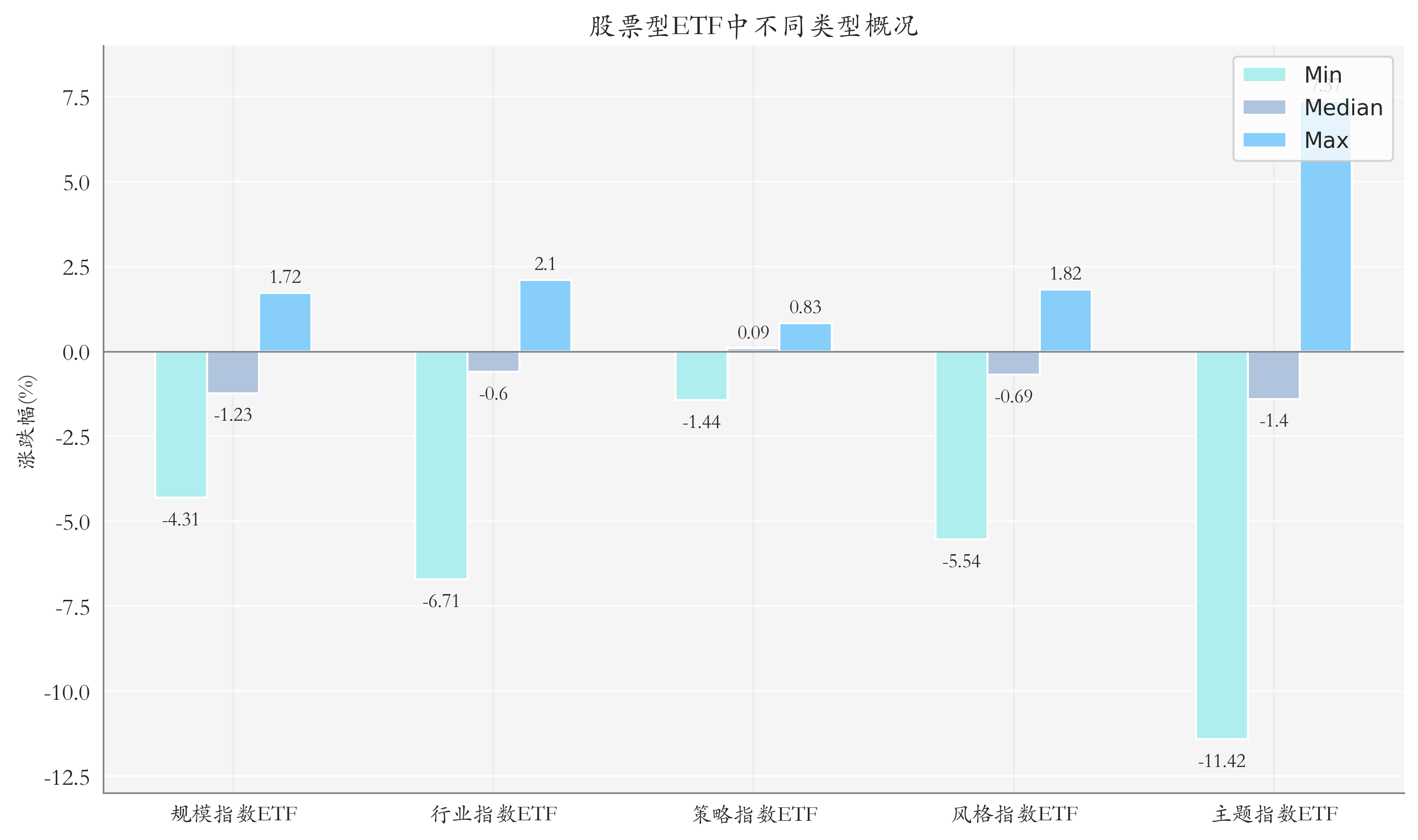
Market Overview - The Shanghai Composite Index fell by 0.64% to close at 4138.76 points, with a high of 4179.7 points during the day [1] - The Shenzhen Component Index decreased by 1.37% to 14169.4 points, reaching a peak of 14458.88 points [1] - The ChiNext Index dropped by 1.96% to 3321.89 points, with a maximum of 3416.84 points [1] ETF Market Performance - The median return of stock ETFs was -0.95% [2] - The highest performing scale index ETF was the Bosera CSI A100 ETF with a return of 1.72% [2] - The highest performing industry index ETF was the Yinhua CSI All-Share Power Utility ETF with a return of 2.1% [2] - The highest performing strategy index ETF was the E Fund National Free Cash Flow ETF with a return of 0.83% [2] - The highest performing style index ETF was the Harvest CSI Pharmaceutical Health 100 Strategy ETF with a return of 1.82% [2] - The highest performing thematic index ETF was the Guotai Hangseng A-Share Power Equipment ETF with a return of 7.37% [2] ETF Performance Rankings - The top three ETFs by return were: - Guotai Hangseng A-Share Power Equipment ETF (7.37%) - Yinhua CSI Oil and Gas Resources ETF (2.84%) - Huaxia CSI Power Equipment Thematic ETF (2.83%) [5] - The top three ETFs by decline were: - Morgan CSI Innovation and Entrepreneurship Artificial Intelligence ETF (-11.42%) - Huaxia National Aerospace Industry ETF (-9.36%) - Huatai Baichuan CSI All-Share Aerospace ETF (-9.17%) [6] ETF Fund Flows - The top three ETFs by fund inflow were: - GF CSI Media ETF (inflow of 4.122 billion) - Yongying National Commercial Satellite Communication Industry ETF (inflow of 1.886 billion) - Harvest CSI Software Service ETF (inflow of 1.507 billion) [8] - The top three ETFs by fund outflow were: - Huaxia SSE 50 ETF (outflow of 1.448 billion) - E Fund ChiNext ETF (outflow of 1.386 billion) - Huaxia CSI Robot ETF (outflow of 572 million) [10] ETF Margin Trading Overview - The top three ETFs by margin buying were: - Huaxia SSE Sci-Tech Innovation Board 50 ETF (0.95 billion) - GF CSI Media ETF (0.747 billion) - Guotai CSI All-Share Securities Company ETF (0.568 billion) [11] - The top three ETFs by margin selling were: - Huatai Baichuan CSI 300 ETF (33.78 million) - Huaxia SSE 50 ETF (24.27 million) - Southern CSI 500 ETF (15.93 million) [13] Institutional Insights - Huaxin Securities highlighted the ongoing modernization of the power grid and the expanding equipment gap, noting that North America's long-term investment in key areas like high-voltage transformers and distribution equipment has been insufficient [13] - The demand for high-voltage and ultra-high-voltage transformers, switching equipment, and digital grid infrastructure is expected to increase as the grid enters an accelerated investment cycle [13] - Guotai Securities anticipates that domestic power grid investment will maintain a high level of activity, benefiting from proactive fiscal policies aimed at expanding domestic demand [14]
特朗普过去24小时都忙了什么?(2026-01-13)
Xin Lang Cai Jing· 2026-01-13 10:19
Group 1 - The U.S. will impose a 25% tariff on any country that conducts business with Iran, effective immediately, although specific details on the tariff's scope have not been provided [1][2][3] - The Federal Reserve Chairman interview process is nearing completion, with Rick Riedel from BlackRock being interviewed on January 15, where he reiterated support for lowering the U.S. benchmark interest rate to 3% [2][3] - A collective statement of support for Powell has been issued by several former Federal Reserve Chairs and notable economists, indicating a strong backing amidst ongoing investigations [3][4] Group 2 - Current U.S. policy still allows Mexico to supply oil to Cuba, despite Trump's announcement to cease oil and funding support for the island [2][4] - In response to rising electricity prices, the government is negotiating with Microsoft to ensure consumers do not bear the costs associated with large data centers [3][4] - Trump criticized New York's congestion pricing policy, calling for its immediate termination, claiming it has never been effective [4] - A warning was issued regarding potential liabilities of trillions of dollars if the government loses on tariff issues, suggesting that such payments would be nearly impossible for the U.S. to afford [4]
涨幅达300%!内存条价格大涨,记者实地探访→
新华网财经· 2026-01-12 03:05
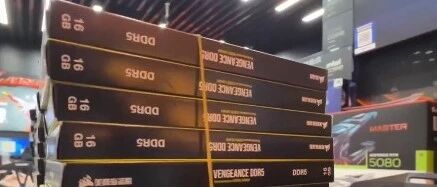
Core Viewpoint - The recent significant price increase of memory modules has attracted widespread attention, with reports indicating that prices have surged dramatically in various markets [1]. Price Trends - In Shanghai, the price of a 16GB memory module has risen from over 300 yuan a year ago to more than 1100 yuan currently, reflecting an increase of over 2 to 3 times for other specifications as well [2]. - In Guiyang, Guizhou, most memory categories have seen price increases exceeding 100% since July of last year, with DDR4 and DDR5 memory experiencing even higher price hikes, reaching two to three times their previous prices [4]. Supply Chain Insights - According to a research director from a Shanghai-based enterprise service department, the shortage has now affected the upstream supply chain of storage devices. It is anticipated that the supply capacity will not be resolved quickly, and shortages may persist at least until the second half of the year [6]. Market Dynamics - Data indicates that global investment in AI data centers reached a historical high last year, with surging demand for high-end products impacting the entire market and causing price increases across various memory module specifications [7].
蓝思科技早盘涨超6% 公司创新研发航天级超薄柔性玻璃UTG光伏封装
Zhi Tong Cai Jing· 2026-01-12 01:45
Core Viewpoint - Lens Technology (300433)(06613) has seen a significant stock increase, attributed to its innovative presentation at CES 2026, showcasing a comprehensive AI hardware ecosystem focused on aerospace and intelligent applications [1] Group 1: Stock Performance - Lens Technology's stock rose over 6% in early trading, currently up 4.24% at HKD 30.16, with a trading volume of HKD 211 million [1] Group 2: Product Innovation - The company presented its ultra-thin flexible glass (UTG) photovoltaic packaging, which has become a focal point in the low Earth orbit satellite internet sector [1] - The UTG glass has a thickness ranging from 30μm to 50μm and can bend to a radius of 1.5mm, addressing the evolution needs of flexible solar wings in low Earth orbit satellites [1] - The UTG was developed in collaboration with glass substrate manufacturers, featuring special glass formulations and surface treatments to enhance resistance to atomic oxygen erosion and UV aging [1] Group 3: Technological Advancements - Lens Technology demonstrated its chemical strengthening and nano-coating technologies for foldable screens, showcasing their adaptability to aerospace environments, particularly for rocket launch vibrations and long-term reliability in space [1]

港股异动 | 蓝思科技(06613)早盘涨超6% 公司创新研发航天级超薄柔性玻璃UTG光伏封装
智通财经网· 2026-01-12 01:40
Core Viewpoint - Lens Technology (06613) has seen a significant stock increase, rising over 6% in early trading, attributed to its innovative presentations at CES 2026, particularly in the aerospace and AI hardware sectors [1] Group 1: Company Developments - Lens Technology showcased a comprehensive AI hardware ecosystem at CES 2026, covering five key areas: aerospace, embodied intelligence, AI data centers, AI terminals, and smart cockpits [1] - The company introduced its aerospace-grade ultra-thin flexible glass (UTG) photovoltaic packaging, which has become a focal point in the low Earth orbit satellite internet sector [1] - The UTG glass has a thickness ranging from 30μm to 50μm and can be bent to a radius of 1.5mm, addressing the evolution needs of low Earth orbit satellite solar wings from rigid panels to rollable and foldable flexible solar wings (ROSA structures) [1] Group 2: Technological Innovations - The UTG was developed in collaboration with glass substrate manufacturers, utilizing a special glass formula and surface treatment process to enhance its resistance to atomic oxygen erosion and UV aging [1] - Lens Technology also demonstrated its advancements in chemical strengthening and nano-coating technologies for foldable screens, showcasing their adaptability to the harsh conditions of rocket launches and long-term reliability in space environments [1]
【基础化工】商务部陆续出台对日管制措施,半导体材料国产替代紧迫性提升——行业周报(20260105-20260109)(赵乃迪/蔡嘉豪/周家诺)
光大证券研究· 2026-01-11 23:03
Group 1 - The article highlights the urgency for domestic substitution of semiconductor materials due to recent export control measures imposed by the Ministry of Commerce on Japan, which includes a ban on dual-use items and an anti-dumping investigation on DCS, a key electronic chemical material for chip manufacturing [4] - The ongoing geopolitical tensions between China and Japan are likely to escalate, increasing the probability of Japan retaliating with further export controls, which would heighten uncertainties in the domestic semiconductor supply chain [4] Group 2 - Global semiconductor sales are projected to grow significantly in 2025, driven by demand from AI computing, data centers, and smart driving, with an expected sales figure of approximately $687.4 billion, representing a year-on-year increase of 22.7% [5] - The production capacity for 12-inch wafers is expected to reach 11.1 million pieces per month by 2028, with a compound annual growth rate (CAGR) of about 7% from 2024 to 2028, while advanced process capacity (7nm and below) is anticipated to grow from 850,000 to 1.4 million pieces per month, with a CAGR of 14% [5] Group 3 - The demand for high-bandwidth memory (HBM) is rapidly increasing due to the needs of data centers and AI processors, leading to a significant rise in semiconductor material consumption [6] - The global semiconductor materials market is expected to reach approximately $70 billion in 2025, with a year-on-year growth of 6%, and is projected to exceed $87 billion by 2029 [6] - In China, the market for key materials is forecasted to reach 174.1 billion yuan in 2025, reflecting a growth rate of 21.1% [6]

内存条价格一年暴涨300%
Mei Ri Jing Ji Xin Wen· 2026-01-11 15:10
Core Insights - The price of 16GB memory modules has increased from over 300 yuan to over 1100 yuan in one year, reflecting a significant price surge in the market [1] - The global investment in AI data centers reached a historical high last year, driving demand for high-end products and contributing to the price increase of various memory specifications [1] - The upstream supply chain for memory components is experiencing shortages, and it is expected that the supply capacity will not be resolved quickly, with shortages likely to persist at least until the second half of the year [1]