
光伏反内卷

Search documents
光伏反内卷点评:反内卷再出新政策,高质量发展导向明确
Shenwan Hongyuan Securities· 2025-09-25 13:28
Investment Rating - The industry investment rating is "Overweight" indicating that the industry is expected to outperform the overall market [8] Core Insights - The report highlights a significant shift in the photovoltaic (PV) industry from a single energy consumption model to a multi-energy comprehensive utilization model, which is crucial for alleviating current PV consumption pressures [2][3] - Future development of renewable energy is expected to transition from a "resource-oriented" approach to a "market-oriented" approach, emphasizing cost control and operational efficiency over mere resource availability [2] - Key measures to break the "involution" in the industry include policy coordination and technological innovation, which are essential for addressing the supply-demand imbalance in the photovoltaic manufacturing sector [2] Summary by Sections Industry Transition - The article emphasizes the need for a transition in the PV industry towards multi-energy utilization, particularly highlighting the importance of hydrogen production from renewable sources [2] - The utilization rate of PV power generation in China was reported at 94.7% for January to July 2025, a decrease of 2.4 percentage points year-on-year, indicating increasing pressure on the power system [2] Market Dynamics - The report stresses that the competitiveness of PV power stations will increasingly depend on market capabilities such as cost control and bidding strategies rather than just resource conditions [2] - The current challenges faced by renewable energy in the power market include weak bargaining power and exposure to price volatility, leading to situations where companies experience "increased output without increased revenue" [2] Investment Recommendations - The report suggests focusing on companies that will benefit from the "involution" reversal, particularly in the silicon material segment, including companies like GCL-Poly Energy, Daqo New Energy, Tongwei Co., and TBEA [2] - It also highlights the importance of new technology firms such as Aiko Solar in the evolving market landscape [2] Valuation Table - A valuation table is provided for key companies in the power equipment sector, detailing their stock prices, market capitalizations, and projected net profits for 2025 to 2027 [3]



康农种业(837403)深度:育繁推一体化企业,品种制胜,扩大全国销售版图
Shenwan Hongyuan Securities· 2025-09-25 00:55
Core Insights - The report highlights the integrated development of Kangnong Agriculture, focusing on hybrid corn seed production, breeding, and promotion, achieving a revenue CAGR of 30.5% and a profit CAGR of 42.1% from 2022 to 2024 [2][10] - The industry is experiencing a demand for high-yield and quality varieties, with a projected tight balance in corn supply and demand for the 2025/26 season, leading to stable corn prices and positive planting enthusiasm among farmers [2][10] - Kangnong's flagship product, Kangnong Yu 8009, is expected to drive growth, with sales projections indicating significant volume increases in the coming years [2][10] Company Overview - Kangnong Agriculture specializes in hybrid corn seeds and has streamlined its operations across breeding, propagation, and promotion since 2017 [2][10] - The company has successfully entered new markets, including the Huanghuaihai summer sowing area and northern spring sowing area, which have become new growth drivers [2][10] Industry Analysis - The seed market is currently facing a supply-demand imbalance, with a projected supply-demand ratio of 175% for the 2024/25 season, indicating a high inventory situation that may take 2-3 years to improve [2][10] - High-quality varieties are favored in the market, commanding better price premiums, while competition among homogeneous varieties remains intense, putting pressure on prices [2][10] Short-term Outlook - For 2025, the company aims to achieve both revenue growth and cost reduction, with expectations of increased gross margins due to self-propagation models [2][10] - The anticipated gross margin for 2025 is projected to improve by 1.2-5.0 percentage points based on sensitivity analysis [2][10] Long-term Strategy - Kangnong plans to expand its national sales footprint, leveraging its market position in the Southwest and introducing diverse product offerings in the Huanghuaihai and Northeast markets [2][10] - The company has a robust pipeline for transgenic varieties, with a strategic rollout across different regions [2][10] Investment Rating and Valuation - The report forecasts Kangnong's net profit for 2025-2027 to be 0.96 billion, 1.23 billion, and 1.50 billion respectively, with a target market capitalization of 4.5 billion, indicating a potential upside of 90% from the current closing price [2][10] - The report assigns a "Buy" rating based on the company's growth potential and favorable market conditions [2][10]
9月24日早餐 | 云栖大会今日开幕
Xuan Gu Bao· 2025-09-24 00:01
Market Overview - US stock markets experienced a decline, with the Dow Jones down 0.19%, Nasdaq down 0.95%, and S&P 500 down 0.55% [1] - Major tech stocks also fell, including Amazon down 3.04%, Nvidia down 2.82%, Tesla down 1.93%, Meta down 1.28%, Microsoft down 1.01%, Apple down 0.63%, and Google A down 0.34% [1] Company Developments - Lithium Americas saw a post-market surge of over 94% following reports that the Trump administration is considering holding shares in the company [2] - The US Department of Defense awarded a $245 million contract to a US antimony company [3] - Micron Technology reported that AI-driven demand is accelerating the shortage of DRAM supplies [5] - Microsoft announced the launch of a chip-integrated microfluidic cooling system [7] Industry Insights - The semiconductor industry is facing rising prices, with reports indicating that the price of the last generation 3nm CPUs has increased by approximately 20%, and the upcoming 2nm generation is expected to rise by over 50% [12] - TSMC has notified clients of price increases of about 5% to 10% for 5nm, 4nm, 3nm, and 2nm wafer foundry services [12] - The global semiconductor wafer production capacity is projected to grow from 31.5 million pieces per month in 2024 to 33.7 million pieces per month in 2025, driven by increasing chip demand [12] - The photovoltaic industry is seeing significant price control measures, with expectations for supply-side improvements through policy support and market-driven capacity exits [15] Investment Opportunities - Tether is seeking to raise up to $20 billion at a valuation of $500 billion [6] - Cloud AI and robotics sectors are gaining traction, with companies like CloudWalk and others showcasing advancements in AI-driven products and technologies [19][20] - The demand for high-end copper foil is surging due to AI server requirements, with a notable price increase of about 15% announced by Mitsui Mining [16] Upcoming Events - The Cloud Summit is set to open today, featuring Nvidia and discussions on robotics [13] - The Shanghai International Intelligent Robotics Conference will also take place today, with participation from various tech companies [13]


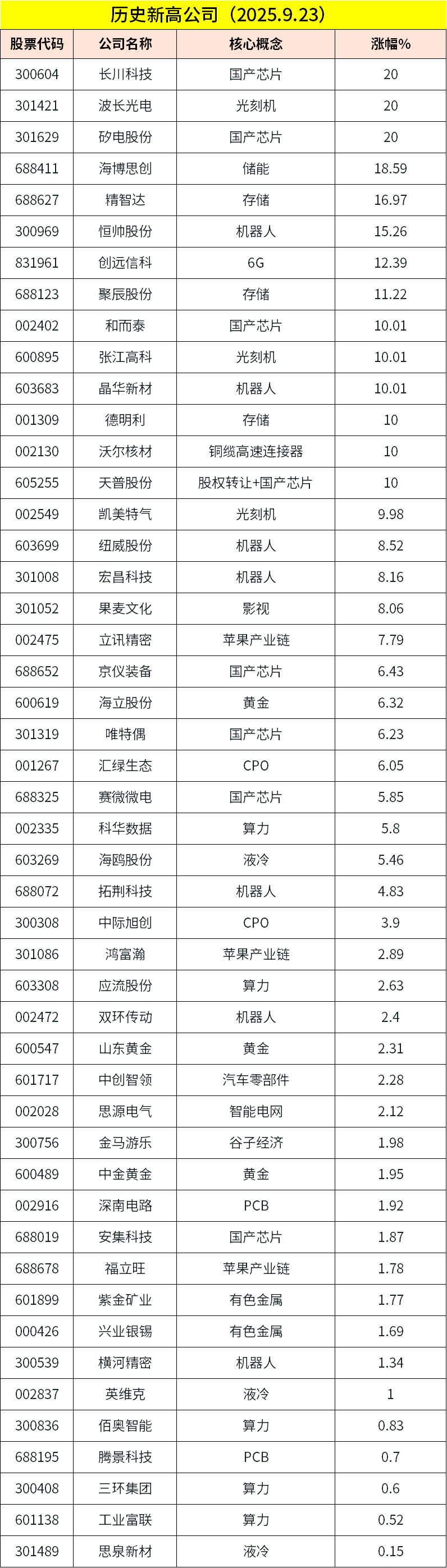
上游现减产预期,多晶硅成交价重心继续上移
Xuan Gu Bao· 2025-09-23 23:17
Industry Insights - The price of multi-crystalline silicon N-type raw materials is quoted at 50.3-55 CNY/kg, while granular silicon is priced at 49-50 CNY/kg, with an overall multi-crystalline silicon price index at 52.44 CNY/kg, indicating a slight upward shift in transaction prices [1] - The market for multi-crystalline silicon is experiencing polarization, with resources priced at 52 CNY/kg and below being more popular, leading to some crystal pulling enterprises facing supply shortages [1] - In September, multi-crystalline silicon production saw mixed changes, with an overall expected slight decline. In October, a reduction in production is anticipated in the Sichuan region due to the approaching dry season [1] - The photovoltaic industry is advancing its "anti-involution" strategy, with significant effects from price control measures, suggesting that industry chain prices may gradually cover full costs [1] - Strict new energy consumption standards for multi-crystalline silicon are expected to accelerate the elimination of outdated production capacity [1] - The photovoltaic sector is likely to achieve supply-side improvements through a combination of top-level support, market-driven elimination, and technological iteration, with policies related to capacity and product quality expected to be implemented soon [1] Company Developments - TBEA (特变电工) claims that its multi-crystalline silicon cost and quality are among the best in China, with cash costs around 30,000 CNY/ton and comprehensive costs approximately 35,000 CNY/ton by July 2025 [2] - Daqo New Energy (大全能源), a leading domestic high-purity multi-crystalline silicon producer, has established partnerships with major photovoltaic companies such as Longi Green Energy, JA Solar, Trina Solar, and TCL Zhonghuan, with a production guidance of 110,000 to 140,000 tons for the entire year of 2025 [2]
硅烷科技(838402):公司点评报告:硅烷气价格下滑,公司业绩显著承压,硅碳负极有望推动需求增加
Zhongyuan Securities· 2025-09-23 11:16
Investment Rating - The report assigns an "Accumulate" rating for the company, indicating a potential increase of 5% to 15% relative to the CSI 300 index over the next six months [23]. Core Views - The company's performance is significantly pressured by the decline in silane gas prices, with a notable 40.09% year-on-year drop in revenue for the first half of 2025, amounting to 246 million yuan [5][8]. - The transition towards silicon-carbon anodes is expected to drive demand growth, as the technology matures and commercial projects are implemented, potentially increasing the demand for electronic-grade silane gas [8]. - The report anticipates a recovery in the photovoltaic industry, which may lead to a rebound in product prices across the supply chain, further supporting the company's growth prospects [8]. Summary by Sections Financial Performance - In the first half of 2025, the company reported a net profit attributable to shareholders of -33 million yuan, marking a 140.02% decline year-on-year, with a basic earnings per share of -0.08 yuan [5][8]. - The gross margin for the first half of 2025 was -4.05%, a decrease of 37.76 percentage points compared to the same period last year [8]. - The company's operating cash flow decreased by 51.65% to 25 million yuan, primarily due to reduced revenue and cash inflows from sales [8]. Market Dynamics - The decline in silane gas prices is attributed to an imbalance in supply and demand within the photovoltaic industry, leading to lower prices across the product spectrum [8]. - The average price of silane gas in the Zhejiang market fell from 80 yuan/kg in January to 40 yuan/kg in June, representing a 50% year-on-year decrease [8]. Future Outlook - The report forecasts revenue growth for the company, estimating revenues of 615 million yuan, 790 million yuan, and 849 million yuan for 2025, 2026, and 2027 respectively [9]. - Net profit projections for the same years are 63 million yuan, 150 million yuan, and 174 million yuan, with corresponding earnings per share of 0.15 yuan, 0.35 yuan, and 0.41 yuan [9].
晶科能源出售资产“回血”明年或现盈利拐点
Zhong Guo Jing Ying Bao· 2025-09-22 04:24
Core Viewpoint - JinkoSolar, a leading company in the photovoltaic industry, is undergoing significant capital operations, including asset sales and share transfers, in response to the industry's downturn, with expectations of returning to profitability by 2026 [2][6]. Group 1: Asset Sales and Financial Moves - JinkoSolar announced the sale of 80% of its subsidiary Jinko New Materials to Dike Co., Ltd. for 80 million yuan, with the first payment of 16 million yuan completed [2][4]. - The company’s major shareholder plans to transfer approximately 400 million shares at an initial price of 4.90 yuan per share, potentially raising about 1.96 billion yuan [2][5]. - Jinko New Materials, established in 2020, has been operating at a loss, with total assets of 65.08 million yuan and a net profit of -11.35 million yuan for the first half of 2025 [3][4]. Group 2: Industry Context and Challenges - The photovoltaic industry is experiencing a "winter," characterized by intensified competition and declining prices, affecting even leading companies like JinkoSolar [2][6]. - JinkoSolar reported a significant decline in revenue, with a 32.63% year-on-year decrease to 31.83 billion yuan and a net loss of 2.91 billion yuan for the first half of 2025 [6]. - The company’s asset-liability ratio reached 74.07%, indicating a relatively high level of debt compared to peers [5]. Group 3: Future Strategies and Market Outlook - JinkoSolar aims to enhance its operational efficiency and reduce management costs through these asset sales, with a focus on utilizing funds effectively [4]. - The company is investing in technology upgrades, particularly in TOPCon technology and perovskite tandem cells, to maintain competitiveness [7]. - JinkoSolar's global strategy includes establishing production bases in Southeast Asia and the U.S., with over 60% of its sales revenue coming from overseas markets in the first half of 2025 [7][8]. Group 4: Energy Storage Development - JinkoSolar is developing its energy storage business, with a focus on overseas markets, having shipped 1.5 GWh of storage systems in the first half of 2025, surpassing the total for the previous year [8]. - Despite rapid growth in the energy storage sector, it is not yet a major contributor to the company's overall performance, with expectations of improved profit margins in the future [8].

光伏:反内卷持续推进,价格改善迎布局良机
2025-09-22 01:00
Summary of Key Points from the Conference Call on the Photovoltaic Industry Industry Overview - The photovoltaic (PV) industry is driven by policies aimed at addressing excessive competition, with measures such as minimum bidding guidance prices and energy consumption standards to promote the elimination of outdated capacity and achieve supply-demand balance and price recovery [1][2] - Global installed capacity is expected to reach 580 GW in 2025, a 10% year-on-year increase, with module demand projected between 600-700 GW [1][4] - The industry is expected to maintain a growth rate of 10%-15% over the next three years [1][4] Core Insights and Arguments - Since July 2025, prices in the PV supply chain have begun to rise, with silicon materials and wafers leading the rebound, and module bidding prices also starting to recover, indicating the effectiveness of anti-involution measures [1][5] - The valuation of the PV industry is currently relatively low, with short-term support from policies and long-term positive demand expectations [1][9] - New energy consumption standards may impact polysilicon capacity, potentially leading to supply reductions, with about 30% of capacity not meeting the standards [1][14] Investment Opportunities - Recommended sectors include high-energy-consuming and cost-competitive areas such as polysilicon and glass, with companies like Tongwei, GCL, and Flat Glass being the most beneficial from supply-side reforms [6] - Leading companies in various segments, such as Zhonghuan in wafers, Junda in batteries, and JA Solar in modules, are expected to have strong operational capabilities and potential for profitability recovery [6][7] - New technology fields, such as BC battery technology and advancements in silver and copper pastes, are also highlighted as significant opportunities [7] Challenges and Risks - The PV industry faces intense competition leading to severe involution and ineffective self-regulation, compounded by local government support hindering market clearing [8] - Stronger policy measures are needed to expedite the exit of outdated capacity and enhance market discipline [8] Price Trends and Market Dynamics - The price of polysilicon has risen to approximately 40,000 to 52,000 yuan, with expectations of price stability due to production control measures [16] - The increase in polysilicon prices will lead to higher module costs, but the overall impact on the installation cost of PV systems is expected to be minimal [17] Future Outlook - The PV industry is currently undervalued, with a significant improvement in fundamentals expected in the latter half of 2025 and into 2026 [22] - The storage business is anticipated to become a crucial growth point for PV module companies, with firms like Trina Solar and JinkoSolar showing significant potential for performance growth [21] Additional Insights - The auxiliary materials sector is experiencing price increases and profit recovery opportunities, particularly in glass and other materials, driven by supply structure optimization [23] - The application of copper paste and tungsten wire is accelerating, with significant advancements expected in 2026 [24] Conclusion - The PV industry is at a pivotal moment with policy support, improving fundamentals, and emerging growth opportunities in storage and technology, making it a compelling area for investment [22]
多晶硅能耗指标收紧,产能出清在即:光伏行业点评
Shenwan Hongyuan Securities· 2025-09-19 11:26
Investment Rating - The report assigns an "Overweight" rating to the photovoltaic industry, indicating that it is expected to outperform the overall market [8]. Core Insights - The National Standard Committee has proposed stricter energy consumption standards for polysilicon production, reducing the third-level energy consumption standard from ≤10.5 kgce/kg to ≤6.4 kgce/kg, which will lead to the forced shutdown or consolidation of high-energy-consuming capacity [3]. - The new standards are expected to accelerate the elimination of outdated production capacity, particularly affecting facilities established before 2020 that utilize the improved Siemens process [3]. - The report highlights a technological differentiation in production routes, with granular silicon showing significant advantages over rod silicon in terms of energy consumption standards [3]. - The implementation of the new standards is anticipated to keep polysilicon prices robust, as companies will need to increase prices to achieve breakeven under low operating rates [3]. Summary by Sections New Standards and Their Implications - The new energy consumption standards for polysilicon are significantly stricter, with specific limits set for different production methods [3]. - The transition period for companies to comply with the new standards is 12 months, with the official implementation expected in October 2026 [3]. Investment Recommendations - The report suggests focusing on companies like GCL-Poly Energy, Tongwei Co., and Daqo New Energy, as they are well-positioned to adapt to the new standards [3]. - Additionally, companies that upgrade their high-energy-consuming capacities to meet the new standards, such as Shuangliang Eco-Energy, are also recommended for investment [3]. Market Dynamics - The report notes that the market is considering the establishment of large-scale funds for polysilicon storage, indicating a potential shift in market dynamics [3].

光伏行业点评:多晶硅能耗指标收紧,产能出清在即
Shenwan Hongyuan Securities· 2025-09-19 11:12
Investment Rating - The report rates the photovoltaic industry as "Overweight" indicating a positive outlook for the sector [3]. Core Insights - The National Standard Committee has proposed stricter energy consumption limits for polysilicon production, reducing the third-level energy consumption standard from ≤10.5 kgce/kg to ≤6.4 kgce/kg, which will lead to the forced shutdown or consolidation of high-energy-consuming capacity [3]. - The new standards are expected to accelerate the elimination of outdated production capacity, particularly affecting facilities established before 2020 that utilize the improved Siemens process [3]. - The report highlights a differentiation in technical routes, with granular silicon showing significant advantages over rod silicon in terms of energy consumption standards [3]. - A 12-month transition period is provided for companies to comply with the new standards, which are expected to be officially released in December 2025 and enforced from October 2026 [3]. - Following the implementation of the new standards, polysilicon prices are anticipated to remain strong, with potential price increases needed for companies to achieve breakeven at low operating rates [3]. Summary by Sections New Standards - The new energy consumption standards for polysilicon are significantly stricter, with rod silicon standards set at ≤5, 5.5, and 6.4 kgce/kg, and granular silicon standards at 3.6, 4.0, and 5.0 kgce/kg [3]. - The average energy consumption for polysilicon in 2024 is projected to be around 55 kWh, which is above the new first-level energy consumption standard [3]. Market Implications - The report suggests that leading companies like Tongwei Co., Ltd. have already reduced their polysilicon energy consumption to around 46 kWh, below the new first-level standard [3]. - The report recommends focusing on companies such as GCL-Poly Energy Holdings, Tongwei Co., Ltd., and Daqo New Energy Corp., as well as polysilicon equipment manufacturers like Shuangliang Eco-Energy [3]. Company Valuations - The report includes a valuation table for key companies in the power equipment sector, indicating their market capitalization and projected net profits for 2025 to 2027 [4].
交银国际:看好内地光伏行业“反内卷”推进 首选协鑫科技
Zhi Tong Cai Jing· 2025-09-19 03:31
Core Viewpoint - The tightening of energy consumption standards for polysilicon reflects the government's strong commitment to "anti-involution" in the photovoltaic industry, using higher technical standards as a primary means to eliminate outdated production capacity [1] Industry Summary - On September 16, the "Energy Consumption Limits for Polysilicon and Germanium Products" was released, setting the comprehensive energy consumption for rod silicon at 5/5.5/6.4 kgce/kg for grades 1/2/3, significantly stricter than the previously indicated limits of 5/6/7.5 kgce/kg from the industry meeting on July 24 [1] - Following the implementation of this standard, companies that do not meet the grade 3 standard will be given a deadline for rectification, and those that fail to comply or do not meet the grade 2 standard after rectification will be shut down [1] - Preliminary statistics from the Silicon Industry Association indicate that domestic polysilicon effective capacity will decrease to approximately 2.4 million tons, a significant reduction of 31.4% compared to the existing capacity of 3.5 million tons [1] Company Summary - The report maintains a positive outlook on the photovoltaic industry’s "anti-involution" efforts, with a preference for leading companies in low energy consumption, specifically highlighting GCL-Poly Energy Holdings Limited (03800) as a top choice [1]