关税影响

Search documents
“新美联储通讯社”:三大阵营博弈美联储何时降息
华尔街见闻· 2025-07-30 05:00
Core Viewpoint - The article discusses the internal divisions within the Federal Reserve regarding interest rate cuts, highlighting three distinct factions with differing views on when to implement such cuts [1][5][10]. Group 1: Internal Divisions - The Federal Reserve is divided into three main camps: a faction eager for immediate rate cuts due to concerns over the labor market, a middle group waiting for more data on tariff impacts, and a cautious faction preferring to see clear signs of economic weakness before acting [1][5][10]. - The middle camp, represented by San Francisco Fed President Mary Daly, emphasizes the instability of inflation forecasts and the risks of waiting too long to cut rates, suggesting a need for further data analysis over the next two months [6][10]. - The more aggressive faction, including Fed governors Christopher Waller and Michelle Bowman, advocates for immediate rate cuts, arguing that delaying action could worsen labor market conditions [7][8]. Group 2: Economic Signals and Political Pressure - The article notes that the internal divisions are exacerbated by inflation concerns stemming from tariff threats, which have previously led the Fed to pause rate cuts [2][3]. - Political pressure from former President Trump complicates the Fed's decision-making process, as he has been vocal about urging rate cuts and has made public appearances to influence Fed Chair Jerome Powell [9][10]. - Economic data presents mixed signals, with stock markets reaching record highs while long-term bond yields remain elevated, suggesting that the economy may be strong enough to withstand current interest rates [11][12]. Group 3: Future Expectations - Market participants are closely monitoring the Fed's internal debates, particularly Powell's comments during the upcoming press conference, for indications of a potential rate cut in September [14][15]. - Additional employment and inflation data over the next two months will be crucial for the Fed's decision-making, especially for the middle camp that stresses the importance of this data in making informed policy choices [16].

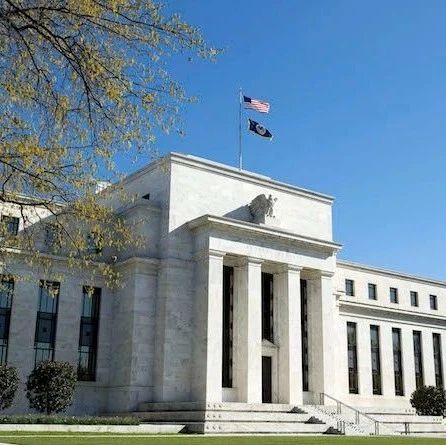
“新美联储通讯社”:2张反对票,3个阵营,关键是“鲍威尔在发布会是否暗示9月降息
Hua Er Jie Jian Wen· 2025-07-30 01:02
Core Viewpoint - The Federal Reserve is experiencing significant internal divisions regarding the timing of interest rate cuts, with three distinct factions emerging among officials [1][2][3]. Group 1: Internal Divisions - The Federal Reserve is divided into three main camps: a minority eager for immediate rate cuts, a cautious middle group, and a more conservative faction advocating for a wait-and-see approach [2][3]. - The cautious middle group, represented by San Francisco Fed President Mary Daly, emphasizes the need for more data to confirm the impact of tariffs on inflation before acting [2]. - The immediate rate cut advocates, including Fed governors Christopher Waller and Michelle Bowman, argue that delaying action could worsen the labor market [2]. Group 2: Political Pressures - Political pressure from former President Trump complicates the Fed's decision-making process, as he has been vocal about urging rate cuts [3][4]. - Trump's recent visit to the Fed's renovation site is seen as part of a broader effort to undermine Fed Chair Jerome Powell's position [3][4]. Group 3: Economic Signals - Economic data presents mixed signals, with stock markets reaching record highs while long-term bond yields remain elevated, suggesting the economy can withstand current interest rates [4]. - Former Dallas Fed President Robert Kaplan likens the Fed's decision-making process to a "super tanker," indicating that premature actions could have long-lasting repercussions [4]. Group 4: Market Expectations - The market anticipates that while no immediate policy changes will occur, the Fed may signal a future shift in policy direction [5][6]. - Investors are closely monitoring Fed Chair Powell's upcoming press conference for hints regarding the possibility of a rate cut in September [6].
“新美联储通讯社”:2张反对票,3个阵营,关键是“鲍威尔在发布会是否暗示9月降息”
Hua Er Jie Jian Wen· 2025-07-30 00:41
三大阵营的政策分歧日趋明显 美联储内部分歧加剧,市场关注9月降息的可能性。 有"新美联储通讯社"之称的华尔街日报记者Nick Timiraos近日发表文章称,美联储官员们虽然同意最终 需要恢复降息,但本周不会行动,他们对何时恢复降息存在严重分歧。 文章认为,目前,美联储内部已经分化为三个不同的阵营:一派想马上降息,担心劳动力市场恶化;中 间派想等更多数据确认关税影响温和;另一派则更谨慎,等看到明显经济疲软才行动。 这种内部分歧源于关税威胁引发通胀担忧,导致美联储此前屡屡暂停降息。 然而,随着关税传导的价格上涨幅度比预期温和,而就业市场显现疲软迹象,叠加特朗普的施压,联储 内部的分歧趋于复杂。 文章指出,焦点是周三FOMC会后鲍威尔在记者会上有关9月是否降息的暗示。 文章指出,虽然沃勒和鲍曼可能的反对票将成为五年来首次有FOMC会议出现"唱反调"的情况,并带来 新的头条新闻,但这实际上凸显了大多数美联储官员对过快行动的普遍谨慎态度,而非对其构成挑战。 保守派则采取了更加鹰派的立场,如亚特兰大联储主席拉斐尔·博斯蒂克(Raphael Bostic)担心,关税 公告虽已出,但实际征收率低,价格压力可能在夏末才显现。 ...
Visa(V.N)首席执行官:美国第二季度支出增长依然强劲,关税未产生明显影响。
news flash· 2025-07-29 21:28
Core Insights - Visa's CEO reported that consumer spending in the U.S. for the second quarter remains strong, indicating resilience in the economy despite external pressures [1] - The impact of tariffs on consumer spending has been minimal, suggesting that economic fundamentals are holding steady [1] Group 1 - The second quarter spending growth in the U.S. is robust, reflecting positive consumer sentiment and economic activity [1] - Tariffs have not significantly affected spending patterns, indicating that consumers are continuing to engage in spending despite potential trade-related concerns [1]

Why Tapestry Stock Is Cooling Off Despite Coach's Hot Streak
Benzinga· 2025-07-29 18:21
Core Viewpoint - Tapestry, Inc. stock has declined as analysts reassess its valuation despite the ongoing strength of the Coach brand, leading to a downgrade from Buy to Hold by Bank of America Securities analyst Lorraine Hutchinson, while raising the price forecast from $95 to $115 [1][2]. Group 1: Financial Performance and Projections - Tapestry has traded at an average P/E of 13x over the past decade, currently sitting at the upper end of the range, which has influenced the downgrade to a Neutral stance [2]. - Hutchinson forecasts a solid fourth quarter with EPS of 98 cents, matching management's guidance, alongside expected sales growth of 5.4% and an operating margin of 16.4% [3]. - Fiscal year 2026 guidance will be closely monitored, with expectations for mid-single-digit sales growth and stable margins, balancing tariff-related pressures with SG&A efficiency [3]. Group 2: Brand Performance and Market Dynamics - The Coach brand continues to perform well due to effective marketing and premium product appeal, although management is not expected to forecast double-digit growth for the brand this year [4]. - There is potential for upside in fiscal year 2026 estimates, but limited long-term margin expansion is anticipated beyond Coach's current operating margin of 33.6% [4]. Group 3: Tariff Impact and Profitability - Management is expected to maintain profitability over time despite tariff pressures, with a projected 60 basis points decline in gross margin for fiscal year 2026 due to tariffs, with full recovery anticipated by fiscal year 2027 [5].


脱欧红利?美欧达成关税协议,但“巨大间接赢家”竟是英国!
Jin Shi Shu Ju· 2025-07-29 12:29
欧盟输美商品将面临更高的15%关税税率,而英国此前已同意的征税税率为10%。 "理论上,英国是受益的,"Investec的首席经济学家Philip Shaw说,"欧盟新的15%关税意味着英国对美 国的出口变得相对便宜,这可能会促进英国与美国的贸易,因为美国公司会从英国而非欧盟购买商 品。" Lubbock Fine LLP的合伙人兼德国业务主管Alex Altmann在美欧协议宣布后不久发布的一份报告中也暗 示,由于关税税率较低,英国商品对美国消费者来说也会更便宜,这意味着他们可能更青睐英国产品, 而非欧盟制造的产品。 在欧洲各国的世界领导人和经济学家们消化美欧贸易协议的消息之际,一些专家认为,尽管这对欧盟来 说可能是个坏消息,但该协议可能为英国带来意外的提振。 他补充道,"英国较低的美国关税确实为欧盟公司将其部分生产基地转移到英国或扩大其现有的英国设 施提供了主要激励。" Altmann解释说,利润率较低的欧盟制造商尤其可能觉得搬到英国的想法很有吸引力,以避免这些利润 受到进一步挤压,他指出,由于英国脱欧,英国拥有闲置的制造能力。他补充道,"英国可能是这份协 议的一个巨大的间接赢家," Dentons的国际 ...
美欧贸易协议与美联储利率决议:全球市场的双重变量
Sou Hu Cai Jing· 2025-07-28 17:50
Core Viewpoint - The Federal Reserve is expected to maintain the benchmark interest rate during the upcoming meeting, while discussions around potential rate cuts in the fall are intensifying due to pressures from the Trump administration and mixed economic signals [1][2]. Group 1: Federal Reserve's Decision and Market Expectations - The Federal Reserve will announce its interest rate decision on July 30, with market expectations leaning towards no change in rates as more data is awaited regarding the impact of tariffs on consumer prices [1]. - There is growing speculation about a possible rate cut in September, as indicated by futures markets, with observers closely monitoring upcoming economic data, including the monthly employment report [1][3]. Group 2: Diverging Opinions Among Officials - Some Federal Reserve officials, including Christopher Waller and Michelle Bowman, are likely to voice dissent regarding the current interest rate levels, citing rising employment risks [2]. - If both officials oppose the decision, it would mark the first time since 1993 that two members have voted against the majority, with Waller being considered a potential successor to Powell [2]. Group 3: Inflation and Economic Indicators - Recent inflation reports show that while some goods have seen price increases due to tariffs, the core inflation rate has remained below expectations for five consecutive months, indicating that price pressures are not yet widespread [3]. - Economists are puzzled by the limited impact of tariffs on prices, attributing it to factors such as preemptive inventory increases and cost-sharing in supply chains [3]. Group 4: Powell's Communication Strategy - During the press conference, Powell is expected to address concerns about tariffs and inflation, likely emphasizing the Fed's responsibility to maintain price stability while acknowledging recent positive data [4]. - Powell has faced significant pressure from the Trump administration, which may influence his responses, although he is anticipated to focus on economic issues rather than political pressures [4].
本周数据洪流来袭!市场迎来“真相时刻”
Jin Shi Shu Ju· 2025-07-28 00:00
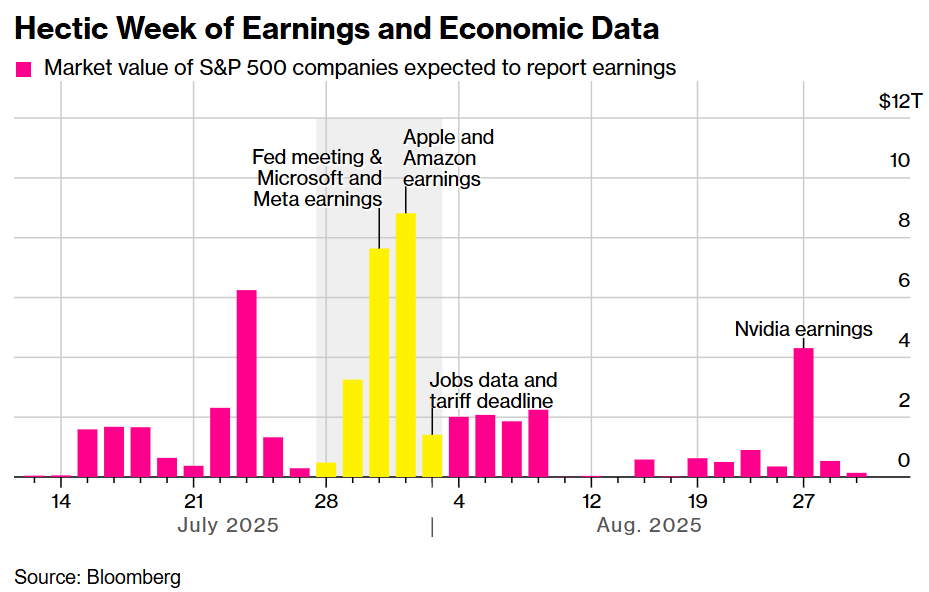
Group 1 - The upcoming week is critical for the market, with key events including the Federal Reserve's interest rate decision, earnings reports from major tech companies like Amazon and Apple, and important economic indicators such as GDP and non-farm payroll data [1][3] - Evercore ISI strategist Julian Emanuel describes this week as a "truth moment" for the market, emphasizing the significance of the data flow in assessing investor confidence in the resilience of the U.S. economy and stock market [3] - The S&P 500 companies are generally exceeding expectations, with profits rising by 4.5% year-over-year, indicating a positive outlook for the second half of the year [3][6] Group 2 - Economic data presents a mixed picture, with expectations for a significant rebound in Q2 GDP following a contraction due to a surge in imports earlier in the year [7] - Analysts predict that consumer spending adjusted for inflation in June will show little to no growth, and hiring is expected to continue slowing down, with a slight increase in the unemployment rate [7][11] - The preferred inflation indicator of the Federal Reserve, the Personal Consumption Expenditures (PCE) price index, is anticipated to accelerate due to the impact of tariffs [7][11]
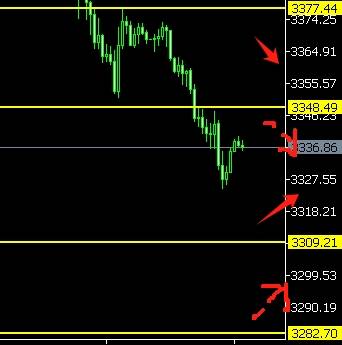
7.27黄金猛跌50美金 大空再探3300
Sou Hu Cai Jing· 2025-07-26 06:56
Group 1 - Gold prices experienced volatility, breaking above 3400 before a significant drop, leading to three consecutive days of decline, with a notable drop of 50 USD recently, and a potential test of the 3300 level next week [1][3] - The market sentiment remains bearish, with expectations of further declines, particularly if the price breaks below 3309, which could lead to a target of 3282 [3][6] - The recent decline in gold prices is attributed to tightening monetary policies from major central banks, including the ECB and the Bank of Japan, which have impacted market dynamics [3][4] Group 2 - The upcoming week is critical with the Federal Reserve's decision expected, where no interest rate cuts are anticipated, but the focus will be on Chairman Powell's statements, which could influence global market stability [6] - Key economic indicators such as the Non-Farm Payrolls and the PCE price index are set to be released, which will serve as primary references for the Fed's interest rate decisions [6] - The investment strategy in gold emphasizes the importance of accurately determining entry and exit points, as well as managing risk to maximize profit opportunities [6] Group 3 - The semiconductor market is undergoing significant changes, with major players like Intel facing substantial declines, which have affected market valuations and created a shift in the competitive landscape [7][9] - The rise of domestic alternatives in the semiconductor industry is reshaping the global market, challenging previously dominant companies and altering industry dynamics [9]
营收、净利双双提速,宁波银行上半年净利润近150亿
Nan Fang Du Shi Bao· 2025-07-25 09:20
Core Insights - Ningbo Bank reported a revenue of 37.16 billion yuan for the first half of 2025, representing a year-on-year growth of 7.9%, and a net profit attributable to shareholders of 14.77 billion yuan, up 8.2% year-on-year [2][4] Financial Performance - Revenue for the first half of 2025 was 37.16 billion yuan, compared to 34.44 billion yuan in the same period of 2024, marking a 7.91% increase [3] - Operating profit reached 16.12 billion yuan, a 3.09% increase from 15.63 billion yuan in 2024 [3] - Total profit was 16.05 billion yuan, up 3.18% from 15.56 billion yuan [3] - Basic earnings per share increased to 2.24 yuan, an 8.21% rise from 2.07 yuan [3] - The annualized return on average equity decreased by 0.94 percentage points to 13.80% [3] Asset Quality - As of June 2025, the non-performing loan ratio remained stable at 0.76%, unchanged from the end of the first quarter [5] - The provision coverage ratio improved to 374.16%, up 3.62 percentage points from the previous quarter, indicating enhanced risk mitigation capacity [5] - The core Tier 1 capital adequacy ratio increased by 0.33 percentage points to 9.65% [5] Loan and Deposit Growth - Total loans and advances reached 1.67 trillion yuan, with a year-on-year growth of 13.36% [4] - The growth rate of loans and advances was 18.7%, although it decreased by 1.7 percentage points compared to the end of the first quarter [4] - Total deposits amounted to 2.08 trillion yuan, reflecting a year-on-year increase of 12.7%, but a decline of 4.9 percentage points from the end of the first quarter [4]