
新兴产业

Search documents
白银疯涨上演史诗级牛市!正式进入“60美元时代”
Jin Tou Wang· 2025-12-10 06:12
Core Viewpoint - Silver prices have surged dramatically, breaking the $60 per ounce mark and entering a new era of pricing, with a year-to-date increase exceeding 100% [1][2] Group 1: Price Movement - On December 9, silver prices rose over 4% in a single day, surpassing $60 per ounce [1] - On December 10, spot silver continued its upward trend, reaching $61 per ounce and hitting a historical high of $61.45 per ounce [1] - Domestic silver futures in China also showed strength, with the main contract peaking at 14,388 yuan per kilogram [1] Group 2: Market Dynamics - The gold-silver ratio has declined to 68.6, the lowest since July 2021, indicating that silver is outperforming gold significantly [1] - The surge in silver prices is attributed to a combination of factors, including ongoing supply chain issues, increased industrial demand from sectors like photovoltaics, electric vehicles, 5G, and artificial intelligence [2] - Expectations of interest rate cuts by the Federal Reserve and rising geopolitical risks have led to increased investor demand for precious metals as a hedge against inflation [2] Group 3: Inventory and Investment Trends - Since 2025, silver inventories in the London LBMA vaults have increased by 1,447 tons, while New York Comex inventories have risen by 4,311 tons, with the ratio of London to Comex inventories reaching a new high for the year at 1.91 [2] - Global silver ETP holdings surged by 487 tons in November 2025, with an additional increase of 475 tons in the first ten days of December, marking the most significant inflow of funds since 2020 [2]
1.2%↑!创2024年3月以来新高!
券商中国· 2025-12-10 03:32
Core Viewpoint - In November, consumer spending continued to recover, and the effectiveness of comprehensive rectification of "involution-style" competition became evident, with notable changes in price trends across various industries [2][7]. Consumer Price Index (CPI) - In November, the CPI increased by 0.7% year-on-year, with the growth rate expanding by 0.5 percentage points compared to the previous month, marking the highest increase since March 2024 [3][4]. - Food prices rose by 0.2% year-on-year, while non-food prices increased by 0.8%. Fresh vegetable prices turned from a decline of 7.3% last month to an increase of 14.5%, contributing approximately 0.49 percentage points to the CPI [3][4]. - Month-on-month, fresh vegetable prices rose significantly by 7.2%, far exceeding the average seasonal decline of 3.2%, impacting the CPI by about 0.17 percentage points [3]. Core CPI - The core CPI, excluding food and energy, rose by 1.2% year-on-year, maintaining a growth rate above 1% for three consecutive months [5]. - Prices for services and industrial consumer goods, excluding energy, increased by 0.7% and 2.1%, respectively, contributing approximately 0.29 and 0.53 percentage points to the CPI [5]. Producer Price Index (PPI) - The PPI decreased by 2.2% year-on-year, with the decline rate expanding by 0.1 percentage points compared to the previous month, primarily due to a high comparison base from the previous year [6]. - The PPI showed a month-on-month increase for two consecutive months, attributed to seasonal demand increases in certain domestic industries [8]. Industry Price Trends - The comprehensive rectification of "involution-style" competition has led to a narrowing of price declines in related industries, such as coal mining, photovoltaic equipment manufacturing, and lithium-ion battery manufacturing [7]. - Emerging industries are rapidly developing, driving price increases in sectors like external storage devices (up 13.9% year-on-year) and integrated circuit manufacturing (up 1.7%) [7]. - Consumer potential is being effectively released, reflected in price increases in sectors such as craft art and ceremonial supplies (up 20.6% year-on-year) and sports ball manufacturing (up 4.3%) [7].

锐财经|经济大省展现强劲发展动能
Ren Min Ri Bao Hai Wai Ban· 2025-12-10 02:04
Core Viewpoint - Economic provinces in China are playing a crucial role in stabilizing the national economy while driving growth, with clear future plans outlined in the "14th Five-Year" proposals [1][2]. Group 1: Economic Performance - The top ten economic provinces contribute nearly 20% of the national area and over 60% of the GDP, acting as a stabilizing force for the national economy [2]. - In the first three quarters of this year, all nine provinces in the top ten recorded GDP growth rates above or on par with the national average, showcasing strong development momentum [2]. - Jiangsu's GDP surpassed 10 trillion yuan for the first time, while Shanghai and Hunan both exceeded 4 trillion yuan, marking a new threshold for the "four trillion club" [2]. Group 2: Future Planning - Five of the ten economic provinces have set ambitious goals to lead in various aspects, such as Guangdong aiming for economic doubling by 2035 and Jiangsu focusing on high-quality development and technological innovation [3]. - Zhejiang plans to achieve significant progress in high-quality development and common prosperity within five years [3]. Group 3: Structural Optimization and New Momentum - Economic provinces are at the forefront of structural optimization and new momentum, with policies promoting the growth of emerging industries like digital economy and artificial intelligence [4]. - Guangdong has released a detailed plan for digital economy development, targeting a core AI industry scale exceeding 440 billion yuan by 2027 [4]. Group 4: Domestic Demand and Investment - Economic provinces are enhancing domestic demand and stabilizing investment through consumption activities and major engineering projects [6]. - Guangdong has allocated an additional 3.5 billion yuan for fiscal policies, while Jiangsu plans to distribute over 400 million yuan in consumption vouchers [7]. Group 5: Reform and Innovation - To further stimulate growth potential, economic provinces are encouraged to focus on breaking regional collaboration barriers and innovating in areas like low-altitude economy [8].
经济大省展现强劲发展动能
Ren Min Wang· 2025-12-10 00:45
Group 1 - The core viewpoint of the article highlights the strong development momentum of major economic provinces in China, which are playing a crucial role in stabilizing the national economy while also driving growth as the 14th Five-Year Plan progresses [1][2]. - Major economic provinces, including Guangdong, Jiangsu, Shandong, and others, contribute significantly to the national GDP, accounting for over 60% of the total, and have shown impressive growth rates in the first three quarters of the year [2][3]. - Specific achievements include Jiangsu's GDP surpassing 10 trillion yuan for the first time and Shanghai and Hunan exceeding 4 trillion yuan, indicating a higher entry threshold for the top ten economic provinces [2]. Group 2 - Five out of the ten major economic provinces have set ambitious goals for themselves, focusing on high-quality development and technological innovation, with Guangdong aiming for economic doubling by 2035 [3][4]. - The provinces are prioritizing emerging industries such as digital economy and artificial intelligence, with Guangdong outlining specific targets for AI and digital transformation by 2027 [4][5]. - The article emphasizes the importance of collaboration between major economic provinces and central and western regions to promote technological transfer and industrial cooperation [5]. Group 3 - Major economic provinces are actively working to boost domestic demand and stabilize investment through various initiatives, including financial incentives and major infrastructure projects [6][7]. - For instance, Guangdong has allocated 3.5 billion yuan for new fiscal policies, while Jiangsu plans to distribute over 400 million yuan in consumer vouchers [7]. - Significant infrastructure projects are underway, such as the completion of key railway and water resource projects, which are expected to enhance regional connectivity and benefit millions [7]. Group 4 - In terms of reform and high-level openness, major economic provinces are implementing measures to improve the business environment and integrate into the national market [8]. - For example, Sichuan has introduced 25 measures to address challenges in the business environment, while Henan has developed a plan to support the national market integration [8]. - The article suggests that further breakthroughs in regional collaboration and innovative practices are necessary to inject stronger momentum into local economic development [8].
实施更加积极有为的宏观政策,着力扩大内需优化供给
2 1 Shi Ji Jing Ji Bao Dao· 2025-12-09 22:51
持续扩大内需和优化供给需要更加积极有为的宏观政策予以支撑。会议指出将继续实施更加积极的财政 政策。在财政资金使用上,需把"投资于物和投资于人"紧密结合在一起。"投资于物"意味着加强重点领 域财力保障,全力支持高水平科技自立自强、建设现代化产业体系、推动经济社会发展全面绿色转型 等。"投资于人"则聚焦加强民生保障,财税资源将优先保障教育、社会保障等基本公共服务,加大对普 惠养老和育儿支持体系的财政补贴与税收激励力度。 一方面,大力提振消费,激活高品质消费需求仍是关键。重点培育新业态、打造新场景,将有效降低居 民消费成本与企业创新门槛,激发市场对智能化、绿色化、高品质产品和服务的需求,为强大国内市场 注入持续的内生动力。此外,还应加大对服务消费领域的支持力度,如对养老托育、文化旅游、健康体 育等给予补贴支持或发放消费券,促进服务市场增量扩围。近年来以旧换新政策取得了积极成效,未来 在对家电、汽车等传统耐用消费品支持的基础上,可考虑将政策支持范围进一步扩充至智能家居、低碳 建材等更广泛的商品类别。 另一方面,着力扩大有效投资,夯实内需增长基础,也是当务之急。"十五五"时期,一批国家重大战略 实施和重点领域安全能力建 ...
乌海市工商联组织商会赴外开展交流合作考察工作
Xin Lang Cai Jing· 2025-12-09 13:36
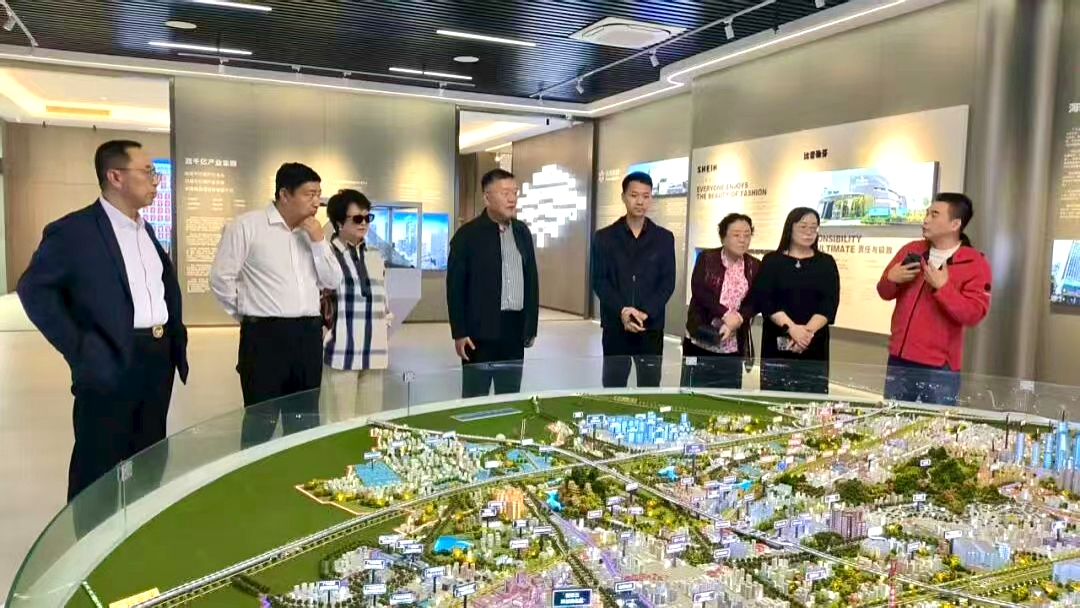
Group 1 - The Ulaanbaatar City Federation of Industry and Commerce organized a visit to Guangzhou, Shenzhen, Wuhan, and Beijing from November 30 to December 6 to discuss cooperation paths with local chambers of commerce and enterprises [1][4] - The delegation visited various chambers of commerce, introducing Ulaanbaatar's key industrial layout, advantages of local private economy development, and work strategies for the 14th Five-Year Plan, expressing a desire to attract investment and deepen cooperation [1][4] - In-depth discussions were held with the chambers on enhancing information exchange, resource sharing, and exploring new cooperation opportunities [1][4] Group 2 - In Beijing, the delegation focused on cutting-edge technology and emerging industries, visiting companies such as Beijing Ge'an Hengneng New Energy Technology Development Co., Ltd. and Beijing Wanlian Yida Holdings Group Co., Ltd. to discuss solid-state battery technology, big data, and AI applications [3][6] - The companies showed strong interest in the development of Ulaanbaatar's four key industrial chains [3][6] - The Ulaanbaatar City Federation of Industry and Commerce plans to establish a regular cooperation platform to strengthen connections with external chambers and track cooperation intentions to promote high-quality economic and social development [3][6]
巩固壮大实体经济根基|开辟产业发展新领域新赛道
Zhong Guo Jing Ji Wang· 2025-12-09 10:00
Group 1 - The core viewpoint emphasizes the rapid advancement of emerging and future industries, which are becoming key drivers for high-quality economic development in China [1] - Emerging industries such as new energy vehicles, photovoltaic and wind power equipment, and biomanufacturing are showing significant growth, with the "three new" economy's contribution to GDP exceeding 18% in 2024 [1] - Future industries, including quantum technology, hydrogen energy, and brain-machine interfaces, are expected to create substantial market opportunities, potentially equivalent to recreating a high-tech industry in China over the next decade [1] Group 2 - Challenges faced by key industries like mining, metallurgy, and textiles include international trade issues, insufficient domestic demand, and rising production costs [2] - The "14th Five-Year Plan" suggests fostering emerging and future industries as a strategic direction for the next five years, emphasizing the importance of modernizing the industrial system [2] - The plan highlights the need for innovative regulatory approaches and investment mechanisms to support the development of future industries, addressing uncertainties in investment returns and encouraging capital investment [3]
开辟产业发展新领域新赛道
Zhong Guo Jing Ji Wang· 2025-12-09 10:00
制图:彭章霞 近几年,人们的"曾经想象"正变得触手可及。无人机送外卖,美食"从天而降";借助脑机接口技 术,四肢截肢患者用"意念"下象棋;人形机器人站上生产一线,与工人协同工作。一批前沿科技从实验 室走向生产生活,成为推动经济高质量发展的新引擎。 新兴产业、未来产业技术创新速度快、市场潜力空间大、新动能成长活跃,对保持经济稳定增长、 培育发展新质生产力至关重要。"十四五"期间,我国新兴产业和未来产业有了怎样的积累? 新能源汽车产销量连续10年保持全球第一,光伏和风电装备产量位居世界前列,生物制造产业总规 模已接近1万亿元……新兴产业加速"领跑",未来产业加力"生根",为我国经济高质量发展注入源源不 断的新动能。2024年,我国"三新"经济增加值占GDP比重已经超过18%。 放眼长远,新兴产业和未来产业发展前景广阔。在新能源、新材料、航空航天、低空经济等战略性 新兴产业领域,有望催生数个万亿级甚至更大规模的市场;量子科技、生物制造、氢能和核聚变能、脑 机接口、具身智能、第六代移动通信等未来产业蓄势发力,未来十年新增规模相当于再造一个中国高技 术产业。 然而,机遇和挑战如同一枚硬币的两面,总是相伴而生。近年来,在 ...
意大利前总理:努力推动欧中更多合作与交流
Zhong Guo Xin Wen Wang· 2025-12-09 00:26
Core Viewpoint - The article emphasizes the need for the EU and China to collaborate in addressing global governance challenges, particularly as they approach the 50th anniversary of diplomatic relations in 2025 [2]. Group 1: Global Governance and Cooperation - The world is facing multiple challenges in global governance, and there is an expectation for the EU and China to jointly lead efforts to rebuild global cooperation trends [2]. - Prodi highlights China's impressive development achievements in recent years, particularly in emerging industries where it is leading globally [2]. Group 2: EU's Internal Dynamics - Prodi analyzes the differing attitudes towards China within the EU, attributing this to the varying interests among member states [2]. - He suggests that a more effective approach would be to establish a macro framework agreement that clarifies core cooperation directions and basic principles [2]. Group 3: Italy's Role - Italy is positioned to act as a communication bridge among EU member states, helping them to view China's development objectively and comprehensively [2]. - This role could facilitate the consolidation of a cooperative consensus among EU countries regarding their relationship with China [2].
新兴产业快速发展!机床ETF(159663)上涨2.07%,华工科技涨7.83%
Sou Hu Cai Jing· 2025-12-08 03:07
Core Viewpoint - The A-share market showed a collective increase on December 8, with the Shanghai Composite Index rising by 0.58%, driven by strong performances in sectors such as communication equipment, brokerage, and electronic components, while coal and petrochemical sectors faced declines [1] Industry Summary - The machine tool sector continued to strengthen, with the Machine Tool ETF (159663) rising by 2.07% as of 10:44 AM. Key component stocks such as Yujing Co., Ltd. increased by 8.25%, Huagong Technology by 7.83%, Guoji Precision by 5.57%, Haimeixing by 3.92%, and Zhejiang Haideman by 3.68% [1] - According to the National Bureau of Statistics, the cumulative production of metal cutting machine tools in China is projected to reach 715,000 units by October 2025, reflecting a year-on-year increase of 14.80%. In October alone, production was 69,000 units, up 6.20% year-on-year [1] - Jianghai Securities noted that machine tool-related data is steadily recovering, with a significant increase in export prices. The demand for machine tools is being released as the domestic economy improves and structural transformation progresses, particularly in emerging industries such as new energy vehicles, low-altitude economy, humanoid robots, and commercial aerospace [1] - The Machine Tool ETF (159663) closely tracks the China Securities Machine Tool Index, which encompasses a critical segment of the manufacturing industry—high-end equipment manufacturing. This includes sectors such as laser equipment, machine tool tools, robots, and industrial control equipment, aligning with the new productivity concept that emphasizes innovation-driven and industrial upgrading practices [1]
