
民生保障

Search documents
2025年终经济观察丨办好民生实事 不断提升人民幸福成色
Xin Hua Wang· 2025-12-30 09:21
Group 1 - The core viewpoint emphasizes the importance of improving people's livelihoods and happiness as a fundamental goal of China's modernization efforts, with a focus on inclusive and basic social welfare initiatives by 2025 [1] - The Central Economic Work Conference highlighted the commitment to prioritize people's livelihoods and implement practical measures to enhance public welfare [1] - Various local governments and departments are actively investing in policies to improve people's sense of gain, happiness, and security [1] Group 2 - Employment is identified as the most basic aspect of people's livelihoods, with the government prioritizing job stability amid external and internal challenges [3] - From January to November, 12.1 million new urban jobs were created, maintaining an average urban unemployment rate of 5.2% [3] - The number of college graduates in 2026 is projected to reach 12.7 million, an increase of 480,000 from the previous year, with initiatives underway to facilitate their employment [3] Group 3 - Skills training programs are being implemented to enhance job prospects for local residents, with a focus on high-demand sectors [4] - The government plans to introduce more training projects to support employment and income growth for urban and rural residents [4] - Policies aimed at stabilizing employment for key groups, such as college graduates and migrant workers, will be strengthened in 2026 [4] Group 4 - The long-term care insurance system is being expanded, providing financial support and services to those in need, thereby reducing economic burdens on families [5] - Nationwide health insurance reforms are being implemented, including the cancellation of outpatient prepayment and the accelerated introduction of rare disease medications [5] - Housing policies are being optimized to ensure affordable housing for low-income families and new urban residents [5] Group 5 - Emergency relief funds totaling 4.44 billion yuan have been allocated to assist those affected by disasters, ensuring basic living conditions during winter [7] - The government is focused on maintaining the achievements of poverty alleviation and preventing a return to poverty [7] - A comprehensive social safety net is being developed to address various livelihood challenges and enhance community support [7] Group 6 - Urban renewal projects are transforming underutilized spaces into community resources, enhancing local environments and public amenities [8] - The establishment of support facilities for flexible and new employment forms is increasing, with a focus on improving labor rights and protections [9] - Recent policies aim to support families with children, enhance educational resources, and improve elderly care services [9]
聚焦主责主业 彰显投资审计服务发展价值
Sou Hu Cai Jing· 2025-12-30 08:53
Core Viewpoint - The investment audit sector is facing new challenges such as expanded audit scope and increased supervision requirements, necessitating a focus on national priorities and public expectations to enhance supervisory value in service of major policies and public welfare [1] Group 1: Policy Implementation - Investment audits must align closely with national development strategies and local key work deployments, focusing on critical areas such as transportation, water conservancy, and public welfare to ensure effective policy execution [1] Group 2: Public Welfare - The audit work should prioritize the needs and concerns of the public, particularly in government investment projects related to education, healthcare, and rural revitalization, while rigorously investigating issues that harm public interests [1] Group 3: Institutional Improvement - Investment audits should not only address existing issues but also prevent future problems by analyzing systemic root causes of common issues identified during audits and proposing constructive recommendations to enhance industry governance [1]
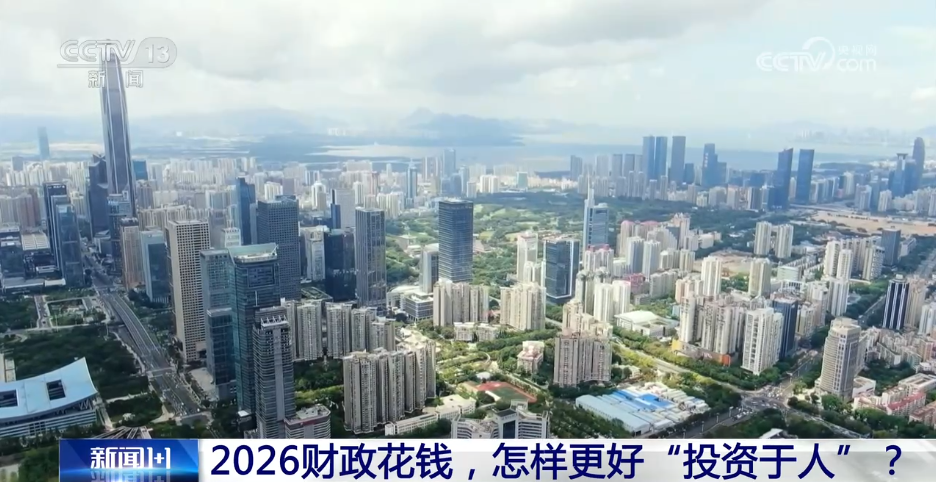
新闻1+1丨2026财政花钱,怎样更好“投资于人”?
Yang Shi Wang· 2025-12-29 22:12
Group 1: Fiscal Policy and Spending - The national fiscal work conference has decided to expand the fiscal spending scope for the upcoming year, focusing on promoting consumption and ensuring social welfare [1] - In 2025, the national subsidy funds are expected to double compared to 2024, indicating a significant increase in funding scale for 2026 [3] - The subsidy range will expand from home appliances to include digital products like computers and mobile phones, with local governments encouraged to tailor subsidies to their specific consumption needs [3] Group 2: Employment and Social Security - Employment is highlighted as the most critical aspect of people's livelihoods, with a focus on stabilizing existing jobs and enhancing skill development to increase income [5] - Tax deductions, particularly for individual income tax, have been increased, leading to a rise in disposable income for citizens [6] - The government plans to raise the subsidy standards for urban and rural residents' pension and social security, thereby reducing financial concerns for citizens and strengthening the social safety net [6] Group 3: Education Funding Mechanism - Changes in school-age population demographics necessitate adjustments in fiscal spending, with a focus on directing funds towards urban areas and regions experiencing population inflow [8] - There is a need to expand higher education capacity to meet the demand for quality university education among the populace [8] Group 4: Central and Local Government Spending Responsibilities - The government is pushing for fiscal funds to be directed more towards grassroots levels, particularly in areas with population inflow, while also increasing local spending responsibilities [10] - The approach includes reducing specific transfer payments and increasing general transfer payments to enhance local financial autonomy for better allocation towards public welfare [10]

杭州2025年十方面民生实事已全面完成
Xin Lang Cai Jing· 2025-12-29 12:00
Core Viewpoint - The city government has implemented a series of practical measures focused on improving people's livelihoods, achieving significant progress in various social welfare projects by the end of December 2023 Group 1: Employment and Entrepreneurship - A total of 964 housing units have been added for the "Qinghe Station" initiative, with 15.8 million training sessions conducted for key employment skills, benefiting 284,000 individuals, including 13,455 unemployed graduates and 2,240 veterans [1] - The city has provided employment assistance to 1,550 individuals with disabilities [1] Group 2: Safety and Security - 149.3 kilometers of old gas pipelines have been updated and transformed, with 235 sets of early warning devices installed in high-risk areas [1] - Emergency fire management stations have been upgraded in 95 townships and streets, and 110 standardized flood prevention systems have been established [1] Group 3: Housing and Living Conditions - 200 old urban residential communities have been renovated, with 13,603 units of affordable housing completed and 14,459 public rental housing units allocated [2] - 11,030 units of guaranteed rental housing have been launched, and 1,063 elevators have been added to old residential buildings [2] Group 4: Education - 40 new or expanded primary and secondary schools have been completed, adding 68,000 new student places [2] - 259,000 sets of nap equipment for compulsory education schools have been provided, and 140 school canteens have been upgraded [2] Group 5: Elderly Care and Health - 110 elderly dining facilities have been improved, and 1,730 caregivers with dual certifications have been added [3] - Free flu vaccinations have been provided to 440,000 individuals aged 60 and above [3] Group 6: Community Services - 320 outdoor worker service stations have been established, and 1,005 communities have been covered by the "Xiao Ge Code" initiative [3] - 12 new grassroots maternity consultation clinics have been added, enhancing one-stop financial service inquiries for the public [3] Group 7: Environmental Improvement - 65 new or renovated urban parks and 180 kilometers of greenways have been completed, along with the rehabilitation of 84.3 kilometers of rural water systems [3] - Eight land comprehensive remediation projects have been completed [3] Group 8: Accessibility and Convenience of Services - The city has upgraded comprehensive service centers to enhance community interaction and accessibility to services such as elderly care and medical assistance [8] - The development of "AI + hazard inspection" applications has improved the rapid response capabilities of local emergency services [8]
海南省委经济工作会议召开
Hai Nan Ri Bao· 2025-12-29 10:00
Core Insights - The Hainan Provincial Economic Work Conference emphasized the importance of implementing the spirit of the Central Economic Work Conference and the significant speeches by General Secretary Xi Jinping, focusing on economic work for 2026 and beyond [1][2] Group 1: Economic Development Goals - 2025 is highlighted as a milestone year for Hainan's development, with a focus on high-quality economic growth and the successful operation of the Hainan Free Trade Port [2] - The overall requirement for economic work in the coming year is to adhere to Xi Jinping's thoughts, implement the new development concept, and promote high-quality development while ensuring stability [3] Group 2: Free Trade Port Construction - The conference called for solid progress in the construction of the Free Trade Port, aiming for a successful first year of operation and the effective implementation of closure policies [4] - Emphasis was placed on optimizing regulatory models and ensuring smooth operations while prioritizing risk prevention [4] Group 3: Industrial and Economic Strategies - The need to build a modern industrial system that enhances the collaborative effects of the Free Trade Port's operations was stressed, with a focus on developing key industries and fostering innovation [4] - Strategies to expand effective demand and enhance domestic consumption were outlined, including initiatives to boost tourism and improve the investment environment [4] Group 4: Social and Environmental Initiatives - The conference highlighted the importance of ecological civilization and environmental protection, with plans for sustainable development and green transformation [5] - Measures to enhance public welfare, including employment, education, healthcare, and social security, were discussed to improve the quality of life for residents [5] Group 5: Governance and Leadership - The need for strong leadership in economic work was emphasized, with a call to implement the decisions of the Central Committee and improve the capabilities of the workforce [6] - The conference also focused on promoting integrity and accountability within governance structures to ensure effective implementation of policies [6]
中国人寿广西分公司:“解困保”织牢民生保障网
Zhong Guo Jin Rong Xin Xi Wang· 2025-12-29 06:38
Group 1 - The core idea of the news is the launch of the "Relief Insurance" program by China Life Insurance Guangxi Branch in collaboration with local government to provide financial protection for vulnerable groups such as urban and rural subsistence allowance recipients and special care recipients [1][2] - The program aims to establish a multi-layered protection system combining government support and insurance to address the shortcomings in social security [1][2] - As of November 2025, the program has successfully included 6,639 special care recipients and 17,074 subsistence allowance recipients in Beihai City under the "Relief Insurance" coverage [1] Group 2 - The "Relief Insurance" program is designed to create a long-term mechanism of "government guidance, financial subsidies, and insurance operation" to match central enterprise resources with local social needs [2] - The program offers affordable risk protection with a premium of 90 yuan per year for special care recipients (fully subsidized by the government) and 45 yuan for subsistence allowance recipients (partially subsidized) [3] - Coverage includes critical illness insurance (up to 6,000 yuan), hospitalization allowances (50 yuan/day, up to 9,000 yuan annually) for special care recipients, and differentiated critical illness coverage for subsistence allowance recipients [3] Group 3 - The program emphasizes efficiency and accessibility through technology and streamlined processes, ensuring that insurance services are more effective and user-friendly [4] - A closed-loop operation is established for enrollment, where the government provides the list of insured individuals, eliminating the need for self-reporting by the public [4] - The program includes a 24-hour reporting hotline and a green channel for claims, ensuring prompt payment in emergencies and home service for those unable to collect claims [4]

财政政策如何继续“更加积极”
Ren Min Ri Bao· 2025-12-29 05:23
Core Viewpoint - The Chinese government plans to implement a more proactive fiscal policy in 2026, focusing on expanding fiscal expenditure, optimizing spending structure, and enhancing policy precision to support economic growth and ensure a strong start to the "14th Five-Year Plan" [1] Group 1: Domestic Demand and Consumption - The domestic market has significant potential, and fiscal policy will play an active role in expanding domestic demand and facilitating economic circulation [2] - In 2026, there will be a strong emphasis on boosting consumption through special actions, including funding support for consumer goods replacement programs and optimizing personal consumption loan interest subsidies [2] - Fiscal investments will target both infrastructure and human capital to alleviate concerns and unleash consumer potential, with a focus on long-term special government bonds to support major projects [2] Group 2: Technological and Industrial Innovation - The government aims to strengthen the integration of technological and industrial innovation, increasing fiscal investment in technology and enhancing the management of technology funding [3] - There will be a focus on supporting enterprises in technological innovation and promoting the transformation and application of technological achievements [3] - The implementation of high-quality development actions for key manufacturing industry chains will be prioritized to build a modern industrial system [3] Group 3: Social Welfare and Regional Development - Strengthening basic social welfare and increasing residents' income through various fiscal measures will be a priority in 2026 [4] - There will be increased fiscal investment in education and healthcare to improve service levels and social security systems [4] - The government will promote urban-rural integration and regional coordination, supporting rural revitalization and new urbanization initiatives while ensuring public services are accessible [4]
财政政策如何继续“更加积极”:扩大财政支出盘子,强化重点领域保障
Ren Min Ri Bao· 2025-12-29 00:28
Core Viewpoint - The Chinese government plans to implement a more proactive fiscal policy in 2026, focusing on expanding fiscal expenditure and optimizing spending structures to support economic growth and ensure a strong start to the "14th Five-Year Plan" [1] Group 1: Fiscal Policy and Economic Growth - The government aims to enhance domestic demand and support the construction of a robust domestic market, with a strong emphasis on boosting consumption through various initiatives [1] - Plans include funding for consumer incentives, optimizing personal consumption loan interest subsidies, and promoting new consumption models [1][2] - There will be a continued focus on effective investment in key areas such as new productivity and comprehensive human development [1] Group 2: Infrastructure and Social Welfare - Fiscal funds will be directed towards infrastructure investments and social welfare to reduce consumer concerns and stimulate spending [2] - The issuance of long-term special government bonds is expected to support major national projects and increase investment demand [2] - There will be a shift in fiscal spending towards improving living standards and enhancing consumer confidence [2] Group 3: Technological and Industrial Innovation - The government plans to increase fiscal investment in technology and strengthen the role of enterprises in innovation [2] - Policies will be implemented to support the integration of technological and industrial innovation, including financial incentives for technology adoption and application [2] - The focus will be on developing a modern industrial system and promoting high-quality development in key manufacturing sectors [2] Group 4: Social Security and Regional Development - Strengthening social security and ensuring basic living standards will be a priority, with measures to increase residents' income through various channels [3] - The government will promote urban-rural integration and regional coordination, supporting rural revitalization and enhancing agricultural productivity [3] - Fiscal policies will be adjusted to facilitate public services that are portable and accessible, promoting coordinated development in major regions [3]
全国财政工作会议提出 扩大财政支出盘子 优化政府债券工具组合
Zhong Guo Zheng Quan Bao· 2025-12-28 22:15
Core Viewpoint - The National Finance Work Conference emphasizes the continuation of a more proactive fiscal policy in 2026, focusing on expanding fiscal expenditure, optimizing government bond tools, and enhancing the effectiveness of transfer payments to support local financial autonomy [1][2]. Group 1: Fiscal Policy and Economic Development - The conference outlines key tasks for 2026, including promoting domestic demand, supporting the construction of a strong domestic market, and implementing actions to boost consumption and effective investment in key areas [1][2]. - There is a strong emphasis on integrating technological and industrial innovation, increasing fiscal investment in technology, and supporting high-quality development in key manufacturing industries [1][2]. Group 2: Social Welfare and Environmental Sustainability - The meeting highlights the importance of strengthening basic social safety nets, promoting employment, improving education and healthcare services, and enhancing the social security system to meet public needs [2]. - It also calls for a comprehensive green transformation of economic and social development, focusing on pollution prevention, ecosystem protection, and the establishment of supportive policies for low-carbon development [2]. Group 3: International Cooperation and Fiscal Management - The conference stresses the need for enhanced international financial cooperation, promoting high-level openness, and reforming global economic governance [2]. - It emphasizes the importance of scientific fiscal management, maintaining a balance between responsibility and mechanism improvement, and managing government debt effectively [2][3].
财政政策如何继续“更加积极” 扩大财政支出盘子,强化重点领域保障
Ren Min Ri Bao· 2025-12-28 22:03
Core Viewpoint - The Chinese government plans to implement a more proactive fiscal policy in 2026, focusing on expanding fiscal expenditure and optimizing spending structures to support economic growth and ensure a strong start to the "14th Five-Year Plan" [1] Group 1: Fiscal Policy and Economic Growth - The government aims to enhance domestic demand and support the construction of a robust domestic market, with a strong emphasis on boosting consumption through various initiatives [1] - Plans include funding for consumer incentives, optimizing personal consumption loan interest subsidies, and promoting new consumption models [1] - There will be increased investment in key areas such as new productivity and comprehensive human development, alongside efforts to establish a unified national market [1] Group 2: Infrastructure and Social Welfare - Continued issuance of long-term special government bonds is expected to support major national projects, ensuring sustained investment demand and improving living standards [2] - Fiscal spending will be directed towards social welfare, with a focus on enhancing residents' income and improving consumption willingness [2] - The government will implement policies to lower financing costs for innovation and service sectors, thereby encouraging technological innovation and consumption [2] Group 3: Technological and Industrial Development - The government plans to increase fiscal investment in technology and strengthen the role of enterprises in innovation [2] - There will be a focus on fostering new productive forces through enhanced fiscal and tax policies, promoting the integration of technological and industrial innovation [2] - Initiatives will include insurance compensation policies for first-time applications and support for high-quality development in key manufacturing sectors [2] Group 4: Social Security and Regional Development - Strengthening basic social security and enhancing urban-rural integration will be priorities, with measures to increase residents' income through various channels [3] - The government will support rural revitalization and improve agricultural productivity, while also promoting new urbanization and regional coordinated development [3] - Fiscal policies will be adjusted to ensure public services are accessible and portable, facilitating urban renewal and regional strategies [3]