能源安全

Search documents
电力监控系统专用安全产品管理委员会成立并召开首次全体会议
Zhong Guo Dian Li Bao· 2025-12-16 09:57
管委会将在国家能源局的指导下,精准锚定"引领者、协调员、监督哨、服务台"四位一体的角色定位, 重点做好以下工作:一是强化行业引领,紧扣网络强国、能源强国等国家战略,谋划长远发展路径;二 是深化协调联动,完善项目管理与标准化体系,推动跨企业信息共享与协同合作;三是严实监督责任, 聚焦产品技术质量与规范应用,以专业监管促进行业健康发展;四是做优服务支撑,精准对接政府与企 业需求,凝聚发展合力,全面推动行业整体跃升与可持续发展。 国家能源局有关部门以及各电网企业、重点发电企业、专业检测认证机构等相关单位负责同志参加会 议。 会议期间,与会代表围绕专用安全产品与管委会建设进行了深入研讨。大家聚焦专用安全产品管理功能 优化、态势感知能力提升、加密技术创新等关键技术领域,以及管委会未来工作机制、平台建设和信息 通报等发展路径,积极建言献策,营造了行业共商共治的良好氛围。 会议指出,电力系统网络安全关乎国计民生,是保障能源电力安全稳定运行的基石。管委会的成立,既 是国家主管部门强化专用安全产品管控、保障其安全可控的关键举措,更是筑牢国家能源安全防线、支 撑电力行业高质量发展的战略部署。 为深入贯彻落实国家能源电力安全战略, ...
国家发改委:夯实基础保障 确保能源安全
Zhong Guo Dian Li Bao· 2025-12-16 06:11
能源安全是关系国家经济社会发展的全局性、战略性问题,对国家繁荣发展、人民生活改善、社会长治 久安至关重要。当前,我国能源发展面临全球能源供需格局深刻调整、国内供应保障与绿色转型统筹推 进的复杂局面,保障能源安全任务仍然艰巨。党的二十届四中全会对"十五五"时期能源安全工作作出了 明确部署,提出要"夯实国家安全基础保障,确保粮食、能源资源、重要产业链供应链、重大基础设施 安全"。确保能源安全,必须夯实基础保障。这里的基础保障既包括能源生产、储运、消费等环节的"硬 设施",也涵盖战略规划、技术创新、体制机制等"软支撑",是一个多维度、多层次的系统工程。只有 全面夯实能源发展的各项基础,才能在复杂多变的环境中牢牢把握能源安全主动权,为中国式现代化建 设提供安全可靠的能源保障。 一、深刻领会习近平总书记关于国家能源安全的重要论述精神 深刻领会保障能源安全的重要意义。习近平总书记指出,"能源安全关系我国经济社会发展全局,是最 重要的安全之一""能源保障和安全事关国计民生,是须臾不可忽视的'国之大者'""能源的饭碗必须端在 自己手里",这些重要论述深刻揭示了能源安全在国家发展全局中的重要地位。历史和实践反复证明, 充足的能 ...
今年能源安全保障有力有效 保供成效“十四五”最好一年
Ren Min Ri Bao· 2025-12-16 02:28
记者从2026年全国能源工作会议上获悉:今年全国发电总装机预计超过38亿千瓦、同比增长14%,全社 会用电量首超10万亿千瓦时。"1万亿千瓦时"便相当于日本全年的用电量总和,7月和8月全社会用电量 连续超过1万亿千瓦时,我国有力有效应对迎峰度夏电力负荷20次超去年峰值考验。 国家能源局有关负责人表示,今年能源安全保障有力有效,保供成效是"十四五"以来最好的一年。 今年还有几组数据值得关注—— 油、气产量双创历史新高,原油产量约2.15亿吨,天然气产量突破2600亿立方米、连续9年增产超百亿 立方米,油气增储上产"七年行动计划"胜利收官; 全年原煤产量48亿吨以上,进口约4.7亿吨,加快建设储备产能9000万吨/年以上,煤炭供给裕度保持合 理水平、供给弹性持续增强; 西电东送能力达到3.4亿千瓦,长输油气管道里程达到20万公里,煤炭主要产区外运量超19亿吨。 总的来看,全国电力供应保持安全稳定,油气勘探开发力度大幅提升,能源资源互补互济水平持续提 升,能源安全保障有力有效。"十四五"以来,我国能源自给率从80%左右增至84%以上,建成全球最大 的可再生能源体系,能源体量规模稳居世界第一。 能源绿色低碳转型步伐也 ...
全球核电复苏推高铀价
Huan Qiu Shi Bao· 2025-12-15 23:01
全球范围的核电站重启,推高了对铀的需求。今年9月,世界核协会对未来全球核能发电装机总量进行 预测。根据该协会的中间估值,到2040年,全球核能发电装机总量预计将比2024年翻一番,达到746吉 瓦。全球核反应堆所需的铀量也将从2025年的水平翻一番,达到15万吨。 加拿大拉拉米德矿业公司的首席执行官马克·亨德森上月底在节目中甚至断言,如今铀正迎来民用核能 产业诞生以来的"最大牛市",且这种强劲的增长态势将持续至2040年。 【环球时报综合报道】在全球人工智能(AI)普及和应对气候变化措施的双重驱动下,电力需求激 增,这一趋势推动着全球核电站的重启,从而引发对铀——核反应堆主要原料的抢购,引发市场对其供 应短缺的担忧。《日经亚洲评论》日前梳理发现,近日,国际市场上铀浓缩物现货价格达到每磅75.85 美元,比2021年初的价格翻了一番以上。此外,更能反映实际需求的铀浓缩物长期合同价格达到每磅86 美元,创下自2008年以来的最高水平。 近日,日本北海道知事批准重启当地一座核反应堆,称此举将确保电力供应稳定。东京电力控股公司位 于新潟县的一座核电站也在获得当地政府同意后,正朝着恢复运行的方向推进。 美国目前也在大力 ...
储备量超十亿桶!仍日囤千万桶石油,中国20年布局硬刚能源风险
Sou Hu Cai Jing· 2025-12-12 13:55
尤其中国是"富煤贫油少气"的底子,67%的原油都得靠进口,而且差不多七成的进口油都要走马六甲海 峡,而最近为什么我国开始逆势疯狂买石油? 能源储备的战略底线与长远图谋 现在全球地缘政治乱得跟一锅粥,谁也说不准明天会发生啥,所以提前存点"备用粮",真不是多此一 举,而是刚需。 大家好,今天犀哥这篇财经评论,主要来聊聊中国能源问题。能源安全平时看着不起眼,真到用的时候 才知道有多重要。 目前中国的石油储备总容量能装20亿桶,但实际也就存了12-13亿桶,按现在的消耗速度,撑死了用90 天。 这个数跟人家日本、美国比差远了,人家能撑150-180天,相当于人家家里有半年的余粮,咱们只有三 个月的,心里能不慌吗? 这差距不光是数字上的,更是应对风险的底气差距,万一哪天马六甲海峡出点状况,或者国际油价因为 打仗飙上天,咱们这点储备根本顶不住,到时候国内经济运行都得受影响,所以中国现在加速囤油、建 油库,本质上就是守住"能源安全红线"。 一方面是怕被人"卡脖子",另一方面也是为了在跟产油国谈价格的时候腰杆硬一点,你看现在从粮食到 能源,中国都在加大储备,说白了就是"把命运握在自己手里"。 现在正在建的11个大型油库,能多 ...

2025年中国油气产量有望再创新高,专家:三大因素保障能源安全
Huan Qiu Wang· 2025-12-12 12:46
Core Viewpoint - China aims to enhance its energy security by increasing domestic oil and gas production, with projections indicating record-high outputs by 2025 [1][2]. Group 1: Oil and Gas Production Projections - By 2025, China's oil production is expected to reach 215 million tons, marking the highest level in history, while natural gas production could hit 260 billion cubic meters, solidifying its position as the fourth-largest natural gas producer globally [1][2]. - The average annual investment in oil and gas upstream exploration and development during the 14th Five-Year Plan period is projected to increase by approximately 48% compared to the 13th Five-Year Plan [2]. Group 2: Factors Driving Production Growth - The increase in oil and gas production is attributed to three main factors: enhanced exploration and development efforts, breakthroughs in deep and unconventional oil and gas fields, and technological innovations that expand exploration capabilities [2]. - Significant advancements include the completion of wells exceeding 10,000 meters in depth and the establishment of China's first self-operated ultra-deepwater gas field, "Deep Sea No. 1," marking the entry into the ultra-deepwater oil and gas era [2]. Group 3: International Cooperation - Chinese oil companies have deepened international cooperation, operating over 200 oil and gas investment projects across more than 60 countries and regions, which enhances the scale and quality of China's oil and gas supply [3]. - The estimated overseas oil and gas equity production equivalent for Chinese oil companies is projected to reach 196 million tons this year, providing a solid foundation for national energy security [3].
国家能源局召开页岩油勘探开发工作推进会
国家能源局· 2025-12-12 12:34
Core Viewpoint - The meeting held by the National Energy Administration emphasizes the importance of enhancing shale oil exploration and development to ensure energy security and high-quality energy development in China [1][3]. Group 1: Meeting Highlights - The meeting was chaired by Wan Jinsong, a member of the National Energy Administration, and focused on the progress of shale oil exploration and the establishment of national shale oil demonstration zones [1][3]. - Major oil companies, including China National Petroleum Corporation and China Petroleum & Chemical Corporation, reported on their advancements in shale oil exploration and development [3]. - The year 2023 marks the conclusion of the "14th Five-Year Plan" and the "Seven-Year Action Plan" aimed at enhancing oil and gas exploration and development, with significant achievements noted in shale oil production [3]. Group 2: Production Goals and Achievements - National shale oil production is projected to increase from 1 million tons in 2019 to over 8 million tons by 2025, contributing to a record high in national crude oil production [3]. - The successful completion of the "Seven-Year Action Plan" is presented as a satisfactory report to the central government and the public [3]. Group 3: Future Directions - The meeting highlighted the need for oil and gas companies to strengthen confidence and commitment, increase investment in shale oil exploration and technological research, and enhance cost efficiency in upstream production [4]. - A systematic approach is required to boost policy support for shale oil exploration and development, ensuring project resource allocation and maximizing stakeholder engagement [4].


我国石油进口年花费2.2万亿,但为何油价上涨,却对我国更有益?
Sou Hu Cai Jing· 2025-12-12 01:01
Core Insights - China imported 553 million tons of crude oil in 2024, costing approximately $32.48 billion, which is about 2.2 trillion yuan, equivalent to the annual GDP of a medium-sized province [1] - The high dependency on oil imports, currently at 71.9%, poses significant energy security challenges for China [1][3] - Rising oil prices can be viewed positively from a strategic perspective, as they may enhance the value of China's strategic oil reserves [3][4] Group 1: Strategic Oil Reserves - China is actively building strategic oil reserves, with plans to add at least 169 million barrels of storage capacity by 2025 and 2026, which is equivalent to the total added capacity over the past five years [3] - The strategy involves purchasing oil during low price periods to build reserves, which can appreciate in value as prices rise [4] - China's oil reserve capacity currently covers over 80 days of consumption, with a goal to exceed 90 days, providing a buffer against price volatility [7] Group 2: Market Influence and Economic Implications - China's purchasing power significantly influences global oil prices; if China were to stop buying oil, prices could drop below $50 [5] - High oil prices can protect domestic oil production by improving the economic viability of local oil fields, encouraging increased output [8] - The transition to clean energy is supported by high oil prices, as they discourage excessive energy consumption and align with China's long-term development goals [8] Group 3: Currency and Trade Dynamics - Rising oil prices increase global demand for the dollar, but China is working to settle more oil trades in yuan, enhancing its currency's international standing [8] - The strategic approach to oil reserves not only secures energy needs but also stabilizes global oil prices, reflecting a dual strategy of defense and offense [9]
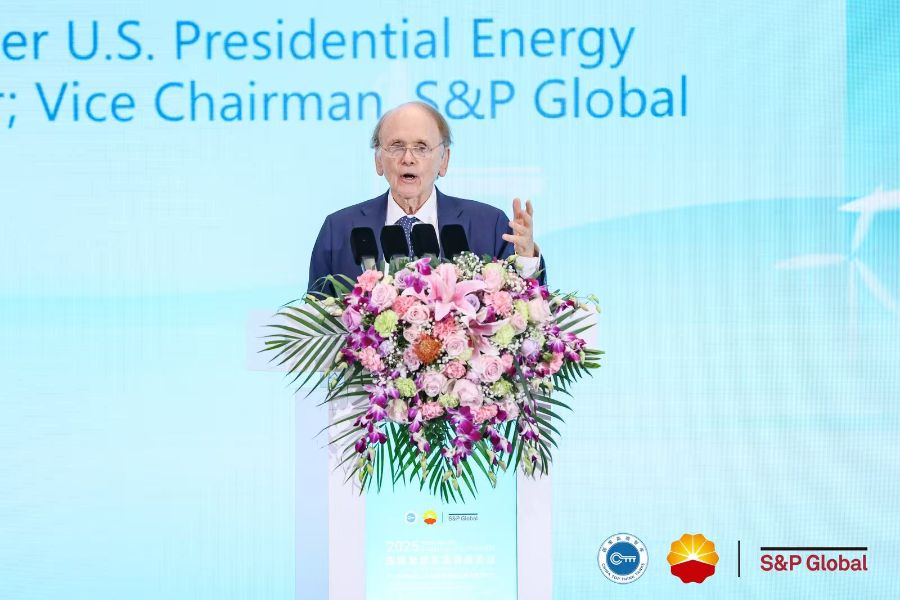
21对话|丹尼尔·耶金谈油价走势:既供应过剩,也风险过剩
2 1 Shi Ji Jing Ji Bao Dao· 2025-12-11 07:41
Core Insights - The global energy system is transitioning from "supply surplus" to "risk surplus," with geopolitical factors becoming the core variable affecting energy prices [3] - China's oil demand is entering a critical "platform period," marking a significant turning point in the global oil market, as it has contributed to half of the global oil demand increase over the past 20 years, but is now stabilizing [3] - The current global oil market is characterized by a supply surplus, reflected in oil prices ranging from $50 to $60, and it may take one to two years for the market to rebalance [3] Group 1 - Geopolitical uncertainties, such as the situation in Venezuela, sanctions on Russia, and the Russia-Ukraine conflict, could change market dynamics at any time [3] - Three major trends are expected to drive long-term changes in the energy landscape by 2060: the expansion of renewable energy, a return to nuclear energy, and the continued demand growth for oil and gas alongside a significant upstream investment gap [3] - Artificial intelligence (AI) is anticipated to profoundly change the energy system, increasing electricity demand and reshaping the operational models of energy companies [3] Group 2 - The International Energy Agency (IEA) reports that approximately $540 billion annually will be needed for exploration and development to maintain current oil and gas production levels by 2050 [4] - Some companies are retreating from overly rapid transitions to renewable energy and are showing renewed interest in oil and gas exploration while continuing to explore diversified technological routes [4] - The importance of mineral resources, particularly copper, is rapidly increasing, as key minerals will play a central role in the global electrification process [4] Group 3 - China is recognized as a leader in green energy technologies such as solar and batteries, maintaining a dominant position in the global clean energy supply chain despite trade frictions [4] - China's strategy focuses more on energy security and supply diversification, while policies like the promotion of electric vehicles are changing the demand structure and influencing the global energy market [4]
匈土俄“天然气过境新三角”引爆欧洲能源焦虑!俄高官直戳痛点:羡慕是种病,得治!
Sou Hu Cai Jing· 2025-12-10 16:24
匈土俄"天然气过境新三角"引爆欧洲能源焦虑!俄高官直戳痛点:羡慕是种病,得治! 【前言】当欧尔班与埃尔多安在伊斯坦布尔握手言笑时,布鲁塞尔的欧盟总部正经历着比寒冬更刺骨的震颤——这并非虚构的权力博弈剧,而是正在上演的 欧洲能源格局颠覆现场。2025年12月9日,匈牙利总理与土耳其总统的闭门谈判成果,像一颗深水炸弹炸开了欧洲能源安全的"安全阀"。北溪管道爆炸的阴 影尚未消散,此刻的匈土俄天然气过境协议,究竟是危机中的救命稻草,还是新冷战的导火索?答案藏在那些被刻意忽略的数字与细节中。 "破冰者"欧尔班:在制裁与生存间走出第三条路 匈牙利总理欧尔班素有"欧洲刺头"之称,此次却以"破冰者"姿态完成关键布局。11月28日莫斯科之行中,他直指核心矛盾——当德国工业因天然气短缺被迫 减产时,匈牙利工业却能维持98%的产能利用率。这组来自欧盟统计局的数据,在布鲁塞尔引发激烈争论:为何匈牙利能成为欧洲能源"避风港"?答案藏在 俄土匈三国构建的"过境新三角"中。 数据背后的硬核真相:谁在真正承担成本? 北溪之痛:暴露欧洲能源动脉的致命脆弱性 回溯2022年北溪管道爆炸事件,德国联邦网络局的数据至今令人心惊:爆炸点周边海底电缆损 ...