可控核聚变

Search documents
浙富核电深耕聚变能源赛道 已完成钠冷快堆等产品布局
Zheng Quan Shi Bao Wang· 2026-01-18 13:31
Core Insights - Zhejiang Fu Holdings' subsidiary, Zhejiang Fu Nuclear Power Equipment Co., Ltd., gained significant attention at the 2026 Nuclear Fusion Energy Technology and Industry Conference due to its expertise in core equipment for controllable fusion reactors [1] - The company was approved as a member of the Anhui Fusion Industry Alliance, marking its integration into the domestic fusion energy ecosystem and initiating a new phase of collaborative innovation and development [1] Group 1: Company Developments - Zhejiang Fu Holdings operates in clean energy equipment, including hydropower and nuclear power products, with notable innovations such as the ML-B type third-generation pressurized water reactor control rod drive mechanism [1] - The company has successfully tested the world's largest and China's first 600MW fourth-generation commercial fast reactor liquid metal nuclear pump prototype, meeting all expected performance indicators [1] - During the conference, the Zhejiang Fu Nuclear Power team showcased advancements in key equipment for the cooling system of controllable fusion reactors, including lithium-lead pumps and liquid metal electromagnetic pumps [1] Group 2: Industry Positioning - As a new supplier of nuclear pumps, Zhejiang Fu Nuclear Power has established a comprehensive product layout for sodium-cooled fast reactors, lead-based fast reactors, and thorium molten salt reactors through innovative collaborations [2] - The company has accumulated thousands of hours of testing and operational experience in liquid metal media, laying a solid foundation for its involvement in the development of controllable fusion reactor pumps [2] - Joining the Anhui Fusion Industry Alliance, which has over 200 member units, allows the company to participate in industry exchanges and resource integration, enhancing its strategic position in the fusion energy sector [2][3] Group 3: Strategic Goals - Leveraging the alliance's ecosystem, Zhejiang Fu Nuclear Power aims to deepen collaboration with upstream and downstream partners, focusing on breakthroughs in the localization and industrial application of fusion reactor core equipment [3] - The company is committed to contributing to the commercialization of fusion energy, transitioning from laboratory research to engineering practice and commercial application [3]

港股公告掘金 | 中国儒意附属拟出资约1420万美元投资AIsphere 探索人工智能技术在影视、流媒体及游戏内容生产与运营等业务中的创新应用
Zhi Tong Cai Jing· 2026-01-18 12:38
Major Developments - Four Seasons Pharmaceutical (00460) has received approval from the National Medical Products Administration for a new specification of its "Youthful Needle" product [1] - Jixing New Energy (03395) has obtained regulatory approval for a 9.6 MW natural gas power generation project and board approval for a new 75,000 tons/year liquefied natural gas project [1] - Tiangong International (00826) has signed an agreement for a joint laboratory focused on the research and development of high-end fusion metal materials, aiming to explore downstream applications of controllable nuclear fusion [1] - Huashang Energy (00206) has announced a strategic plan for the next five years (2026-2030), aiming to become a leading green energy and equipment service provider in China [1] - Tianyu Semiconductor (02658) has entered into a strategic cooperation agreement with Qinghe Crystal to jointly develop bonding materials and technology iterations [1] - China Ruyi (00136) plans to invest approximately $14.2 million in AIsphere to explore innovative applications of artificial intelligence technology in film, streaming, and gaming content production and operations [1] Operating Performance - Shimao Group (00813) reported a cumulative contract sales total of approximately 23.953 billion yuan for 2025 [1] - China Shenhua (01088) expects coal sales volume to reach 431 million tons in 2025, a year-on-year decrease of 6.4% [1] - New China Life Insurance (01336) reported a cumulative original insurance premium income of 195.899 billion yuan for 2025, a year-on-year increase of 15% [1] - Ronshine China (03301) anticipates a total contract sales amount of approximately 3.777 billion yuan for 2025, a year-on-year decrease of 50.96% [1] - Hu Shang Ayi (02589) has issued a profit warning, expecting a net profit for 2025 to be between 495 million and 525 million yuan, a year-on-year increase of approximately 50% to 60% [1] - TCL Electronics (01070) has issued a profit warning, expecting adjusted net profit for 2025 to be between 2.33 billion and 2.57 billion Hong Kong dollars, a year-on-year increase of approximately 45% to 60% [1]
可控核聚变产业化迎黄金发展期,产业链企业迎新机遇
Zheng Quan Shi Bao Wang· 2026-01-18 12:20
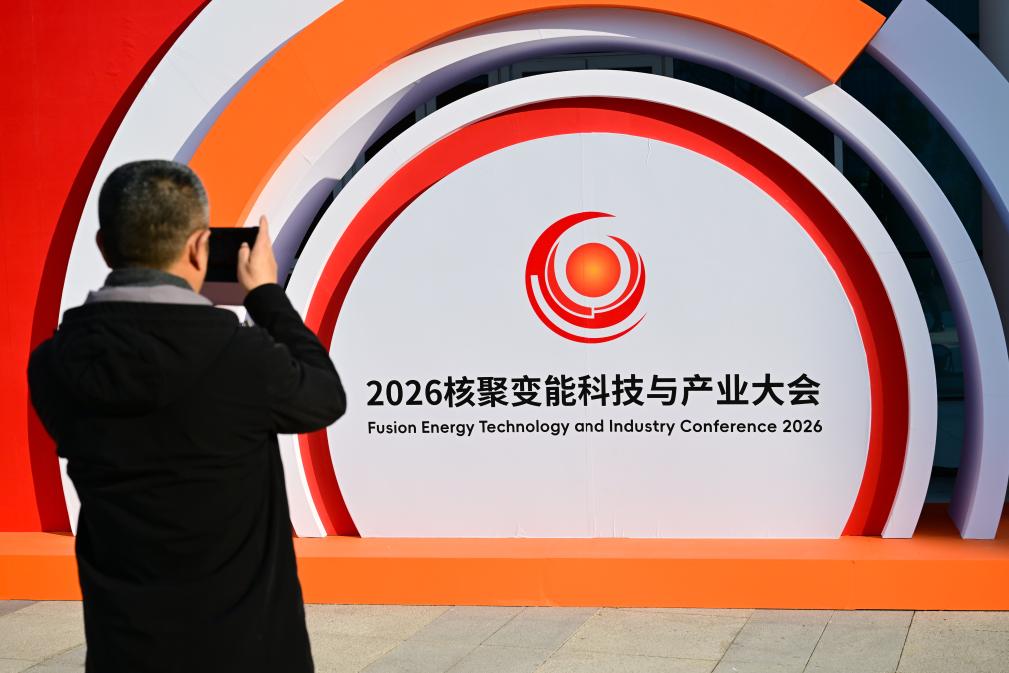
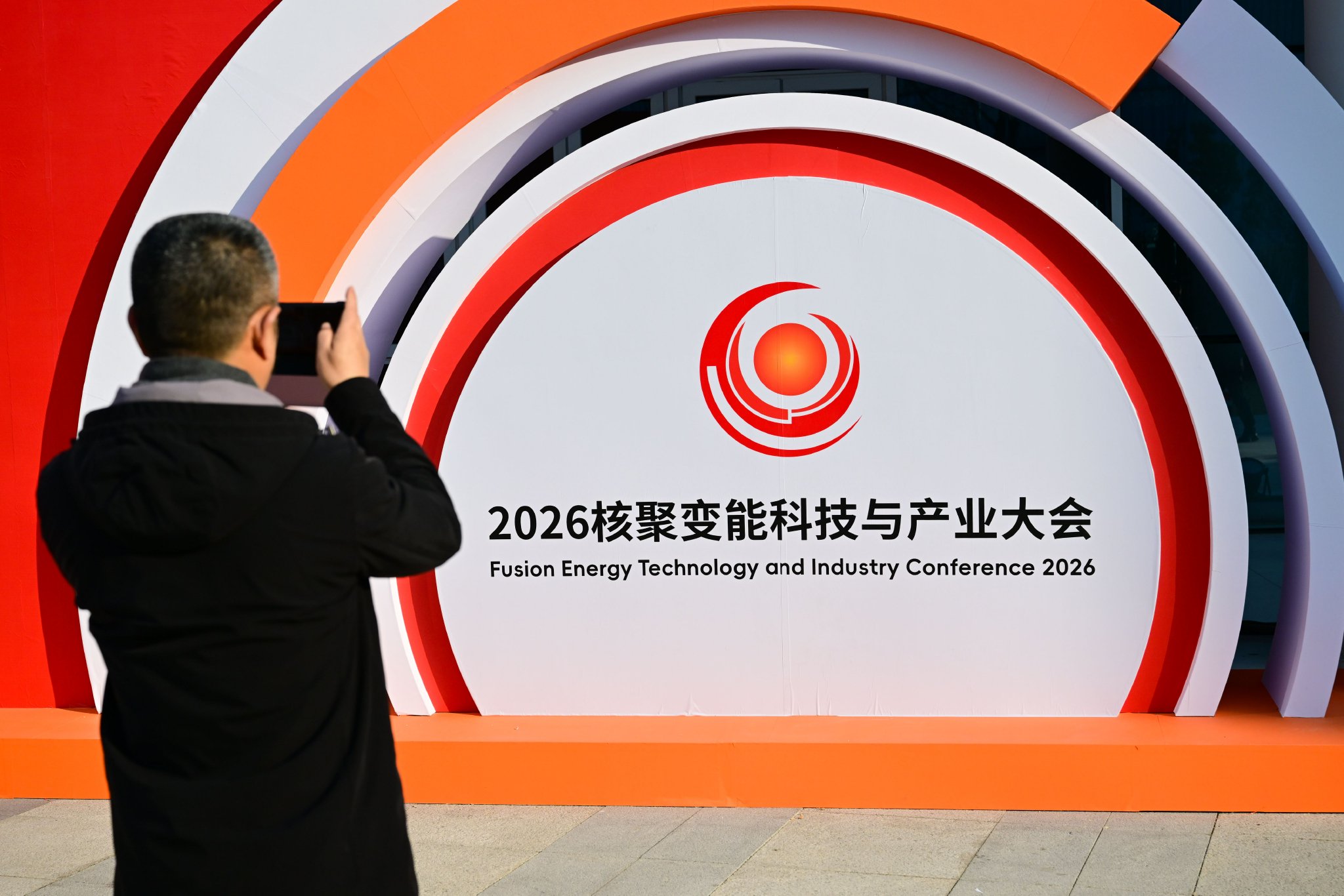
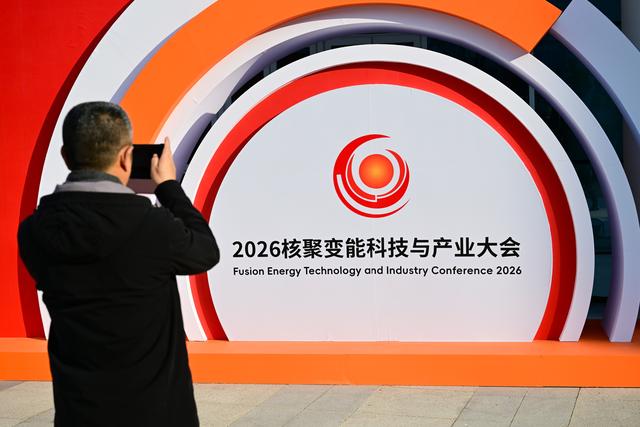
Group 1 - The 2026 Nuclear Fusion Energy Technology and Industry Conference successfully concluded in Hefei, Anhui, marking a key transition of controllable nuclear fusion from laboratory research to large-scale industrialization [1] - The commercialization of controllable nuclear fusion is accelerating, with significant breakthroughs in domestic projects such as EAST achieving 1 million degrees Celsius for 1066 seconds, and the CRAFT project nearing completion [2] - The industry is expected to enter a capital expenditure expansion cycle from 2025 to 2028, with projected total investments in major domestic projects reaching 146.5 billion yuan [2] Group 2 - The explosive growth of the controllable nuclear fusion industry is creating vast development opportunities for upstream and downstream enterprises, with companies like Western Superconducting and Shanghai Electric leading in their respective fields [3] - Capital participation is providing sustained momentum for the development of the industry chain, with companies like Zhongyou Capital investing heavily in fusion energy projects [4] - The conference is expected to further accelerate resource integration and collaborative innovation within the industry chain, enhancing the growth potential of quality enterprises [4]
财经聚焦|“人造太阳”照进现实还有多远?
Xin Hua Wang· 2026-01-18 03:38
Core Insights - Controlled nuclear fusion is transitioning from laboratory research to engineering and commercialization, with expectations to see the first operational fusion energy by around 2030 [1] - The core of fusion commercialization lies in finding a technically feasible and economically viable path [1] - China's fusion sector is characterized by a unique collaboration model involving state-owned enterprises, private companies, and diverse partnerships [1] Group 1: Technological Developments - Advanced tokamak devices like the "East" (EAST) and "China Fusion Engineering Test Reactor" (CFETR) are leading the scientific exploration in fusion technology [2] - The construction of key systems for fusion reactor research facilities aims to support the development and verification of critical fusion technologies [2] - The next-generation "artificial sun" experimental device (BEST) aims to demonstrate power generation by 2030 [2] Group 2: Industry Collaboration - Private enterprises are emerging as key players in exploring diverse technological routes in the fusion sector [2] - Companies like Xinghuan Energy and Xinneng Xuanguang are innovating with spherical tokamaks and AI-powered energy solutions [2] - The collaboration between state-owned and private enterprises enhances the efficiency of technological iterations and accelerates the commercialization process [2] Group 3: Supply Chain and Material Demand - Major scientific advancements are driving demand for superconducting materials, vacuum equipment, and specialized power sources [3] - The successful development of extreme low-temperature heat exchange technology and ultra-high temperature radiation materials indicates significant progress in the supply chain [5] Group 4: Talent Development and Education - The establishment of fusion science and engineering programs in universities aims to cultivate interdisciplinary talent for the fusion industry [5] - Companies are enhancing practical engineering capabilities through major projects and initiatives like the Xiyuan Fusion Innovation Fund to support young researchers [5] Group 5: Financial Support and Investment - The establishment of a fusion financial institution alliance aims to align financial services with industry needs, injecting capital into the fusion sector [8] - A new investment evaluation system tailored to the characteristics of the fusion industry is being developed to support the growth of this sector [8]

【财经分析】 “人造太阳”照进现实还有多远?
Zhong Guo Jin Rong Xin Xi Wang· 2026-01-18 01:51
Core Insights - Controlled nuclear fusion is transitioning from laboratory research to engineering and commercialization, with expectations to see the first operational fusion energy by around 2030 [1][10] - The core of fusion commercialization lies in finding a feasible and economically viable technological path, with a unique collaborative structure in China's fusion sector involving state-owned enterprises and private companies [1][3] Group 1: Technological Developments - Advanced Tokamak devices like the "East" (EAST) and "China Fusion Engineering Test Reactor" (CFETR) are leading the scientific exploration in China's fusion energy sector [3] - The construction of key facilities for fusion technology research and verification is underway, aiming for operational demonstration by 2030 [3] - Private enterprises are diversifying technological routes in fusion, with companies like Xinghuan Energy and Xineng Xuanguang focusing on innovative solutions [3] Group 2: Industry Collaboration - The collaboration between state-owned and private enterprises is enhancing the efficiency of technological iterations and advancing the fusion industry chain from sporadic research to systematic construction [3][4] - Major scientific advancements are driving demand in upstream industries such as superconducting materials and vacuum equipment [4] - Cross-domain collaboration is effectively integrating research resources and industrial needs, significantly improving engineering progress [6] Group 3: Talent Development - The establishment of specialized educational institutions, such as the Fusion Science and Engineering College at Hefei University of Technology, is fostering a diverse talent pool for the fusion industry [7] - Companies are enhancing practical capabilities through major projects, while innovation funds are being set up to support young researchers [7] Group 4: Financial Support - Financial institutions are increasingly supporting the fusion industry, with the establishment of a fusion financial alliance and investment funds aimed at aligning financial services with industry needs [9] - A tailored investment evaluation system is being developed to support the unique characteristics of the fusion industry [9]
财经聚焦:“人造太阳”照进现实还有多远?
Xin Hua She· 2026-01-18 01:20
Group 1 - Controlled nuclear fusion is transitioning from laboratory experiments to engineering and commercialization, with expectations to see the first demonstration of fusion energy by around 2030 [1] - The core of fusion commercialization lies in finding a technically feasible and economically viable path, with a unique structure in China's fusion sector characterized by collaboration between state-owned enterprises and private companies [1][2] - Major advanced tokamak devices like EAST and the China Fusion Engineering Test Reactor are leading scientific exploration, supported by the construction of key research facilities for fusion technology development [2] Group 2 - The demand for upstream industries such as superconducting materials and vacuum equipment is being driven by significant advancements in large scientific devices [3] - Collaborative models, such as joint laboratories, are effectively breaking through technical bottlenecks in the supply chain, enhancing the efficiency of engineering advancements [6] - The establishment of educational institutions focused on fusion science and engineering is diversifying talent cultivation pathways, with universities like Hefei University of Technology and Lanzhou University setting up relevant programs [6][7] Group 3 - Financial institutions are increasingly supporting the fusion industry, with the establishment of a fusion financial alliance and a venture capital fund aimed at aligning financial services with industry needs [8] - The transition of fusion energy from basic research to large-scale application represents a significant opportunity for technological innovation to drive manufacturing upgrades and cultivate new productive forces [8]
“人造太阳”照进现实还有多远?
Xin Lang Cai Jing· 2026-01-17 15:37
Core Insights - Controlled nuclear fusion is transitioning from laboratory research to engineering and commercialization, with expectations to see the first operational fusion energy by around 2030 [1] - The core of fusion commercialization lies in finding a technically feasible and economically viable path [1] - China's fusion sector is characterized by a unique collaboration model involving state-owned enterprises, private companies, and diverse partnerships [1] Group 1: Technological Developments - Advanced Tokamak devices like the "EAST" and "China Fusion Engineering Test Reactor" are leading the scientific exploration in China [3] - The construction of key facilities for fusion technology research aims to provide essential support for engineering implementation [3] - The "BEST" facility is expected to demonstrate power generation by 2030, serving as a platform for the next generation of fusion energy [3] Group 2: Industry Collaboration - Private enterprises are emerging as key players in exploring diverse technological routes in the fusion sector [3] - Companies like Xinghuan Energy and Xin'ao Group are innovating in areas such as spherical Tokamaks and safer fusion fuels [3] - A collaborative model is effectively breaking through supply chain bottlenecks, enhancing engineering efficiency [7] Group 3: Talent Development - The establishment of specialized institutes and programs in universities is aimed at cultivating a diverse talent pool for the fusion industry [8] - Initiatives like the "Xiyuan Fusion Innovation Fund" are designed to support young researchers in tackling core technologies [8] Group 4: Financial Support - The establishment of a fusion financial institution alliance aims to align financial services with industry needs [10] - A venture capital fund focused on fusion energy has been launched to provide necessary capital for industry growth [10] - The development of a tailored investment evaluation system is intended to support the unique characteristics of the fusion industry [10]
永赢基金李文宾:坚守高质量成长,聚焦前瞻性配置
ZHESHANG SECURITIES· 2026-01-17 15:13
- 李文宾专注于成长风格,注重挖掘高质量成长型企业,并通过前瞻性行业配置和选股交易实现超额收益[1][2][3] - 李文宾的代表产品包括万家成长优选A和永赢科技驱动A,前者在其管理期间年化收益率为12.81%,后者年化收益率为88.09%[2][14][27][29] - 李文宾的投资理念包括三个核心问题:真成长还是假成长、成长空间、成长质量和确定性[12] - 李文宾在行业配置上具有较高的胜率,14个半年期中13期的前五大重仓行业包含当期全市场涨幅前30%的行业[35] - 李文宾在选股中偏好高质量成长企业,重仓股营收同比增速和ROE均值显著高于中证800成长指数[47][48][49][50][51] - 李文宾善于挖掘冷门黑马股,44%的重仓股在重仓起始时的持仓基金数量不超过50只[52][53][54][55] - 李文宾的左侧止盈策略有效规避了回调风险,75%的个股在调出重仓后下季度下跌[58][60][61] - 李文宾后市关注AI、创新药、可控核聚变和反内卷相关的周期性产业[62]
俞浩,我帮你捋好了:怎样用20年干到百万亿美元
Sou Hu Cai Jing· 2026-01-17 14:41
Core Viewpoint - The ambitious goal of achieving a market value of 100 trillion USD in 20 years is presented as a feasible target based on historical trends of tech giants like Microsoft, Apple, and Nvidia, which have seen significant increases in their valuations over time [2][17]. Group 1: Strategic Recommendations - The company should leverage its core technology of "high-speed digital motors + AI algorithms" to expand into various sectors beyond home appliances, including automotive and aerospace [3][5]. - It is advised to adopt strategies from industry leaders: Nvidia's hardware and ecosystem integration, Apple's seamless user experience, and Microsoft's open platform approach to create a robust business model [5][6]. - The company should focus on global expansion and localization, establishing direct retail experiences in key markets to enhance brand presence and adapt products to local needs [6]. Group 2: Roadmap to Growth - The first phase (2026-2030) aims to solidify the company's foundation with a target market value of 50 billion USD, emphasizing R&D investment and market leadership in existing product categories [7][8]. - The second phase (2031-2035) focuses on expanding the ecosystem, targeting a market value of 500 billion USD, with plans to enter the automotive sector and develop partnerships for technology sharing [10]. - The third phase (2036-2040) aims for a market value of 3 trillion USD, with the goal of establishing industry standards and leading in smart living and robotics [11]. - The final phase (2041-2046) envisions a market value of 100 trillion USD, emphasizing groundbreaking technologies and a shift towards subscription services and data monetization [12][13]. Group 3: Financial Strategy - The company needs to secure diverse funding sources, including self-funding, equity financing, and strategic investments, to support its ambitious growth plans without relying solely on public offerings [16].
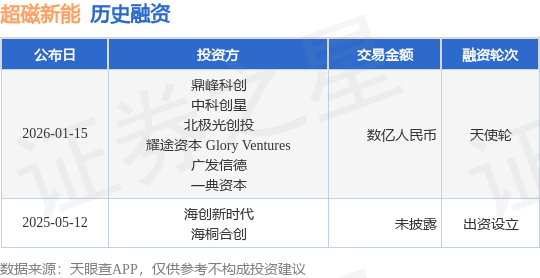
【投融资动态】超磁新能天使轮融资,融资额数亿人民币,投资方为鼎峰科创、中科创星等
Sou Hu Cai Jing· 2026-01-17 11:25
Group 1 - The core viewpoint of the news is that Chao Magnetic New Energy (Shanghai) Technology Co., Ltd. has completed an angel round of financing amounting to several hundred million RMB, with participation from various investment institutions [1][2]. - The financing round was announced on January 15, 2026, and included investors such as Dingfeng Kechuang, Zhongke Chuangxing, Northern Light Venture Capital, Glory Ventures, Guangfa Xinde, and Yidian Capital [2]. - Chao Magnetic New Energy is positioned as a provider of core components for controllable nuclear fusion, focusing on the research and manufacturing of high-temperature superconducting strong magnetic field systems, which are critical for nuclear fusion technology [1][2]. Group 2 - The company aims to promote the commercialization of fusion energy, with a significant milestone being the development of the world's first large-scale 25 Tesla high-temperature superconducting nuclear fusion tokamak magnetic system [1][2]. - This breakthrough technology is expected to make nuclear fusion devices more compact and efficient, significantly reducing construction costs and clearing key obstacles for the commercialization of fusion energy [1][2].