
太空算力

Search documents
收评:沪指震荡小幅上涨0.27% 黄金、石油等资源周期股集体大涨
Xin Hua Cai Jing· 2026-01-28 07:39
Market Overview - A-shares showed mixed performance on January 28, with the Shanghai Composite Index and Shenzhen Component Index slightly up, while the ChiNext Index experienced a small decline. The Shanghai Composite Index closed at 4151.24 points, up 0.27%, with a trading volume of 13,655 billion yuan [1] - Resource stocks led the market, particularly gold stocks, with Sichuan Gold achieving four consecutive trading limits, and China National Offshore Oil Corporation rising over 6% to a new high [1] - The total trading volume in the Shanghai and Shenzhen markets reached 29.7 trillion yuan, an increase of 70.4 billion yuan compared to the previous trading day [1] Sector Performance - Key sectors that performed well included precious metals, oil and gas extraction, steel, combustible ice, rare earth permanent magnets, and coal [2] - Conversely, sectors that saw declines included photovoltaic equipment, medical services, education, recombinant proteins, avian influenza, and Sora [2] Institutional Insights - According to Jifeng Investment Advisors, the A-share market is expected to continue a volatile consolidation pattern in February, with support from policies and valuations, while facing pressure from profit verification. They recommend focusing on cyclical sectors, technology growth, and defensive assets [3] - CITIC Construction highlighted the booming commercial aerospace industry, particularly the advancements in reusable rocket technology, which are expected to drive significant growth in the satellite communication market, projected to grow from $25.2 billion in 2025 to $83 billion by 2035, with a compound annual growth rate of approximately 13% [3] Company Updates - Amazon Web Services (AWS) announced a price increase of approximately 15% for its EC2 machine learning capacity blocks, marking the first price hike in about twenty years. This adjustment reflects the high demand for AI computing resources and the increasing scarcity of supply [4] - Haizhou Intelligent, a subsidiary of Suzhou Keda, announced a price adjustment for certain products, with increases ranging from 10% to 30%, effective March 1, 2026. This adjustment affects a range of products including storage series, front-end cameras, and servers [8]
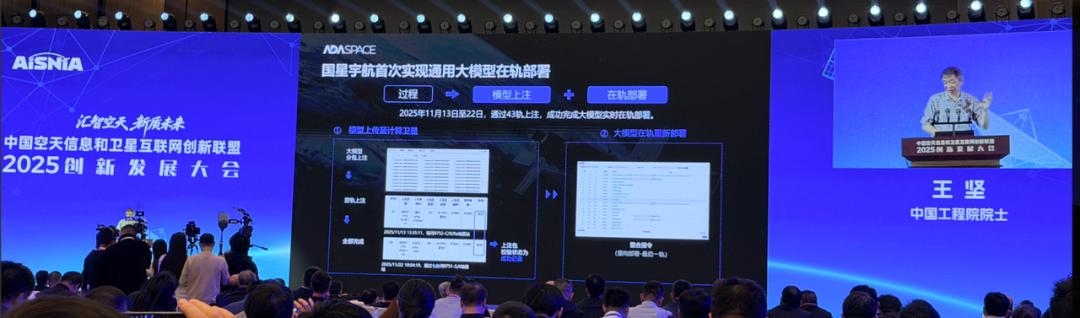
中国团队引领太空算力:首次太空在轨部署通用大模型,发2800颗卫星服务数亿硅基智能体
3 6 Ke· 2026-01-28 06:39
Core Insights - The global competition in AI is shifting focus to space computing power, with both the US and China making significant advancements in this area [1][2][8] Group 1: Developments in Space Computing Power - Starcloud, backed by Nvidia, has successfully run a large model in space using Nvidia H100, marking a significant technical validation [3][5] - Guoxing Aerospace plans to launch 2,800 satellites, with 2,400 dedicated to inference computing power reaching a total of 100,000 P-level, and 400 for training with a capacity of 1 million P-level [2][8] - Guoxing Aerospace has already completed key technology validations with its first group of space computing centers launched last year, and aims for commercial deployment by 2030 [2][8] Group 2: Differences in Approaches - Starcloud's approach involves deploying large models on the ground before sending them to space, while Guoxing Aerospace can deploy general large models in orbit and update them online as needed [5][6] - The difference in methodologies is likened to single-player versus online gaming, highlighting the advanced capabilities of Guoxing Aerospace [6] Group 3: Advantages of Space Computing Power - Space computing power can significantly reduce costs and energy consumption compared to traditional data centers, which are projected to consume 1 trillion kWh by 2026 [8][10] - The ability to provide real-time services from space can enhance the performance of silicon-based intelligent systems, such as Robotaxis and drones, by reducing latency [8][10] - Space computing power can also democratize AI access, providing infrastructure to remote areas lacking computational resources [10] Group 4: Technical Challenges and Innovations - The rapid evolution of AI computing chips poses challenges for maintaining up-to-date hardware in space, necessitating a hardware replacement mechanism [12][13] - Unique challenges in the space environment, such as heat management and protection against high-energy particles, require innovative solutions to ensure the reliability of space computing systems [14][15]

通信2026年度投资策略-聚焦AI-算力降本向光而行-应用落地网络先行
2026-01-28 03:01
Summary of Key Points from Conference Call Records Industry Overview - The focus is on the AI and cloud services industry, particularly the transition to cloud-based computing and cost reduction strategies in 2026 [1][3][4]. Core Insights and Arguments - AI cloud services are expected to enter a growth phase in 2025, with model vendors converting capital expenditures into Kubernetes (K8S) to achieve cloud computing and cost reduction, similar to the mobile internet era [1][3]. - Data center computing power is projected to see significant growth with the large-scale adoption of 1.6T and 224G single-channel technologies, which will profoundly impact China's optical communication industry [1][4]. - LightCounting forecasts that by 2030, the shipment of 1.6T will accelerate, surpassing 800G and 400G around 2028, with Chinese upstream optical chip companies likely achieving global replacement [1][5]. - The transition from copper connections to performance realization narratives is highlighted, with expectations that copper connections will remain dominant for the next two years [1][6]. - The commercial space sector is anticipated to have significant developments in 2026, including reusable liquid rockets and the gradual implementation of commercial satellite constellations [1][12]. Additional Important Insights - The infrastructure for computing power is experiencing price increases, with cloud computing seeing its first price hike in over 20 years, expected to continue until 2026 [2][22][23]. - The CDN market may follow suit with price increases, potentially impacting smaller clients who may seek cheaper alternatives [24][25]. - AI inference in edge computing is projected to have vast applications, with edge nodes becoming ideal for reducing latency and improving cost-effectiveness [26]. - Liquid cooling systems are becoming crucial in data center construction due to increased power demands from GPUs, with significant market opportunities arising from this trend [27]. - Power technology is also evolving, with new market spaces emerging from innovations in power supply systems within data centers [28]. Investment Opportunities - Key investment opportunities in the communication industry include companies like Xuzhuang and Yizhongtian, which are gaining market share in the optical module sector [5][6]. - The potential for growth in AI modules from IoT modules is emphasized, with companies that can provide integrated intelligent solutions expected to see rapid growth [13]. - The commercial rocket sector is highlighted as a critical area for investment, with expectations of successful validation of new reusable rocket models in 2026 [18][19]. - Investors are advised to focus on companies with strong backing and significant satellite planning capabilities in the space computing sector [19][21].
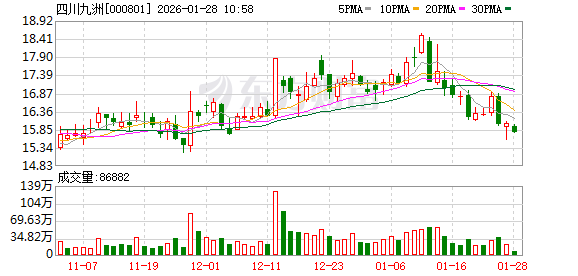
四川九洲:控股子公司四川九州电子科技股份有限公司暂未涉及太空算力业务
Mei Ri Jing Ji Xin Wen· 2026-01-28 02:57
(文章来源:每日经济新闻) 四川九洲(000801.SZ)1月28日在投资者互动平台表示,公司控股子公司四川九州电子科技股份有限公 司目前暂未涉及太空算力业务。 每经AI快讯,有投资者在投资者互动平台提问:基于商业航天和卫星行业的高速发展趋势,请问公司 继"空事一号卫星"后是否有计划继续发射新的卫星计划?同时九洲电子科技目前又进入了算力业务领 域,公司是否有计划结合自身优势抢占太空算力先发优势? ...

中国团队引领太空算力:首次太空在轨部署通用大模型,发2800颗卫星服务数亿硅基智能体
量子位· 2026-01-28 02:48
Core Viewpoint - The article discusses the emerging trend of space computing power in the global AI competition, highlighting advancements from both American and Chinese companies in deploying AI models in space [1][4][13]. Group 1: Space Computing Power Developments - Starcloud, backed by Nvidia, has successfully run a large model in space, marking a significant milestone in space computing power [1][4]. - Guoxing Aerospace has announced the launch of the world's first silicon-based intelligent agent service network in space, planning to deploy 2,800 satellites to support billions of silicon-based intelligent agents [2][4]. - The total computing power from the planned satellites will reach 100,000 P-level for inference and 1,000,000 P-level for training, with full deployment expected by 2035 [4][6]. Group 2: Technological Differences - Starcloud's approach involves deploying large models on the ground before sending them to space, while Guoxing Aerospace can deploy general large models directly in orbit and update them as needed [9][10]. - This capability allows for real-time updates and operational flexibility, akin to over-the-air updates in smartphones [9][10]. Group 3: Advantages of Space Computing Power - Space computing power can significantly reduce costs and save land resources, as it operates without the constraints of terrestrial data centers [13]. - It offers energy efficiency by utilizing solar power directly in space, avoiding the high energy consumption associated with ground-based data centers [13]. - The real-time service capabilities of space computing power can enhance applications in various sectors, such as providing fishermen with timely information about fish movements [14][16]. Group 4: Challenges and Technical Considerations - The development of space computing power faces challenges such as hardware selection, the need for on-orbit hardware replacement mechanisms, and the unique environmental conditions of space [19][21]. - Issues like heat management and protection against high-energy particles must be addressed to ensure the reliability and accuracy of space-based computing systems [21][22]. Group 5: Future Outlook - The integration of space computing power with open-source large models presents a unique opportunity for China to establish a leading position in this emerging field [23][24]. - The ongoing advancements in both space computing and AI models are expected to drive significant changes in various industries, promoting broader access to AI technologies [17][24].
东吴证券:卫星目前关键能源、火箭运力或迎非线性增长 太空算力空间远大
智通财经网· 2026-01-28 02:21
海外运力加速、太空算力落地在即 近期马斯克陆续表态:1)特斯拉和SpaceX未来三年计划各自建设100GW/年产能,马斯克预计2-3年内 规模化太空算力成为现实;2)星舰今年目标完全复用、进入太空成本将下降100倍。三年内星舰发射频 率将超每小时1次,终极目标每年生产1万艘星舰。按星舰100吨次的近地运力计算,年运载量可达100万 吨;若按1吨/颗卫星计算,3年内年发射量可达百万颗,较当前3000颗/年实现非线性增长,空间远大。 智通财经APP获悉,东吴证券发布研报称,太空商业活动迎来爆发期。海外方面,马斯克提出星舰将实 现完全复用并大幅提升发射频率。国内进程同步加速,已提交超20万颗卫星频轨申请,中国星网等星座 计划将进入密集发射阶段。技术层面,柔性钙钛矿组件因其高效轻薄的特性,成为太空光伏供能的关键 路径。相关产业链有望迎来高速发展机遇。 东吴证券主要观点如下: 国内产业化提速、战略重视度高 投资建议:商业航天+低轨卫星加速发展背景下,太空光伏供能最优、或有望迎来高速发展。1)推荐 太空电源:钧达股份(合作尚翼布局卫星钙钛矿+CPI膜)、明阳智能(布局钙钛矿、HJT技术及砷化 镓)、关注东方日升(P型HJ ...

未知机构:三安光电继续推荐砷化镓的主要元素是砷镓红黄光LED芯-20260128
未知机构· 2026-01-28 02:05
【三安光电】继续推荐! 价值量和空间:国内单颗卫星用6000颗芯片,单芯片价格800元,单卫星价值量500万左右。 砷化镓的主要元素是砷、镓,红黄光LED芯片的主要材料,全球的产能主要在中国,国内产能主要在LED企业,红 黄光做得最好的就是三安和乾照。 假设国内卫星数3000颗/年,对应国内150亿市场容量。 三安的产能最大,100多台设备,现有产值打满约70-80亿 砷化镓的的行业格局:三安、乾照、几大院所(811所、电科18所等)。 价值量和空间:国内单颗卫星用6000颗芯片,单芯片价格800元, 【三安光电】继续推荐! 砷化镓的主要元素是砷、镓,红黄光LED芯片的主要材料,全球的产能主要在中国,国内产能主要在LED企业,红 黄光做得最好的就是三安和乾照。 三安的产能最大,100多台设备,现有产值打满约70-80亿 砷化镓的的行业格局:三安、乾照、几大院所(811所、电科18所等)。 三安的积累:2004年布局,2011年完成产品开发、2012年承接863课题砷化镓三结太阳电池研发项目、2015年通过 863项目验收,目前已有1亿多收入。 关于技术路线:材料决定产品上限,砷化镓的转换效率(35%以上)远高 ...

电力设备行业点评报告:太空光伏:卫星目前关键能源、火箭运力或迎非线性增长,太空算力空间远大
Soochow Securities· 2026-01-28 01:50
Investment Rating - The report maintains an "Overweight" rating for the power equipment industry [1][4]. Core Insights - The space photovoltaic sector is expected to experience significant growth due to advancements in satellite energy and rocket capacity, with a potential for non-linear growth in space computing capabilities [4]. - Recent statements from Elon Musk indicate plans for Tesla and SpaceX to establish 100GW annual production capacity each within three years, with a projected 100-fold reduction in space launch costs [4]. - China is accelerating its satellite deployment, with a record application for frequency resources for 203,000 satellites, and plans to launch 13,000 low-orbit satellites between 2026 and 2030 [4]. - Continuous technological advancements are being made, particularly with the introduction of perovskite solar cells, which are expected to penetrate the market rapidly due to their energy-to-weight ratio advantages [4]. - The report suggests investment opportunities in companies involved in space power supply and equipment manufacturing, highlighting specific firms such as JunDa Co., MingYang Smart Energy, and others [4]. Summary by Sections Industry Trends - The report outlines a significant increase in satellite launches, projecting a rise from 3,000 to 1 million launches annually within three years, indicating a vast market potential [4]. - The domestic industry is gaining momentum with strategic importance placed on space computing and satellite deployment [4]. Technological Developments - The introduction of flexible perovskite solar cells is highlighted, with successful deliveries and planned launches aboard SpaceX rockets [4]. - Major manufacturers are progressively adopting perovskite technology, which is expected to enhance market penetration [4]. Investment Recommendations - The report recommends investing in companies that are positioned to benefit from the growth in commercial space and low-orbit satellites, including those involved in advanced solar technologies and equipment manufacturing [4].
太空光伏概念拉升,关注光伏50ETF(159864)
Mei Ri Jing Ji Xin Wen· 2026-01-28 01:33
Core Viewpoint - The space photovoltaic sector is gaining traction, with the photovoltaic 50 ETF (159864) rising by 0.82% on January 27, indicating growing investor interest in this technology [1]. Group 1: Space Photovoltaic Overview - Space photovoltaic refers to the technology that converts solar energy into electrical energy in space environments, such as satellite orbits and space stations, which face extreme conditions [2]. - Low Earth orbit (LEO) resources are becoming a new battleground for major powers, with China applying for frequency and orbital resources for 203,000 satellites by December 2025 to secure valuable orbital resources [2]. - The global commercial space boom is expected to benefit space photovoltaic technology, with companies like SpaceX and Tesla aiming to increase solar energy production to 100 GW annually [2]. Group 2: Space Computing Power - Space computing power involves deploying data centers in space to address energy and space limitations, utilizing solar energy and the vacuum's ultra-low temperature for efficient power and cooling solutions [2]. - The rising operational costs of ground-based computing power highlight the advantages of space computing, which may lead to increased demand for photovoltaic technology [2]. Group 3: Technological Choices for Space Photovoltaics - Gallium arsenide (GaAs) is the current mainstream choice for space photovoltaics due to its radiation resistance, high conversion efficiency, and long lifespan, although it faces limitations in production capacity and cost [3]. - Crystalline silicon is progressing faster in industrialization due to its strong radiation resistance and lower production costs, making it suitable for low Earth orbit satellites [3]. - Perovskite solar cells show potential with high theoretical efficiency and better radiation resistance than silicon, but their practical application remains limited due to a lack of empirical data and a less mature supply chain [3]. Group 4: Investment Opportunities - Investors interested in the photovoltaic sector can consider the photovoltaic 50 ETF (159864) for a comprehensive investment in the entire photovoltaic supply chain, including silicon materials, wafers, cells, modules, and equipment [3].
长城基金尤国梁:商业航天行业成长空间广阔
Xin Lang Cai Jing· 2026-01-28 01:29
2026年开年以来,商业航天领域资本热潮强势涌动,相关概念股表现活跃。不过,在持续"高歌猛 进"后,近日板块又有所降温。那么,商业航天这一领域的行业空间究竟有多大?其产业链包括哪些环 节,投资价值如何挖掘?近日,长城久嘉基金经理尤国梁做客央视财经直播间,围绕这些投资者关注的 核心话题展开了深度交流。 尤国梁表示,从远期视角看,商业航天是一个具有很大的成长潜力与想象空间的新兴产业。目前低轨卫 星互联网已接入大量用户,海外"星链" 业务已持续盈利,证明了其商业模式的可行性,国内星座则在 快速组网,未来除满足国内自身需求外,还有望拓展"一带一路"沿线等国家的业务需求,进一步打开市 场空间。与此同时,海外巨头正积极探索太空算力,国内亦有进展,全球共振趋势,有望为商业航天创 造新的需求,打开发展天花板。 责任编辑:石秀珍 SF183 2026年开年以来,商业航天领域资本热潮强势涌动,相关概念股表现活跃。不过,在持续"高歌猛 进"后,近日板块又有所降温。那么,商业航天这一领域的行业空间究竟有多大?其产业链包括哪些环 节,投资价值如何挖掘?近日,长城久嘉基金经理尤国梁做客央视财经直播间,围绕这些投资者关注的 核心话题展开了 ...