
碳达峰碳中和

Search documents
一图读懂丨2026年全国能源工作会议
Zhong Guo Dian Li Bao· 2025-12-16 01:32
Core Insights - The 2026 National Energy Work Conference emphasizes the importance of energy security and high-quality development, highlighting significant achievements in energy supply and green transformation [4][21][23]. Energy Security and Supply - The year 2025 is projected to see record high oil and gas production, with crude oil output around 215 million tons and natural gas production exceeding 260 billion cubic meters, marking nine consecutive years of over 10 billion cubic meters increase [5]. - The total installed power generation capacity in the country has surpassed 3.8 billion kilowatts, a year-on-year increase of 14%, with total electricity consumption exceeding 10 trillion kilowatt-hours for the first time [5][22]. Green and Low-Carbon Transition - The proportion of non-fossil energy consumption has exceeded the 20% target, with an expected investment of 3.54 trillion yuan in key energy projects, a year-on-year increase of 11% [7]. - New wind and solar power installations are expected to reach approximately 370 million kilowatts, with a utilization rate maintained above 94%, contributing to about 22% of total electricity consumption [8]. Technological Innovation - The integration of artificial intelligence with the energy sector is accelerating, with a focus on eight application scenarios including "AI+" in power grids and new energy [10]. - The installed capacity of new energy storage has surpassed 100 million kilowatts, indicating significant advancements in energy technology [10]. International Cooperation - The conference highlighted the importance of international energy cooperation, with successful forums and platforms established to enhance collaboration in clean energy [16][17]. - China is recognized for its green certificate system, achieving significant breakthroughs in international mutual recognition [17]. Future Goals and Planning - The goal is to establish a new energy system by 2030, with non-fossil energy consumption reaching 25% and renewable energy accounting for over 50% of power generation capacity [25]. - The focus will be on optimizing energy infrastructure and ensuring a balanced approach to energy production and consumption, promoting high-quality development of clean energy [27][40].

时时皆绿 金融有为:中国银行深圳市分行2000亿元绿色贷款赋能生态建设
2 1 Shi Ji Jing Ji Bao Dao· 2025-12-15 23:11
Core Viewpoint - Shenzhen is recognized as a leading city in green transformation and development, supported by robust green finance initiatives from the Bank of China Shenzhen Branch, which has achieved significant milestones in green loans and bonds [1][2]. Group 1: Green Finance Achievements - As of November, the Bank of China Shenzhen Branch's green loan balance exceeded 200 billion yuan, leading the market in Shenzhen [1]. - During the 14th Five-Year Plan period, the bank's cumulative green bond underwriting exceeded 33 billion yuan, serving over 700 green enterprises [1]. - The bank has established itself as a pioneer in green finance innovation and a leader in the growth of green finance scale [1]. Group 2: Support for Green Projects - The bank has supported the carbon-neutral experimental park "Biocircle No. 3" with a 10 million yuan loan, enabling it to achieve an 85% green electricity usage rate [2]. - The bank has a long-standing partnership with BYD Group, expanding its services from traditional credit to bond underwriting and supply chain financing as the company leads global electric vehicle sales [2][3]. - The bank's collaboration with companies like Grinmei has spanned over 15 years, providing loans for battery recycling and resource utilization [3]. Group 3: Innovative Financial Products - In July 2024, the bank issued Shenzhen's first 30 million yuan "carbon reduction loan" to a clothing company, linking loan rates to emission reduction outcomes [4]. - The Shenzhen government launched 1 billion yuan offshore RMB green bonds, with the bank serving as the sole global coordinator and green structure advisor [4]. Group 4: Mechanisms and Institutional Support - Shenzhen has established a comprehensive ecological civilization system, with the green finance framework being a critical component [6]. - The implementation of the first green finance regulation in March 2021 has encouraged the establishment of specialized green finance systems within banks [6]. - The bank has formed a green finance committee and has been publishing environmental information disclosure reports for four consecutive years, setting a transparency benchmark [6][7]. Group 5: Integration into Urban Development - The bank is integrating green finance into urban development through targeted green credit support, product innovation, and transparent environmental disclosures [7]. - The bank's headquarters is set to achieve carbon neutrality by 2024, becoming the first zero-carbon financial institution in Shenzhen [6][7].

全国发展和改革工作会议部署9项重点工作
Jing Ji Ri Bao· 2025-12-15 22:27
从全国发展和改革工作会议上获悉,今年我国经济顶压前行、向新向优发展,实现质的有效提升和量的 合理增长,年度和"十四五"规划目标任务即将顺利完成。 发展改革系统坚决贯彻落实党中央和国务院决策部署,扎实推动各项工作。一是做好经济分析和政策研 究,加强经济形势研判,强化逆周期调节,推动出台稳就业稳经济政策举措,持续优化宏观政策取向一 致性评估。二是做好中长期规划和年度计划,做好"十五五"规划《纲要》起草,推进重点领域规划编制 实施,加强对地方规划编制的指导,高质量编制实施年度计划。三是做好投资管理和项目建设,统筹用 好中央预算内投资等各方面资金,扎实推进"两重"建设,加力支持"两新"工作,设立投放新型政策性金 融工具,进一步促进民间投资发展。四是做好改革和创新,纵深推进全国统一大市场建设,深入开展市 场准入壁垒清理整治行动和招标投标领域突出问题系统整治,加力化解重点产业结构性矛盾,颁布实施 民营经济促进法,加快推进关键核心技术攻关,深入实施"人工智能+"行动,持续提升利用外资和境外 投资质量,高质量推进共建"一带一路"。五是做好综合统筹和综合平衡,统筹推动区域战略深化实施和 区域联动融合发展,支持经济大省挑大梁,有 ...
多方为“十五五”环境企业发展支招 聚焦三大方向
Di Yi Cai Jing· 2025-12-15 09:23
"我国气候行动已超越单纯减排,进入以绿色新动能驱动全经济系统深刻变革的高质量发展阶段。"全国 人大常委会委员、国家气候变化专家委员会副主任王毅表示,环境企业充分发挥专业与技术能力,积极 成为绿色技术的创新者、发展模式变革的实践者、全球绿色转型的合作者。 环境产业价值在于环境要素的系统整合,当前亟待围绕政策、技术、市场与金融进行系统性重构。对 此,环境服务业商会会长李其林认为,首先是改善利润表,扭转"增收不增利"局面,实现可持续的盈利 复苏。此外,环境企业要改善现金流量表,通过环境与金融的创新融合,解决账款回收等结构性难题, 构建健康的资金循环。 "十五五"时期是我国实现碳达峰目标的关键五年,也是推动高质量发展取得突破性进展的重要阶段。 专家表示,在这一宏观背景下,我国生态环境产业依然前景广阔。 在全国工商联环境服务业商会12月14日举办的2025年会暨2025中国生态环境产业发展大会上,全国政协 常委、全国工商联副主席方光华表示,今年中央经济工作会议提出"坚持双碳引领,推动全面绿色转 型"重点任务,为民营企业参与绿色发展筑牢了制度保障、拓展了发展空间、注入了强劲动能。 方光华说,环境企业应聚焦三大方向主动作为 ...
生态环境部副部长李高:到2027年中国碳市场将基本覆盖工业领域主要排放行业
Xin Lang Cai Jing· 2025-12-15 03:08
Core Viewpoint - The Chinese carbon market is entering a new phase of rapid development, becoming a crucial mechanism for achieving carbon peak and carbon neutrality goals, with plans for comprehensive coverage of major industrial sectors by 2027 [1][6]. Group 1: Carbon Market Development - By 2027, the national carbon emission trading market is expected to cover major emission sectors, while the voluntary greenhouse gas reduction trading market aims for full coverage in key areas [1][5]. - The carbon market has been established as an important policy tool for addressing climate change and promoting a green transition in economic and social development [1][6]. - As of March this year, the carbon emission trading market has expanded to include four industries: power generation, steel, cement, and aluminum smelting, covering over 3,500 key emission units and managing more than 60% of national carbon emissions [2][6]. Group 2: Data Quality and Market Functionality - Data quality is emphasized as critical for the carbon market, with a long-term mechanism for data quality management established to enhance corporate carbon emission accounting capabilities [2][6]. - The carbon market is seen as injecting new momentum into the development of green and low-carbon industries, creating new market opportunities [2][6]. - There is a growing awareness in society regarding the costs of carbon emissions and the benefits of carbon reduction, highlighting the market's role in this shift [2][6]. Group 3: Future Plans and International Cooperation - During the 14th Five-Year Plan period, efforts will be made to accelerate the construction of the national carbon market and strengthen the connection with the dual control system for emissions [3][7]. - Plans include enriching the trading entities in the carbon market and enhancing market transaction supervision [3][7]. - The government aims to engage in international cooperation across multiple fields and channels to build a more effective and influential carbon market, contributing to global climate governance [3][7].
李连成:构建现代化基础设施体系
Bei Jing Ri Bao Ke Hu Duan· 2025-12-15 02:17
Core Viewpoint - The 20th Central Committee's Fourth Plenary Session emphasizes the construction of a modern infrastructure system as a crucial task for building a modern industrial system and strengthening the foundation of the real economy [1] Group 1: Importance of Modern Infrastructure - Infrastructure plays a strategic, foundational, and leading role in national development, significantly impacting economic and social progress [2] - The Central Committee has consistently promoted the construction of a modern infrastructure system, recognizing its importance for long-term national development [2] - Infrastructure is essential for industrial development and serves as a critical component of the modern industrial system, reflecting a country's development level and civilization [2] Group 2: New Quality Productivity - The development of a modern infrastructure system is vital for nurturing new quality productivity, as historical innovations have relied on corresponding infrastructure [3] - Modern infrastructure networks facilitate the flow of technological innovation and production factors, enhancing efficiency and reducing costs [3] Group 3: Current Challenges - There are significant gaps in China's infrastructure compared to developed countries, with issues such as insufficient coordination and resilience in key areas [4] Group 4: Characteristics of Modern Infrastructure - The modern infrastructure system must be advanced, systematic, efficient, safe, and green, aligning with the needs of a socialist modernized nation [5] - Emphasis on integrating advanced technology with economic benefits is crucial for modern infrastructure development [5] Group 5: Transition to Systematic Planning - There is a need to shift from single-domain planning to cross-domain systematic planning for infrastructure, addressing imbalances and structural issues [6][7] Group 6: Development Direction - The development of modern infrastructure should focus on intelligence, greenness, and integration, leveraging new technologies for enhanced efficiency and sustainability [8] Group 7: Key Tasks for the 14th Five-Year Plan - The 14th Five-Year Plan aims to consolidate and expand China's infrastructure advantages, focusing on modernizing transportation and energy systems while enhancing safety and resilience [9][12] Group 8: New Energy Infrastructure - The new energy infrastructure will prioritize non-fossil energy sources and develop a new power system, aiming for a significant increase in clean energy supply [12] Group 9: Modern Water Network - The construction of a modern water network is essential for national public service systems, focusing on flood control and efficient water resource management [13] Group 10: Urban Infrastructure Resilience - Enhancing urban infrastructure to support both daily functions and emergency responses is critical for improving resilience and sustainability [14]
【学习贯彻党的二十届四中全会精神】加快建设新型能源体系
Jing Ji Ri Bao· 2025-12-15 01:55
Group 1 - The core viewpoint emphasizes the necessity of accelerating the construction of a new energy system to ensure energy security and promote high-quality development in China [1][2][3][4] - The new energy system is seen as a strategic choice to safeguard energy security and gain an advantage in global power dynamics, especially in the context of geopolitical and climate challenges [3][4] - Achieving carbon peak and carbon neutrality goals is a critical pathway that requires a significant transformation of the energy system, moving away from fossil fuels [4][5] Group 2 - The construction of a new energy system is based on a solid foundation, with historical achievements in energy reform and development since the 18th National Congress of the Communist Party of China [5][6] - The new energy system aims to gradually establish non-fossil energy as the main supply source while maintaining fossil fuels as a backup, ensuring a stable energy supply [6][7] - The development of a new power system is crucial, focusing on the integration of various energy sources and enhancing the flexibility and resilience of the power grid [11][12] Group 3 - Key tasks for the "14th Five-Year Plan" period include increasing the share of renewable energy supply, improving the clean and efficient use of fossil energy, and constructing a new power system [10][11][12] - Emphasis is placed on promoting green and low-carbon energy consumption across various sectors, including transportation, buildings, and industry [12][13] - Accelerating energy technology innovation and establishing a robust energy market system and pricing mechanism are essential for supporting the transition to a new energy system [13][14]
加快建设新型能源体系
Jing Ji Ri Bao· 2025-12-14 22:46
Core Viewpoint - The article emphasizes the importance of accelerating the construction of a new energy system in China as a strategic decision to ensure energy security and promote high-quality development in the context of global energy transformation [1][2]. Group 1: Significance of Accelerating the New Energy System - Accelerating the construction of a new energy system is a necessary requirement for advancing the energy revolution and building an energy powerhouse [2]. - It is a strategic choice to ensure energy security and gain an advantage in major power competition, especially given the complex global energy landscape influenced by geopolitical factors and climate change [3]. - Achieving carbon peak and carbon neutrality goals is essential, as nearly 90% of carbon emissions in China are due to fossil fuel combustion, necessitating a shift to a low-carbon energy system [4]. Group 2: Current Foundations for New Energy System Construction - China has made significant progress in energy reform and development, establishing a solid foundation for the new energy system, including becoming the world's largest producer of solar panels and wind power equipment [5]. - The country has built the largest clean power supply system globally, with renewable energy installations expected to surpass coal power by 2024 [5]. Group 3: Basic Requirements for New Energy System Construction - The new energy system aims to gradually establish non-fossil energy as the main supply source, with fossil energy serving as a backup [6]. - A new power system is crucial for supporting high proportions of renewable energy, requiring the development of a flexible and intelligent grid [7]. - Advocating for green and smart energy consumption is essential, especially with the integration of digital technologies into the energy sector [8]. Group 4: Key Tasks for Implementing the New Energy System - Increasing the share of renewable energy supply is a priority, with a focus on diverse energy sources and the development of clean energy bases [10]. - Enhancing the clean and efficient use of fossil energy while controlling its consumption is necessary to ensure energy security [11]. - Constructing a new power system that promotes coordinated development of energy sources, grids, loads, and storage is vital [12]. - Promoting green and low-carbon energy consumption across various sectors, including transportation and buildings, is essential for achieving energy transition goals [13]. - Accelerating energy technology innovation and strengthening the energy market system and pricing mechanisms are critical for supporting the new energy system [14].
国家发改委,重磅发声!
Zhong Guo Ji Jin Bao· 2025-12-13 14:49
来源:中华人民共和国国家发展和改革委员会网站 会议强调,发展改革系统要深刻领会习近平总书记在中央经济工作会议上提出"五个必须"的重要内涵,准确把握明年经济工作的总体要求,结合职能扎扎 实实做好明年发展改革重点工作。 一是编制实施好"十五五"规划。深入领会党中央战略意图,坚持因地制宜,提高规划质量,加强规划内容审核衔接,把党的二十届四中全会《建议》确定 的各项决策部署和工作要求落到实处。同时,加强经济监测预警分析,完善政策工具箱,加强预期管理,做好今明两年政策衔接、工作衔接,推动政策靠 前发力,实现良好开局。 二是多措并举促进投资止跌回稳。充分发挥"两重"建设、新增地方政府专项债券等各类政府投资资金作用,适当增加中央预算内投资规模,继续发挥新型 政策性金融工具作用,不断提高投资效益。面向"十五五"谋划实施重大工程项目。进一步明确投资规则,扎实做好前期工作,加强投资项目调度。深入实 施促进民间投资发展的若干措施,有效激发民间投资活力。 12月12至13日,全国发展和改革工作会议在北京召开。会议坚持以习近平新时代中国特色社会主义思想为指导,全面贯彻党的二十大和二十届历次全会精 神,认真落实中央经济工作会议决策部署, ...
国家发展改革委,最新发声
Shang Hai Zheng Quan Bao· 2025-12-13 13:19
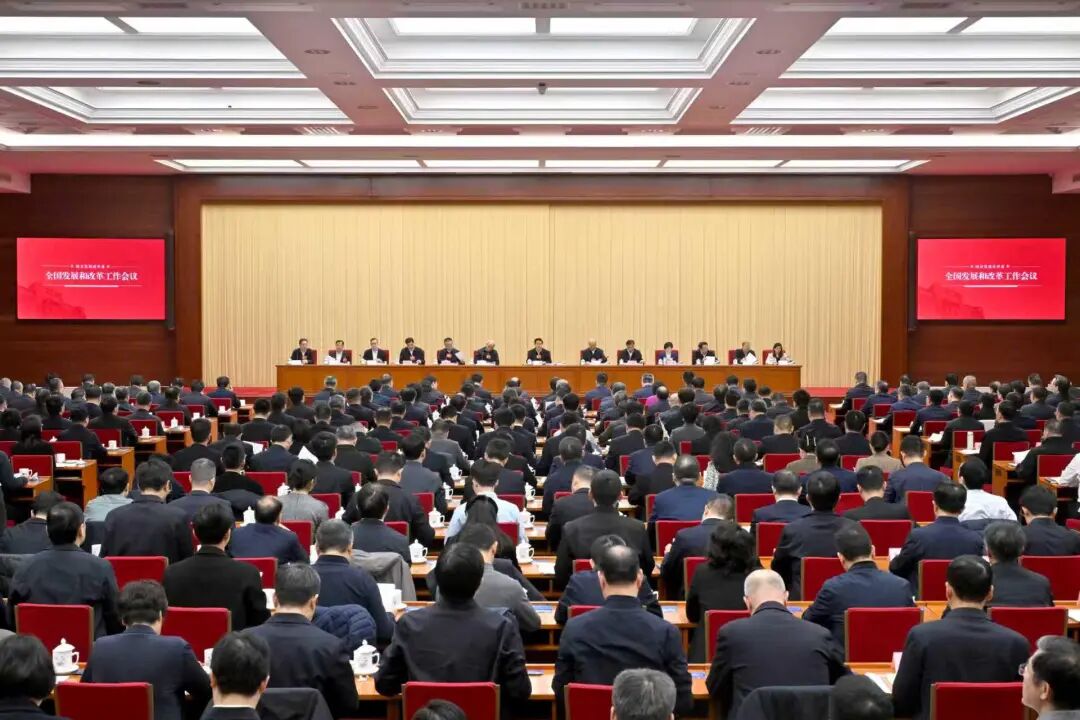
记者12月13日从国家发展改革委获悉,12月12日至13日,全国发展和改革工作会议在北京召开。会议认 真落实中央经济工作会议决策部署,按照党中央和国务院部署要求,总结2025年发展改革工作,研究部 署2026年发展改革重点任务。国家发展改革委党组书记、主任郑栅洁作工作报告,委党组成员出席会 议。 会议指出,今年是很不平凡的一年,我国经济顶压前行、向新向优发展,实现质的有效提升和量的合理 增长,年度和"十四五"规划目标任务即将顺利完成。发展改革系统坚决贯彻落实党中央和国务院决策部 署,扎实推动各项工作。一是做好经济分析和政策研究,加强经济形势研判,强化逆周期调节,推动出 台稳就业稳经济政策举措,持续优化宏观政策取向一致性评估。二是做好中长期规划和年度计划,做 好"十五五"规划《纲要》起草,推进重点领域规划编制实施,加强对地方规划编制的指导,高质量编制 实施年度计划。三是做好投资管理和项目建设,统筹用好中央预算内投资等各方面资金,扎实推进"两 重"建设,加力支持"两新"工作,设立投放新型政策性金融工具,进一步促进民间投资发展。四是做好 改革和创新,纵深推进全国统一大市场建设,深入开展市场准入壁垒清理整治行动和招标 ...