
绿色贸易

Search documents
商务部:增强外贸企业绿色低碳发展意识 加快推动物流绿色低碳发展
智通财经网· 2025-10-30 13:43
Core Viewpoint - The Ministry of Commerce has released implementation opinions to expand green trade, emphasizing the importance of enhancing the awareness and capabilities of foreign trade enterprises in green and low-carbon development [1][3]. Group 1: Enhancing Green Low-Carbon Development Capabilities - Foreign trade enterprises are encouraged to strengthen their awareness of green low-carbon development through training and dissemination of domestic and international legal policies and market dynamics [4][5]. - The implementation opinions promote the adoption of green design and production practices, urging enterprises to utilize renewable energy and reduce carbon emissions through updated equipment and processes [4][5]. - A focus on logistics is highlighted, with recommendations for long-distance transportation to shift from road to rail and water, and the use of environmentally friendly packaging materials [5][6]. Group 2: Expanding Green Low-Carbon Products and Technologies - The opinions call for enhancing the international competitiveness of green low-carbon products, encouraging the use of recycled materials and the development of sustainable fuel trade [6][7]. - There is an emphasis on understanding international market demands for green trade, with support for enterprises to leverage free trade agreements to expand cooperation in green low-carbon sectors [6][7]. - The opinions also advocate for increasing the greenization of exhibitions, promoting the establishment of dedicated green low-carbon exhibition areas at major trade events [7]. Group 3: Creating a Favorable International Environment for Green Trade - The Ministry aims to strengthen international communication and collaboration on green trade rules through participation in global forums [8][9]. - There is a push for the establishment of standards that align with international green low-carbon product and service standards, facilitating mutual recognition [8][9]. - The opinions encourage the development of a robust support system for green trade, including financial policy support and the establishment of carbon footprint databases [9][10]. Group 4: Strengthening Support Systems for Green Trade - Financial institutions are encouraged to develop products and services based on carbon footprint assessments to support green low-carbon product exports [9][10]. - The establishment of a national carbon footprint database is prioritized to assist foreign trade enterprises in calculating their product carbon footprints [9][10]. - The opinions highlight the importance of talent development in green trade, advocating for research and training programs to cultivate expertise in this area [10].
【独家】拓展绿色贸易举措将出台
Sou Hu Cai Jing· 2025-10-30 03:15
中国证券报·中证金牛座记者近日获悉,拓展绿色贸易相关举措将出台,为绿色贸易发展营造良好环 境。 专家表示,发展绿色贸易是促进贸易优化升级、助力实现碳达峰碳中和目标、加快建设贸易强国的重要 举措。 日前召开的国务院常务会议提出,要加快完善绿色贸易政策制度体系,加强与产业、科技、财税、金融 等政策衔接协同,为绿色贸易发展营造良好环境。要提升外贸企业绿色低碳发展能力,推动企业开展绿 色设计和生产,建设绿色贸易公共服务平台。要拓展相关产品和技术进出口,加强国际交流与沟通,加 快建立与国际接轨的绿色低碳产品、技术和服务标准体系。 ...
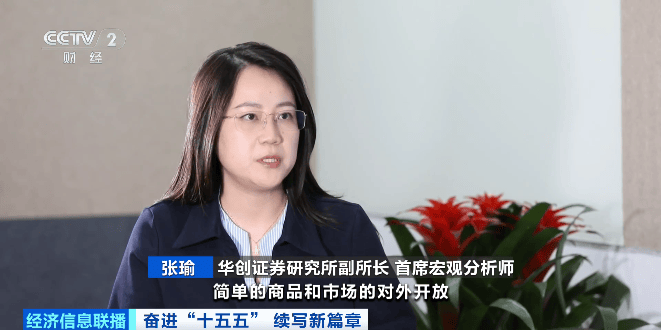
张瑜:“十五五”期间 我国“制度型开放”特点将更鲜明
Sou Hu Cai Jing· 2025-10-28 15:15
Core Viewpoint - China is transitioning from simple commodity and market openness to "institutional openness" during the 14th Five-Year Plan, aiming to establish a more systematic and high-standard international cooperation framework [1][3]. Group 1: Characteristics of Institutional Openness - The focus will shift towards high-standard international economic and trade rules, with emphasis on agreements like DEPA and CPTPP, which will include labor protection, environmental standards, and industrial subsidies [3][5]. - Two new trade characteristics are expected: a focus on green trade, digital trade, and high-value-added trade, along with increased unilateral openness to the poorest countries, showcasing China's commitment to maintaining openness amid rising protectionism [5][7]. Group 2: Stability of Foreign Trade - Despite global economic fluctuations and rising trade protectionism, China's foreign trade remains robust due to deep integration into global supply and demand structures [9][11]. - China's export and foreign cooperation space is projected to remain significant, supported by steady overseas demand from both emerging markets and developed countries, indicating resilience in the external demand environment [11][13]. Group 3: New Investment Opportunities - The 14th Five-Year Plan is expected to create larger platforms and investment spaces, with initiatives like the Hainan Free Trade Port lowering barriers in finance, healthcare, and education, thus opening new investment opportunities [13][15]. - There will be further standardization of outbound investments and a reduction in restrictions on foreign investments in China, enhancing the overall investment landscape [15].

多措并举 推动我国绿色贸易高质量发展
Xin Hua Wang· 2025-10-28 14:33
Core Viewpoint - Developing green trade is a crucial measure to promote trade optimization and upgrading, assist in achieving carbon peak and carbon neutrality goals, and accelerate the construction of a strong trading nation [1] Group 1: Policy and Institutional Framework - The State Council's executive meeting proposed to accelerate the improvement of the green trade policy system and strengthen coordination with industrial, technological, fiscal, and financial policies to create a favorable environment for green trade development [1] Group 2: Role of Enterprises - Enterprises play a vital role in the process of exploring green trade development, exemplified by Inner Mongolia Daxing'anling Carbon Sink Technology Co., Ltd., which focuses on forestry's response to climate change and promotes the marketization of forestry carbon sink resources [1] Group 3: Trade Statistics and Trends - According to customs statistics, in the first three quarters of this year, China's export products have shifted towards higher quality, with high-end equipment related to new quality productivity increasing by 22.4% year-on-year, and green products such as wind turbine sets and parts, "new three types" products, and electric locomotives also experiencing double-digit growth [1] - Capturing the new trend of global energy transition, Chinese foreign trade enterprises will continue to increase the supply of high-quality green products and accelerate the exploration of new fields and tracks [1]

谁将成为绿色贸易“新主力”
Jin Rong Shi Bao· 2025-10-28 00:34
Core Viewpoint - The Chinese government is prioritizing the development of green trade as a strategic initiative to enhance trade optimization, achieve carbon neutrality goals, and accelerate the construction of a strong trade nation in response to climate change and international competition [1][2]. Group 1: Green Trade Development in China - The State Council, led by Premier Li Qiang, has outlined measures to expand green trade, positioning it as essential for economic transformation and international competitiveness [1]. - China's green trade exports have seen significant growth, with high-end equipment related to new production capabilities increasing by 22.4% year-on-year in the first three quarters of the year [1]. - In 2022, China's green trade import and export total reached $1,079.28 billion, accounting for 12.2% of global green trade, an increase of 2.3 percentage points since 2013 [2]. Group 2: Global Green Trade Trends - Global green trade has shown stable growth, with an average annual growth rate of 0.85% from 2013 to 2022, reaching $6.5 trillion in the first three quarters of 2023 [2]. - Green trade accounted for approximately 18.17% of total global trade in 2022, reflecting a slight decrease despite overall trade growth [2]. Group 3: Challenges in Green Trade Mechanisms - Existing green trade mechanisms face challenges, including limited effectiveness and slow progress, with non-tariff barriers becoming significant obstacles to green trade liberalization [3][4]. - Non-tariff barriers, such as inconsistent technical standards and complex certification processes, are major hindrances to the free trade of green products, particularly in the electric vehicle sector [4][7]. Group 4: RCEP as a Platform for Green Trade - The Regional Comprehensive Economic Partnership (RCEP) is seen as a potential optimal platform for promoting regional green trade due to its members' consensus on trade liberalization and diverse economic structures [5][6]. - Experts suggest that RCEP can facilitate the establishment of green product standards and streamline customs processes for electric vehicles and related components [6][7]. Group 5: Recommendations for Enhancing Green Trade - Recommendations include eliminating tariffs on green and low-carbon products, as current tariffs can be as high as 20% in the RCEP region [7]. - Reducing non-tariff barriers is crucial, with suggestions for measures such as simplifying import/export quotas, coordinating standards, and utilizing digital tools for data sharing [7].
朱鹤新金融街论坛重磅发声!贸易便利化政策大礼包呼之欲出
2 1 Shi Ji Jing Ji Bao Dao· 2025-10-27 10:13
Core Viewpoint - The 2025 Financial Street Forum highlights the resilience of global trade amidst challenges such as the pandemic, geopolitical tensions, and rising protectionism, driven by technological advancements and open cooperation [1][2]. Group 1: Global Trade Growth - Global trade is projected to grow at an average annual rate of 5.4% from 2019 to 2024, an increase of 4.6 percentage points compared to the previous five years [1]. - The United Nations forecasts global trade to exceed $33 trillion in 2023, marking a historical high [1]. - The semiconductor trade has seen significant growth, with annual trade in integrated circuits surpassing $1 trillion [1]. Group 2: Technological and Economic Drivers - The new wave of technological revolution and industrial transformation is injecting new momentum into global trade, with AI and digital economy playing crucial roles [1]. - Green trade has rapidly emerged, with annual trade in new energy increasing from $10 billion a decade ago to nearly $100 billion in recent years [1]. Group 3: China's Role in Global Trade - China, as the world's second-largest economy and largest goods trader, contributes significantly to global economic resilience and trade rules [2]. - The country maintains stability in global supply chains and actively shares market opportunities [2]. - China's foreign exchange market transactions are projected to grow by 37% in 2024 compared to 2020, with foreign-related income and expenditure increasing by 64% [3]. Group 4: Foreign Exchange Policy and Reforms - The State Administration of Foreign Exchange (SAFE) plans to introduce nine new policy measures to enhance trade facilitation and expand cross-border trade [4]. - SAFE aims to deepen reforms in foreign exchange management, focusing on direct investment, cross-border financing, and securities investment [4]. - The implementation of a comprehensive foreign exchange management reform in pilot free trade zones is expected to promote new levels of openness [4]. Group 5: Risk Management and Regulatory Enhancements - SAFE emphasizes improving foreign exchange regulatory capabilities and risk prevention through a dual management approach combining macro-prudential and micro-regulation [5]. - The use of AI and big data will enhance monitoring and early warning systems for cross-border capital flows, aiming to mitigate external risks [5].

中共中央发布会丨“十五五”时期,既重视“中国经济”也重视“中国人经济”
Sou Hu Cai Jing· 2025-10-26 07:26
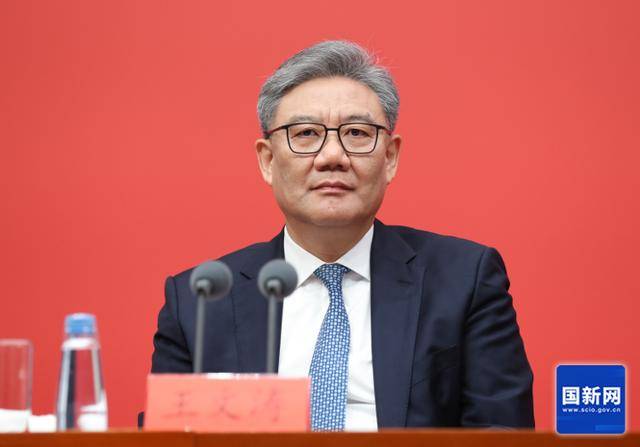
Core Points - The article discusses the important deployment of China's "15th Five-Year Plan" regarding opening up the economy, as introduced by Wang Wentao, the Minister of Commerce [2][3] Group 1: Expansion of Opening Up - The plan emphasizes actively expanding autonomous opening, aligning with international high-standard economic and trade rules, focusing on service sectors, and increasing market access [2] - It aims to enhance trade relationships through regional and bilateral trade investment agreements and expand the network of high-standard free trade zones [2] Group 2: Trade Innovation Development - The plan outlines three pillars for becoming a strong trading nation: goods trade, service trade, and digital trade [2] - In goods trade, it focuses on expanding intermediate goods trade, green trade, and promoting market diversification [2] - For service trade, it aims to improve the negative list management system for cross-border service trade [2] - In digital trade, it plans to gradually expand openness in the digital sector while promoting balanced import and export development [2] Group 3: Investment Cooperation - The strategy includes enhancing the "Invest in China" brand and creating new advantages to attract foreign investment [3] - It emphasizes the importance of a transparent, stable, and predictable institutional environment for foreign investment [3] - The plan also highlights the need for effective management of outbound investments and a comprehensive overseas service system [3] Group 4: High-Quality Belt and Road Initiative - The article states that the Belt and Road Initiative is a collaborative effort rather than a solo endeavor, requiring strategic alignment with partner countries [3] - It aims to advance significant landmark projects alongside smaller, community-focused initiatives [3] - The plan seeks to deepen cooperation in trade, investment, industry, and culture, while expanding collaboration in green, digital, and artificial intelligence sectors [3]
进一步稳外贸 新政策将适时推出
Jing Ji Wang· 2025-10-23 02:39
Core Viewpoint - China's foreign trade is under pressure but showing signs of stability and improvement, with the Ministry of Commerce planning to enhance policy effectiveness, promote trade, and deepen trade cooperation [1][2][8] Group 1: Trade Performance - In the third quarter, China's goods trade imports and exports grew by 6% year-on-year, marking eight consecutive quarters of growth [2] - By September, both exports and imports had seen four consecutive months of year-on-year growth, with significant contributions from major provinces [7] - The western region's foreign trade maintained strong momentum, with a 10.2% year-on-year increase in imports and exports [7] Group 2: Policy Measures - The Ministry of Commerce will focus on three areas: releasing policy effectiveness, promoting trade, and deepening trade cooperation [2] - New policies will prioritize digital trade, green trade, and service trade as emerging growth engines [4] - Specific measures include enhancing financial services for foreign trade enterprises and optimizing customs processes [5] Group 3: Structural Changes and Challenges - Current challenges for foreign trade enterprises include costs, orders, and risks, necessitating a closed-loop response from problem identification to policy solutions [4] - Experts note that global economic recovery is uneven, and geopolitical tensions are adding structural and cyclical risks to foreign trade [3] - The transition towards high-tech and high-value-added sectors is critical for China's foreign trade, requiring diverse policy tools to support emerging business models [3] Group 4: Regional Development - The development of foreign trade is characterized by a new pattern of "coastal leadership, inland rise, and border breakthroughs," with tailored local measures enhancing trade performance [7] - The western land-sea new channel has seen significant growth, with container shipments increasing by 70.3% year-on-year [7] Group 5: Future Outlook - With the timely introduction of new policies and the continuous release of enterprise innovation, China's foreign trade is expected to withstand short-term pressures and achieve sustained growth on a high-quality development track [8]
我国外贸企业绿色动能澎湃 绿色贸易蓬勃发展
Yang Guang Wang· 2025-10-23 01:27
Core Insights - The development of green trade in China is accelerating, supported by increasing supply of high-quality green products and favorable policies [1][2] - In the first three quarters of this year, exports of high-end equipment related to new production capacities grew by 22.4%, with significant growth in green products such as wind power generators and electric locomotives [1] - A notable example includes the completion of a large BRT bus order for Africa, enhancing local commuting efficiency [1] Group 1 - China's foreign trade enterprises are expanding the supply of high-quality green products, leading to robust growth in green trade [1] - Exports of high-end equipment related to new production capacities increased by 22.4% year-on-year [1] - The first batch of 100 BRT buses from Xiamen has been deployed in Tanzania, significantly improving local commuting [1] Group 2 - A recent State Council meeting emphasized the need to enhance the green trade policy framework and support the green low-carbon development of foreign trade enterprises [2] - The certification process for charging stations exported to Vietnam has been streamlined from three months to two weeks, facilitating green trade [2] - Experts suggest that establishing clear green standards and providing targeted financial and policy support will drive the deep green transformation of China's industrial structure [2]
明年全球贸易前景不容乐观 贸易增速或降至0.5%
Jing Ji Ri Bao· 2025-10-23 00:39
Core Insights - The World Trade Organization's latest report indicates that while global trade showed strong performance in the first half of the year, the outlook for the second half and into 2026 is pessimistic due to rising tariffs and increased trade policy uncertainty [1] Group 1: Global Trade Performance - Global merchandise trade volume is projected to grow by 2.4% in 2025, but the growth rate is expected to drop to 0.5% in 2026, primarily due to trade policy uncertainty [2] - In the first quarter of 2025, U.S. imports surged beyond expectations as companies stockpiled goods in anticipation of future tariff increases, leading to a 4.9% year-on-year increase in global merchandise trade volume [2] Group 2: Artificial Intelligence Trade Growth - Trade in artificial intelligence-related goods grew by over 20% year-on-year in the first half of 2025, significantly outpacing other goods and becoming a key driver of trade growth [3] - The growth in AI-related trade is attributed to investments in digital infrastructure and includes contributions from both developed and emerging markets, with East Asia remaining a major supply chain hub [3] Group 3: Service Trade Trends - Global service trade grew by 5% year-on-year in the first half of 2025, a slowdown from the double-digit growth seen in 2023 and 2024, with expectations of continued deceleration due to global economic slowdown and geopolitical tensions [4] - Despite the current slowdown, there is optimism for long-term growth in service trade, particularly as emerging markets develop and demand for digital services increases [4] Group 4: Trade Policy Uncertainty - Trade policy uncertainty impacts global trade by affecting business investment, consumer spending, supply chain stability, and trade costs, leading to a potential decline in trade growth [4] Group 5: Recommendations for Trade Development - To address the challenges facing global trade, measures such as enhancing trade policy transparency, coordinating trade policies, and supporting developing countries' trade competitiveness are recommended [5] - Promoting digital economy development and green trade initiatives are also suggested to facilitate trade and ensure sustainable growth [5]