
贸易战

Search documents
美国缩减对意大利面关税 意大利称特朗普时期政策回调
Xin Lang Cai Jing· 2026-01-01 16:54
Core Points - The U.S. government has significantly reduced the planned tariffs on Italian pasta brands, which were initially set to double their costs, amid domestic political pressure regarding living costs [1][2] - The U.S. Department of Commerce has lowered the additional tariffs from a maximum of 92% to a range of 2% to 14% for different brands, including La Molisana and Garofalo [1][2] - The Italian government claims that this tariff adjustment reflects the constructive cooperation of its companies [2][3] Industry Impact - The Italian Agricultural Association warned that such tariffs would have a "fatal blow" to pasta producers, with approximately half of the pasta exports to the U.S. being affected [1][3] - The total value of pasta imports from Italy to the U.S. is projected to be around €671 million in 2024 [1][3] - The tariffs were initially proposed as an additional charge on top of a general 15% tariff on EU imports, which had already sparked strong protests from Rome and Brussels [1][3] Tariff Details - The revised tariff rates are as follows: La Molisana at 2.26%, Garofalo at 13.98%, and the remaining 11 producers at a rate of 9.09% [2][3] - A formal investigation result is expected to be published in March [2][3]
中方采购最新数据披露,“美国人高兴坏了”
Sou Hu Cai Jing· 2026-01-01 14:42
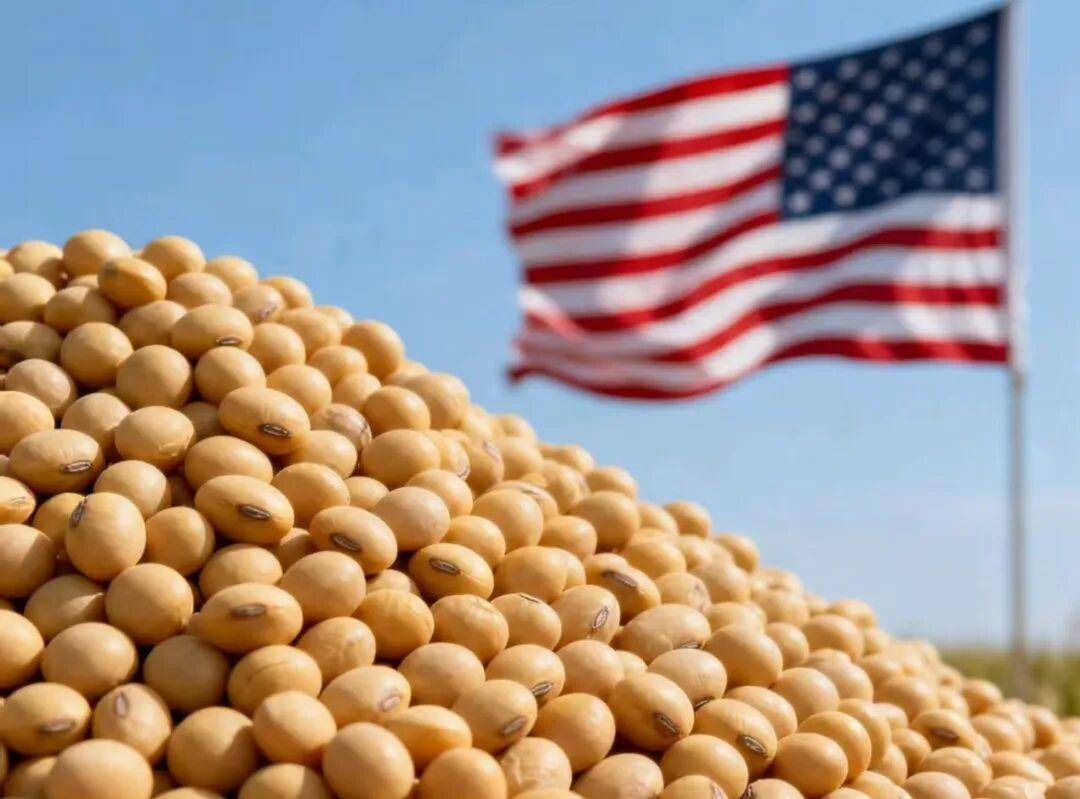
Group 1 - Chinese buyers have resumed purchasing U.S. soybeans, which is a positive development for American farmers [2] - During the trade war, U.S. soybeans faced significant market challenges, with Brazil and Argentina increasing their market share [2] - Brazil's soybean exports to China are projected to reach 80% by 2025, with a 16% increase in sales compared to the previous year [2] Group 2 - Analysts express uncertainty regarding the total amount China will purchase, with predictions suggesting a "soft target" of 10 million tons by 2025 [2] - The Chicago futures market saw a decline of approximately 7% in December, reflecting pressure on soybean prices due to uncertainties [2] - The U.S. soybean association noted that Brazil's share of China's soybean imports has surged from 2% thirty years ago to 71% today [2] Group 3 - The resumption of U.S. soybean exports to China is seen as a victory for the U.S., but it also reflects significant changes in global trade dynamics [4] - China is actively working towards self-sufficiency in grain, with the soybean import dependency potentially dropping from 90% to below 30% in the next decade [4] - Since the trade war began in 2018, China has been adjusting its soybean consumption structure, reducing import demand by an average of 15 million tons annually [4]

2025市场回顾:AI主导全球股市走向,贵金属领跑大宗商品
第一财经· 2026-01-01 11:57
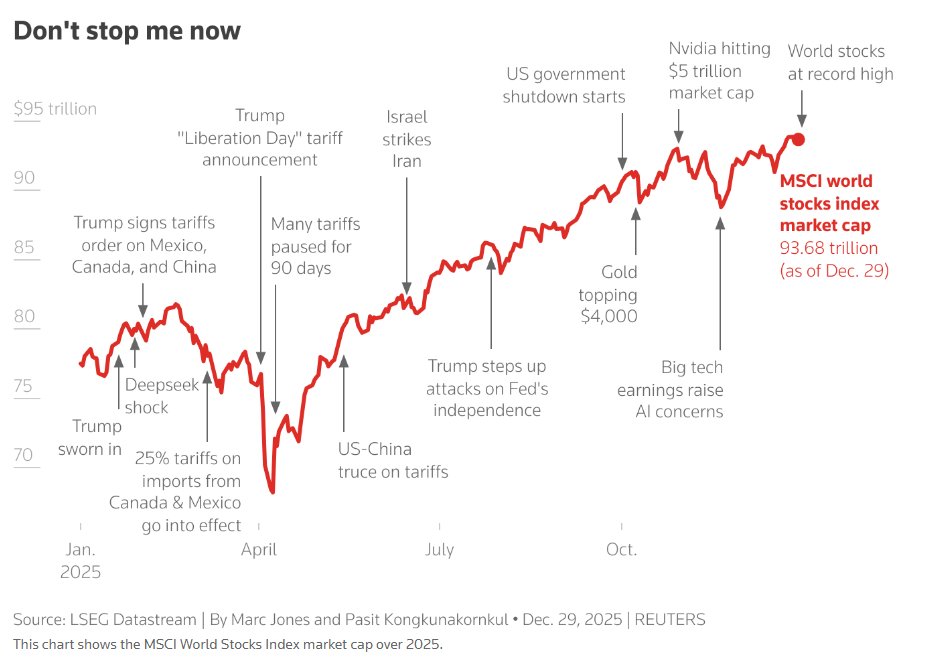
Core Viewpoint - The year 2025 was marked by significant market volatility driven by factors such as artificial intelligence (AI), trade wars, geopolitical tensions, and debt issues, with a notable performance in the commodity market, particularly precious metals [3]. Group 1: Stock Market Performance - The global stock market rebounded sharply from early April, with the MSCI global index rising 21% for the year, marking the sixth occurrence of double-digit annual growth in the past seven years [5]. - The technology sector, especially semiconductors and AI-related fields, led the market rally, with the U.S. indices recording substantial gains: Nasdaq up 20.76%, S&P 500 up 16.39%, and Dow Jones up 12.97% [5][7]. - European markets also performed well, with Spain's IBEX35 index soaring 49.27%, Italy's IT 40 index up 31.47%, and Germany's DAX 30 index rising 23.01% [7][8]. Group 2: Commodity Market Trends - The commodity market experienced significant divergence, with gold prices rising 64.60%, silver up 144.53%, and platinum up 124.29%, marking the best annual performance since the 1979 oil crisis [9][11]. - Industrial metals also saw strong gains, with copper prices reaching a historical high of $12,960 per ton, up 41.78%, driven by demand from AI and renewable energy sectors [9]. - Conversely, cocoa prices plummeted 47.47%, while crude oil prices fell for the third consecutive year, with WTI down 19.91% and Brent down 18.44% [10][11]. Group 3: Currency Market Developments - The U.S. dollar fell 9.37%, the largest annual decline since 2017, leading to a rise in other currencies: the euro increased by 13.3% and the Swiss franc by 14.5% [11]. - Emerging market currencies showed resilience, with the Russian ruble appreciating 30% amid renewed interactions with the U.S. [11]. Group 4: Future Market Uncertainties - As 2026 approaches, uncertainties remain, including the impact of U.S. midterm elections and potential changes in Federal Reserve leadership, which could affect monetary policy [13]. - The AI sector faces challenges regarding investment returns, with concerns about the sustainability of its growth model, which relies heavily on external funding [13][14]. - Geopolitical factors, including elections in Israel and Hungary, as well as ongoing conflicts, will continue to influence market dynamics [13].

美方承认犯下大错!特朗普以前真的没料到,中国敢跟美国这么打
Sou Hu Cai Jing· 2026-01-01 08:15
Core Viewpoint - The trade war initiated by the Trump administration against China resulted in unexpected resilience from the Chinese economy, leading to a reassessment of U.S. strategies and policies [1][5][9]. Group 1: Trade War Initiation and Response - The U.S. imposed an initial 34% tariff on Chinese goods, expecting a quick concession from China, but China retaliated with an equal 34% tariff just one day later [1][3]. - The U.S. escalated tariffs to 145%, the highest level since the Great Depression, but this did not yield the anticipated results [5]. Group 2: Economic Impact and Misjudgment - The U.S. underestimated China's economic resilience and the structural changes within its economy, which allowed China to respond effectively to the trade pressures [3][5]. - The trade war led to rising consumer prices and inflation in the U.S., prompting concerns from various sectors, including agriculture and manufacturing [5][7]. Group 3: Strategic Shift and Policy Reevaluation - As the trade war progressed, U.S. policymakers began to recognize the negative impacts on the U.S. economy, leading to a shift in strategy from aggressive threats to a more conciliatory approach [7][9]. - The introduction of China's revised foreign trade law in 2026 marked a significant institutional response to the trade conflict, enhancing China's ability to manage trade disputes [7][9]. Group 4: Global Trade Dynamics - China's proactive stance in international forums, rallying support against U.S. unilateralism, highlighted a shift from passive to active engagement in global trade [7][9]. - The outcome of the trade war illustrated that unilateral and extreme pressure tactics are ineffective in the current globalized economy, emphasizing the need for multilateral cooperation [9].
The Investment Scorecard for 2025: Top Performers and Biggest Decliners
Investopedia· 2026-01-01 01:00
Group 1 - Gold prices reached inflation-adjusted levels not seen since the Carter administration, indicating a strong demand for safe-haven assets amid economic uncertainties [1][2] - Silver surged by 146%, leading all major asset classes, driven by demand from solar panels, data centers, and electric vehicles [1][3] - The VIX, a measure of market volatility, decreased by 16%, suggesting that Wall Street remained relatively unfazed by geopolitical tensions and economic challenges [2] Group 2 - The performance of hard assets, such as gold, silver, and copper, was favored over digital assets due to factors like AI developments, tariff issues, and a weaker dollar [3] - Energy prices initially held steady despite geopolitical conflicts but later declined due to concerns over oversupply [2] - The demand for copper and silver is expected to continue, supported by their essential roles in technology and renewable energy sectors [3]
2025魔幻收官:黄金暴涨65%,美元低头,特朗普归来搅动全球
智通财经网· 2026-01-01 01:00
智通财经APP获悉,尽管多数投资者早已预判,随着特朗普重返世界最大经济体的权力中心,2025年的市场格局必将有所不同,但 鲜有人能料到此番行情的波谲云诡,以及最终呈现的结果。 全球股市从4月"解放日"关税政策引发的暴跌中强势复苏,2025年全年涨幅达21%,在过去七年里第六度实现两位数增长。然而,放 眼其他资产类别,意外之处比比皆是。 黄金,这一公认的乱世避险港,迎来了自1979年石油危机以来表现最佳的一年,全年涨幅逼近65%;反观美元指数下跌近10%,原油 价格跌幅约18%,而债券市场中风险最高的垃圾债却走出暴涨行情。 自人工智能(AI)龙头企业英伟达(NVDA.US)于10月成为全球首家市值突破5万亿美元的公司后,美国"七巨头"的光环似乎有所褪色, 比特币市值也骤然蒸发了三分之一。 双线资本基金经理Bill Campbell将2025年描述为"变革之年与惊喜之年"。他指出,各类资产的大幅波动均与贸易战、地缘政治及债 务问题这三大颠覆性议题"紧密交织"。 Campbell表示:"倘若有人事先告诉我,特朗普会再度入主白宫,并以当前的节奏推行激进的贸易政策,我绝不会预料到估值会像 今天这样坚挺或高企。" 受特朗 ...
2025市场回顾:AI主导全球股市走向,贵金属领跑大宗商品
Di Yi Cai Jing· 2025-12-31 23:25
新一年有哪些风险因素? AI引领股市上扬 经历了对特朗普关税政策的恐慌释放,全球股市自4月初开始触底反弹,摩根士丹利资本国际公司编制 MSCI全球指数全年累计上涨21%——过去七年间,这已是第六次实现两位数年度涨幅。科技板块持续 引领全球行情,半导体与AI相关领域表现尤为突出。 美国三大股指录得连续三年上涨超10%,其中道指涨12.97%,纳指涨20.76%,标普500指数涨16.39%。 自人工智能领域的龙头股英伟达于去年10月成为全球首家市值突破5万亿美元的企业后,科技七巨头的 光环似乎有所褪色。人工智能领域的热潮曾是拉动美股估值上升的重要因素,其中既包括市场对该领域 基础设施建设的巨额投入预期,也涵盖了市场对人工智能应用需求激增的期待。不过近期,市场对人工 智能相关资本支出回报率的质疑情绪升温,拖累科技股及其他人工智能概念股走弱,这一话题也可能成 为2026年市场关注的核心。 | | 2025 年全球主要股市表现 | | | --- | --- | --- | | 美国 | 纳斯达克指数 | +20.76% | | | 标普 500 指数 | +16.39% | | | 道琼斯工业指数 | +12.97 ...
美媒哀叹特朗普对中国昏招百出,让美国帮了中国一次又一次
Sou Hu Cai Jing· 2025-12-31 11:52
Group 1 - The article critiques the U.S. trade policies initiated by Trump, suggesting they inadvertently benefited China instead of hindering it [3][11][47] - Trump's tariffs escalated from 10% to 125%, leading to significant retaliatory measures from China, including a 50% tariff on U.S. goods [5][13] - The trade war resulted in substantial financial losses for the U.S., with estimates suggesting a potential annual loss of $1.9 trillion by 2025 if tariffs on all Chinese goods are implemented [30][28] Group 2 - The U.S. innovation landscape has suffered due to these policies, with predictions indicating a potential $80 billion revenue loss for American companies by 2026 [26][28] - China's AI chip market demand is approximately $30 billion annually, representing nearly one-third of the global market, which has been negatively impacted by U.S. restrictions [28][30] - The article highlights that U.S. manufacturing has been weakened, with China maintaining the largest share of global manufacturing output for 15 consecutive years [32][30] Group 3 - The trade policies have strained U.S. relationships with allies, causing disruptions in global supply chains, particularly in the automotive and electronics sectors [40][42] - The article emphasizes that the U.S. reliance on tariffs and trade wars is not a viable long-term strategy, advocating for cooperation and multilateral trade agreements instead [45][49] - The ongoing trade tensions have prompted other countries to seek alternatives to U.S. markets, diminishing America's influence in global trade [45][47]
美方承认犯下大错!特朗普之前真的没想到,中国敢跟美国这么打
Sou Hu Cai Jing· 2025-12-31 10:03
Group 1 - The core viewpoint of the articles highlights the misjudgment of the U.S. regarding China's economic resilience and strategic capabilities, particularly in the context of trade tariffs imposed by the Trump administration [2][6][20] - The U.S. underestimated China's ability to respond to tariffs, leading to a significant miscalculation in the trade negotiations, as evidenced by China's immediate countermeasures [4][10][22] - The trade war has revealed a shift in the global economic landscape, with China enhancing its technological independence and market resilience, making U.S. pressure tactics ineffective [6][18][20] Group 2 - The articles emphasize that the U.S. trade policies aimed at protecting domestic industries inadvertently stimulated China's technological advancements and self-sufficiency [6][10][16] - The trade conflict has led to a re-evaluation of the U.S. strategy, as internal pressures from market volatility and rising costs prompted a shift towards dialogue and reduced tariffs [10][11][22] - China's strategic response to the trade war has strengthened its global influence and highlighted the importance of multilateral cooperation over unilateral actions [13][18][22] Group 3 - The articles indicate that the U.S. trade strategy was based on outdated assumptions about China's economic structure and capabilities, failing to account for China's shift from an export-driven to a consumption-driven economy [8][14][20] - The trade war has resulted in a realignment of global trade patterns, with China diversifying its export markets and minimizing reliance on the U.S., thus reducing the impact of tariffs [14][18][20] - The lessons learned from this trade conflict are expected to influence future U.S.-China interactions, promoting more rational and cooperative dialogue [22]

2025收官:贵金属暴涨,美元重挫10%!2026更疯狂?
Jin Shi Shu Ju· 2025-12-31 09:44
Group 1 - Global stock markets recovered from the April downturn caused by tariffs, rising 21% in 2025, marking the sixth year in seven with double-digit growth [1] - Gold surged nearly 70%, achieving its best annual performance since the 1979 oil crisis, while the dollar fell nearly 10% and oil dropped about 17% [2] - European weapon manufacturers' stock prices soared by 55% due to signals from Trump indicating a reduction in military protection for Europe, prompting rearmament [3] Group 2 - The U.S. bond market was influenced by three interest rate cuts and concerns over debt, with 30-year Treasury yields peaking at over 5.1%, the highest since 2007 [4] - Emerging market currencies experienced a reversal of a 14-year bear market cycle, with significant gains in currencies like the Polish zloty and Czech koruna, which strengthened by 15% to 20% [5] - The anticipated nomination of a new Federal Reserve chair by Trump could significantly impact the central bank's independence [8]