
适度宽松的货币政策

Search documents
事关货币政策、扩大内需、节假日安排!国家发改委重磅发声
Hua Xia Shi Bao· 2026-01-20 05:40
Core Viewpoint - The National Development and Reform Commission (NDRC) emphasizes the need for more proactive fiscal policies and moderately loose monetary policies to promote price recovery and stimulate economic growth [1][2]. Group 1: Economic Policies - The NDRC plans to implement a more proactive fiscal policy and moderately loose monetary policy, focusing on price recovery as a key consideration [1]. - A new strategy for expanding domestic demand from 2026 to 2030 will be developed, aiming to strengthen the domestic circulation and adapt to the upgrading of demand structure [2]. - The NDRC is studying the establishment of a national-level merger fund to enhance government investment and fund layout planning [3]. Group 2: Market Regulation - The NDRC will further regulate low-price disorderly competition among enterprises and strengthen price supervision in key industries to create a healthy market order [4]. - There will be a focus on promoting a transition from "price competition" to "value competition" and improving market access and fair competition mechanisms [5]. Group 3: Economic Development Goals - By 2025, the NDRC aims to complete major economic and social development goals, with a focus on implementing proactive macro policies and achieving breakthroughs in new productivity development [6]. - The urbanization rate is expected to reach 67.89% by the end of the year, an increase of 0.89 percentage points from the previous year [6]. Group 4: Employment and Social Welfare - The NDRC is committed to enhancing social welfare and employment, with an average urban survey unemployment rate of 5.2% for the year [7]. - Measures will be taken to optimize holiday arrangements and implement childcare subsidies to improve the quality of life for citizens [7]. Group 5: Technological and Industrial Development - The NDRC is planning to advance a series of significant projects in high-tech industries during the 14th Five-Year Plan period [8][9]. - By 2025, the digital economy's added value is expected to reach 49 trillion yuan, accounting for approximately 35% of GDP [9]. Group 6: Consumer and Investment Policies - The NDRC is developing actions to stabilize jobs and expand capacity, aiming to enhance residents' consumption capabilities [10]. - A comprehensive approach will be taken to address supply-demand imbalances and promote domestic circulation [11]. Group 7: Investment and Project Management - In 2025, approximately 8,400 projects will be supported by long-term special government bonds, driving total investment growth by 1.8 percentage points [12]. - The NDRC will lower investment thresholds for project applications and increase support for small and medium-sized enterprises [13][16]. Group 8: Environmental and Energy Policies - The NDRC aims to accelerate energy transition and increase the share of non-fossil energy consumption, promoting clean energy generation to meet new electricity demand [17]. - Efforts will be made to develop green and low-carbon industries while promoting energy-saving and carbon-reduction transformations in key sectors [18]. Group 9: Market Construction and Regulation - The NDRC is working on establishing regulations for a unified national market and will address issues that hinder market construction [19][20]. - Measures will be taken to eliminate unreasonable restrictions in the consumer sector and foster new growth points in consumption [21]. Group 10: Private Investment and Participation - The NDRC will implement measures to promote private investment and improve mechanisms for private enterprises' participation in major projects [22].
国家发改委:把促进物价回升作为货币政策的重要考量
Bei Jing Shang Bao· 2026-01-20 03:08
Core Viewpoint - The National Development and Reform Commission (NDRC) emphasizes the need for more proactive fiscal policies and moderately loose monetary policies to promote price recovery, highlighting the importance of integrating existing and new policies to foster economic growth and price recovery [1] Group 1 - The Consumer Price Index (CPI) and Producer Price Index (PPI) have both shown signs of recovery [1] - Future policies will focus on implementing more aggressive fiscal measures and maintaining a moderately loose monetary stance [1] - The integration of stock and incremental policies is crucial for enhancing efficiency and promoting a positive interaction between economic growth and price recovery [1]
发改委:把促进物价回升作为货币政策的重要考量
Feng Huang Wang· 2026-01-20 02:43
Core Viewpoint - The National Development and Reform Commission (NDRC) emphasizes the need for more proactive fiscal policies and moderately loose monetary policies to promote price recovery, highlighting the importance of integrating stock and incremental policies to foster a positive interaction between economic growth and price recovery [1] Group 1 - The Consumer Price Index (CPI) and Producer Price Index (PPI) have both shown signs of recovery [1] - Future policies will focus on implementing more aggressive fiscal measures and maintaining a moderately loose monetary stance [1] - The promotion of price recovery will be a key consideration in monetary policy [1]
发改委:将强化市场优胜劣汰机制,理顺价格关系
Zheng Quan Shi Bao Wang· 2026-01-20 02:43
Core Viewpoint - The Chinese government aims to promote a reasonable recovery of prices as a key objective of macroeconomic regulation, with a focus on implementing policies that support economic growth and price recovery [1] Group 1: Economic Policy Measures - The National Development and Reform Commission emphasizes the need for a more proactive fiscal policy and moderately loose monetary policy to facilitate price recovery [1] - Structural adjustments will be made to address "involution" competition and establish a unified national market construction regulation [1] - The government plans to enhance the market mechanism for survival of the fittest, ensuring efficient resource allocation and stable supply [1] Group 2: Future Directions - The government will focus on dual supply and demand efforts to create a positive interaction between economic growth and price recovery [1] - There will be a concerted effort to streamline the exit of inefficient production capacities and improve price relationships [1]
申万期货品种策略日报:国债-20260120
Shen Yin Wan Guo Qi Huo· 2026-01-20 02:36
1. Report Industry Investment Rating - There is no information about the industry investment rating in the provided content. 2. Core View of the Report - The price of treasury bond futures fluctuated, with the T2603 contract down 0.02% and an increase in open interest. The IRR of CTD bonds corresponding to the main contracts of each treasury bond futures was at a low level, with no arbitrage opportunities. Short - term market interest rates showed mixed trends. Key - term treasury bond yields at home and abroad also showed mixed trends. The price of treasury bond futures stabilized due to factors such as the central bank's implementation of a moderately loose monetary policy and the cooling of the equity market [2][3]. 3. Summary by Relevant Catalogs 3.1 Futures Market - **Price and Volume Information**: The closing prices of TS2603, TS2606, TF2603, TF2606, T2603, T2606, TL2603, and TL2606 were 102.400, 102.428, 105.785, 105.815, 108.040, 107.980, 110.92, and 111.03 respectively. The price changes were 0.004, - 0.002, - 0.020, - 0.025, - 0.025, - 0.030, - 0.240, and - 0.260 respectively, with corresponding percentage changes of 0.00%, 0.00%, - 0.02%, - 0.02%, - 0.02%, - 0.03%, - 0.22%, and - 0.23%. The open interest was 69553, 7201, 141773, 21429, 234657, 20086, 141983, and 33744 respectively, with changes of - 600, 241, 1075, 111, - 2327, 768, 2030, and 991 respectively. The trading volumes were 23651, 730, 43774, 3593, 52248, 4918, 78148, and 9319 respectively [2]. - **IRR and Arbitrage**: The IRR of the CTD bonds corresponding to the main contracts of each treasury bond futures was at a low level, and there were no arbitrage opportunities [2]. 3.2 Spot Market - **Short - term Market Interest Rates**: SHIBOR overnight, SHIBOR7 days, DR001, DR007, GC001, GC007, FR001, and FR007 were 1.3180, 1.4670, 1.3752, 1.5288, 1.5790, 1.5810, 1.39, and 1.54 respectively. The changes were - 0.7bp, - 0.3bp, 0.18bp, 1.51bp, 24.8bp, 4.4bp, - 1bp, and 1bp respectively [2]. - **Chinese Key - term Treasury Bond Yields**: The yields of 6M, 1Y, 2Y, 5Y, 7Y, 10Y, 20Y, and 30Y treasury bonds were 1.29%, 1.29%, 1.40%, 1.61%, 1.72%, 1.84%, 2.34%, and 2.38% respectively. The changes were - 0.55bp, 3.05bp, - 0.01bp, 0.29bp, 0.34bp, - 0.23bp, 0bp, and 7.2bp respectively. The 10 - 2Y, 10 - 5Y, 5 - 2Y, and 30 - 10Y yield spreads were 43.53bp, 31.72bp, 11.81bp, and 53.24bp respectively [2]. 3.3 Overseas Market - **Overseas Key - term Treasury Bond Yields**: The yields of US 2Y, US 5Y, US 10Y, US 30Y, German 2Y, German 10Y, Japanese 2Y, and Japanese 10Y treasury bonds were 3.59%, 3.82%, 4.24%, 4.83%, 2.080%, 2.900%, 1.230%, and 2.266% respectively. The changes were 3.0bp, 5.0bp, 7.0bp, 4.0bp, - 2.0bp, 1.0bp, 2.5bp, and 8.4bp respectively [2]. 3.4 Macro and Policy Information - **Central Bank Operations**: On January 19, the central bank conducted 1583 billion yuan of 7 - day reverse repurchase operations at a fixed interest rate of 1.40%. With 861 billion yuan of reverse repurchases maturing on the same day, the net investment was 722 billion yuan [3]. - **Economic Data**: In 2025, China's GDP increased by 5% year - on - year to 140.19 trillion yuan. The added value of industries above the designated size increased by 5.9% year - on - year, the added value of the service industry increased by 5.4% and accounted for 57.7% of GDP, the total retail sales of consumer goods increased by 3.7% year - on - year, and fixed - asset investment decreased by 3.8% year - on - year, with real - estate development investment decreasing by 17.2% [3]. - **Housing Price Data**: In December 2025, in the secondary housing market, the prices of 70 large and medium - sized cities all declined month - on - month, with the decline in first - tier cities narrowing. In the new housing market, the decline in first - tier cities also narrowed, and Shanghai was the only first - tier city with both month - on - month and year - on - year price increases [3]. - **Policy Direction**: The central bank stated that in 2026, it would continue to implement a moderately loose monetary policy, increase counter - cyclical and cross - cyclical adjustment, and there was still room for reserve requirement ratio cuts and interest rate cuts [3]. - **International Economic Outlook**: The IMF raised the global economic growth forecast for 2026 by 0.2 percentage points to 3.3% and also raised the economic growth forecasts for China, the US, the Eurozone, and Japan [3].
总理今年首场座谈会 这9人成为“座上宾”!继梁文锋之后 他作为AI大模型企业代表参会
Hua Xia Shi Bao· 2026-01-20 00:43
Core Viewpoint - The meeting highlighted the importance of high-quality development in China's economy, emphasizing the need for innovative strategies and policies to sustain growth amidst external pressures [17][19]. Group 1: Economic Performance and Projections - China's GDP reached 140,187.9 billion yuan in 2025, reflecting a 5.0% increase from the previous year [17]. - The economy has shown resilience and vitality, with significant growth milestones achieved during the "14th Five-Year Plan" period, crossing the thresholds of 110 trillion, 120 trillion, 130 trillion, and 140 trillion yuan [17]. Group 2: Policy Recommendations - The government aims to implement more proactive fiscal policies and moderately loose monetary policies, focusing on a combination of policy measures to enhance quality and effectiveness [20]. - There is a strong emphasis on innovation-driven growth and deepening reform and opening-up, with a strategic focus on expanding domestic demand to boost internal growth dynamics [21]. Group 3: Social Development and Welfare - The meeting underscored the necessity of integrating social welfare improvements with economic growth, aiming to enhance consumer spending and invest in both material and human resources [21].

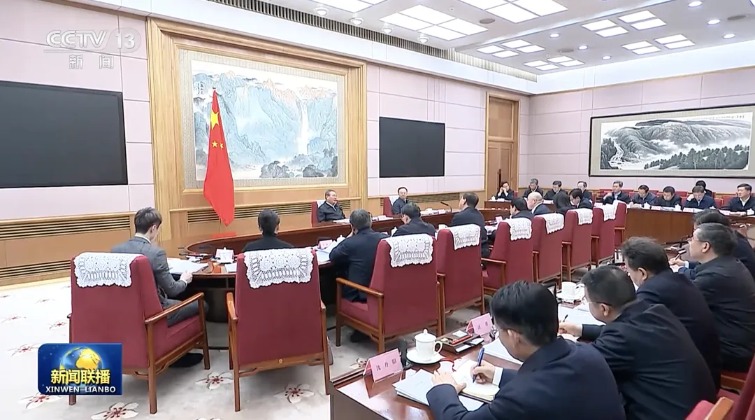
李强主持召开专家、企业家和教科文卫体等领域代表座谈会
第一财经· 2026-01-19 13:01
Core Viewpoint - The meeting highlighted the importance of implementing high-quality development strategies in response to the uncertain external environment, emphasizing the need for proactive fiscal and monetary policies to enhance domestic demand and improve living standards [2][3]. Group 1: Economic Performance and Outlook - The past year was marked by significant challenges, yet the country managed to implement effective counter-cyclical measures, leading to improved market confidence and economic resilience [1]. - The government aims to maintain a positive economic trajectory despite ongoing uncertainties and challenges, with a focus on high-quality development as a long-term goal [2]. Group 2: Policy Recommendations - Emphasis on high-quality development as a guiding principle, with a call for a combination of proactive fiscal policies and moderately loose monetary policies to achieve substantial improvements [3]. - The need to strengthen innovation and deepen reform and opening-up, with a strategic focus on expanding domestic demand to enhance internal growth drivers [3]. Group 3: Social Welfare and Development - The government plans to integrate social welfare improvements with consumption and investment strategies, aiming to cultivate new economic growth points and enhance the well-being of the population [3].

李强:突出高质量发展的目标引领 实施更加积极的财政政策和适度宽松的货币政策
Jin Rong Jie· 2026-01-19 11:58
Core Viewpoint - The meeting led by Premier Li Qiang emphasizes the need for high-quality development to address uncertainties in the development environment, focusing on implementing proactive fiscal policies and moderately loose monetary policies [1] Group 1: High-Quality Development - The government aims to enhance high-quality development as a guiding goal, seeking greater breakthroughs in qualitative improvements [1] - There is a strong emphasis on innovation-driven growth and deepening reform and opening up [1] Group 2: Economic Strategy - The strategic focus is on expanding domestic demand to continuously enhance the internal driving force of development [1] - Policies will be coordinated to ensure that reforms and macroeconomic policies work in tandem [1] Group 3: Social Welfare - The government intends to ensure and improve people's livelihoods while promoting consumption and investment, both in goods and human capital [1] - There is a commitment to cultivating new economic growth points to continuously enhance the well-being of the population [1]
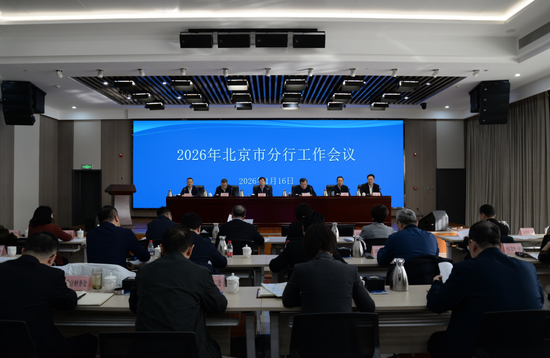
中国人民银行北京市分行召开2026年工作会议
Xin Lang Cai Jing· 2026-01-19 10:56
Core Viewpoint - The People's Bank of China Beijing Branch held a work meeting to summarize 2025's achievements and outline the goals for 2026, emphasizing the implementation of national policies and the importance of financial support for the capital's economic development [1][11]. Group 1: Achievements in 2025 - The Beijing Branch adhered to the guidance of Xi Jinping's thought, implementing major decisions from the central government and achieving significant progress in various areas [3][13]. - A unified leadership from the central government was maintained, ensuring that important political tasks were effectively executed in Beijing [3][13]. - The branch created a conducive monetary and financial environment for stable economic growth, implementing moderately loose monetary policies and promoting financial policy initiatives [3][4][14]. Group 2: Financial Support and Policy Implementation - The branch established a policy framework for financial support in key areas, enhancing services in technology, green finance, and inclusive finance, with a notable increase in the scale of technology bonds [4][14]. - Collaboration with Hebei Province was initiated to support financial services for the Xiong'an New Area, promoting coordinated development in the Beijing-Tianjin-Hebei region [5][15]. - Effective measures were taken to manage macro-prudential risks and prevent financial risks, particularly in the real estate sector [5][16]. Group 3: Goals for 2026 - The Beijing Branch aims to continue implementing moderately loose monetary policies and ensure balanced credit distribution to support economic growth [6][20]. - There is a focus on enhancing financial services for high-quality economic development, particularly for small and micro enterprises [6][21]. - The branch plans to deepen financial reforms and promote high-level openness, including facilitating cross-border use of the Renminbi [6][23]. Group 4: Internal Management and Service Improvement - The branch emphasizes the importance of political construction and internal management, aiming to create a professional and dedicated workforce [7][19]. - Continuous improvement in financial management and service quality is prioritized, including advancements in financial technology and anti-money laundering efforts [6][24]. - The branch is committed to enhancing internal governance and providing better support for employees, including retirees [6][26].
扩内需、优供给,防风险、稳预期 持续营造良好货币金融环境
Jing Ji Ri Bao· 2026-01-18 23:19
Core Viewpoint - The 2026 work meeting of the People's Bank of China emphasizes the implementation of a moderately loose monetary policy to support high-quality economic development and financial market stability while enhancing macro policy coordination and risk prevention measures [1][2][3]. Monetary Policy Implementation - The monetary policy in 2025 showed effectiveness through a combination of measures such as lowering reserve requirements and interest rates, maintaining liquidity, and guiding market expectations [2][3]. - In 2026, the policy goal has shifted to maintaining a "low-level operation" of social financing costs, with a focus on stabilizing economic growth and reasonable price recovery [3]. - The People's Bank of China will adopt a more flexible and efficient approach to using tools like reserve requirement cuts and interest rate reductions, considering the effectiveness and targeting of these policies [3]. Support for Real Economy - The meeting proposed specific measures to enhance financial services for the real economy, including improving the financial policy framework and optimizing support for key areas such as technology innovation and small and micro enterprises [4]. - The focus will be on increasing the availability of structural monetary policy tools, which are expected to lead to a "quantity increase and price decrease" trend, promoting financial resources towards high-quality development sectors [4]. Risk Prevention and Management - The People's Bank of China aims to steadily resolve financial risks in key areas while ensuring the stability of financial institutions, emphasizing macro-prudential management and regulatory enforcement [7]. - Measures will include supporting the resolution of financing platform debt risks and enhancing risk identification and early correction for small financial institutions [7]. Financial Reform and Opening Up - The meeting highlighted the importance of expanding high-level financial openness as a means to enhance international competitiveness, with initiatives to optimize mechanisms for bond and currency exchanges and support the development of international financial centers [8]. - The People's Bank of China is expected to maintain the stability of the RMB exchange rate while coordinating financial reform and opening up with global macro policy [8].