AIoT

Search documents
小米集团-W第三季度经调整净利润创历史新高 达113.11亿元 智能手机出货量连续9个季度实现同比增长
Zhi Tong Cai Jing· 2025-11-18 10:00
Core Insights - Xiaomi Group reported Q3 2025 revenue of approximately 113.12 billion RMB, a year-on-year increase of 22.3% [1] - The "Mobile × AIoT" segment generated revenue of 84.1 billion RMB, up 1.6% year-on-year, while the "Smart Electric Vehicles and AI Innovation" segment reached a record high of 29 billion RMB, growing 199.2% year-on-year [1] - Operating profit was 15.11 billion RMB, a 150.1% increase year-on-year, and adjusted net profit was approximately 11.31 billion RMB, marking an 80.9% year-on-year growth [1] - For the first nine months of 2025, revenue totaled approximately 340.37 billion RMB, up 32.5% year-on-year, with profit around 35.02 billion RMB, a 140.2% increase [1] Smartphone and User Growth - In Q3 2025, Xiaomi's smartphone shipments reached 43.3 million units, a 0.5% year-on-year increase, marking nine consecutive quarters of growth [2] - The company maintained a global smartphone market share of 13.6%, ranking among the top three for 21 consecutive quarters [2] - As of September 2025, the number of active users reached a record high of 741.7 million, up 8.2% year-on-year [2] - The AIoT platform connected over 1 billion devices, reaching 1,035.5 million, a 20.2% year-on-year increase [2] - The company delivered 108,796 new vehicles in Q3 2025, setting a new record [2] Research and Development - Xiaomi continues to invest heavily in AI, with R&D expenditure reaching 9.1 billion RMB in Q3 2025, a 52.1% year-on-year increase [2] - Cumulative R&D spending for the first three quarters of 2025 was 23.5 billion RMB [2] - The number of R&D personnel reached a historical high of 24,871 [2] AI Innovations - In September 2025, Xiaomi launched the Xiaomi-MiMo-Audio voice open-source model, achieving significant advancements in voice interaction and natural language processing [3] - The company introduced the Xiaomi Miloco smart home exploration plan, enabling users to interact with smart home systems through natural language [3] - This initiative aims to enhance smart home capabilities with perception, understanding, and execution features [3] Retail Strategy - Xiaomi's retail strategy is progressing steadily, with over 18,000 Mi Home stores in mainland China as of Q3 2025 [4] - The number of large stores (over 500 square meters) reached approximately 210 [4] - The company has expanded its new retail model internationally, with around 300 stores in Southeast Asia, Europe, East Asia, and Latin America [4] - During the 2025 Double Eleven shopping festival, Xiaomi achieved over 29 billion RMB in total payment across all channels, with its smartphones ranking first in sales among domestic brands [4]

小米Q3经调整净利润同比大增80.9%创新高,电动汽车及AI等创新业务首次实现单季经营盈利 | 财报见闻
Sou Hu Cai Jing· 2025-11-18 09:57
Core Viewpoint - Xiaomi Group's Q3 performance exceeded market expectations, with significant year-on-year net profit growth and the electric vehicle and AI innovation businesses achieving operational profitability for the first time in a single quarter [1][4]. Financial Performance - Q3 total revenue reached 113.12 billion RMB, a year-on-year increase of 22.3% but a quarter-on-quarter decrease of 2.4% [2][3]. - Adjusted net profit was 11.31 billion RMB, marking a historical high with a year-on-year growth of 80.9% [2][3]. - Gross margin stood at 22.9%, up 2.5 percentage points year-on-year [2]. - Cumulative revenue for the first three quarters was 340.4 billion RMB, reflecting a year-on-year increase of 32.5% [2]. Core Business Progress - Smartphone shipments totaled 43.3 million units, marking nine consecutive quarters of year-on-year growth, with a global market share of 13.6%, maintaining a top-three ranking for 21 consecutive quarters [5]. - The electric vehicle and AI innovation business achieved operational profitability for the first time, generating 700 million RMB in profit, with a record delivery volume of 108,800 units [5][9]. - The AIoT platform connected devices surpassed 1 billion, reaching 1.036 billion, with monthly active users at 742 million [5]. - Internet services revenue hit a record high of 9.4 billion RMB, growing 10.8% year-on-year [5]. Automotive Business - Q3 revenue from the automotive business was 28.3 billion RMB, a year-on-year increase of 197.9%, with delivery volume up 33.8% from Q2, reaching a historical high [7][9]. - The automotive business achieved a gross margin of 25.5%, leading among new energy vehicle companies, attributed to lower core component costs, reduced unit manufacturing costs, and an increased share of higher average selling price (ASP) models [10]. Increased R&D Investment - Q3 R&D expenditure was 9.1 billion RMB, a year-on-year increase of 52.1%, with cumulative spending for the first three quarters at 23.5 billion RMB and a record number of R&D personnel at 24,871 [11]. - Capital expenditure was 5.38 billion RMB, significantly exceeding the expected 2 billion RMB [11]. - Xiaomi's strategic investments in AI and electric vehicles reflect a long-term commitment to enhancing technological competitiveness [11].


中科创达(300496):收入利润高增,端侧智能输出新动能
Haitong Securities International· 2025-11-18 07:22
Investment Rating - The report maintains an "Outperform" rating with a target price of RMB 75.85 [5][14]. Core Insights - The company reported a revenue of RMB 5.15 billion for the first three quarters of 2025, representing a year-over-year increase of 39.34%, and a net profit attributable to shareholders of RMB 229 million, up 50.72% year-over-year [5][15]. - The AIoT business has become the new core driver of growth, with revenue from this segment increasing by 136.14% year-over-year in the first half of 2025, surpassing the smart automotive sector as the largest revenue source [5][17]. - The company is shifting its strategy from "in-vehicle intelligence" to "all-scenario intelligent terminals," indicating a structural change in growth momentum [5][17]. Financial Summary - For 2025, the company is projected to achieve revenues of RMB 7.27 billion, with a year-over-year growth of 34.9% [3]. - The net profit attributable to shareholders is expected to be RMB 573 million in 2025, reflecting a growth of 40.6% [3]. - The gross profit margin (GPM) for the first three quarters of 2025 was 31.72%, while the net profit margin (NPM) was 4.46% [5][16]. - The company’s cash flow from operating activities was RMB 401 million, down 13.70% year-over-year, primarily due to increased inventory and accounts receivable [5][16]. Business Segment Performance - The revenue from the smart automotive segment is projected to grow at a compound annual growth rate (CAGR) of 10% from 2024 to 2027, while the IoT smart devices segment is expected to see a significant increase, with revenue projected to reach RMB 5.83 billion by 2027 [8]. - The gross profit margin for the IoT smart devices segment is expected to stabilize around 18% over the forecast period [8]. Valuation Metrics - The report assigns a price-to-earnings (PE) ratio of 50x for 2026, reflecting the company's strong growth prospects and strategic initiatives [5][14]. - The average PE for comparable companies in 2026 is projected to be 18.42x, indicating a significant valuation premium for the company [5][14].

家居控制国际:通过一般授权配售新股募资约1.1亿港元 医疗保健业务研发及营运
Xin Lang Cai Jing· 2025-11-17 23:29
来源:新浪港股-好仓工作室 2025年11月18日,家居控制国际(股份代号:1747)公告称,通过一般授权以"配售新股份"方式融资, 其中配售新股份发行28,424,000股(约2.8亿股),募集约1.1亿港元;以上合计募集资金约1.1亿港元 (扣除费用后净得约1.1亿港元)。本次融资由麦格理担任独家配售代理及独家整体协调人。 公司主要提供智能遥控解决方案,并通过成立新附属公司拓展医疗保健业务,构建AIoT赋能的家居医 疗保健生态系统。所得款项中,约0.7亿港元将用于医疗保健业务研发(包括AIoT技术及智能穿戴设备 开发),约0.2亿港元用于业务实施及营运,其余约0.1亿港元补充营运资金及一般企业用途。本次发行 根据股东大会授予的一般授权实施,预计于2025年11月25日完成。 点击查看公告原文>> 声明:市场有风险,投资需谨慎。 本文为AI大模型基于第三方数据库自动发布,任何在本文出现的信 息(包括但不限于个股、评论、预测、图表、指标、理论、任何形式的表述等)均只作为参考,不构成 个人投资建议。受限于第三方数据库质量等问题,我们无法对数据的真实性及完整性进行分辨或核验, 因此本文内容可能出现不准确、不完整、 ...
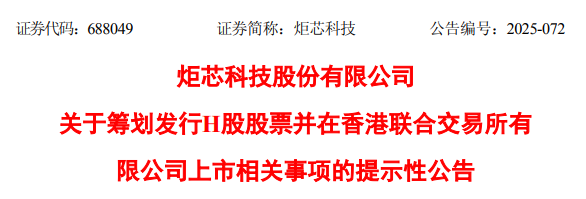
炬芯科技,宣布赴香港IPO,冲刺A+H | A股公司香港上市
Xin Lang Cai Jing· 2025-11-17 06:00
Core Viewpoint - Juchip Technology (688049.SH) is planning to issue overseas shares (H-shares) and list on the Hong Kong Stock Exchange to enhance its global development strategy, brand influence, and core competitiveness [1][2] Company Overview - Juchip Technology, established in 2014 and headquartered in Zhuhai, is a leading low-power AIoT chip design manufacturer in China, focusing on the research, design, and sales of mid-to-high-end smart audio SoC chips [2] - The company has subsidiaries in Shenzhen, Hefei, and Hong Kong, and branch offices in Shanghai and Chengdu [2] - Its main products include smart wireless audio SoC chips, edge AI processors, and portable audio-video SoC chips, widely used in Bluetooth speakers, wireless home theaters, smartwatches, and other AIoT applications [2] - As of November 17, 2025, the total market capitalization of Juchip Technology is approximately 3.158 billion RMB [2]

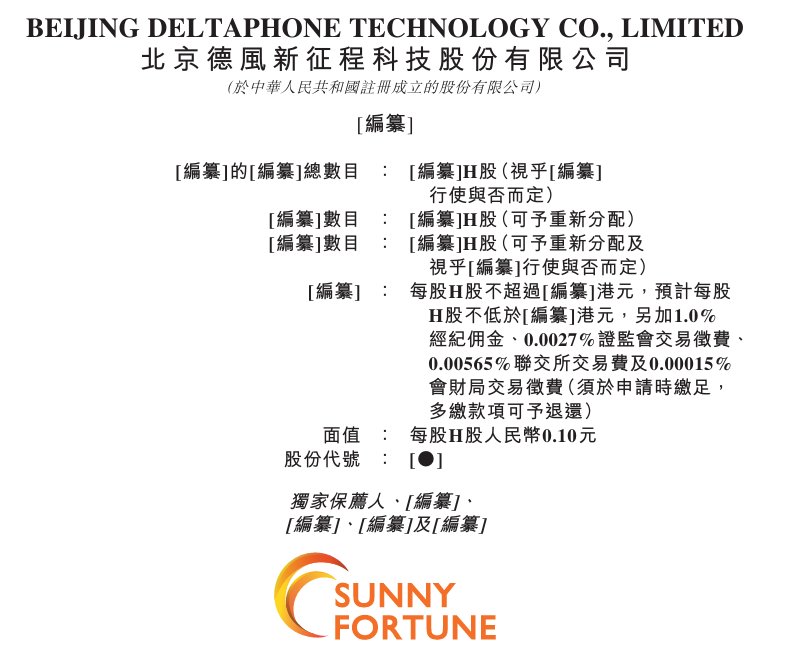
德风科技递表港交所 SUNNY FORTUNE为独家保荐人
Zheng Quan Shi Bao Wang· 2025-11-17 00:06
德风科技提供AI赋能的AIoT生产优化软件解决方案,专注于服务中国能源、制造及混合行业。公司拥 有一体化的平台,支持AIoT应用的快速开发和大规模部署。公司的解决方案涵盖能源管理,健康、安 全、环境和质量,以及智能制造三大专业领域。 德风科技已向港交所递交上市申请。SUNNY FORTUNE为其独家保荐人。 在往绩记录期间,德风科技已完成超过600个项目,客户包括电力、石油天然气和烟草行业的领军企 业。 根据弗若斯特沙利文报告,德风科技是中国第五大独立专业AIoT服务提供商,在中国能源行业AIoT服 务领域排名第三。中国AIoT市场规模持续扩大,预计到2029年将达到约人民币2209亿元,主要得益于 政策支持、制造业转型需求以及5G和AI技术的应用。 ...
雷军下铺的兄弟,创业具身智能机器人
Sou Hu Cai Jing· 2025-11-16 13:00
Core Insights - The article discusses the entrepreneurial journey of Cui Baoqiu, a former vice president of Xiaomi, who is now venturing into the field of embodied intelligence and household robotics after leaving Xiaomi [1][4][18] - Cui's shift from building AI platforms to creating physical robots signifies a broader trend in the tech industry towards integrating AI with physical embodiments to enhance interaction with the real world [3][18] Group 1: Background and Career Transition - Cui Baoqiu, known as the "technology father" at Xiaomi, has transitioned from a significant role in the company to founding a startup focused on household service robots [1][4] - His previous experience includes leading Xiaomi's AIoT strategy, which initially focused on connecting devices like smart speakers and cameras, but he now aims to create a more comprehensive AI solution that can think, move, and interact [4][17] - After leaving Xiaomi, Cui took a brief period of silence before becoming the chief technology advisor for a domestic RISC-V chip company, indicating a strategic focus on foundational technology [5][7] Group 2: Xiaomi's Technological Evolution - During his tenure at Xiaomi, Cui was instrumental in establishing the company's AI and cloud platform, contributing to the development of machine learning and deep learning technologies [9][15] - The company faced significant challenges in the smartphone market around Q4 2018, leading to a strategic pivot towards technology as a core focus for survival [16][17] - In response to market pressures, Xiaomi established a technology committee in 2019, with Cui at the helm, to guide the company's technological direction and foster a culture of innovation [17] Group 3: Industry Trends and Future Directions - The trend of former tech executives starting their own companies in the field of embodied intelligence reflects a growing recognition that AI needs physical embodiments to fully realize its potential [18][21] - Notable figures from major tech companies are entering the robotics space, indicating a competitive landscape fueled by significant venture capital interest [19][21] - The emergence of embodied intelligence as a key area of focus suggests that the next phase of AI development will increasingly involve creating robots that can interact with and transform the physical world [18][21]

新股消息 | 德风科技递表港交所 为AIoT生产优化软件解决方案技术开发商
智通财经网· 2025-11-15 09:07
Core Viewpoint - Defeng Technology is an AI-enabled Industrial Internet of Things (AIoT) software solution developer focused on enhancing energy efficiency, operational excellence, safety, and sustainability in China's energy, manufacturing, and mixed industries [2][3]. Company Overview - Defeng Technology has completed over 600 projects, primarily serving state-owned enterprises in China, with around 200 clients, including major players in the electricity, public utilities, oil and gas, and tobacco industries [2]. - According to a Frost & Sullivan report, the company is the fifth largest independent AIoT service provider in China by revenue for the fiscal year 2024, holding a market share of approximately 1.8%. In the energy sector, it ranks third with a market share of about 9.9% [2]. Product Offerings - The company has developed an integrated Delt@AIoT platform that enables rapid development and large-scale deployment of AIoT applications. This platform includes proprietary software, systems, and solutions embedded with relevant connected devices [2]. - The application suite focuses on three main areas: - **Energy Management**: The Delt@EM system monitors and analyzes real-time energy consumption to reduce costs and enhance sustainability [3]. - **Health, Safety, Environment, and Quality (HSEQ)**: The Delt@HSEQ system conducts real-time monitoring and hazard detection in industrial settings to prevent accidents and ensure regulatory compliance [3]. - **Smart Manufacturing**: The Delt@MOM system optimizes production processes from planning to supply chain management, improving efficiency and reducing costs [3]. Financial Performance - Revenue for Defeng Technology in the fiscal years 2022, 2023, 2024, and the first six months of 2025 was approximately CNY 313 million, CNY 442 million, CNY 525 million, and CNY 159 million respectively [4]. - The company reported losses of CNY 165 million, CNY 297 million, CNY 228 million, and CNY 40 million for the same periods [4]. - Gross profit margins for the fiscal years 2022, 2023, 2024, and the first six months of 2025 were 22%, 23.8%, 24.9%, and 26% respectively [6]. Industry Overview - China's IIoT market has rapidly expanded, with its market size growing from approximately CNY 9 trillion in 2020 to an estimated CNY 14 trillion by 2024, and projected to reach around CNY 20 trillion by 2029 [8]. - The AI penetration rate in the IIoT sector is expected to rise from about 6.1% in 2020 to approximately 11.0% by 2029, indicating a significant increase in AI applications across various industrial processes [8]. - The AIoT market in China has also seen substantial growth, expanding from approximately CNY 54.1 billion in 2020 to an estimated CNY 111.9 billion by 2024, with projections of reaching around CNY 220.9 billion by 2029 [12]. Market Applications - AIoT solutions are expected to be widely applied in key sectors such as energy, petrochemicals, automotive, engineering machinery, mining, tobacco, mold manufacturing, and equipment manufacturing [16]. - The market for HSEQ solutions is projected to grow from approximately CNY 500 million in 2020 to about CNY 3.1 billion by 2024, and further to around CNY 8.6 billion by 2029 [16]. - The energy management market is anticipated to increase from approximately CNY 6.3 billion in 2020 to CNY 14.5 billion by 2024, and to about CNY 32.7 billion by 2029 [17]. - The smart manufacturing market is expected to grow from approximately CNY 38.3 billion in 2020 to CNY 73.9 billion by 2024, reaching around CNY 146 billion by 2029 [17].
瑞芯微:在智能座舱领域,RK3588M量产车型已达几十余款
Ju Chao Zi Xun· 2025-11-15 03:53
Core Viewpoint - The company has made significant progress in multiple product lines within the automotive electronics sector, particularly in smart cockpit solutions and audio systems, with a strong focus on AI technology integration [2] Group 1: Automotive Electronics Progress - The company has closely collaborated with several domestic automakers in the smart cockpit field, resulting in the mass production of dozens of vehicle models, with more models and customers expected to be added next year [2] - In the in-vehicle audio sector, the company's RK2118M and RK2116M chips have been adopted in over thirty projects, with ongoing expansion of clients and projects, leading to the gradual release and mass production of new vehicle models [2] - The company is promoting its RK182X smart cockpit AIBox solution, which offers a convenient upgrade path for traditional vehicles through multimodal fusion perception technology [2] Group 2: AI Technology and Market Potential - Driven by innovations in AI technology, the application scenarios for edge AI are rapidly expanding across various fields, including automotive, robotics, education, healthcare, and agriculture, indicating vast market opportunities [2] - According to IDC research, the AIoT market in China is projected to exceed 3.2 trillion yuan by 2025 and is expected to reach 8.6 trillion yuan by 2030, positioning it as the largest AIoT market globally [2] Group 3: Future Product Development - The company is actively developing next-generation products, with flagship chip RK3688 and sub-flagship chip RK3668 currently in design, slated for release next year [2] - The next-generation edge computing co-processor RK1860 is being developed at an accelerated pace, with an expected launch in the first half of next year, contributing to a series of co-processor layouts [2]

雷军下铺的兄弟,创业具身智能机器人
具身智能之心· 2025-11-14 16:03
Core Insights - The article discusses the career transition of Cui Baoqiu, a former Xiaomi executive, who is now venturing into the field of embodied intelligence and robotics after leaving Xiaomi [2][6][12]. Group 1: Career Transition and Vision - Cui Baoqiu, known as a "technical guru" at Xiaomi, is now focusing on creating household service robots, marking a shift from his previous role of building platforms for AI [2][4][5]. - His vision has evolved from "connecting everything" to "transforming the physical world," aiming to create an AI that can think, move, and interact with humans [4][7]. - Prior to his current venture, he served as the Chief Technical Advisor for a RISC-V chip company, indicating a strategic move towards foundational technology [8][10]. Group 2: Background and Achievements at Xiaomi - Cui joined Xiaomi in 2012 at the invitation of Lei Jun and played a crucial role in establishing Xiaomi's AI and cloud platform team [14][29]. - He was instrumental in promoting Xiaomi's "AIoT" strategy, which initially focused on connecting devices like smart speakers and cameras [7][29]. - Under his leadership, Xiaomi launched significant AI products, including the AI assistant "Xiao Ai," which reflects the culmination of his earlier predictions about AI capabilities [30][32]. Group 3: Industry Trends and Implications - The article highlights a broader trend in the tech industry where former executives from major companies are now focusing on building physical embodiments for AI, as software alone is insufficient to unlock AI's full potential [42][44]. - This shift towards embodied intelligence is seen as the next phase in the AI evolution, with many former tech leaders entering the robotics space [42][47]. - The competition in this sector is intensifying, with significant investments flowing into startups focused on general-purpose robotics and embodied intelligence [45][48].