GDP增长

Search documents
2025年第一季度迪拜GDP达1197亿迪拉姆,同比增长4%
Shang Wu Bu Wang Zhan· 2025-08-15 16:08
Economic Performance - In the first quarter of 2025, Dubai's GDP reached 119.7 billion dirhams, reflecting a year-on-year growth of 4% [2] - The growth demonstrates the resilience and vitality of Dubai's economy [2] Sector Contributions - The real estate sector experienced a significant growth of 7.8% [2] - The financial and insurance sector grew by 5.9% [2] - The wholesale and retail trade sector saw an increase of 4.5% [2] - The information and telecommunications sector grew by 3.2% [2] - The accommodation and food services sector increased by 3.4% [2] - The manufacturing sector grew by 3.3% [2] - The transportation and warehousing sector experienced a growth of 2% [2]
上海GDP重返全国前十,温州、徐州冲刺万亿之城
21世纪经济报道· 2025-08-15 14:53
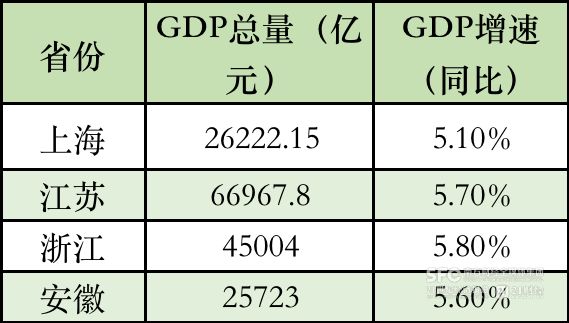
Core Viewpoint - The article highlights the economic performance of the Yangtze River Delta (YRD) region, which accounts for nearly 25% of China's total economic output, showcasing its resilience and growth potential through the analysis of the first half of 2025 GDP reports from 41 cities in the region [2][5]. Provincial Level Summary - In the first half of 2025, the total GDP of Shanghai, Jiangsu, Zhejiang, and Anhui reached 163,916.95 billion yuan, maintaining a stable position above the "15 trillion yuan threshold" [2]. - Jiangsu had the highest GDP at 66,967.8 billion yuan, ranking second nationally, while Zhejiang recorded the fastest growth rate at 5.8% [5][6]. - Shanghai's GDP was 26,222.15 billion yuan, rising from 11th to 9th place nationally, with a growth rate of 5.1% [5][6]. City Level Summary - All nine cities in the YRD with a GDP exceeding 1 trillion yuan reported GDPs above 5,000 billion yuan in the first half of 2025, with Wenzhou and Xuzhou nearing this threshold [3][11]. - Notably, Shaoxing's GDP surpassed 4,000 billion yuan for the first time, while Chuzhou and Huzhou crossed the 2,000 billion yuan mark [3][13]. Economic Structure and Growth - The tertiary sector remains the main driver of economic growth in the region, with Shanghai's tertiary industry growing by 5.4% and accounting for a record high of 79.09% of its GDP [6][7]. - The contribution of the service sector to Shanghai's GDP was significant, particularly in finance and logistics, while manufacturing's contribution was relatively smaller [7]. - Jiangsu, Zhejiang, and Anhui's tertiary industry value added accounted for 55.0%, 59.82%, and 56.33% of their GDP, respectively, all exceeding 50% [8]. Notable City Performances - In the first half of 2025, Suzhou, Hangzhou, and Nanjing each exceeded 1 trillion yuan in GDP, with respective figures of 13,002.35 billion yuan, 11,303 billion yuan, and 9,179.18 billion yuan [11]. - The growth rates of cities such as Suzhou, Hangzhou, and Hefei were above the national average, with Hefei leading at 6% [11][12]. Growth Trends - Seventeen cities in the YRD achieved GDP growth rates of 6% or higher, with notable performances from cities like Zhoushan and Shaoxing [12][15]. - The overall economic performance of the YRD in the first half of 2025 was characterized by stability, with only a few cities reporting growth rates below 4% [15].

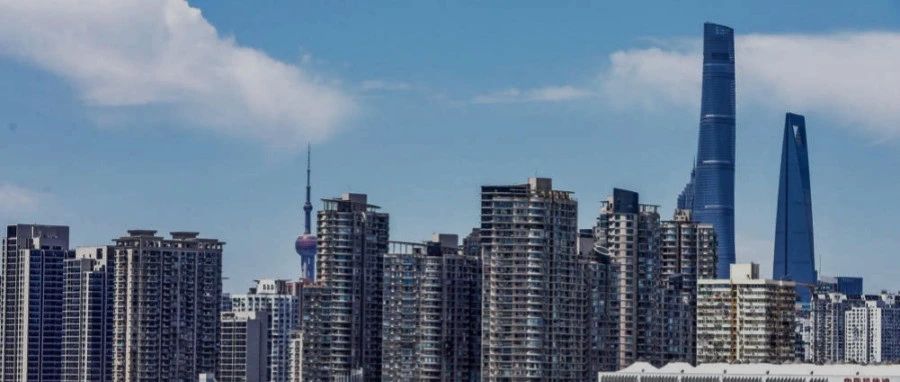
长三角半年瞰①:上海GDP重返全国前十,浙皖多地增速破6%
2 1 Shi Ji Jing Ji Bao Dao· 2025-08-15 10:59
Core Viewpoint - The Yangtze River Delta (YRD) region, comprising 41 cities, has shown robust economic performance in the first half of 2025, with a total GDP exceeding 163 trillion yuan, maintaining a significant position in China's economy [1][2]. Provincial Summary - Jiangsu has the highest GDP at 66,967.8 billion yuan, ranking second nationally, while Zhejiang exhibits the fastest growth rate at 5.8%. Shanghai's GDP reached 26,222.15 billion yuan, moving from 11th to 9th nationally [1][2]. - The GDP growth rates for the provinces are as follows: Jiangsu at 5.7%, Zhejiang at 5.8%, Anhui at 5.6%, and Shanghai at 5.1%, all surpassing the national growth rate of 5.3% [2][3]. City-Level Summary - All nine cities in the YRD with GDPs over 10,000 billion yuan surpassed 5,000 billion yuan in the first half of 2025. Notably, Wenzhou and Xuzhou are approaching the 5,000 billion yuan mark [1][6]. - Shanghai, Suzhou, and Hangzhou each exceeded 10,000 billion yuan in GDP, with respective figures of 26,222.15 billion yuan, 13,002.35 billion yuan, and 11,303 billion yuan [5][6]. - Nanjing achieved a significant milestone by surpassing 9,000 billion yuan for the first time, while Changzhou crossed the 5,000 billion yuan threshold [6][7]. Economic Structure - The tertiary sector remains the main driver of economic growth in the YRD, with Shanghai's tertiary industry growing by 5.4%, accounting for a record high of 79.09% of its GDP. The information service sector in Shanghai saw a notable increase of 14.6% [2][3]. - The secondary industry growth rates are led by Anhui at 6.4%, followed by Jiangsu at 5.5%, Zhejiang at 5.6%, and Shanghai at 3.9% [4][6]. Growth Highlights - Seventeen cities in the YRD recorded GDP growth rates of 6% or higher, with notable performances from cities like Zhoushan and Shaoxing [8][9]. - The overall economic performance of the YRD in the first half of 2025 is characterized as stable, with only a few cities experiencing growth rates below 4% [9].
1.2%!日本二季度GDP超预期增长
Hua Er Jie Jian Wen· 2025-08-15 01:56
Group 1 - Japan's economy showed unexpected resilience in Q2, with GDP growth at an annualized rate of 1.0%, significantly above economists' expectations of 0.4% [1][2] - The first quarter's GDP was revised from a contraction to a growth of 0.6% [1] - Year-on-year GDP growth for Q2 was 1.2%, down from 1.8% in Q1 [1] Group 2 - Domestic demand was the main driver of the strong performance, with corporate investment rising by 1.3%, exceeding the expected 0.7% [4] - Private consumption, which accounts for nearly 60% of the economy, increased by 0.2%, supported by robust wage growth from this year's salary negotiations [4] Group 3 - Net exports contributed 0.3 percentage points to economic growth, with actual export values increasing by 2% despite higher tariff barriers [5] - Inbound tourism also bolstered net exports, with foreign tourist spending in Japan rising by 18% [5] Group 4 - The strong GDP data supports the Bank of Japan's path towards policy normalization, with expectations of potential interest rate hikes in the near future [6] - Approximately 42% of economists anticipate action from the Bank of Japan in October, despite expectations to maintain rates in the upcoming September meeting [6]

星展银行:日本GDP增长可能继续保持疲软
Xin Hua Cai Jing· 2025-08-13 07:03
Core Viewpoint - Japan's second-quarter GDP data is expected to show a stagnation in growth, with a projected annualized growth rate of 0.2%, just enough to offset the contraction in the first quarter [1]. Economic Indicators - The second-quarter GDP growth rate is anticipated to hover around 0% on a quarter-on-quarter basis [1]. - The annualized growth rate, after seasonal adjustment, is forecasted to rise modestly by 0.2% [1]. Export and Domestic Consumption - Export momentum has weakened, influenced by a decline in exports to the U.S. and sluggish overseas demand [1]. - Private consumption remains lackluster, as wage growth lags behind inflation [1]. Monetary Policy Outlook - The persistent weakness in GDP suggests that the Bank of Japan is unlikely to raise interest rates in the short term [1]. - Although a trade agreement with the U.S. may alleviate tariff uncertainties, the Bank of Japan is expected to wait for stronger wage recovery and stable inflation before normalizing its policy [1]. - The forecast for a 25 basis point rate hike by the Bank of Japan in the fourth quarter remains unchanged [1].
澳洲联储年内第三次降息 符合市场预期
Qi Huo Ri Bao· 2025-08-12 08:13
Group 1 - The Reserve Bank of Australia (RBA) has lowered the benchmark interest rate by 25 basis points to 3.60%, marking the third rate cut this year, with a total reduction of 75 basis points in 2023 [1] - The RBA emphasizes that maintaining price stability and full employment are its primary objectives, noting a decline in underlying inflation to around the midpoint of the 2-3% range and a slight easing in the labor market [1] - A recent survey indicated that 31 out of 34 experts predicted the rate cut, with AMP's Deputy Chief Economist suggesting that the moderate quarterly inflation data warranted the decision [1] Group 2 - The RBA highlighted the lagging effects of recent monetary policy easing and the uncertainty surrounding corporate pricing decisions, alongside global economic uncertainties that could pressure Australia's economic activity and inflation [2] - The decision comes at a delicate moment in global policy shifts, with potential implications for the Australian dollar, investor expectations, and the broader economic environment due to changes in the U.S. Federal Reserve's stance [2]
新加坡第二季度GDP同比增长4.4%
Mei Ri Jing Ji Xin Wen· 2025-08-12 00:12
每经AI快讯,新加坡第二季度GDP同比增长4.4%,预估4.4%;第二季度GDP环比增长1.4%,预估为 1.4%。 ...
【环球财经】俄罗斯今年前5个月GDP增速为1.5%
Xin Hua Cai Jing· 2025-08-09 10:26
Group 1 - The core viewpoint of the article indicates that Russia's GDP growth rate for the period from January to May 2025 is projected at 1.5% according to the Ministry of Economic Development of Russia [1] - In May 2025, Russia's GDP growth was recorded at 1.2%, down from 1.9% in April 2025 [1] - The Ministry of Economic Development has maintained its annual GDP growth forecast for Russia at 2.5% for the year 2025 [1]
菲经济学家:选举支出推动菲二季度GDP增长5.6%
Shang Wu Bu Wang Zhan· 2025-08-07 16:53
Core Viewpoint - Despite facing US tariff threats, private sector economists expect the Philippines' economic growth to accelerate to 5.6% in the second quarter, primarily driven by strong household consumption during the midterm elections [1] Group 1: Economic Growth Projections - HSBC ASEAN economist Aris Dacanay noted that spending related to the May midterm elections boosted household and government consumption, although this growth rate remains below the Philippines' economic potential [1] - Emilio Neri, Senior Vice President of Bank of the Philippine Islands, raised the growth forecast to 5.8%, citing election spending, easing inflation (especially the continuous decline in rice prices), and growth in consumer loans as supporting factors for household consumption [1] Group 2: Contributing Factors to Growth - Economists generally agree that improved employment data and a narrowing trade deficit have also contributed to economic growth [1] - Despite external risks, most institutions maintain their full-year economic growth forecast between 5.5% and 6% [1] Group 3: Risks and Challenges - The delayed implementation of US tariff policies may lead to a decline in subsequent exports [1] - Recent typhoons have impacted production and infrastructure, and the high 19% US tariff could pose downward pressure on growth [1]
高盛中国下半年财政展望:无需大规模财政扩张
Zhi Tong Cai Jing· 2025-08-07 11:41
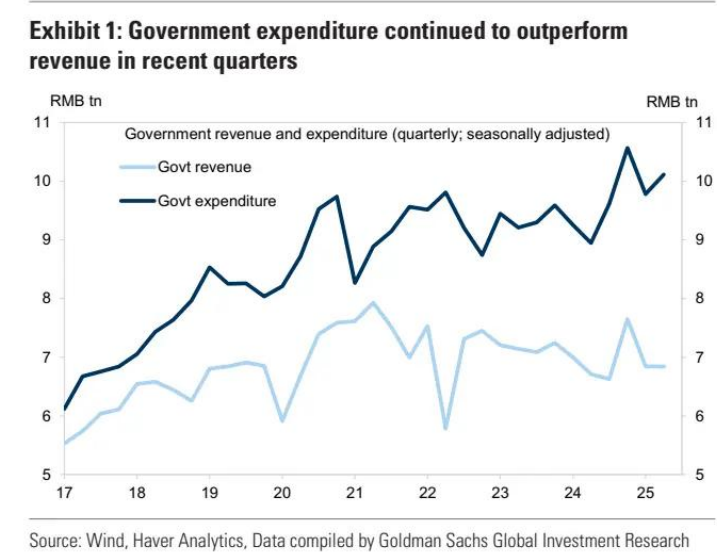
截至 6 月,高盛 proprietary 的广义财政赤字(AFD)指标按 12 个月移动平均计算为 GDP 的 11.3%(2024 年为 10.6%),这表明今年以来财政政策已成为温和的增长推动力,而去年则是增长拖 累。 香港时间8月6日下午,高盛发布亚洲宏观经济研究指出,鉴于今年迄今为止出口增长强于预期,以及当 前 "被动应对式"(而非 "先发制人式")的宽松模式,中国的政策宽松一直是适度、有针对性且具有耐 心的。 7 月政治局会议表明,刺激的紧迫性有所下降,但高盛认为,若增长阻力加大,政策制定者仍为进一步 的宽松举措留有空间。 在这份报告中,高盛回顾了中国上半年的财政状况,评估了下半年可用的财政空间,重新审视今年剩余 时间的财政政策展望,并更新高盛对固定资产投资(FAI)的预测。 部分预算外融资渠道持续疲软 与去年相比,上半年财政状况有所改善 得益于去年年底推出的 10 万亿元地方政府债务化解计划以及今年的扩张性预算,中国的财政状况显著 改善。上半年,预算内财政支出同比增长 3.4%,持续高于财政收入(上半年同比下降 0.3%)。受土地 出让收入下滑的拖累,政府性基金收入依然低迷,今年上半年同比进一步 ...