
东数西算

Search documents
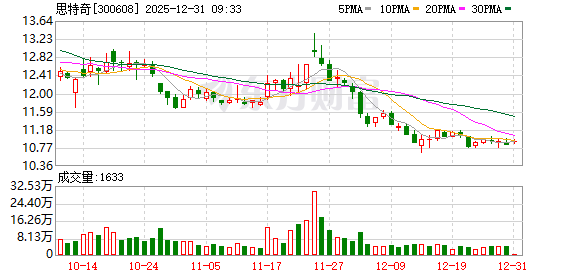
思特奇:思特奇是中国电信的产业合作伙伴
Mei Ri Jing Ji Xin Wen· 2025-12-31 01:32
Core Viewpoint - The company, Sitergy (300608.SZ), confirmed its status as an industrial partner of China Telecom and emphasized its involvement in the national East Data West Computing project, indicating a commitment to ongoing collaboration in technology and product innovation related to computing network scheduling [2]. Group 1 - Sitergy is recognized as a leading enterprise in computing network scheduling [2]. - The company is deeply involved in the construction of the national East Data West Computing project [2]. - Sitergy aims to contribute to the high-quality development of computing network scheduling and related technologies in collaboration with China Telecom [2].


我国建成高质量数据集超10万个,规模超890PB
Xin Hua She· 2025-12-30 12:56
Group 1 - The core idea of the articles highlights China's significant advancements in data empowerment for artificial intelligence by 2025, with the establishment of over 100,000 high-quality datasets and a total scale exceeding 890PB [1] - The National Data Bureau, in collaboration with 26 ministries, has selected 72 leading units to pilot high-quality data construction tasks in key areas such as science and education, as well as innovative fields like embodied intelligence [1] - By 2025, the implementation of the "East Data West Computing" project will see 80% of intelligent computing resources concentrated in eight major hubs, with a national computing resource monitoring and scheduling system established [1] Group 2 - In 2024, China's digital economy core industry patent authorizations ranked first globally, with expectations for the digital economy's added value to reach 49 trillion yuan by 2025, accounting for approximately 35% of GDP [2] - The National Data Bureau will guide the development of 48 national standards and technical documents related to data infrastructure and products, and will lead the release of four international standards on metadata and data quality by 2025 [2] - The year 2026 is designated as the "Year of Data Element Value Release," aiming to enhance data flow and resource allocation channels, thereby stimulating market supply and demand [2]
我国建成高质量数据集超10万个 规模超890PB
Xin Hua Wang· 2025-12-30 12:55
记者30日从全国数据工作会议上获悉,2025年,我国数据赋能人工智能成效显著,国家数据局联合26个 部委遴选72家链主单位,在科学、教育等重点领域和具身智能等创新领域先行先试,部署140项高质量 数据集建设任务,建成高质量数据集超10万个,规模超890PB(拍字节)。 国家数据局局长刘烈宏在会上表示,2025年,国家数据局围绕制度、设施、场景、市场和产业,增强体 系化攻坚能力,打出一套数据要素市场化配置改革"组合拳",推动数据要素市场化价值化进程明显加 快,数据领域国际合作取得积极成效。 数据要素市场化配置改革持续深化。2025年,我国深入实施"东数西算"工程,全国80%的智算资源在八 大枢纽集聚;建立全国算力资源监测调度体系,监测调度试验验证平台上线运行,可监测、可供调度的 算力资源分别达到85.7万PFlops和9.6万PFlops;全国一体化公共数据资源登记体系基本建立,实现省域 全覆盖,登记量超13万项。 "我们将2026年明确为'数据要素价值释放年'。"刘烈宏表示,畅通数据流动和资源配置渠道,激活数据 市场供给和需求,繁荣市场生态,进一步推动数据"供得出、流得动、用得好、保安全",促进数据要素 全面 ...
国家数据局:2026年我国将加力推进数字中国建设
Yang Shi Xin Wen· 2025-12-30 12:17
Core Viewpoint - In 2026, China will intensify efforts to advance the construction of a digital China, focusing on data application, technological innovation, and industry integration [1] Group 1: Data Application and Scenario Development - The initiative aims to promote comprehensive digital transformation in cities and develop new digital consumption models [1] - It targets 16 key sectors, including healthcare, science, and transportation, to create high-quality data sets that empower artificial intelligence development [1] - There will be a push for broader openness of public and enterprise data, establishing an open scenario list [1] - The plan includes enhancing international cooperation in the data field to accelerate the release of data factor value and promote high-quality development [1] Group 2: Integration of Data Technology Innovation and Industry - The "East Data, West Computing" project will continue, aiming to build a national integrated computing network [1] - A number of key laboratories and innovation platforms in the data field will be established, alongside strengthening the talent pool in data-related disciplines [1] - The initiative will foster digital industry clusters and promote the construction of 10 national comprehensive experimental zones for data factors, accelerating the development of an open, shared, and secure national integrated data market [1]
中国电信甘肃庆阳智能算力中心一期项目即将投运
Xin Lang Cai Jing· 2025-12-30 09:46
Core Insights - The China Telecom Gansu Qingyang Intelligent Computing Power Center Phase I project is about to commence operations, marking a significant milestone in the construction of data center clusters in Qingyang and indicating a new phase of large-scale, high-quality operations for the national "East Data West Computing" project in Gansu [1] Group 1 - The first Qingyang computing power center (Phase I) was put into operation in August 2023, providing 1,664 racks of computing power [1] - The larger intelligent computing power center project is set to begin construction in October 2024, achieving main structure completion and civil works within just over a year [2] - The Phase I data center and dispatch center have been fully completed, with over half of the electromechanical supporting projects finished, and the introduction of external power is in the final stages [1][2] Group 2 - The intelligent computing center park is located in the core area of the digital industry in Xifeng District, with a total planned building area of approximately 183,000 square meters, a PUE value as low as 1.192, and a WUE value of 0.982, ultimately forming an advanced computing capacity of about 13,700 racks and 135 megawatts [2] - The park's scientific layout of personnel, vehicles, and goods flow, along with seven data center main buildings and complete supporting facilities, creates a reliable, flexible, and efficient modern computing base [2] - The Qingyang Telecom has signed contracts totaling over 330 million yuan, with a rack utilization rate of 97.06%, and high-performance computing services contracts nearing 80 million yuan, indicating a continuous optimization of business structure and strong growth potential [2]
庆阳全社会用电量突破75亿千瓦时
Xin Lang Cai Jing· 2025-12-30 09:45
庆阳全社会用电量突破75亿千瓦时 每日甘肃网12月30日讯 据陇东报报道(庆阳融媒记者路世玲 通讯员赵喜成、郑朝宁)近日,记者从国 网庆阳供电公司获悉,截至12月27日,我市全社会用电量达76.73亿千瓦时,首次跨越75亿千瓦时大 关,增速位列全省第二。预计2025年全年将完成77.83亿千瓦时。 近年来,我市电力市场增长逻辑实现根本性转变,从单一传统能源开采驱动,升级为综合能源产业与数 字经济产业"双轮并驱"。国网庆阳供电公司主动融入发展大局,提前布局核心基础设施建设,为全市发 展注入强劲电力动能。 骨干网架建设方面,750千伏曲子变330千伏配套送出工程、华能600万千瓦风光项目配套送出工程等重 点项目相继建成投运,新建改造35千伏及以上变电站15座,新增输电线路715公里,不仅优化了电网结 构,更强化了"陇电入鲁"外送通道能力与新能源消纳承载水平。 配网建设方面,精准对接民生与产业需求,聚焦"陇东粮仓"提质、设施农业电气化和小微企业用电保 障,改造新建配网线路1.01万公里,新增配电变压器5329台,打造网架清晰、响应快速、供电可靠的骨 干配网体系,为设施农业、文旅产业及东数西算产业园区绿电直供筑牢基础 ...
四大证券报精华摘要:12月30日
Xin Hua Cai Jing· 2025-12-30 06:14
Group 1: Digital Currency and Financial Infrastructure - The digital renminbi will officially implement an interest payment feature starting January 1, 2026, transitioning from a digital cash era to a digital deposit currency era [1][8] - The People's Bank of China has released an action plan to enhance the management service system and related financial infrastructure for digital renminbi [1][8] Group 2: Consumer Sector Outlook - The consumer sector is gaining attention due to multiple factors, including ongoing consumption policies, the closure of Hainan Free Trade Port, and the upcoming holiday season [2] - Analysts suggest focusing on high-end consumption and sectors with improving supply-demand dynamics as potential investment opportunities for 2026 [2] Group 3: New Quality Productivity Investment - The importance of new quality productivity sectors, such as commercial aerospace and embodied intelligence, is increasing, with electric equipment, electronics, military industry, and AI supply chains being favored for investment in 2026 [3] Group 4: Foreign Investment Perspectives - Foreign institutions express positive expectations for the Chinese market in 2026, with consumption expected to remain a key growth driver [4] - Chinese stocks are anticipated to perform well in Asia (excluding Japan) due to improved corporate governance and policy support for technological innovation [4] Group 5: Lithium Iron Phosphate Industry Dynamics - Several lithium iron phosphate companies have announced production cuts of 35% to 50% in January 2026, impacting a significant market share [5] - The industry faces challenges with raw material price increases and the uncertain impact of new production expansions [5] Group 6: Public Fund Growth - The total net asset value of public funds in China has reached 37.02 trillion yuan, marking a historical high and a growth of over 4 trillion yuan since the beginning of the year [6][7] - The average annual growth rate of public fund assets has been approximately 16% since 2016, indicating a strong customer base [7] Group 7: Humanoid Robot Industry Developments - The establishment of a standardization committee for humanoid robots is expected to enhance the industry's growth, with significant financing inflows into related stocks [9] - Humanoid robots are transitioning from experimental phases to practical applications in factories and commercial settings [9] Group 8: AI Computing Power and Solid-State Transformer Demand - The rapid expansion of AI computing power is driving increased demand for solid-state transformers, with a projected compound annual growth rate of 25% to 35% in the global market [12][13] - The AI market is expected to grow significantly, from 1.1879 trillion yuan in 2023 to 11.4554 trillion yuan by 2030, indicating a robust growth trajectory [12][13]
奥比中光涨2.02%,成交额3.88亿元,主力资金净流出763.50万元
Xin Lang Zheng Quan· 2025-12-30 05:26
Group 1 - The core viewpoint of the news is that Aobo Zhiguang's stock has shown significant performance, with a year-to-date increase of 90.99% and a recent rise of 9.37% over the last five trading days [1] - As of December 30, Aobo Zhiguang's stock price is 88.81 yuan per share, with a total market capitalization of 35.626 billion yuan [1] - The company has experienced a net outflow of 7.635 million yuan in principal funds, with large orders showing a buy of 84.4442 million yuan and a sell of 89.5330 million yuan [1] Group 2 - Aobo Zhiguang, established on January 18, 2013, and listed on July 7, 2022, specializes in the design, research, development, production, and sales of 3D visual perception products [2] - The company's revenue composition includes 61.83% from consumer-grade application devices, 31.35% from 3D visual sensors, and 2.60% from industrial-grade application devices [2] - As of September 30, 2025, Aobo Zhiguang reported a revenue of 714 million yuan, a year-on-year increase of 103.50%, and a net profit of 108 million yuan, a year-on-year increase of 279.12% [2] Group 3 - As of September 30, 2025, the top ten circulating shareholders of Aobo Zhiguang include new entrants such as Hong Kong Central Clearing Limited and E Fund National Robot Industry ETF, with significant holdings [3] - The number of shareholders has increased by 45.86% to 29,200, while the average circulating shares per person decreased by 22.41% to 9,998 shares [2]

会畅科技涨2.16%,成交额8809.89万元,主力资金净流出89.46万元
Xin Lang Cai Jing· 2025-12-30 02:50
Group 1 - The core viewpoint of the news is that Huichang Technology's stock has shown a positive performance in recent trading sessions, with a year-to-date increase of 10.65% and significant gains over various time frames [1] - As of December 30, Huichang Technology's stock price reached 21.30 yuan per share, with a market capitalization of 4.223 billion yuan [1] - The company has experienced a net outflow of main funds amounting to 894,600 yuan, with large orders showing a mixed buying and selling trend [1] Group 2 - Huichang Technology, established on February 8, 2006, specializes in multi-party communication services, video data application processing, and the development and sales of communication-related equipment [2] - The company's main revenue source is cloud video services, accounting for 99.37% of total revenue, while other services contribute 0.63% [2] - As of December 19, the number of Huichang Technology's shareholders increased by 3.85% to 27,000, with an average of 7,341 circulating shares per shareholder [2] Group 3 - Since its A-share listing, Huichang Technology has distributed a total of 89.4304 million yuan in dividends, with no dividends paid in the last three years [3]
“东数西算”下,谁将主宰 AI时代的能源命脉?
Feng Huang Wang Cai Jing· 2025-12-30 02:50
Group 1: National Strategy and Infrastructure - The "East Data West Computing" project is a national strategic initiative aimed at creating a new integrated circulation pattern for data elements across the country, similar to previous projects like "South-to-North Water Diversion" and "West-to-East Power Transmission" [1] - The project includes the establishment of 8 national computing power hub nodes and 10 national data center clusters, with a focus on enhancing computing power as a critical infrastructure for economic development [1] - Research indicates that a 1% increase in computing power index can lead to a 3.3‰ growth in the digital economy and a 1.8‰ increase in GDP [1] Group 2: Regional Development and Investment - The Shaoguan data center cluster, as the only cluster in the Guangdong-Hong Kong-Macao Greater Bay Area, is set to accommodate real-time computing power demands from cities like Guangzhou and Shenzhen, with an investment exceeding 500 billion yuan [2] - By 2025, the Shaoguan cluster is expected to have a capacity of 500,000 standard racks and 5 million servers, primarily serving large and super-large data centers [2] - The cluster's strategic location and favorable climate conditions contribute to reduced operational costs and energy consumption for data centers [2] Group 3: Energy Demand and Supply - The electricity demand of the Shaoguan data center cluster is projected to reach 9.7 billion kilowatt-hours annually by 2025, accounting for nearly half of the city's total electricity consumption [3] - The energy consumption for AI applications is significant, with generating approximately 5,000 words of text consuming 1 kilowatt-hour, and producing a 1-minute 4K video requiring 3-5 kilowatt-hours [3] - The stability and economic viability of electricity supply are critical for the success of the Shaoguan cluster, as electricity costs represent 50%-60% of computing power costs [3] Group 4: Green Energy Advantages - Shaoguan has a clean energy installed capacity ratio of 51.64%, significantly higher than the national average, with every second kilowatt-hour coming from clean energy [4] - The electricity price for computing centers in Shaoguan is 20%-30% lower than that in the Pearl River Delta, providing a substantial cost advantage for data centers [4] - Shaoguan aims to achieve a "fully green electricity" target by 2025, with plans to expand renewable energy facilities significantly [4] Group 5: Opportunities for Local Energy Companies - Under the "East Data West Computing" initiative, local energy companies like Chenzhou Electric International are positioned to benefit from the development of the Shaoguan data center cluster [6] - Chenzhou Electric International, serving 1.21 million users, is transitioning from a traditional hydropower supplier to a comprehensive energy service provider, capitalizing on the growing electricity demand from the cluster [6] - The company reported a 33.93% year-on-year increase in net profit for the first three quarters of 2025, indicating strong growth momentum [6] Group 6: Industry Transformation and Value Reassessment - The shift towards AI computing power is transforming electricity from a traditional utility into a core production factor of the digital economy, leading to a reassessment of the value of electricity companies, especially those with clean energy resources [8] - Companies with green electricity resources are expected to enjoy premium pricing, driven by increasing demand for clean power in data centers [8] - The advancement of smart grids, energy storage technologies, and energy management systems is opening new revenue streams for electricity companies as they transition to comprehensive energy service providers [8]
