中美博弈

Search documents
李嘉诚,又有新动作!
大胡子说房· 2025-07-26 07:08
Core Viewpoint - The article discusses the potential sale of ports by Li Ka-shing to a consortium led by BlackRock and COSCO, highlighting the geopolitical implications of this transaction, particularly in the context of U.S.-China relations [3][4][10]. Group 1: Transaction Details - Li Ka-shing's Cheung Kong Group announced the sale of 43 ports across 23 countries for $22.8 billion (approximately 165.7 billion RMB) to a consortium including BlackRock and Mediterranean Shipping Company [4]. - The ports involved include strategically significant locations, such as those at both ends of the Panama Canal, which are crucial for East Asia's exports to the Americas [6][7]. Group 2: Geopolitical Implications - The sale of these ports to BlackRock, a firm closely tied to U.S. interests, raises concerns about the potential for the U.S. to gain control over strategic resources that could impact East Asia's foreign trade [10][12]. - The article suggests that this transaction is not merely a commercial decision but also reflects a broader geopolitical alignment, as Li Ka-shing has a history of actions that align with Western interests [11][13]. Group 3: COSCO's Position - BlackRock has expressed willingness to accept COSCO into the acquisition consortium, indicating a potential collaboration [2][14]. - COSCO has significant experience in port management and development, demonstrated by its successful turnaround of Greece's Piraeus Port and its involvement in the construction of Peru's Chancay Port [16][17]. - COSCO may opt to pursue independent acquisition or partner with domestic firms like China Merchants or CITIC, which possess both financial and operational capabilities [19][20]. Group 4: Strategic Choices for COSCO - COSCO has several strategic options: to acquire the ports independently, collaborate with domestic partners, or remain passive, thereby preventing BlackRock from gaining control [21]. - The article emphasizes that regardless of the outcome, the influence over the transaction has shifted from BlackRock to COSCO, reflecting a change in power dynamics [21][22].




欧洲的事,中美已经商量好了,那就是欧洲上也得上,不上也得上
Sou Hu Cai Jing· 2025-07-25 17:22
Group 1 - Europe is navigating between major powers, attempting to extract benefits amid global tensions, but may be miscalculating its approach this time [1] - The relationship between Europe and Russia has become complex due to the Ukraine war, while Europe remains dependent on the US for security under NATO [3][5] - Europe's economic reliance on China is significant, with ongoing exports and investments, indicating a persistent dependency [3] Group 2 - The ongoing US-China rivalry is reshaping global economic dynamics, with Europe facing challenges in leveraging its position effectively [5][7] - The US has a strategic timeline for potential interest rate cuts, which requires Europe to act in response to global economic pressures [5][7] - Europe's role in the global economic framework is diminishing as it struggles to assert its independence amid the shifting geopolitical landscape [9] Group 3 - The upcoming visit of Ursula von der Leyen to China represents a critical test of Europe's sincerity and ability to navigate the great power competition [7] - Europe's lack of strong negotiating power limits its ability to benefit from the current international dynamics, as it becomes increasingly entangled in US-led strategies [9] - The question remains whether Europe can redefine its position and gain advantages in the ongoing global economic restructuring [9]
美国抓捕中企芯片高管, 中国7天反制美银行高管, 灰色账户牵出富国黑历史
Xin Lang Cai Jing· 2025-07-24 09:27
Group 1 - The arrest of Xu Zewei, a key figure in Shanghai Jita Semiconductor, in Italy under a U.S. extradition request highlights the ongoing technological and financial competition between China and the U.S. [1][3] - The U.S. accuses Xu of being involved in a 2020 cyberattack against American vaccine institutions, claiming his hacker group has ties to the Chinese government, although the evidence is primarily based on an email login record [3][5] - The U.S. actions against Xu are perceived as a strategy to curb China's technological rise, given his significant role in a company that poses a direct threat to U.S. semiconductor giants like Texas Instruments [3][5] Group 2 - Following Xu's arrest, China responded by restricting the travel of American banker Mao Chen Yue, indicating a tit-for-tat approach in the geopolitical landscape [5][9] - Mao, a key figure in Wells Fargo's operations in China, is under investigation for her involvement in a criminal case related to cross-border fund flows, which may expose vulnerabilities in U.S. financial institutions operating in China [7][9] - This counteraction by China not only targets weaknesses in the U.S. financial system but also serves as a warning that judicial and diplomatic maneuvers are not exclusive to the U.S. [9]


特朗普万万没想到,石破茂居然入了中方的眼,火速派美财长到日本要一个交代
Sou Hu Cai Jing· 2025-07-22 02:49
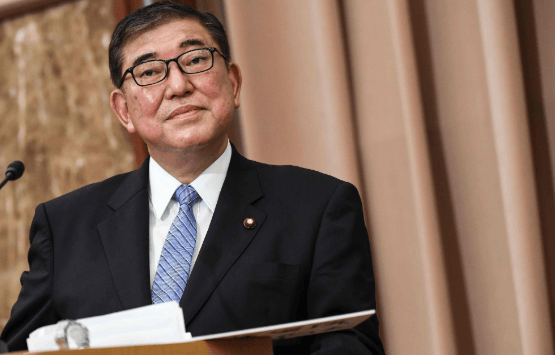
Group 1 - The Chinese government has conditionally resumed imports of certain seafood products from specific regions in Japan, a decision based on international monitoring and scientific assessments regarding the safety of these products [1][3] - Japan's seafood industry heavily relies on exports, and the Chinese market was a significant support until concerns over the Fukushima nuclear wastewater led to a suspension of imports, severely impacting the industry [1][3] - The resumption of imports is seen as a rare opportunity for Japanese seafood companies to regain access to a large market with high consumer safety standards [1][3] Group 2 - Japan is currently facing pressure from the United States regarding trade negotiations, with a significant trade deficit of approximately $69 billion and potential tariffs on Japanese goods [3][5] - The timing of China's decision to resume seafood imports coincided with U.S. Treasury Secretary's visit to Japan, which was intended to address Japan's cooperation with China amidst U.S.-China tensions [5][8] - Japan is in a difficult position, needing to balance cooperation with China to stabilize its economy while also addressing U.S. demands to avoid potential tariffs that could further harm its key industries [5][8]
锂、稀土行业观点汇报
2025-07-21 14:26
Summary of Key Points from Conference Call Records Industry Overview - **Lithium and Rare Earth Industry**: The conference call primarily discusses the lithium and rare earth sectors, focusing on supply dynamics, pricing trends, and government regulations affecting these industries [1][3][6]. Core Insights and Arguments - **Supply Tightening in Lithium**: The verification report for lithium reserves in Yichun, Jiangxi Province, may lead to some companies being unable to renew mining licenses on time, potentially affecting lithium carbonate production by approximately 20,000 tons per month, which could drive prices up [1][4]. - **Impact of Qinghai Salt Lake Production**: Companies in Qinghai are less affected by the recent regulatory changes, but there are concerns about overproduction and illegal mining practices that could pose risks to lithium supply [1][5]. - **Government Regulation Intent**: The government aims to optimize the lithium industry by eliminating loss-making capacities and better understanding national strategic metal reserves, which has contributed to a rebound in lithium prices from low levels [1][6]. - **Rare Earth Supply-Demand Shift**: Initially, there was an oversupply of rare earths in May, but a shift to a supply deficit is expected in Q3, which is likely to significantly boost prices, with prices for products like gadolinium oxide nearing 500,000 yuan per ton [1][9]. - **Geopolitical Factors Enhancing Rare Earth Value**: The U.S.-China trade tensions have led to a reassessment of the strategic value of rare earths, with China limiting exports and the U.S. supporting local industries, thus enhancing the valuation of the rare earth sector [1][10]. - **Market Sentiment in Rare Earths**: The auction of gadolinium and niobium metals on the Baotou exchange has led to a price increase, reflecting heightened market activity and confidence, with bullish sentiment prevailing [1][12]. Additional Important Content - **Current Lithium Companies to Watch**: Companies such as Zhongmin Resources, Shengxing Lithium Energy, Tianqi Lithium, Ganfeng Lithium, and Yongxing Materials are highlighted for their stable stock performance and future growth potential [1][7]. - **Rare Earth Market Trends**: The rare earth market has shown significant improvement, with a tightening supply situation compared to the previous year, leading to a positive price outlook [1][9][13]. - **Investment Opportunities in Rare Earths**: The rare earth magnetic materials sector is recommended for investment, with companies like Northern Rare Earth and China Rare Earth being noted for their potential [1][15][17]. - **Precious Metals Market Outlook**: The precious metals market, particularly silver and gold, is viewed optimistically due to expectations of Federal Reserve interest rate cuts, with silver showing strong performance due to its dual financial and industrial attributes [2][16][18]. This summary encapsulates the key points discussed in the conference call, providing insights into the lithium and rare earth industries, market dynamics, and investment opportunities.




有色金属行业2025年中期投资策略:中长期看好金铜铝,重视战略金属
Southwest Securities· 2025-07-18 09:03
Core Views - The report maintains a positive long-term outlook on gold, copper, and aluminum, emphasizing the importance of strategic metals [1][3] - In H1 2025, domestic economic indicators show signs of bottoming out, with improvements in real estate construction and a gradual shift towards new economic drivers [4][8] - The global economic landscape is being reshaped by fluctuating interest rate expectations from the Federal Reserve and the impacts of trade wars, leading to significant changes in resource sectors [4][8] Investment Strategies - **Main Line 1: Expansion on the Denominator Side - Gold and Silver**: Focus on gold and silver, with specific attention to the performance of gold stocks and the potential for silver due to its high price ratio to gold [4][5] - **Main Line 2: Improvement on the Numerator Side - Aluminum, Copper, Tin**: Anticipate continued high profitability in aluminum due to falling costs, while remaining cautious of potential short-term demand weakness [4][7] - **Main Line 3: Key Strategic Metals**: Highlighting opportunities in rare earths and other strategic metals amid US-China tensions, particularly in six key strategic metals [4][7] - **Main Line 4: Supply-Side Disruptions from Anti-Competition**: The report suggests that supply-side constraints in sectors like lithium carbonate may present attractive bottom-fishing opportunities [4][7] Market Performance - The CRB metal spot index increased by 7.08% from the beginning of 2025 to June 30, 2025, indicating a general upward trend in metal prices [9][10] - Gold prices surged by 23.93% during the same period, driven by expectations of a Federal Reserve rate cut [12][14] - Industrial metals, particularly tin and copper, saw significant price increases of 19.91% and 15.59% respectively, while zinc prices fell by 5.55% [16][19] Supply and Demand Dynamics - Global copper inventories saw a significant reduction, with LME copper stocks decreasing by 66.17% by June 30, 2025 [21][69] - The report anticipates limited growth in global copper supply due to insufficient capital expenditure in mining, projecting only a 2.3% increase in global copper production in 2025 [62][64] - The refined copper market is expected to remain slightly short, with a projected demand growth of 7.1% for 2025, supporting a high price center for copper [69] Sector Performance - The non-ferrous metal sector outperformed the broader market, with a cumulative increase of 19.17% from January to June 2025, compared to a 5.6% rise in the Shanghai Composite Index [38][40] - Sub-sectors such as tungsten, gold, and rare earths performed particularly well, with respective increases of 39.64%, 33.57%, and 31.88% [42][44] - Companies closely tied to resource price fluctuations, particularly in gold and rare earths, showed strong performance, while midstream processing companies faced challenges due to weak downstream demand [44]



聊聊Manus“跑路”事件,以及在中美博弈中“夹缝求生”的AI创业者
Sou Hu Cai Jing· 2025-07-16 00:50
Core Viewpoint - The current generation of Chinese AI entrepreneurs is facing unique challenges due to the geopolitical divide between China and the U.S., making it difficult for them to navigate their business strategies effectively [3][4][5]. Group 1: Geopolitical Context - The AI sector is experiencing a significant "decoupling" between China and the U.S., requiring entrepreneurs to choose sides from the outset [5][6]. - The infrastructure for AI, represented by large models, is divided; entrepreneurs must decide whether to use Chinese models like DeepSeek and Qwen or U.S. models like ChatGPT and Gemini [6][7]. - The user base for AI applications is also split, with Chinese users unable to access U.S. AI agents and vice versa, necessitating a clear target market choice [9][10]. Group 2: Investment and Market Strategy - Entrepreneurs must choose between Chinese and U.S. investments, as attempting to secure both is nearly impossible due to regulatory challenges, exemplified by the TikTok case [12][13]. - The decision to "pick a side" is crucial; companies must align with either Chinese or U.S. models, investments, and consumer bases from the beginning [14][15]. Group 3: Globalization Challenges - Despite the challenges, there is a strong push for Chinese companies to expand their influence internationally rather than remaining isolated [18][19]. - The global market presents opportunities beyond the U.S., including Europe, Southeast Asia, and Latin America, but these regions have varying degrees of readiness for AI development [20][21]. - The founder of Manus expressed the importance of adapting to global markets and the complexities that come with it, highlighting the need for resilience and adaptability in the face of external pressures [23][24]. Group 4: Divergent Perspectives - There are contrasting views on the decision to expand internationally; some question the motives behind leaving the domestic market, while others recognize the necessity of such moves for survival and growth [28][30]. - The sentiment among entrepreneurs is not a lack of love for their homeland but rather a strategic choice made under challenging circumstances [30][31].

中美外长已谈完,不到24小时,韩国放出消息,特朗普逼李在明二选一
Sou Hu Cai Jing· 2025-07-15 06:50
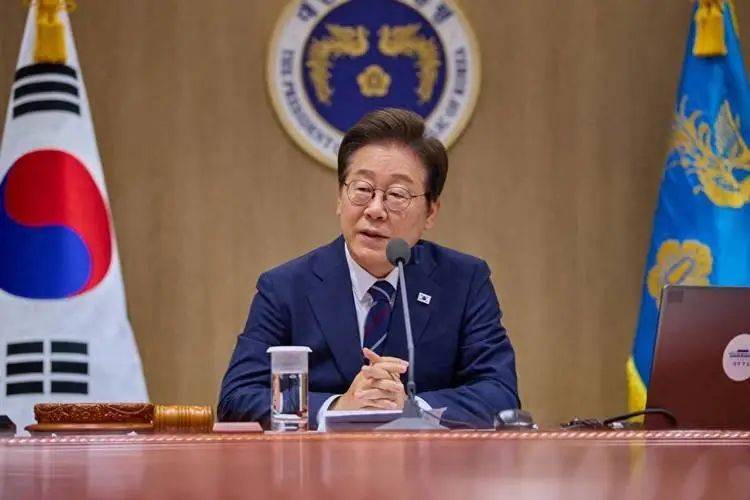
Group 1 - The U.S. government is pressuring South Korea to join a coalition to curb China's shipbuilding industry, threatening high tariffs and port fees if they refuse [1][3] - The U.S. has imposed a 25% tariff on South Korea and Japan, with the deadline for "reciprocal tariffs" extended to August 1 [1][3] - South Korea's economy is heavily reliant on China, with trade with China accounting for a quarter of its foreign trade and over 40% dependency on semiconductors [3][5] Group 2 - South Korean President Lee Jae-myung faces a dilemma due to the U.S. pressure, balancing relations with both the U.S. and China [3][7] - Lee's strategy involves sending envoys to China, Japan, and the U.S. to restart high-level communications and revealing U.S. pressure tactics to both sides [3][7] - China's response includes calls for dialogue and opposition to agreements that harm third-party interests, emphasizing its strategic resource leverage over South Korea [5][7] Group 3 - The situation highlights the structural contradictions faced by small countries in great power rivalries, with South Korea's security dependence on the U.S. and economic reliance on China [7] - The outcome of this geopolitical struggle will significantly impact the trilateral relations between China, the U.S., and South Korea [7]
与特朗普关税有关?中国考虑恢复进口和牛,日本海鲜也将登陆中国
Sou Hu Cai Jing· 2025-07-14 23:12
Group 1: Core Insights - Japan has resumed beef imports from Japan after a 24-year ban due to BSE, marking a significant shift in trade relations with China [1] - The lifting of restrictions on Japanese seafood imports coincides with the beef import resumption, indicating a broader trend of trade normalization between Japan and China [2] - The strategic decision to enhance economic cooperation with China is influenced by the trade pressures from the Trump administration, particularly the tariffs imposed on Japanese goods [3][5] Group 2: Economic Impact - Japan's beef export value is projected to reach 18 billion yen in 2024, with potential demand from China exceeding 5 billion yen [2] - The Japanese seafood export to China is expected to reach 1.23 billion USD in 2024, accounting for 11.1% of Japan's total seafood exports [2] - The anticipated trade agreements could boost Japan's exports to China to 300 billion USD, representing 35% of its total exports, effectively countering losses from U.S. tariffs [5] Group 3: Market Dynamics - The Chinese market, with its 400 million middle-class consumers, presents a growing demand for high-end food products, including Japanese beef priced at 3,000 RMB per kilogram [7] - Japan's beef currently holds only a 0.3% share of China's total beef imports, which are projected to reach 2.8 million tons in 2024 [7] - Despite the challenges posed by stringent quality checks and public concerns over food safety, the potential for market share growth in China remains significant for Japanese agricultural products [7][2] Group 4: Geopolitical Context - The resumption of Japanese beef imports is not merely a trade decision but reflects the complex interplay of geopolitical and economic interests amid escalating U.S.-China tensions [1][7] - Japan's proactive approach in strengthening ties with China is seen as a strategic move to mitigate the economic impact of U.S. trade policies [5][3] - Continuous efforts from both the Japanese government and businesses are essential to navigate the challenges and achieve a mutually beneficial outcome in this evolving trade landscape [7]
收到北京邀请函5天后,李在明接下美国信函,特朗普开惩罚条件?
Sou Hu Cai Jing· 2025-07-13 05:44
Core Viewpoint - Trump's decision to impose tariffs of up to 25% on South Korean goods is seen as a strategic move to exert pressure on South Korea amid its warming relations with China, particularly following an invitation to South Korean President Lee Jae-myung from China to attend an event commemorating the 80th anniversary of the victory in the Anti-Japanese War [2][12][14]. Group 1: Tariff Announcement and Implications - Trump announced tariffs on 14 countries, including South Korea and Japan, which escalates global economic tensions [5]. - The tariffs are part of Trump's "maximum pressure" strategy, aimed at forcing countries to negotiate favorable trade agreements with the U.S. [8]. - The timing of the tariff announcement, just five days after Lee received the Chinese invitation, raises questions about the U.S. signaling to South Korea to avoid closer ties with China [12][14]. Group 2: Geopolitical Context - The U.S. appears to be using economic measures to warn South Korea against deepening its relationship with China, reflecting America's strong control over South Korea's foreign policy [16][18]. - The cancellation of a visit by U.S. Senator Marco Rubio to South Korea coincided with the tariff announcement, suggesting a political signal regarding Lee's approach to China [12][16]. Group 3: Economic Impact on South Korea - South Korea's economy is significantly impacted by U.S. exports, with 18.3% of its total exports going to the U.S. in 2024, particularly in the semiconductor and automotive sectors [19]. - Accepting U.S. demands could severely harm South Korea's economy, while resisting could lead to U.S. retaliation, creating a complex dilemma for Lee's administration [19][21]. - South Korea and Japan are likely to negotiate with the U.S. to secure more favorable terms rather than fully complying with Trump's demands [21]. Group 4: Future Challenges - The evolving international order complicates the survival strategies for countries like South Korea and Japan, which must navigate between U.S. and Chinese interests [24][25]. - Lee's challenge will be to find a development path that aligns with South Korea's national interests amid these geopolitical pressures [24].