
硬科技

Search documents
科创板向新提质
Xin Lang Cai Jing· 2026-01-17 22:51
Group 1 - The core viewpoint of the news is that the recent listing of Strong Semiconductor (Suzhou) Co., Ltd. has brought the total number of companies on the Sci-Tech Innovation Board to 600, with a total market value exceeding 10 trillion yuan and total fundraising surpassing 1.1 trillion yuan, indicating the board's significant growth and reform progress [1] - The Sci-Tech Innovation Board primarily serves "hard technology" enterprises that align with national strategies and have high market recognition, establishing a diverse and inclusive listing system since its inception in 2019 [2] - As of now, the 600 listed companies cover high-tech industries such as new generation information technology, biomedicine, high-end equipment, new energy, and new materials, with 70% of these companies recognized as national-level specialized and innovative "little giant" enterprises [2] Group 2 - The board has supported 61 unprofitable companies and 9 with special equity structures, with 22 unprofitable companies achieving profitability post-listing, showcasing the board's role in nurturing "hard technology" enterprises [5] - The compound annual growth rates for revenue and net profit attributable to shareholders of Sci-Tech Innovation Board companies have reached 19% and 8%, respectively, over the past five years [5] - The board's research and development investment reached 132.86 billion yuan in the first three quarters of 2025, which is 2.7 times the net profit of the board, indicating a strong focus on R&D as a growth driver [5] Group 3 - The development of the Sci-Tech Innovation Board has played a crucial role in facilitating the "technology-industry-capital" cycle, promoting the integration of innovation chains, industry chains, and capital chains [6] - Approximately 90% of Sci-Tech Innovation Board companies received venture capital investment before going public, indicating a strong trend towards early investment in hard technology [7] - The board has established a comprehensive index system with 33 indices and over 100 ETFs, with a total scale of index tracking products exceeding 310 billion yuan [7] Group 4 - The board's reforms have led to over 160 new industry mergers and acquisitions, with disclosed transaction amounts exceeding 49 billion yuan, reflecting an increase in corporate quality and activity [7] - The acceptance of innovative companies with unprofitable and special equity structures has created an efficient risk pricing and sharing market, enhancing the board's inclusivity and adaptability [8] - The board's initiatives encourage a virtuous cycle of capital injection, technology iteration, industry maturity, and capital appreciation, improving the precision of resource allocation in the capital market [8]
上市公司数量600家,总市值逾10万亿元—— 科创板向新提质
Jing Ji Ri Bao· 2026-01-17 22:11
Group 1 - The core viewpoint of the news is that the recent listing of Strong Semiconductor (Suzhou) Co., Ltd. has brought the total number of companies on the Sci-Tech Innovation Board to 600, with a total market value exceeding 10 trillion yuan and total fundraising surpassing 1.1 trillion yuan [1] - The Sci-Tech Innovation Board primarily serves "hard technology" enterprises that align with national strategies and have high market recognition, establishing a diverse and inclusive listing system since its inception in 2019 [2] - As of now, the 600 listed companies cover high-tech industries such as new generation information technology, biomedicine, high-end equipment, new energy, new materials, and energy conservation and environmental protection, with 70% of these companies recognized as national-level specialized and innovative "little giant" enterprises [2] Group 2 - The board has formed a demonstration and agglomeration effect in industries like integrated circuits and biomedicine, creating a matrix-style industrial cluster that promotes collaborative development among upstream and downstream enterprises [2] - The introduction of the "1+6" reform measures has enhanced the board's inclusivity and adaptability, supporting the development of technology-driven enterprises that break through key core technologies [4] - The board has supported 61 unprofitable companies and 22 companies under the fifth listing standard, with many of these companies achieving profitability post-listing [5] Group 3 - The Sci-Tech Innovation Board has played a crucial role in optimizing the "technology-industry-capital" cycle, facilitating the integration of innovation chains, industrial chains, and capital chains [6] - Approximately 90% of Sci-Tech Innovation Board companies received venture capital investment before listing, indicating a strong trend towards early investment in hard technology [7] - Over 60% of the companies on the board have implemented cash dividend plans, with a total dividend payout of 38.8 billion yuan, reflecting a commitment to enhancing investor returns [7]
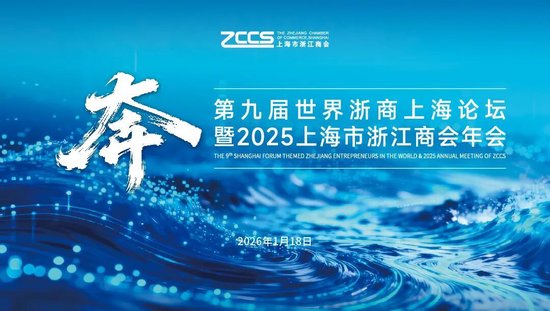
【聚焦】奔:第九届世界浙商上海论坛即将开幕!
Xin Lang Cai Jing· 2026-01-16 14:55
Core Insights - The Ninth World Zhejiang Business Forum and the 2025 Shanghai Zhejiang Chamber of Commerce Annual Meeting will open on January 18 at the Shanghai International Conference Center, focusing on the theme "Surging" which highlights the resilience, innovation, and aspirations of Zhejiang merchants in the context of China's economic waves [3][22] - The forum aims to facilitate a two-way engagement between scientists and entrepreneurs, promoting high-quality development [3][22] Group 1: Key Themes and Speakers - The theme "Surging" symbolizes the pulse of Zhejiang merchants in sync with the times, representing a spirit forged through challenges in the business world [3][22] - Notable speakers include Zheng Qinghua, Wang Jianyu, Guo Guangchang, Lu Chaoyang, Xie Xin, Zhu Junhong, Zhao Yanping, and Ren Bin, who will share insights to propel Zhejiang merchants forward [3][22] - Zheng Qinghua, an academician, will discuss the transformative power of AI and its applications in driving global change [4][22] Group 2: Perspectives on Innovation and Future Directions - Xie Xin, CEO of Feishu, will present on how AI is increasingly understanding business needs, reflecting an "AI-first" approach [6][24] - The forum will explore diverse perspectives in the hard technology sector, emphasizing the collaboration between scientific exploration and practical innovation [9][27] - South Cunhui, a prominent figure in Zhejiang's business community, will address the crossroads faced by Zhejiang merchants in the context of AI trends and international expansion [11][29] Group 3: Commitment to Progress - Guo Guangchang, honorary chairman of the chamber, will highlight the pioneering spirit of Zhejiang merchants as they navigate the global market [15][33] - Li Xiande, the rotating chairman, will emphasize the importance of ambition and leadership in achieving high-quality development [17][35]



调仓?
第一财经· 2026-01-16 10:45
2026.01. 16 作者 | 一财阿驴 ▼ 0.18% ▼0.20% A股三大指数高开低走后维持低位震荡, 沪指险守4100点整数关口, 深市与创业板指跌幅收窄, 科创50 成为唯一上涨的核心指数,结构性差异显著。 2370家上涨 涨跌停比 67:61 个股跌多涨少,板块分化极致,盘面上,AI应用 题材全线回调,金融科技、电商、商业航天概念 股走低。半导体产业链爆发,存储器方向领 涨;消费电子、人形机器人、特高压概念股活 ▼ 0.26% 两市成交额 0 5万亿元 ▲ 4.15% 两市成交额维持高位,小幅放量,市场分歧巨 大, 资金进行大规模调仓换股,从高位板块向低 位板块转移,半导体相关个股成为成交核心,存 储芯片方向多只龙头股成交额居前。 资金情绪 主力资金净流出 486.02Z元 散户资金净流入 13 22元 机构呈"聚焦硬科技、规避题材泡沫"的理性调仓特征,资金从传媒、AI应用等高估值题材板块果断撤 离,转而大举加仓半导体、电网设备、入形机器人等硬制造赛道;散户谨慎观望,操作上出现分化,一部分 投资者选择卖出观望,另一部分活跃资金则尝试在半导体、新股等局部热点中寻找短线机会。 散户情绪 75.85% ...

积跬步至千里,小雪实盘2025年度报告
雪球· 2026-01-16 08:34
Market Overview - The central bank, financial regulatory authority, and securities commission jointly launched a package of financial policies on September 24, 2024, injecting confidence into the capital market. As of December 31, 2025, the Shanghai Composite Index had risen by 18.41% for the year, while the ChiNext Index and the STAR 50 Index increased by 49.57% and 35.92%, respectively. The Shanghai Composite Index reached 4000 points for the first time in nearly a decade as of October 29 [1][3]. Economic Indicators - In 2025, the Chinese price index showed a trend of "moderate recovery in CPI and narrowing decline in PPI." The central bank's annual meeting in January 2026 emphasized promoting high-quality economic development and reasonable price recovery as key considerations for monetary policy [3][5]. Investment Performance - The investment strategy followed a three-part allocation model, with 60% in equities, 30% in bonds, and 10% in commodities, achieving a return of 19.60% for 2025. The maximum drawdown was 7.52%, with an annualized volatility of 9.87%. The Sharpe ratio was 1.99, indicating a favorable risk-return profile compared to the Shanghai Composite Index's 1.5 and the Nasdaq 100's below 1 [8][10]. Asset Allocation - The three-part allocation strategy aimed to optimize risk-adjusted returns by selecting quality assets that benefit from different economic environments. This approach allowed the portfolio to navigate through various market cycles effectively [11][13]. Market Dynamics - The investment strategy included a focus on A-share market opportunities, particularly in sectors like new energy, semiconductors, and innovative pharmaceuticals, which were seen as core assets with both profit and valuation growth potential. The strategy also involved reducing exposure to U.S. equity funds in favor of A and H shares [17][18]. Fund Selection - The equity fund selection combined index-based strategies with high-quality active management. For instance, the fund allocated to the CSI 300 and the Nasdaq 100, while also incorporating actively managed funds that excelled in sectors like new consumption and innovative pharmaceuticals [20][21]. Risk Management - The bond allocation served primarily to hedge against equity volatility, with a notable focus on U.S. Treasuries, which provided attractive yields amid a low-interest-rate environment. The strategy also included a small allocation to commodity funds, particularly gold, which performed well in 2025 [21][22]. Investor Behavior - A significant 92% of investors who adhered to the three-part allocation strategy achieved positive returns, demonstrating the effectiveness of disciplined investment practices. The data indicated that longer holding periods correlated with higher profitability [24][25]. Conclusion - The article reflects on the investment landscape as of early 2026, highlighting the importance of maintaining a balanced approach to asset allocation while being mindful of market risks. The company aims to continue delivering value to investors through its strategic insights and disciplined investment framework [29].

全释硬科技丨中国天眼FAST将怎样升级?一文了解
Huan Qiu Wang Zi Xun· 2026-01-16 04:06
Group 1 - The Chinese FAST telescope is preparing for upgrades to create the world's first array centered around a giant telescope, with medium-sized telescopes surrounding it [3]
更长存续 更少返投 更硬科技 撬动耐心资本 创投“国家队”打法升级
Zhong Guo Zheng Quan Bao· 2026-01-15 22:50
Core Insights - The National Venture Capital Guiding Fund, launched at the end of 2025, has a 20-year duration and aims to support hard technology sectors without regional investment return requirements, marking a significant shift in China's venture capital landscape [1][2]. Group 1: Fund Characteristics - The guiding fund is designed to leverage a substantial amount of fiscal resources, aiming to mobilize trillions in social capital, focusing on strategic emerging industries and early-stage innovative small and medium enterprises [2]. - The fund's long duration and flexible return requirements are seen as beneficial for fostering a unified national market and aligning with the developmental needs of technology enterprises [2][5]. Group 2: Investment Trends - There is a noticeable trend of state-owned capital funds increasing their investments in hard technology, with significant investments in semiconductor and AI sectors, indicating a long-term commitment to strengthening key industrial chains [2][6]. - The guiding fund's approach emphasizes early and small investments, which aligns with the growth trajectories of innovative companies, as evidenced by the involvement of state-owned funds in various successful startups [1][6]. Group 3: Changes in Investment Strategy - The investment strategy has evolved to allow longer fund durations and more flexible return mechanisms, moving away from rigid return requirements that previously distorted investment decisions [4][5]. - A focus on a more patient capital approach is emerging, with an emphasis on supporting the entire lifecycle of investments rather than prioritizing quick returns [4][6]. Group 4: Sector-Specific Investments - The state-owned venture capital "national team" is actively investing in critical sectors such as semiconductors, advanced manufacturing, artificial intelligence, and new materials, reflecting a strategic focus on enhancing domestic capabilities [6][7]. - Investments in aerospace and robotics are also highlighted, showcasing the diverse interests of the national team in fostering innovation across various high-tech fields [7].

撬动耐心资本 创投“国家队”打法升级
Zhong Guo Zheng Quan Bao· 2026-01-15 20:48
Core Insights - The National Venture Capital Guiding Fund, launched at the end of 2025, has a 20-year duration and aims to support hard technology sectors without regional reinvestment requirements, marking a significant shift in China's venture capital landscape [1][2] Group 1: Fund Characteristics - The fund emphasizes a focus on hard technology and strategic emerging industries, primarily targeting seed, early, and mid-stage innovative small and micro enterprises [2] - The fund's long duration and flexible reinvestment requirements are designed to align with the growth cycles of hard technology companies, promoting a more market-oriented investment approach [3][4] Group 2: Investment Trends - State-owned capital is increasingly investing in hard technology, with significant contributions from central enterprises and local government funds, such as the 18.32 billion USD investment from the National Integrated Circuit Fund into SMIC [2][3] - Local government funds are also expanding, with Beijing establishing a 100 billion yuan fund focused on AI and robotics, and Chengdu launching a fund covering similar future industries [2] Group 3: Investment Strategy Evolution - The investment strategy has shifted towards longer fund durations and more flexible reinvestment mechanisms, with 53% of new guiding funds allowing for durations over 10 years [3][4] - The focus has moved from short-term gains to respecting industry growth patterns, reducing the pressure for forced exits during market downturns [3][4] Group 4: Key Sectors and Companies - The state venture capital "national team" is actively investing in critical sectors such as semiconductors, advanced manufacturing, AI, and new materials, with notable investments in companies like Moer Technology and Longxin Technology [1][6] - In the semiconductor sector, investments have been made in key areas such as core equipment and materials, while in AI, the focus includes hardware and software solutions [6][7] Group 5: Future Industry Focus - The national team is also targeting emerging fields like embodied intelligence and robotics, with investments in companies that facilitate faster technological validation and industrial scaling [7] - The collaboration between the guiding fund and various capital sources is expected to accelerate the formation of a mature patient capital ecosystem, driving China's high-quality economic development [7]
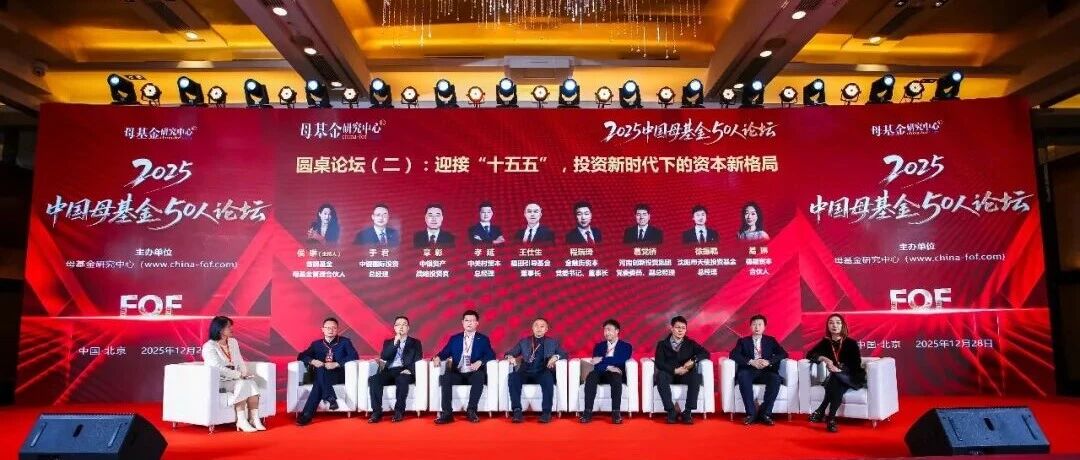
“十五五”启航,一级市场的资本新格局
母基金研究中心· 2026-01-15 09:23
Core Viewpoint - The 2025 China Mother Fund Forum highlighted the evolving landscape of investment strategies and opportunities under the "14th Five-Year Plan," emphasizing the need for collaboration among various capital types to support national strategies and industrial upgrades [2][4]. Group 1: Policy Opportunities and Investment Strategy Evolution - The "14th Five-Year Plan" presents new opportunities for equity investment, with a focus on long-term capital sources such as government-guided funds and insurance capital [5][6]. - Investment strategies are shifting towards hard technology sectors, with a focus on key links in the industrial chain rather than just star companies [6][7]. - Valuations are becoming more rational, with companies demonstrating real technological strength and sustainable growth receiving higher premiums [6][7]. - The integration of ecological construction and resource empowerment is reshaping institutional core competitiveness, allowing for comprehensive financial services [6][8]. - The emphasis on long-termism and patience in capital investment is crucial, as the establishment of large national and regional venture capital funds may lead to a "project shortage" [7][8]. Group 2: Capital Role Restructuring and Competitive Ecosystem Building - Different capital representatives discussed their positioning and practices in the new landscape dominated by state-owned capital and deep industry engagement [8][9]. - Market-oriented GP representatives stressed the importance of adhering to market-driven investment logic while balancing government project demands with financial returns [8][9]. - The need for vertical and horizontal collaboration among various capital sources was highlighted, with recommendations for government-guided funds to focus on early-stage investments and market-oriented VC/PE to engage in growth stages [9][10]. - The importance of industry insights and feedback to guide long-term planning was emphasized, particularly in sectors like biomedicine and manufacturing [10][11]. - The forum concluded with a call for more in-depth exchanges among capital representatives to promote healthy industry development and support national strategic goals [10].
干货满满!瑞银预测中国资本市场将再迎“丰年” AI模型发展加速、应用场景拓宽、泡沫可控
Zhong Guo Ji Jin Bao· 2026-01-14 15:27
Group 1: Market Outlook - The 26th UBS Greater China Conference (GCC) focused on the interaction between China's mid-term economic trends and global growth, trade patterns, and capital market cycles, emphasizing advancements in technology and AI [1] - UBS analysts express optimism for the Chinese stock market in 2026, citing macroeconomic improvements, strong policy support, market structure optimization, and continued capital inflows as key factors [2][3] - The Chinese stock market is expected to experience a significant rebound, with a projected 10% growth in earnings per share (EPS) driven by revenue growth, share buybacks, and improved profit margins [3] Group 2: Investment Opportunities - Specific sectors identified for investment include artificial intelligence (especially hardware and semiconductor equipment), leading internet companies, brokerage firms, and companies with strong international capabilities [3] - The A-share market is predicted to see an 8% growth in earnings, with a shift in growth drivers from financial to non-financial enterprises [3][4] - The valuation of A-shares remains attractive, with room for recovery despite recent market increases, supported by healthy levels of financing and investor activity [4] Group 3: IPO and M&A Trends - The IPO and M&A markets in China are expected to remain active in 2026, driven by improved liquidity and investor confidence [6][8] - The Hong Kong IPO market is projected to exceed 2025 levels, supported by a robust pipeline of over 300 companies and a return of foreign cornerstone investors [7] - The M&A market is anticipated to grow, with trends including increased focus from private equity on European assets and strategic evaluations by multinational companies of their Chinese operations [8] Group 4: Economic Insights - China's GDP growth is forecasted at approximately 4.5% for 2026, with inflation expected to rise and a recovery in investment driven by infrastructure spending [9] - The consumption sector is poised for long-term growth due to improved social security systems and consumption rate targets set in the 14th Five-Year Plan [9] Group 5: AI Industry Development - The Chinese AI industry is expected to continue its rapid development, with advancements in model capabilities and application scenarios anticipated in 2026 [10][12] - The focus will be on enhancing domestic chip performance and optimizing the efficiency of AI model development through collaboration between hardware and software [12] - Concerns about an "AI bubble" in China are deemed low, as leading firms rely on existing cash flows for R&D and maintain a pragmatic approach to capital expenditures [12]
