金融科技

Search documents
上海国际金融中心一周要闻回顾(1月12日—1月18日)
Guo Ji Jin Rong Bao· 2026-01-18 03:47
Group 1: Key Meetings and Policies - Shanghai Mayor Gong Zheng met with UBS CEO Ralph Hamers, expressing hope for UBS to better serve Chinese companies going global and promote Shanghai to global partners [1] - The Shanghai Financial Regulatory Bureau, in collaboration with law enforcement, has launched 15 nationwide campaigns to combat "black and gray" financial activities, resulting in the resolution of 117 cases and the arrest of over 370 suspects [2] - The Shanghai Stock Exchange has adopted a "zero tolerance" policy towards violations, issuing over 270 disciplinary actions and implementing regulatory measures over 330 times to maintain market order [3] Group 2: Financial Developments - As of January 11, 2026, the Shanghai branch of China Construction Bank has managed personal financial assets exceeding 1 trillion yuan, serving 21 million individual clients [4] - The first non-directional public REITs expansion was launched on January 12, 2026, marking a significant innovation in the REITs market and promoting quality rental housing assets [5] - The Shanghai Gold Exchange emphasized the construction of secure and efficient financial infrastructure to support national strategies and improve market services during its 2026 work meeting [6] Group 3: Regulatory Changes - The Shanghai and Shenzhen Stock Exchanges have increased the minimum margin requirement for financing from 80% to 100%, effective January 19, 2026, to strengthen counter-cyclical adjustments [7] - The People's Bank of China held a work meeting emphasizing the implementation of a moderately loose monetary policy to support high-quality economic development [8] - The Shanghai Insurance Association and the Shanghai Judicial Appraisal Association issued guidelines to standardize property insurance claims processes, aiming to improve industry governance [9] Group 4: Innovations in Financial Services - China Construction Bank's Shanghai branch launched a "coffee production internet service platform" to facilitate cross-border trade, enhancing efficiency and security for traders [9] - China Pacific Insurance has upgraded its strategy to address the challenges posed by an aging population, focusing on a comprehensive ecosystem covering elderly care, health, and rehabilitation [10] - Star Ring Fusion completed a 1 billion yuan Series A financing round, setting a record for private nuclear fusion companies in China [11] Group 5: Green Finance Initiatives - Shanghai Pudong Development Bank issued its first biodiversity loan of 7 million yuan to support agricultural technology development, reflecting its commitment to green finance [12] - Bank of China Shanghai branch efficiently processed a qualification application for a Hong Kong metal trader in just 15 days, showcasing its expertise in cross-border finance [13] - The Shanghai branch of the Bank of Communications collaborated with the Shanghai Data Exchange to establish an online data transaction settlement service system [14] Group 6: International Trade Support - The Export-Import Bank of China Shanghai branch provided customized financial support for a solid waste enterprise's offshore trade, demonstrating its role in stabilizing cross-border supply chains [16]
Shanghai Fuiou Payment Service Corp., Ltd.(H0328) - Application Proof (1st submission)
2026-01-17 16:00
The Stock Exchange of Hong Kong Limited and the Securities and Futures Commission take no responsibility for the contents of this Application Proof, make no representation as to its accuracy or completeness and expressly disclaim any liability whatsoever for any loss howsoever arising from or in reliance upon the whole or any part of the contents of this Application Proof. Application Proof of SHANGHAI FUIOU PAYMENT SERVICE CORP., LTD. 上海富友支付服務股份有限公司 (A joint stock company incorporated in the People's Repub ...
前海2025年前11个月外来投资在深圳全市占比过半
Zheng Quan Ri Bao Wang· 2026-01-17 04:15
Group 1 - The contribution of Qianhai to Shenzhen's economy is continuously increasing, with over 50% of the city's foreign investment attracted by Qianhai in the first 11 months of 2025, highlighting its significant role in the Guangdong-Hong Kong-Macao Greater Bay Area economic development layout [1] - Qianhai has achieved a high level of openness in deep cooperation and institutional connectivity between Shenzhen and Hong Kong over 15 years, particularly in the fintech sector [1] - Qianhai is actively promoting the innovative application of digital RMB, supporting the first issuance of the "Qianhai Dream" digital RMB wallet by a national bank, and facilitating cross-border RMB collection innovations [1] Group 2 - As of October 2024, Qianhai has gathered 455 enterprises in the artificial intelligence sector, including 84 Hong Kong-funded enterprises and 102 specialized and innovative enterprises, with total revenue exceeding 300 billion RMB, demonstrating significant industrial clustering effects [2]
中国工商银行申请外汇挂单交易撮合方法专利,解决逐条数据比对效率较低问题
Sou Hu Cai Jing· 2026-01-17 04:14
Group 1 - The core point of the article is that the Industrial and Commercial Bank of China (ICBC) has applied for a patent related to a foreign exchange order matching method and device, indicating its focus on financial technology innovation [1] - The patent application was filed on September 2025, with the publication number CN121329644A, highlighting the company's ongoing efforts in enhancing its technological capabilities in the financial sector [1] - The described method aims to improve the efficiency of foreign exchange trading by addressing the low efficiency of traditional data comparison methods in matching trades [1] Group 2 - ICBC was established in 1985 and is headquartered in Beijing, primarily engaged in monetary financial services [2] - The company has a registered capital of approximately 35.64 billion RMB and has made investments in 28 enterprises, showcasing its active role in the market [2] - ICBC has participated in 5,000 bidding projects and holds a significant number of intellectual property assets, including 976 trademark records and 5,000 patent records [2]

哈萨克斯坦总统托卡耶夫签署新版《银行与银行业活动法》及配套修订法
Xin Lang Cai Jing· 2026-01-17 02:21
Core Viewpoint - Kazakhstan's President Tokayev has signed a new version of the "Law on Banks and Banking Activities" which includes regulations for digital financial assets (DFA) to promote the development of fintech and the cryptocurrency industry [1] Regulatory Framework - The new law categorizes digital assets into three types of secured DFA: stablecoins backed by fiat currency, asset tokenization supported by financial instruments, assets, property rights, or commodities, and financial instruments issued electronically on digital platforms [1] - The legislation formally regulates unsecured digital assets, such as Bitcoin, and allows for the establishment of cryptocurrency exchanges licensed by the central bank [1] Central Bank's Role - The central bank will create a list of tradable crypto assets and enhance anti-money laundering measures along with investor protection [1]
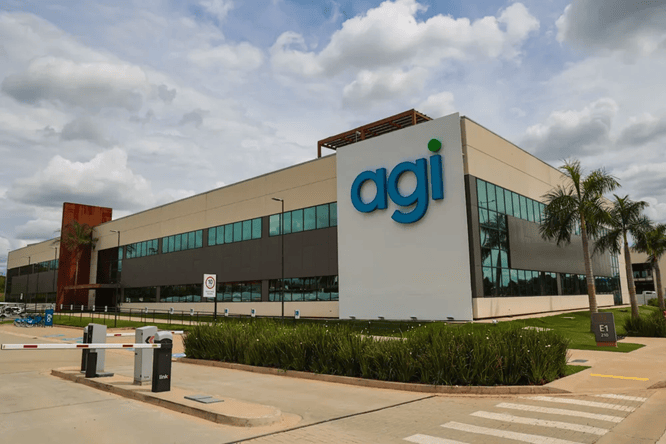
【创投】巴西数字银行Agibank递交招股书,计划登陆纽交所
Sou Hu Cai Jing· 2026-01-16 23:41
Core Viewpoint - Agibank, a Brazilian digital bank, is the latest company to seize the opportunity presented by the reopening of the U.S. IPO market, having submitted its listing application to the SEC on January 14, with plans to trade on the New York Stock Exchange under the ticker "AGBK" [2] Company Summary - Agibank plans to issue Class A common shares, each carrying one vote, while the controlling shareholders will retain Class B shares, which have higher voting rights [2] - Even after the IPO, control of the company will remain concentrated in the hands of the founders and existing shareholders, limiting the influence of new investors on strategic decisions [2] Industry Summary - The U.S. capital markets are showing signs of recovery in new stock issuances, creating a favorable environment for companies like Agibank to pursue public offerings [2]

兴业银行济南分行绘就数链金融新图景
Zhong Guo Jin Rong Xin Xi Wang· 2026-01-16 12:20
Core Insights - The core viewpoint of the news is that Industrial Bank's Jinan Branch is leveraging "finance + technology" to enhance the digital financial service ecosystem in Linyi, focusing on regional and industry-specific value creation [1][2]. Group 1: Financial Technology Integration - The bank has developed a three-dimensional digital service system that includes a financial cloud platform, a smart park system, and an aggregated payment ecosystem to address pain points in enterprise operations, park management, and consumer services [1]. - The financial management platform launched by the bank connects multiple bank systems, enabling real-time visibility and intelligent scheduling of funds, thus transforming financial management from manual to digital [2]. Group 2: Digital Transformation in Logistics and Markets - The bank has tailored a park service platform and a smart market system to meet the digital transformation needs of Linyi's logistics parks and specialized markets, integrating financial services into park management [2]. - As of now, the platform has been implemented in three logistics parks and three specialized markets in Linyi, effectively addressing issues of management inefficiency and fragmented services [2]. Group 3: Scene-Based Services - A one-stop aggregated payment platform has been introduced to streamline payment processes for merchants, integrating major payment channels and providing real-time fund settlement [3]. - The smart canteen system has been launched to cater to large-scale employee dining needs, significantly improving dining efficiency and reducing management costs [3]. Group 4: Future Outlook - The successful implementation of the three-dimensional digital service system exemplifies the bank's commitment to the "good quality finance" concept and highlights the role of financial technology in empowering the real economy [3]. - The bank plans to continue deepening the integration of finance and technology, focusing on key industrial chains and specialized parks in Linyi to optimize digital products and expand application scenarios [3].

调仓?
第一财经· 2026-01-16 10:45
2026.01. 16 作者 | 一财阿驴 ▼ 0.18% ▼0.20% A股三大指数高开低走后维持低位震荡, 沪指险守4100点整数关口, 深市与创业板指跌幅收窄, 科创50 成为唯一上涨的核心指数,结构性差异显著。 2370家上涨 涨跌停比 67:61 个股跌多涨少,板块分化极致,盘面上,AI应用 题材全线回调,金融科技、电商、商业航天概念 股走低。半导体产业链爆发,存储器方向领 涨;消费电子、人形机器人、特高压概念股活 ▼ 0.26% 两市成交额 0 5万亿元 ▲ 4.15% 两市成交额维持高位,小幅放量,市场分歧巨 大, 资金进行大规模调仓换股,从高位板块向低 位板块转移,半导体相关个股成为成交核心,存 储芯片方向多只龙头股成交额居前。 资金情绪 主力资金净流出 486.02Z元 散户资金净流入 13 22元 机构呈"聚焦硬科技、规避题材泡沫"的理性调仓特征,资金从传媒、AI应用等高估值题材板块果断撤 离,转而大举加仓半导体、电网设备、入形机器人等硬制造赛道;散户谨慎观望,操作上出现分化,一部分 投资者选择卖出观望,另一部分活跃资金则尝试在半导体、新股等局部热点中寻找短线机会。 散户情绪 75.85% ...

中泰证券牵手阿里千问共同打造“千问千泰”投顾品牌
Zhong Zheng Wang· 2026-01-16 07:45
Core Viewpoint - The strategic partnership between Zhongtai Securities and Alibaba Cloud aims to explore new paradigms in financial technology and set a benchmark for collaboration between the securities industry and the internet ecosystem [1][2]. Group 1: Partnership Details - Zhongtai Securities has become the first domestic securities company to fully embrace AI stack technology, achieving comprehensive integration with cutting-edge AI capabilities [1]. - The collaboration will focus on multiple key areas, including AI platform construction, corporate financing, capital market operations, and services for the real economy [2]. - The partnership will particularly enhance wealth management services, creating the "Qianwen Qiantai" investment advisory brand to provide smarter, more precise, and convenient wealth management solutions for investors [2]. Group 2: Statements from Executives - The General Manager of Zhongtai Securities emphasized the importance of digital transformation and internet-driven strategies in the company's development journey [2]. - The Vice President of Alibaba Cloud's Intelligent Group highlighted the potential of AI to create value across various industries, aiming to accelerate the intelligent upgrade of the securities industry through this partnership [2]. - A professional interpretation of the AI capability construction plan for Zhongtai Securities was presented by Alibaba Cloud's Chief Architect for New Finance during the signing event [2].

超2900只个股下跌
第一财经· 2026-01-16 07:23
2026.01. 16 本文字数:669,阅读时长大约2分钟 作者 | 一财阿驴 1月16日,A股市场全天高开低走,截至收盘,沪指跌0.26%,深成指跌0.18%,创业板指跌 0.2%。科创综指涨1.63%。 资金流向 电网设备板块拉升,思源电气、积成电子、广电电气等涨停。 | 代码 | 名称 | 两日图 | 现价 | 涨跌 | 涨跌幅 | | --- | --- | --- | --- | --- | --- | | 000001 | 上证指数 | Anima | 4101.91c | -10.69 | -0.26% | | 399001 | 深证成指 | Company of | 14281.08c | -25.65 | -0.18% | | 399006 | 创业板指 | s | 3361.02c | -6.90 | -0.20% | | 000680 | 科创综指 | W n/V | 1855.03c | 29.73 | 1.63% | 盘面上,AI应用题材全线回调,金融科技、电商、商业航天概念股走低。半导体产业链爆发,存储器 方向领涨;消费电子、人形机器人、特高压概念股活跃。 具体来看,半导体产业链 ...