
中国制造

Search documents
应变求新多元支撑 我国外贸顶压稳增显韧性
Xin Hua Wang· 2025-06-20 07:12
Group 1: Trade Performance - In May, China's total goods import and export value increased by 2.7% year-on-year, with exports growing by 6.3% [1] - From January to May, trade with ASEAN, EU, and Belt and Road countries grew by 9.1%, 2.9%, and 4.2% respectively [1] - Private foreign trade enterprises in China showed strong market expansion capabilities, with their imports and exports growing by 7% year-on-year, including an 8% increase in exports and a 4.9% increase in imports [1] Group 2: Emerging Industries - The潮玩 (trendy toy) industry in Dongguan, Guangdong, is thriving, with products like the "Lion Dance" series gaining popularity in Europe, particularly in the UK, where 100,000 units were sold in a year [2] - Dongguan has over 4,000 toy manufacturing companies and 1,500 supporting enterprises, creating a robust industrial ecosystem for trendy toys [2] Group 3: Trade with Central Asia - Trade between China and the five Central Asian countries reached 286.42 billion yuan in the first five months, marking a 10.4% year-on-year increase [3] - Companies like Jianxing Special Vehicle Manufacturing Co. are successfully entering Central Asian markets, with orders exceeding 70 million yuan in the first quarter [3] Group 4: Regional Contributions - Zhejiang Province's foreign trade import and export value reached 2.24 trillion yuan from January to May, growing by 6.5% year-on-year, contributing 20.7% to national export growth [4] Group 5: Industrial Upgrades - Tianjin is redefining its port value as a new engine for industrial upgrades, with companies like Bomaike Ocean Engineering achieving significant project milestones [5] - Shandong's foreign trade enterprises are adapting to international market uncertainties through technological innovation and market diversification, exporting to over 50 countries [5]
从拉布布热销看中国制造新优势
Jing Ji Ri Bao· 2025-06-19 22:03
Core Viewpoint - The recent success of China's original IP, Labubu, reflects the rising cultural soft power and manufacturing strength of China, showcasing the country's complete industrial chain and strong production capabilities [1][4]. Group 1: Manufacturing Advantages - China's manufacturing industry has maintained the world's largest scale for 15 consecutive years, characterized by a comprehensive range of industrial categories, diverse products, and large-scale production [1]. - The cost advantage of Chinese manufacturing remains significant despite rising labor costs, attributed to a complete industrial chain and large production scale that reduce unit production costs [1]. - High efficiency is exemplified in the toy manufacturing sector, particularly in Dongguan, which houses over 4,000 toy companies and nearly 1,500 supporting enterprises, making it the largest toy export base in China [2]. Group 2: Quality and Innovation - The quality of Chinese manufacturing has improved significantly, moving beyond the "copycat" label, with advancements in manufacturing processes and design innovation [3]. - Strict quality control systems ensure that products like Labubu meet high standards, contributing to its global popularity [3]. - Embracing digital technologies such as digital twins and smart manufacturing enhances product development cycles, reduces costs, and allows for rapid market response [3]. Group 3: Future Directions - Labubu symbolizes the transition of Chinese manufacturing from a world factory to an innovation hub, emphasizing the need for high-end, intelligent, and green upgrades in the manufacturing sector [4].

业内人士:在下半年经济底部探明前,基本面率先见底的行业会有比较多的机会
news flash· 2025-06-18 12:48
Core Viewpoint - The A-share market has shown a trend of oscillating upward since April 7, indicating a recovery phase, with opportunities emerging in industries that have seen their fundamentals bottom out before the overall economy does [1] Industry Summary - The overall performance of AH shares has been characterized by a gathering of market sentiment amid divergences and a gradual repair of valuations during fluctuations [1] - Industries expected to present more opportunities include innovative pharmaceuticals, new consumption, AI-related sectors, non-ferrous metals, and non-bank financials, as they are likely to see their fundamentals improve first [1] - Many industries are experiencing a relief from deflationary pressures, aided by adjustments in upstream prices, technological breakthroughs, and the benefits of engineering talent, leading to a gradual exit from profit troughs for many mid- and downstream sectors [1] - From a medium-term perspective, the A-share market is anticipated to continue following the main theme of Chinese manufacturing [1]
英华号周播报|巴菲特是怎么买医药股的?黄金还能继续涨吗?
中国基金报· 2025-06-18 10:34
Group 1 - The technology sector's trading congestion has returned to relatively low levels, indicating potential investment opportunities [2] - The precious metals market has seen a significant surge, with questions arising about the future performance of gold and silver [3] - A mid-term perspective suggests that the A-share market may continue to follow the main theme of Chinese manufacturing [3] Group 2 - The evolution of China's index-enhanced funds is highlighted, transitioning from niche to mainstream [5] - The consensus on "de-dollarization" raises questions about the future trajectory of gold [3] - Insights into Warren Buffett's investment strategies in the pharmaceutical sector are discussed [3] Group 3 - The year 2025 is projected to be a pivotal year for China's innovative drug industry, marking a year of revenue growth, profit leap, and valuation uplift, presenting systemic investment opportunities [17]


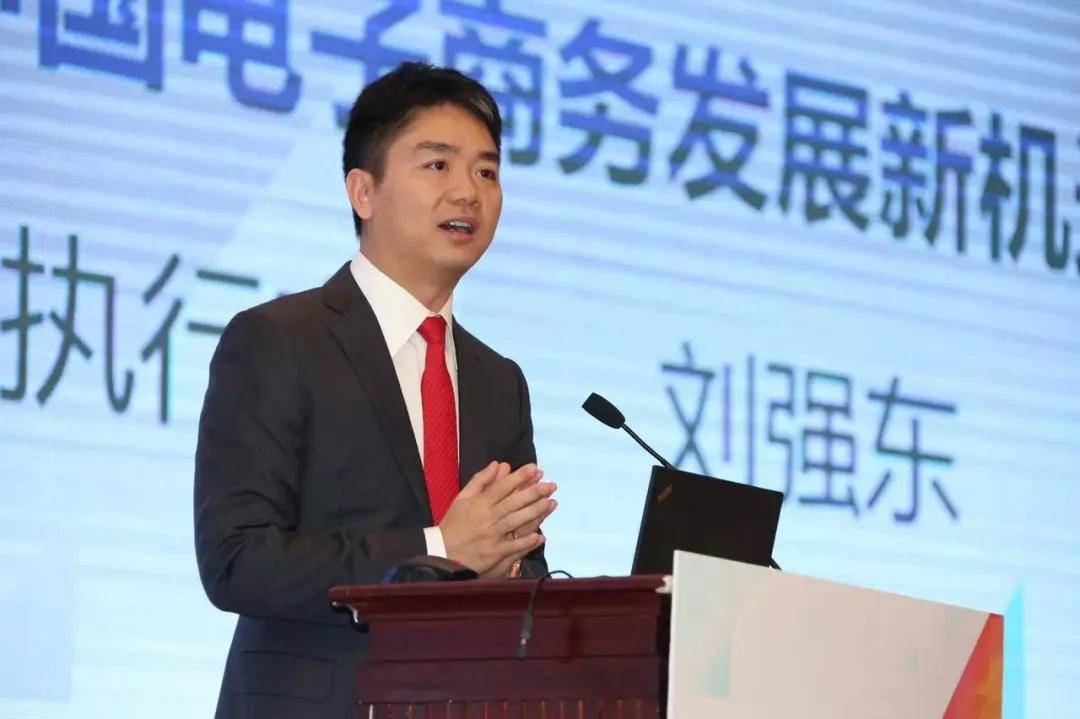
号外评论丨刘强东最新言论与中央经济政策背道而驰
Sou Hu Cai Jing· 2025-06-18 06:11
Core Viewpoint - JD.com's chairman, Liu Qiangdong, publicly criticized the sustainability of the cross-border e-commerce model, which contradicts the current economic policies set by the central government [2][5]. Group 1: Liu Qiangdong's Statements - Liu Qiangdong stated that cross-border e-commerce is unsustainable, citing that it takes away local employment tax revenue and primarily sells low-quality goods, which negatively impacts China's national image [4][5]. - He emphasized that the perception of "Made in China" has deteriorated due to the prevalence of cheap goods being sold internationally, which he believes harms the country's industrial reputation [4][6]. Group 2: Government's Position on Cross-Border E-Commerce - The central government's economic work conference highlighted the importance of fostering new foreign trade dynamics, including cross-border e-commerce, as a key area for innovation and competitiveness [5][8]. - The government aims to optimize economic structure and expand international markets through supportive policies for cross-border e-commerce, which Liu's statements seem to undermine [5][8]. Group 3: Industry Impact and Employment - The development of cross-border e-commerce has created numerous jobs across various sectors, including e-commerce operations and logistics, contributing positively to the domestic economy [6][8]. - The government has been actively improving tax policies related to cross-border e-commerce, allowing it to contribute positively to tax revenue rather than detracting from it [6][8]. Group 4: Quality Control and Brand Image - While there were initial concerns about low-quality products in cross-border e-commerce, the government has implemented strict regulations and quality control measures, leading to an increase in high-quality Chinese brands entering international markets [7][8]. - Liu's assertion that cross-border e-commerce only sells cheap goods is contradicted by the current trend of quality improvement and brand enhancement in the sector [7][8]. Group 5: Political and Market Implications - Liu's comments may reflect JD.com's strategic considerations but overlook the broader economic context and government policies [8][9]. - It is crucial for platform enterprises to align their public statements with government policies to maintain market stability and consumer confidence [9].

“我对中国很憧憬,一直想来看一看”
Ren Min Ri Bao Hai Wai Ban· 2025-06-18 00:42
Core Insights - The popularity of Chinese trendy toys in the Philippines is highlighted, with local youth expressing admiration for Chinese manufacturing [1] - The event "Learn Chinese, Tell Stories" and the cultural experience camp for overseas Chinese youth is taking place in Guangxi, showcasing Chinese culture [1][2] Group 1: Chinese Trendy Toys - Chinese trendy toys are in high demand in the Philippines, with rapid sell-outs upon release [1] - The appeal of Chinese manufacturing is emphasized by young consumers, indicating a strong interest in Chinese products [1] Group 2: Cultural Exchange Activities - The fifth "Learn Chinese, Tell Stories" competition and cultural experience camp is organized for overseas Chinese youth, involving participants from ASEAN countries [1] - The Guangxi Overseas Chinese School has hosted over 100 cultural camps, promoting Chinese culture among youth [2]
“中国制造”品质越来越高
Zhong Guo Chan Ye Jing Ji Xin Xi Wang· 2025-06-17 00:26
Group 1 - The core viewpoint is that China's foreign trade has shown stable growth in the first five months of the year, with a total import and export value of 17.94 trillion yuan, reflecting a year-on-year increase of 2.5%, and exports reaching 10.67 trillion yuan, up 7.2% [1] - China's foreign trade performance exceeds market expectations, indicating that Chinese enterprises have effectively countered external shocks through technological innovation and market diversification [1][2] - The structural upgrade of "Made in China" is evident, with a focus on green, low-carbon, and intelligent products gaining attention, enhancing the competitiveness of Chinese exports [1][3] Group 2 - The global manufacturing industry is paying attention to the structural upgrade and value creation transition of "Made in China," with increased automation reinforcing its irreplaceability [2] - A survey by the China-Germany Chamber of Commerce indicates that 55% of German companies believe Chinese enterprises will become innovation leaders in their industries within five years [2] - China's industrial policies, which draw from German experiences but are implemented with greater intensity, have significantly contributed to the development and innovation levels of its manufacturing sector [2][3] Group 3 - China has introduced various policies to promote manufacturing development, aiming to become a global manufacturing leader by the centenary of the founding of the People's Republic of China [3] - By 2024, China's manufacturing sector is expected to maintain its position as the largest in the world for 15 consecutive years, with a complete industrial production system [3] - Continuous technological innovation in China's manufacturing sector is leading to the emergence of high-tech, high-value-added products, further optimizing the industrial structure [3][4] Group 4 - Despite the progress, challenges remain in product R&D, advanced process design, and high-end production equipment, indicating the need for further improvements to transition from a manufacturing giant to a manufacturing power [4] - There is a call for significant technological upgrades and large-scale equipment renewal to enhance traditional industries using digital and green technologies [4] - The focus is on developing world-class advanced manufacturing clusters in strategic sectors such as rail transportation, smart connected vehicles, and renewable energy [4]
净流入近3000亿元!宽基ETF持续吸金,重视三大方向
券商中国· 2025-06-15 01:54
Core Viewpoint - The article highlights the continuous inflow of funds into ETFs, driven by the issuance of various thematic products such as free cash flow, healthcare, and consumer sectors, amidst a global trend of declining interest rates [1][3][11]. Fundraising and Market Trends - As of June 13, the newly established ETFs in the second quarter have raised over 30 billion yuan, with total net inflows into ETFs approaching 300 billion yuan [2][8]. - A total of 71 ETFs were established in the second quarter, raising 30.85 billion yuan, with 21 of these being free cash flow products, accounting for 40% of the total [4][5]. Product Types and Focus Areas - The newly launched ETFs include mainstream broad-based products and thematic products in technology and healthcare. Key categories are: - Free cash flow products, with 21 ETFs raising 12.35 billion yuan [5]. - Mainstream broad-based products like the CSI 300 and CSI A500, with several ETFs raising over 1.8 billion yuan each [5]. - Thematic ETFs in sectors such as healthcare and consumer, with multiple funds launched in the second quarter [6]. Fund Inflows and Performance - The inflow of funds into existing ETFs continues, with net inflows in the second quarter significantly higher than in the first quarter, particularly in stock-related ETFs [8]. - Notably, broad-based ETFs like the CSI 300 have seen net inflows exceeding 30 billion yuan [8]. Global ETF Market Trends - The global ETF market is experiencing a strong inflow trend, with cumulative net inflows reaching approximately 8.2 trillion USD from 2014 to April 2025, indicating a growing recognition of ETFs' long-term investment value [9][10]. - China's ETF market is particularly robust, with a significant share of the Asia-Pacific region's ETF assets and a net inflow of approximately 784.4 billion yuan over the past year [10]. Investment Directions - The article identifies three key investment directions based on optimistic market predictions: - Technology growth, particularly in AI and related sectors [11][12]. - Chinese manufacturing, focusing on high-quality companies in various industries [13]. - New consumption trends, especially in the rapidly expanding collectible toy market, projected to reach 110.1 billion yuan by 2026 [13].

中国“鲲龙”大型水陆两栖飞机获颁生产许可证
news flash· 2025-06-14 03:48
中国完全自主研制的大型水陆两栖飞机AG600"鲲龙"近日获得中国民航局生产许可证,正式进入批量生 产阶段。这标志着我国在大型航空应急救援装备体系建设上取得关键里程碑,也是"中国制造"向"中国 智造"转型的生动实践。另外,"鲲龙"还在高高原完成了测试飞行,验证了飞机在复杂气象条件下的各 项性能,标志着我国航空工业在复杂气象与高原作业领域实现突破。(央视新闻) ...
港区省级政协委员走进中铁装备——“河南制造,了不起!”
He Nan Ri Bao· 2025-06-13 00:07
Group 1 - The core viewpoint emphasizes the significance of shield tunneling machines as a symbol of national manufacturing strength and technological advancement in China [1][2] - China has transitioned from relying on imported shield machines to achieving self-innovation, with a leading market share and competitive edge in domestic and international markets [2][3] - The company, China Railway Engineering Equipment Group, has successfully exported its shield machines to 32 countries, contributing to global infrastructure development and enhancing international relations [2][3] Group 2 - The historical context highlights that prior to 2008, key technologies for shield machines were monopolized by foreign entities, leading to high costs and inefficiencies in maintenance and support [1] - The current capabilities of domestic manufacturers allow them to produce superior machines at lower costs, showcasing China's rapid development in this sector [2] - The ongoing efforts to promote collaboration between regions, such as Hong Kong and Henan, reflect a commitment to expanding investment and cooperation in advanced manufacturing [3]