
民营经济

Search documents
21评论丨民企院士“破壁”,让更多创新落地
2 1 Shi Ji Jing Ji Bao Dao· 2025-11-25 22:10
民企院士"破壁"登场,不仅是个人荣誉,更是中国创新生态演进的重要里程碑,标志着我国科技创新体 系更加多元、更加包容,产业创新与民营经济在国家科技发展战略中的地位日益凸显。从产业创新的角 度,这一变革将推动科技创新与产业发展深度融合,提升创新成果的转化效能;从民营经济的角度,这 是民营经济创新实力的彰显,也是民营经济在国家发展大局中角色日益重要的体现。未来,随着创新生 态的持续优化,民营经济的创新活力将进一步迸发,产业创新的深度和广度将不断拓展,为我国实现高 水平科技自立自强、再造一个高技术产业提供强大支撑。在这一进程中,民营企业将继续扮演重要角 色,民企科研人才将在更大舞台上发光发热,共同书写中国科技创新与经济高质量发展的新篇章。 民企科学家当选院士,意味着我国对产业创新价值的重新认知和高度肯定。过去,科研成就的评价往往 更侧重学术论文、理论突破等显性指标,而民企科学家的研究成果多体现在技术专利、产品革新、产业 赋能等实践层面。此次评选打破了这种单一评价体系的局限,认可了实践创新、产业贡献在科技创新版 图中的重要地位,为广大扎根产业一线的科研工作者树立了标杆。这将进一步激发民营企业投身科技创 新的积极性,促使 ...


司法如何为民营经济撑腰?这场通报会现场划重点
Sou Hu Cai Jing· 2025-11-24 15:45
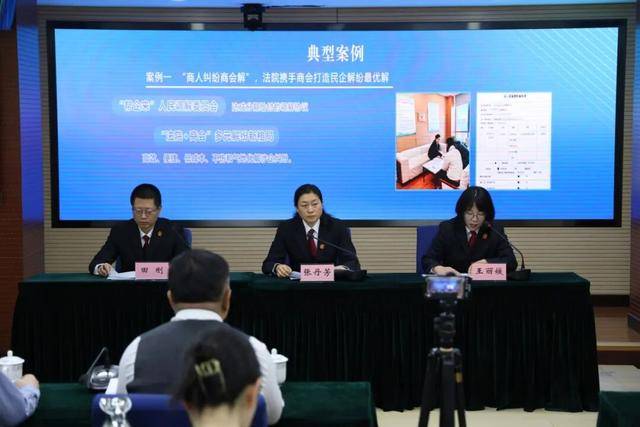
Core Viewpoint - The private economy is a vital force in advancing Chinese-style modernization and is an important foundation for high-quality development. The Shunyi Court aims to provide strong legal support for the high-quality development of the private economy by integrating judicial services with economic development needs [1][3]. Group 1: Judicial Support for Private Economy - The Shunyi Court held a news conference to discuss its actions in supporting the healthy development of the private economy, aligning with the decisions made at the 20th National Congress of the Communist Party of China [3]. - Since 2022, the Shunyi Court has seen a significant increase in cases involving private enterprises, with nearly 25,000 cases expected in 2024, accounting for about half of all cases, representing a 40% increase from 2022 [5]. Group 2: Characteristics of Disputes - The majority of disputes involving private enterprises are contract-related, with sales contract disputes being the most common. New types of cases, such as digital asset ownership disputes and AI application disputes, are also on the rise [7]. - Issues in corporate governance, such as insufficient financial transparency and lack of internal management systems, have led to conflicts among shareholders and governance deadlocks [7]. Group 3: Recommendations for Private Enterprises - Private enterprises are encouraged to strengthen contract lifecycle management, standardize contracts, and enhance risk monitoring to ensure transaction safety [7]. - Improving corporate governance structures and clarifying shareholder rights and responsibilities are essential to prevent internal control failures [7]. Group 4: Case Studies and Practical Solutions - The Shunyi Court has effectively resolved disputes through collaborative efforts with business associations and various mediation methods, demonstrating its commitment to supporting the private economy [9]. - In a specific case, a financing leasing company and an engineering company reached a mediation agreement within three days, showcasing the court's efficiency in dispute resolution [9][10]. Group 5: Future Directions - The Shunyi Court aims to further implement the spirit of the 20th National Congress in its judicial work, creating a stable, fair, transparent, and predictable legal environment for the private economy [12]. - The establishment of initiatives like "Enterprise E-Station" and "Legal Protection Service Team" reflects the court's proactive approach to fostering high-quality economic development [16].
新华财经晚报:24日晚油价下调
Xin Hua Cai Jing· 2025-11-24 15:03
Key Points - Domestic gasoline and diesel prices will be reduced starting from November 24, with gasoline prices decreasing by 0.05 yuan per liter for 92 octane and 0.06 yuan per liter for 95 octane, while diesel prices will also decrease by 0.06 yuan per liter [1] - As of the end of October, China's total installed power generation capacity reached 3.75 billion kilowatts, marking a year-on-year increase of 17.3%, with solar power capacity growing by 43.8% and wind power capacity increasing by 21.4% [1] - The State Administration for Market Regulation has issued measures to support private economic organizations in participating in the construction of industrial metrology testing centers, enhancing their measurement capabilities [2] - The People's Bank of China announced a 1 trillion yuan MLF operation scheduled for November 25, 2025, with a one-year term [2] - The National Bureau of Statistics reported that in mid-November, 30 out of 50 monitored important production materials saw price increases, while 17 experienced declines [2] - The Ministry of Transport reported a decrease in national logistics performance from November 17 to November 23, with rail freight down by 0.34% and highway truck traffic down by 2.16% [3] - Shenzhen has achieved significant breakthroughs in financing for technology and small and medium-sized enterprises during the 14th Five-Year Plan period, with total direct financing exceeding 2.8 trillion yuan, a growth of over 50% compared to the previous five-year period [4] - Moody's Analytics predicts that the Bank of Korea will maintain the benchmark interest rate at 2.5% during its upcoming monetary policy meeting [5] - Singapore's overall CPI accelerated to 1.2% year-on-year in October, driven by rising private transportation prices [6]

省政协十三届三次会议15件重点提案已全部办复,其中——114条建议转化为345条具体措施
Da Zhong Ri Bao· 2025-11-22 00:41
11月21日上午,省政府新闻办举行发布会,介绍省政协十三届三次会议重点提案督办情况。 "目前,省领导领办督办的15件重点提案以及联动督办的38件同类提案均已全部办复,答复满意率 100%,顺利完成了督办任务。"发布会上,省政协常委、副秘书长、研究室主任刘晓钟说,省领导和部 门负责同志分别带队,带领提案者和部分省政协委员,组成15个督办调研组,联合23个承办单位深入16 市64个单位、企业、村居、项目现场开展实地调研,组织召开15场重点提案办理协商座谈会,通过督办 察实情、听意见、解难题、增共识,将重点提案中的114条建议转化为345条具体措施。 "省政府主要领导同志领办督办'优化公平竞争环境 推进民营经济高质量发展'重点提案,彰显了省 委、省政府坚持'两个毫不动摇'、支持民营经济发展壮大的鲜明态度和坚定决心。我们充分吸收提案提 出的意见建议,着力在'立、破、服'上持续用力。"省发展改革委党组成员、副主任,济南新旧动能转 换起步区党工委副书记、管委会副主任滕双兴介绍,我省不断加强法治环境建设,坚决打破各种壁垒, 提升政务服务效能,从制度上保障民营企业公平参与市场竞争。 "省政协将《关于推进社区和家庭适老化改造的 ...
前10个月山东经济运行稳中有进 规模以上工业增加值增长7.7%
Da Zhong Ri Bao· 2025-11-22 00:34
Economic Overview - The province's economy has maintained overall stability and progress, with a focus on releasing domestic demand potential, strengthening industrial support, promoting service industry development, and stabilizing foreign trade [1][2] Industrial Performance - The industrial added value for the first ten months increased by 7.7%, with 36 out of 41 industries experiencing growth, resulting in a growth rate of 87.8% [1] - Key industries such as automotive, electronics, and railway shipbuilding saw significant increases in added value, with growth rates of 17.8%, 14.7%, and 14.3% respectively [1][2] - The added value of the equipment manufacturing industry grew by 11.9%, surpassing the overall industrial growth rate by 4.2 percentage points [2] Service Sector Development - The revenue of the service industry increased by 5.1% in the first three quarters, with nine out of ten major sectors showing growth [1][2] - Notable growth was observed in leasing and business services, water and environmental management, and cultural and entertainment services, with revenue growth rates of 16.0%, 10.7%, and 10.5% respectively [1] Consumer Market Trends - The total retail sales of consumer goods grew by 5.4%, with retail sales above a certain threshold increasing by 6.2% [2] - Online retail sales through public networks reached 195.9 billion yuan, growing by 16.9%, which is 10.7 percentage points higher than the overall retail sales growth [2] Investment Insights - Fixed asset investment saw a structural optimization with a growth rate of 6.0%, supported by strong industrial investment [2] - Significant increases in investment were noted in the metal products industry (19.8%), general equipment manufacturing (28.3%), and automotive manufacturing (33.2%) [2] Foreign Trade Performance - The total import and export volume reached 2.88778 trillion yuan, growing by 4.7%, with exports increasing by 4.0% and imports by 5.7% [2] - Trade with countries involved in the "Belt and Road" initiative amounted to 1.85 trillion yuan, marking an 8.4% increase and accounting for 64.2% of the province's total trade [2] Private Sector Dynamics - The added value of private industrial enterprises grew by 9.3%, exceeding the overall industrial growth rate by 1.6 percentage points [3] - Retail sales from private commercial units increased by 7.4%, outpacing the overall retail sales growth by 1.2 percentage points [3] - Private enterprises accounted for 75.8% of the province's total import and export volume, amounting to 2.19 trillion yuan, with a growth rate of 6.4% [3] Social Welfare Investments - Investments in the social welfare sector increased significantly, with production and supply of electricity, heat, gas, and water growing by 21.6%, and investments in residential services and repairs rising by 13.2% [3]
专访中央结算公司深圳分公司吴程彧:为湾区债券市场贡献中债力量
2 1 Shi Ji Jing Ji Bao Dao· 2025-11-21 13:43
Core Viewpoint - The Central Securities Depository and Clearing Company (CSDCC) is enhancing its role in the Guangdong-Hong Kong-Macao Greater Bay Area by establishing a Shenzhen branch, focusing on bond market services and green finance innovation [1][2]. Group 1: Company Functions and Strategies - CSDCC plays a crucial role in supporting the development of the Greater Bay Area's bond market, including participation in the initial operations of the Macau Central Securities Custody and Clearing Institution [2]. - The company has established a financial technology innovation center and successfully completed a national blockchain innovation application pilot project, facilitating the issuance of digital bonds [2][3]. - CSDCC provides comprehensive lifecycle services for local government bonds, supporting the issuance of 13 trillion yuan in local bonds across South China and Southwest regions [3]. Group 2: Green Finance Initiatives - During the 14th Five-Year Plan period, CSDCC established a green finance innovation center in Shenzhen, focusing on developing green financial products and creating a green bond database, which is the first of its kind globally [4]. - The company has led the release of the first local standard for financial institutions' green investment and financing environmental information disclosure requirements [4]. Group 3: Support for Private Enterprises - CSDCC has developed a high-yield bond market construction plan tailored to the financing characteristics of private enterprises, particularly in the technology sector, which has received recognition from the Shenzhen Financial Society [5][6]. - The company has explored financial technology solutions to address the information asymmetry in bond financing for private enterprises, earning accolades for its research outcomes [7]. Group 4: Cross-Border Financial Cooperation - CSDCC collaborated on a study regarding the development of the Asian offshore technology innovation bond market, which received approval from regulatory authorities [8].
金融护航民营经济“枝繁叶茂”
Jin Rong Shi Bao· 2025-11-21 00:15
Core Insights - The article highlights the significant role of private enterprises in China's economic development, emphasizing their contribution to job creation, market prosperity, and improved living standards [1][2][3] - It discusses the financial support provided by banks to private enterprises, showcasing the growth in loans and the establishment of specialized financial services to meet the unique needs of these businesses [2][6] Group 1: Financial Support for Private Enterprises - As of September 2025, the balance of inclusive micro and small loans reached 36.1 trillion yuan, a year-on-year increase of 12.2%, while loans to the private economy totaled 71.1 trillion yuan, growing by 5.4% [1] - Major state-owned banks have significantly increased their lending to private enterprises, with Agricultural Bank of China reporting a loan balance of 7.51 trillion yuan, an increase of 973.6 billion yuan, reflecting a growth rate of 14.9% [2] - The banking sector is actively customizing financial products to address the diverse needs of private small and micro enterprises, moving away from traditional lending models [3][6] Group 2: Innovative Financial Solutions - Agricultural Bank of China has developed a "five-special" mechanism to enhance its service to private enterprises, optimizing the policy environment for their support [2] - Zhejiang Agricultural Bank utilized a "government-bank-guarantee" model to facilitate a 10 million yuan loan for a biotechnology company, aiding in prototype testing and platform development [4] - Zhejiang Merchants Bank has implemented a financial advisor system and "Zhejiang Silver Good Standard" to improve the quality and efficiency of services for private enterprises [5] Group 3: Addressing Financing Challenges - Despite improvements, challenges remain in financing for private enterprises, with issues such as high costs and mismatched repayment terms still prevalent [3][6] - The State Council has issued measures to promote private investment, emphasizing the need for banks to set annual service goals for private enterprises and to implement a system of due diligence exemption [6][7] - Financial management departments are encouraged to relax certain requirements for small and micro enterprises to facilitate better lending practices [8]



河南民营经济主体超1100万户
Zhong Guo Xin Wen Wang· 2025-11-20 11:41
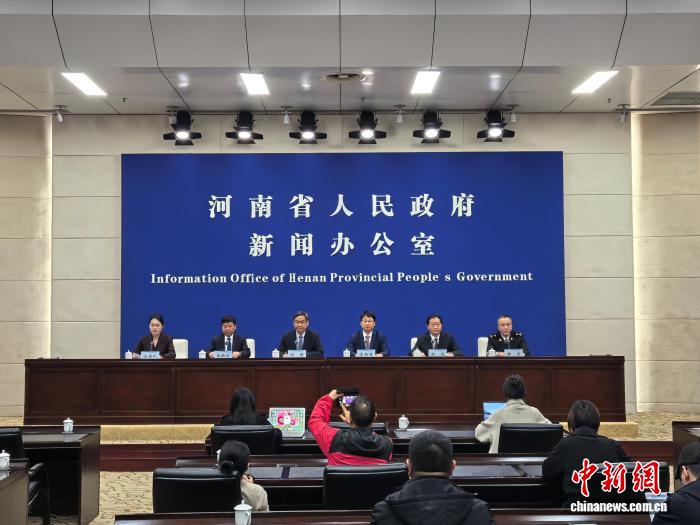
图为2025河南省民营经济高质量发展系列新闻发布会现场。阚力 摄 河南省市场监管局副局长庆凌在发布会上介绍,在河南民营经营主体中,私营企业310.14万户,个体工 商户795.35万户。其中,代表高新技术行业的信息传输、软件和信息技术服务业,科学研究和技术服务 业民营经营主体增势强劲,同比增速分别为19.72%、15.68%。 当日,河南省发展和改革委员会一级巡视员刘琦在发布会上介绍,随着河南省《关于促进民营经济发展 壮大的实施意见》等一系列政策举措的持续发力显效,今年以来,该省民营经济运行呈现良好发展态 势,实有民营经济主体超过1100万户、占比约为96%,主要经济指标增速好于全国,呈现出较强的发展 韧性和活力。 河南民营经济主体超1100万户 中新网郑州11月20日电(王佳宁)河南省政府新闻办20日举行2025河南省民营经济高质量发展系列新闻发 布会通报,截至10月底,该省实有民营经营主体超1105万户,占全部经营主体的近96%。 民营经济取得上述成效,得益于河南省实施一系列服务民营经济高质量发展的政策举措。 庆凌介绍,为持续深化商事制度改革,河南实施个体工商户和企业智能登记,拓展"企业开办+N项服 务" ...
省十四届人大常委会第十八次会议举行
Da Zhong Ri Bao· 2025-11-19 01:01
Group 1 - The meeting of the 18th session of the 14th Provincial People's Congress Standing Committee was held in Jinan, presided over by Yang Dongqi, the Vice Chairman and Secretary of the Party Group [1] - The meeting arranged for the study and implementation of the spirit of the 20th Central Committee's Fourth Plenary Session of the Communist Party of China [2] - Reports were heard regarding various legislative drafts, including the "Shandong Province Digital Economy Promotion Regulations (Draft)" and the "Shandong Province Fire Protection Regulations (Revised Draft)" [2] Group 2 - The meeting included discussions on the completion of the "14th Five-Year Plan" and the drafting of the "15th Five-Year Plan" [2] - The meeting also addressed the high-quality development of the digital economy and rural water supply security [2] - A report on the execution of the provincial budget for 2024 and the rectification of issues identified in financial audits was presented [2]
“扩大准入”为民间资本打开新空间
Zhong Guo Fa Zhan Wang· 2025-11-18 04:30
Core Points - The State Council has issued measures to promote private investment, introducing 13 targeted policy initiatives aimed at expanding market access for private capital [1] - The measures encourage private capital participation in sectors like railways and nuclear power, and aim to eliminate unreasonable restrictions in the service industry [1][2] - The recognition of the importance of private capital in driving economic growth, job creation, and market vitality is emphasized [1][3] Group 1: Policy Initiatives - The new policies include encouraging private investment in projects requiring national approval, such as railways and nuclear power, with specified shareholding requirements [1] - There is a focus on guiding private capital into emerging sectors like low-altitude economy and commercial aerospace, while supporting capable private enterprises in major technological tasks [1][2] - The measures aim to clear unreasonable entry barriers in the service industry and revise the list of projects for private enterprise participation [2] Group 2: Market Dynamics - Private capital's unique advantages stem from its market proximity and flexibility, which allows it to meet market demands effectively [2] - Existing issues such as unclear entry thresholds and cumbersome approval processes hinder the development of private capital and lead to inefficient resource allocation [2] - The ongoing reform of the negative list for market access aims to create a more open environment for private capital, particularly in traditional monopolistic sectors and emerging fields [2][3] Group 3: Economic Impact - The expansion of market access is seen as a recognition of the value of private capital and adherence to market economic principles [3] - The historical growth of private capital in China has been closely linked to the openness of policies, from the rise of individual businesses to the global expansion of private enterprises [3] - The continuous removal of institutional barriers and the establishment of a fair competition framework are crucial for unleashing the potential of private capital in driving high-quality economic development [3]