气候变化

Search documents
极端天气频发 全球葡萄酒连续三年“低产”
Xin Hua She· 2025-11-12 12:30
Core Insights - The International Organization of Vine and Wine predicts a slight increase in global wine production in 2025, but it will remain below average due to extreme weather conditions impacting yields for the third consecutive year [1] Production Forecast - Global wine production is estimated to reach approximately 23.2 billion liters in 2025, a 3% increase from 2024, but still below average levels [1] - The 2024 production is noted to be the lowest since 1961 [1] Regional Analysis - The European Union accounts for 60% of global wine production [1] - France is expected to have its lowest wine production since 1957 in 2025 [1] - Spain's production has fallen to a 30-year low [1] - Italy's production is returning to near-normal levels [1] - In the Northern Hemisphere, the United States, the fourth-largest wine producer, is projected to see a 3% year-on-year increase in production [1] - In the Southern Hemisphere, wine production is expected to grow by 7% year-on-year, although it remains 5% below average levels [1] - Countries like South Africa, Australia, New Zealand, and Brazil are experiencing production rebounds, while Chile faces significant declines due to heatwaves and drought [1] Climate Impact - The decline in wine production over the past three years is attributed to climate change, with regions experiencing extreme temperatures, droughts, and unexpected weather events such as heavy rains and frosts [1] - The General Director of the International Organization of Vine and Wine, John Buck, emphasized the remarkable impact of these climatic changes over the last three years [1]
外交部:中国在应对气候变化上是实打实的“行动派”
Xin Hua She· 2025-11-12 11:15
他表示,中国在应对气变上是实打实的"行动派"。我们将碳达峰碳中和作为国家战略,构建了全 球最系统完备的碳减排政策体系,建成了全球最大、发展最快的可再生能源体系,是世界能耗强 度下降最快的国家之一。中国向世界提供了70%的风电设备、80%的光伏组件设备,推动全球风 电和光伏发电成本分别下降超过60%和80%。习近平主席在联合国气候变化峰会上郑重宣布中国 2035年国家自主贡献目标,覆盖全经济范围、包括所有温室气体,首次提出绝对量减排目标,体 现了中国的坚定决心和最大努力。 "中方将与各方一道,贯彻共同但有区别的责任原则,推动本次大会达成积极平衡成果,为全球气 候治理作出新的贡献。"郭嘉昆说。 郭嘉昆表示,今年是《巴黎协定》达成10周年,全球气候治理进入关键阶段。中方积极参与引领 全球气候治理,坚定支持巴西作为主席国举办大会。习近平主席特别代表、中共中央政治局常 委、国务院副总理丁薛祥出席贝伦气候峰会并致辞,宣介了中共二十届四中全会精神,传递了把 握正确方向、落实气候行动、深化开放合作的强有力信号,为本次大会取得成功提供动力。 "气候变化关乎人类共同未来。无论是全球南方还是全球北方、发展中国家还是发达国家,大家都 ...
美国大豆出口协会CEO:希望当中国需要大豆时,第一个电话能打给美国
第一财经· 2025-11-12 09:57
Core Viewpoint - The article discusses the importance of U.S.-China agricultural cooperation, particularly in soybean trade, highlighting the challenges faced by U.S. farmers due to tariffs and market dynamics [2][5][6]. Group 1: U.S.-China Agricultural Cooperation - The U.S. Soybean Export Council CEO emphasizes the natural synergy between the U.S. and China in agricultural trade, particularly in soybeans, due to China's large market and rapid development [2][5]. - Historical cooperation in agriculture between the U.S. and China dates back 43 years, with ongoing projects aimed at enhancing agricultural modernization and technology transfer [5][6]. - The establishment of the U.S.-China Soybean Product Application Value Chain Innovation Center in Zhengzhou is seen as a platform for deepening cooperation [5]. Group 2: Trade Dynamics and Economic Impact - In 2024, soybean exports from the U.S. are projected to reach $24.58 billion, accounting for 14% of total agricultural exports, with China purchasing over $12.64 billion worth of soybeans [5]. - The U.S. soybean market has faced significant challenges, with a 58% drop in imports from the U.S. to China in the first half of 2025 compared to the previous year [5]. - The U.S. agricultural sector is experiencing increased bankruptcy rates, with a 57% rise in farm bankruptcies in the first half of the year, attributed to the impacts of tariff policies [5][6]. Group 3: Market Challenges and Future Outlook - U.S. farmers are facing rising production costs, with soybean planting costs increasing nearly 50% since 2019, and current selling prices leading to significant losses [10]. - The article notes that U.S. farmers are concerned about climate change, which is affecting crop yields and weather patterns, further complicating their situation [10]. - The future market share of U.S. soybeans in China is expected to stabilize between 30% to 40%, down from over 50% during peak periods, indicating a cautious outlook for recovery [10][11].


为全球碳市场探路,中国、欧盟和巴西发起成立碳市场开放联盟
2 1 Shi Ji Jing Ji Bao Dao· 2025-11-12 09:33
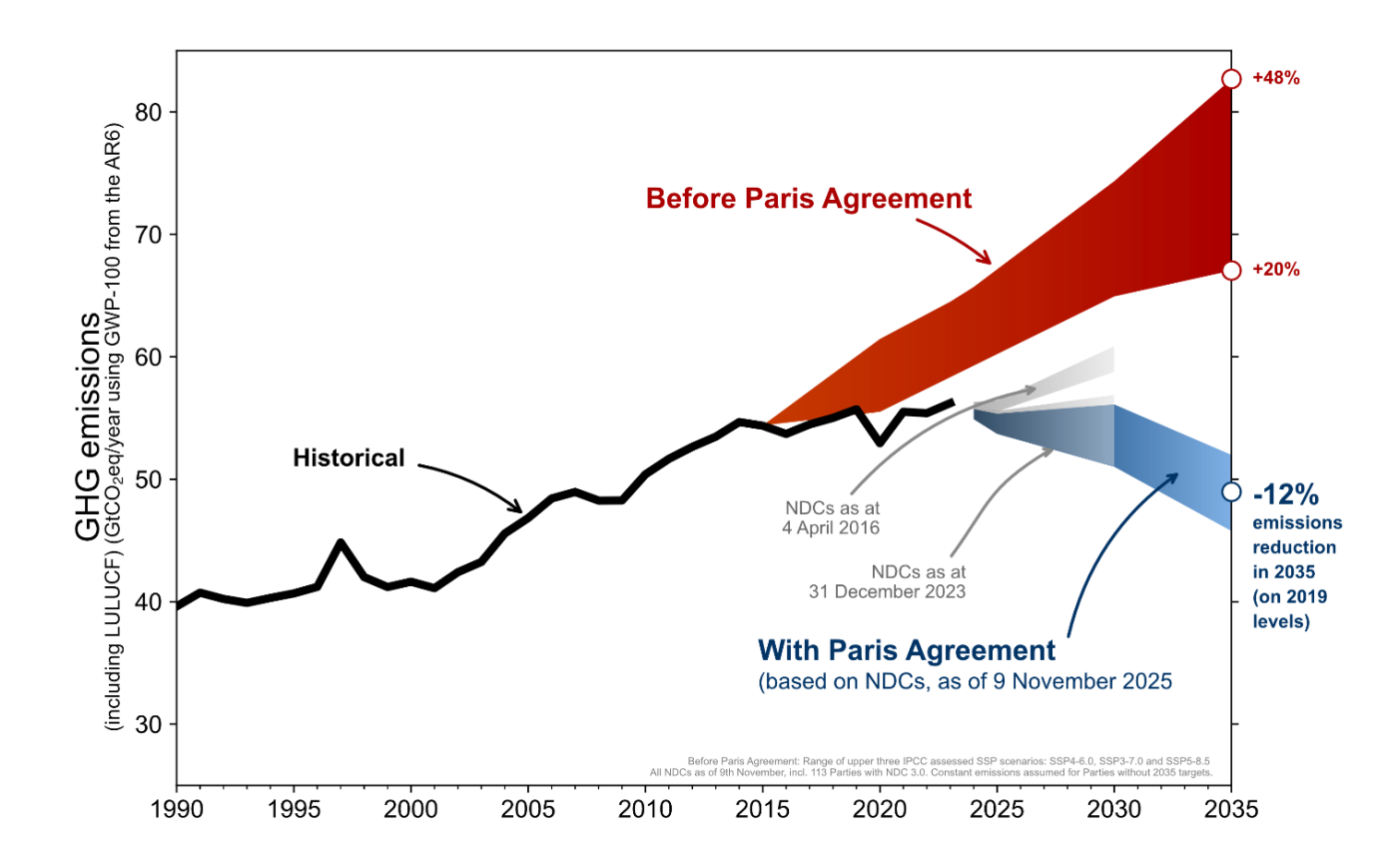
Core Viewpoint - The COP30 conference is making significant progress in climate negotiations, coinciding with the 10th anniversary of the Paris Agreement, focusing on "accelerating implementation" of climate actions [1] Group 1: Carbon Market Developments - China, the EU, and Brazil have established the "Open Coalition on Compliance Carbon Markets" to enhance international cooperation in carbon markets, including 11 countries and regions [2] - The coalition aims to create a framework for coordinating national carbon pricing mechanisms and emission trading systems, promoting a transparent and credible global compliance carbon market [2][3] - The establishment of this coalition is seen as an extension of the outcomes from COP29, which laid the institutional groundwork for its operation [3] Group 2: Financial Goals and Funding - The Brazilian government's financing roadmap, "From Baku to Belem," serves as a reference framework for negotiations, targeting a goal of $1.3 trillion [1] - Discussions are ongoing regarding funding gaps for adaptation and "loss and damage," with a focus on quantifiable indicators and transparency mechanisms [1] Group 3: Emission Reduction Projections - The UNFCCC reports indicate that global greenhouse gas emissions are projected to decrease by 12% by 2035 compared to 2019 levels, although significant gaps remain in achieving the 1.5°C target [5][8] - The NDC comprehensive report includes contributions from 113 parties, highlighting the need for enhanced ambition and systematic execution of climate commitments [5][8] Group 4: China's Role and Contributions - China is committed to sharing its experiences in carbon market design and management, emphasizing the importance of tailored approaches based on national circumstances [3] - The country has signed 55 climate cooperation memorandums with 43 developing countries, showcasing its commitment to South-South cooperation in climate action [9] - China's proactive stance in climate negotiations is underscored by its recent NDC announcement, reflecting its commitment to green and low-carbon transformation [6][9] Group 5: Renewable Energy and Environmental Progress - The past decade has seen a doubling of global renewable energy capacity and a fourfold increase in forest protection funding, although challenges such as insufficient grid investment and rising building emissions persist [6] - The environmental planning institute's assessment indicates that China's carbon market has effectively reduced carbon intensity in the power sector, achieving a cumulative reduction of 357 million tons of emissions [4]
美国大豆出口协会CEO:希望当中国需要大豆时,第一个电话能打给美国
Di Yi Cai Jing· 2025-11-12 09:20
Core Viewpoint - The U.S. soybean industry is facing significant challenges due to tariffs and trade tensions with China, leading to a decline in exports and financial strain on farmers [1][4][6]. Group 1: U.S.-China Soybean Trade Dynamics - U.S. soybean exports are crucial, with a projected value of $24.58 billion in 2024, accounting for 14% of total agricultural exports [3]. - China is expected to purchase $12.64 billion worth of soybeans in 2024, representing over half of U.S. soybean exports [3][4]. - The U.S. soybean industry has a long history of cooperation with China, dating back 43 years, emphasizing the importance of maintaining strong ties [1][3]. Group 2: Impact of Tariffs and Market Conditions - The introduction of tariffs has led to a 58% decrease in U.S. soybean imports by China in the first half of 2025, with imports dropping to 12 million tons [4]. - The number of U.S. farm bankruptcies increased by 57% in the first half of the year, attributed to the adverse effects of the tariff policies [4]. - U.S. farmers are currently facing a significant inventory surplus, with some holding stocks for up to two years due to low prices [5][6]. Group 3: Future Outlook and Challenges - The cost of soybean production has risen nearly 50% since 2019, with fertilizer prices increasing by 120% and fuel costs by approximately 80% [7]. - Farmers are currently losing $3 for every bushel of soybeans sold, leading to potential losses of tens of thousands of dollars for those farming around 80 hectares [8]. - The future market share of U.S. soybeans in China is expected to stabilize between 30% and 40%, down from previous highs of over 50% [8].

外交部:中国在应对气变上是实打实的“行动派”
Zhong Guo Xin Wen Wang· 2025-11-12 08:08
Core Points - China is actively participating in global climate governance and is seen as a leader in addressing climate change, particularly during the ongoing COP30 conference in Brazil [1][2] - The country has established a comprehensive carbon reduction policy framework and is the largest and fastest-growing renewable energy system globally [2] - China's commitment to achieving carbon peak and carbon neutrality is a national strategy, with significant contributions to global wind and solar energy equipment [2] Group 1 - The Chinese government emphasizes the importance of cooperation among all countries, regardless of their development status, in tackling climate change [1] - China has provided 70% of the world's wind power equipment and 80% of solar photovoltaic components, significantly reducing global energy costs [2] - President Xi Jinping announced China's 2035 national contribution targets, which include absolute reduction goals for all greenhouse gases, showcasing China's determination [2] Group 2 - The Chinese delegation at COP30 aims to promote balanced outcomes and contribute positively to global climate governance [2] - The 10th anniversary of the Paris Agreement marks a critical phase in global climate governance, with China playing a pivotal role [1][2] - The Chinese government is committed to the principle of common but differentiated responsibilities in climate action [2]
巴西环境和气候变化部长:中国助力全球南方应对气候变化
Xin Hua She· 2025-11-12 07:45
Core Viewpoint - Brazil's Minister of Environment and Climate Change, Marina Silva, highlighted China's significant contributions to green technology innovation, which enhances the accessibility of renewable energy and provides strong support for developing countries in addressing climate change [1] Group 1 - China has made substantial contributions in the field of green technology innovation [1] - The advancements in green technology are improving the accessibility of renewable energy [1] - These efforts are particularly beneficial for global southern countries in their climate change responses [1]
巴西临时迁都,当地居民:它是巴西最贫穷、最被遗忘的地区,我们终于被看见了
Xin Jing Bao· 2025-11-12 00:03
Core Points - The temporary relocation of Brazil's capital to Belém for COP30 highlights Brazil's commitment to addressing climate change and emphasizes the importance of the Amazon region in global environmental discussions [1][6][10] - COP30 is seen as a critical opportunity for global leaders to address climate commitments and the urgency of climate action, with expectations for significant outcomes [2][10][14] Group 1: Event Details - COP30 is scheduled from November 10 to November 21, 2023, with a high likelihood of extending beyond the planned closure date [2] - The choice of Belém as the venue is intended to bring global attention to the Amazon, which plays a crucial role in regulating the Earth's climate [3][6] - The Brazilian government aims to showcase the Amazon's significance and the need for its protection during the conference [5][6] Group 2: Local Perspectives - Local residents, such as Vinicius and his wife Melissa, express pride in Belém's recognition but also highlight the region's historical neglect and the need for development [4][5] - The local community hopes that COP30 will lead to improvements in infrastructure and urban planning, addressing long-standing issues such as traffic congestion and cultural preservation [8][9] Group 3: Climate Change Context - The Amazon rainforest is referred to as the "lungs of the Earth," and its preservation is critical for global climate stability [3][5] - Reports indicate that climate change is already impacting local weather patterns, with increasing unpredictability in rainfall and rising temperatures [8][9] - The urgency of addressing climate change is underscored by recent scientific reports indicating that the world is approaching critical climate thresholds [9][10] Group 4: Goals and Challenges of COP30 - COP30 is positioned as a "conference of implementation," focusing on actionable commitments rather than mere discussions [11][14] - Key topics include enhancing national contributions to emissions reductions, climate financing, and establishing mechanisms for a just transition for developing countries [14][15] - The conference faces challenges from geopolitical tensions and the need for multilateral cooperation to achieve climate goals [15][16]
对话巴西帕拉州州长巴尔巴略:TFFF让雨林走向世界气候治理的中心
Xin Lang Cai Jing· 2025-11-11 23:28
Core Viewpoint - The core message of the COP30 is the urgency of action to combat climate change, emphasizing the need for stronger commitments and financial investments to protect forests and reduce emissions [3][4]. Group 1: Event Overview - The 30th United Nations Climate Change Conference (COP30) will open on November 10, 2025, in Belém, Brazil, with a focus on transforming urgency into actionable commitments [1]. - The choice of Belém as the host city symbolizes Brazil's commitment to implementing climate action [3]. Group 2: Financial Mechanisms - The Tropical Forests Forever Facility (TFFF) is introduced as a new international financial mechanism aimed at providing stable funding for tropical forest protection, linking forest conservation with economic development and social inclusivity [4]. - TFFF aims to achieve multiple goals, including carbon sequestration, emission reduction, and livelihood improvement by incentivizing forest protection [4]. Group 3: Responses to Criticism - In response to criticisms regarding deforestation linked to infrastructure projects, the governor of Pará, Helder Barbalho, highlighted the significant reduction in deforestation rates in the region, particularly in Pará, and called for investment in global forest protection [4]. - Barbalho invited U.S. President Trump to participate in COP30, emphasizing that action is more important than mere discussion [5].

气变大会称赞中国“行动派”,COP30主席:中国正在提供“惠及所有国家的解决方案”
Huan Qiu Shi Bao· 2025-11-11 22:56
Core Points - The COP30 conference in Brazil marks a significant moment in global climate governance, coinciding with the 10th anniversary of the Paris Agreement, focusing on new national contributions to climate action [1][3] - China has announced ambitious national contribution targets for 2035, including a commitment to reduce greenhouse gas emissions across all sectors, showcasing its leadership in climate action [1][6] - The conference is seen as a pivotal opportunity for the international community to shift from setting decarbonization goals to actual implementation [3][9] Group 1: China's Role and Contributions - China has achieved a cumulative installed capacity of wind and solar power reaching 1.68 billion kilowatts, more than three times that of 2020, ahead of its international commitments [1][6] - The Chinese delegation at COP30, consisting of over 300 members, highlights China's growing influence in climate negotiations, with many representatives acknowledging its practical role in promoting emission reduction [5][6] - China's commitment to renewable energy includes a target to increase wind and solar power capacity to over six times the 2020 level by 2035, which is significantly higher than the reduction commitments of developed countries [6][7] Group 2: Global Climate Action and Challenges - The COP30 conference emphasizes the need for multilateralism in addressing climate change, with calls for integrating climate action into economic activities and job creation [3][9] - Despite geopolitical tensions affecting climate discussions, the conference sends a strong message that the world must act collectively to combat climate change [3][9] - The absence of the U.S. government at the conference has drawn attention, contrasting with the active participation of other nations, particularly China, which is seen as a key leader in global climate governance [5][8]