
绿色转型

Search documents
山东省政协委员“把脉”10万亿新起点、“新引擎”
Sou Hu Cai Jing· 2026-01-27 09:17
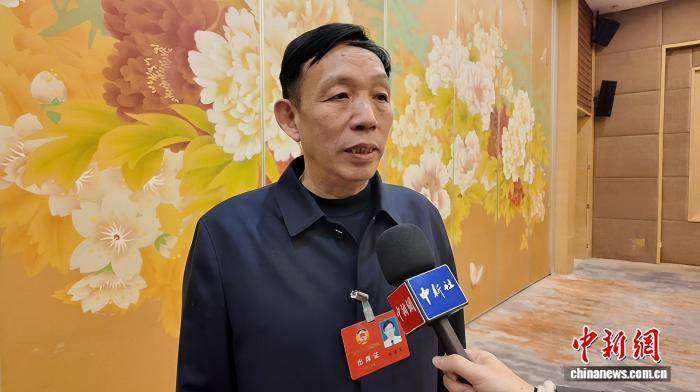
2025年,山东省实现地区生产总值10.3万亿元(人民币,下同),同比增长5.5%,成为北方首个、中国第 三个迈入"十万亿俱乐部"的省份。在刘德军看来,这份成绩单不仅是经济体量的历史性跨越,更是山东 以新旧动能转换破解传统路径依赖、以高水平开放链接双循环、以创新驱动培育新质生产力的生动实 践。 "山东能够突破10万亿元大关,关键在于'筑牢实体经济根基、激活全域增长动能、政策精准赋能'的三 重合力,最终实现量的合理增长与质的有效提升。"刘德军表示,作为中国唯一拥有41个工业大类的省 份,山东工业根基扎实,2025年规上工业增加值同比增长7.6%,36个工业行业实现增长,为经济增长 筑牢"工业压舱石"。 中新网济南1月27日电(孙婷婷 周艺伟 刘驰原 )正在济南举行的山东省两会上,山东省政协委员、山东省 宏观经济研究院战略规划研究所所长刘德军接受中新网记者专访,深入解码山东经济突破的核心逻辑, 把脉10万亿新起点、"新引擎"。 值得一提的是,绿色转型为山东破解重化工业发展瓶颈提供了关键突破口。作为绿色低碳高质量发展先 行区,2025年,山东非化石能源装机占比达54.2%,比2020年提高23.4个百分点,核能供热 ...

山东日照:“筑巢引凤”发展绿色建材产业
Zhong Guo Fa Zhan Wang· 2026-01-27 08:45
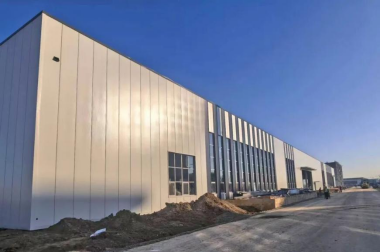
Core Insights - The new green eco-friendly stone crystal floor project in Rizhao Economic Development Zone is being developed by Shandong Helisenyuan Plastic Co., Ltd. with an investment of 200 million yuan, covering an area of over 22,000 square meters and expected to produce 12 million square meters annually, generating an estimated annual output value exceeding 500 million yuan, with products aimed for overseas markets such as South Africa [3][4] Group 1: Project Overview - The project features six production lines currently under installation, with a production capacity that positions it at the upstream of the industry [3] - The project is strategically located in Rizhao Economic Development Zone due to its unique "port export advantage" and "green steam convenience," which provide dual competitive strengths [3][4] Group 2: Logistics and Cost Efficiency - The logistics efficiency and cost are critical for export-oriented enterprises, with the factory located just a half-hour drive from Rizhao Port, facilitating a "front port, back factory" layout [4] - This strategic location is projected to save 70% on inland transportation costs, significantly enhancing product price competitiveness and delivery efficiency [4] Group 3: Environmental Impact and Energy Efficiency - The project utilizes high-temperature steam as a heat source for its production process, which is more energy-efficient and environmentally friendly compared to traditional methods that rely on natural gas or boilers [4] - The use of zero-carbon steam from China Everbright Environmental Energy (Rizhao) Co., Ltd. is expected to reduce natural gas consumption and carbon emissions by 30%, while completely avoiding sulfur dioxide emissions [4] Group 4: Economic and Employment Impact - The project is expected to create approximately 100 jobs upon its production launch in March and will promote the development of the calcium powder supply chain in Rizhao [6] - The semi-automated production line is designed to increase daily output by 50% while reducing labor requirements by one-third [6] - Future plans include a second phase of expansion to add fully automated production lines for new composite material flooring, further enhancing capacity and technological standards [6]
海新能科:2025年全年净亏损4.50亿元—6.40亿元
2 1 Shi Ji Jing Ji Bao Dao· 2026-01-27 08:29
Core Viewpoint - Company expects a net loss of 450 million to 640 million yuan for the year 2025, with a projected net profit excluding non-recurring losses ranging from -770 million to -540 million yuan [1] Group 1: Financial Performance - The company's bioenergy segment revenue increased by approximately 580 million yuan, representing a year-on-year growth of about 46% due to rising product prices and capacity release [1] - The gross profit for the bioenergy segment increased by approximately 270 million yuan, leading to a turnaround from loss to profit, significantly enhancing operational efficiency [1] - The company anticipates asset impairment losses of around 250 million yuan for the reporting period, based on cautious principles and evaluations of inventory and fixed assets [1] Group 2: Market Environment - The global green energy policy environment continues to improve, with the EU and UK implementing regular biojet fuel (SAF) blending policies, and major economies like China, Japan, and South Korea clarifying their green transition paths [1] - The company successfully obtained approval for SAF product export in October 2025, marking a strategic breakthrough in its development [1] Group 3: Challenges in Other Segments - The company's environmental materials and chemical products business faced challenges due to cyclical adjustments in the petroleum refining and coal chemical industries, leading to a pressured market environment for catalyst and purification products [1] - The rapid expansion of capacity in the LNG and neopentyl glycol industries outpaced demand growth, exacerbating competition within the industry [1]

全国智能化煤矿超900处,智能开采产能占比过半
Xin Lang Cai Jing· 2026-01-27 07:25
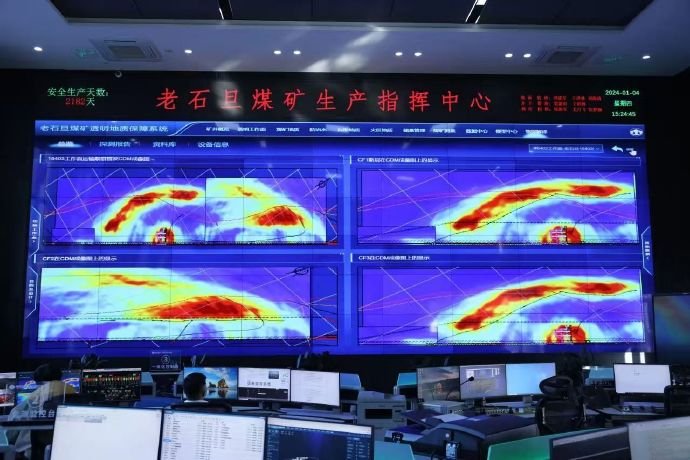
Core Insights - The number of intelligent coal mines in China has exceeded 900, accounting for nearly 25% of the total coal mines, with intelligent mining capacity surpassing 50% of the national total, marking a new phase in the coal industry's transition to safety and efficiency [1] Group 1: Key Developments and Regional Distribution - The current number of intelligent coal mines in China is over 900, covering nearly 25% of coal mines, with intelligent mining capacity historically exceeding 50%, replacing over 16,000 high-risk underground jobs [2] - Inner Mongolia leads in intelligent coal mine capacity, accounting for 88% of the region's operational coal mine capacity, with 44 open-pit mines utilizing unmanned mining trucks and 370 unmanned vehicles in operation [2] - Shanxi has built 369 intelligent coal mines, representing over one-third of the national total, with plans to achieve basic intelligence in all operational coal mines by 2027 [2] - Anhui has achieved full intelligence in all operational coal mines, except for resource-depleted mines [3] Group 2: Technological Applications and Innovations - Safety measures include personnel positioning systems with an accuracy of 0.3 meters and equipment proximity systems that automatically shut down within 10 meters, significantly reducing accident risks [4] - Mining efficiency has improved with "5G+AI" technology enabling "one-click coal mining," reducing the number of workers per shift by 30%-50%, and open-pit mines employing unmanned mining trucks and intelligent blasting technology [4] - The coal industry is transitioning from fuel to high-end materials, such as aviation-grade nylon, and is developing green electricity storage and hydrogen energy industries [4] Group 3: Transformation Outcomes and Societal Value - The replacement of high-risk jobs with automation has led to a significant decrease in miner injury rates, shifting the underground work model from "on-site monitoring" to "remote monitoring" [5] - Intelligent coal mines have increased single-shift efficiency by 30%-50%, with loading speeds reaching 7,000 tons in 2 hours, and labor costs in coal washing plants reduced by 70% [6] - Green mining techniques, such as filling mining and water-preserving mining, have been implemented in over 200 coal mines in Shanxi to reduce surface subsidence [7] - Inner Mongolia ranks first in new energy installations nationwide, with green electricity exports increasing by 40% annually and storage efficiency reaching 72% [8] - Miners are transitioning from heavy physical labor to "white-collar" operations, resulting in reduced labor intensity and enhanced safety, thereby improving occupational dignity [9] Group 4: Existing Challenges and Policy Support - Technical adaptation and cost pressures remain, particularly in deep and high-water-pressure mines, where full automation has not yet been achieved [10] - The cost of harmless disposal of dry rock is 60 yuan per ton, prompting companies to call for policy subsidies [11] - The national strategy emphasizes the intelligent upgrade of traditional industries, with the National Energy Administration releasing guidelines for intelligent construction in non-coal sectors [12] - Companies are exploring advanced technologies, with initiatives like geological transparency and robotic washing projects, and advocating for enhanced research and field collaboration to overcome technical bottlenecks [13] Group 5: Future Directions - Intelligent coal mines are driving the industry’s transition from a "supply guarantee ballast" to a "green new engine," with the next steps focusing on balancing short-term investments with long-term benefits, particularly in deep mine automation and expanding clean energy collaborations [15]
免费注册参会!生物基化学品与材料专场,就在杭州,第五届中国合成生物学及生物制造大会
synbio新材料· 2026-01-27 06:55
在全球推进绿色转型与"双碳"目标的战略背景下,生物基化学品与材料作为生物制造产业的核心支 柱,凭借原料可再生、全生命周期低碳环保等核心优势,正加速替代传统石油基产品,在包装、纺 织、汽车等领域展现出广阔应用前景,成为全球产业绿色转型的关键赛道。 我国高度重视该领域发展,将生物基新材料列为关键战略材料,多项产业扶持政策持续落地。然 而,产业仍面临包括综合成本竞争力、原料供应链稳定、产品性能优化及终端市场接受度等关键问 题。 基于此, 2026年3月31日-4月1日 ,"第五届中国合成生物学及生物制造大会"将在杭州举办,其中设 置 【 生物基化学品与材料专场】 ,旨在汇聚产学研用多方智慧,破解产业发展难题,助力生物基 化学品与材料产业高质量发展。 大会介绍 0 1 大会时间 | 2026年3月31日-4月1日 大会地点 | 杭州市 大会规模 | 1000人 主办单位 | synbio深波 承办单位 | 享融智云 媒体支持 | synbio新农食、synbio新美护、synbio新材料、生物制造圈、合成生物学俱乐部 扫码 免费 报名参会 请添加下方微信,备注 "报名路演" 商务合作 0 4 论坛设置 0 2 | | ...

苏伊士:做客户绿色转型的技术伙伴
Zhong Guo Hua Gong Bao· 2026-01-27 01:35
"十五五"开局之际,面对未来多变的市场环境,环境产业如何进行价值重构?近日,苏伊士亚洲地区高 级副总裁孙明华表示,站在苏伊士进入中国50周年的新起点,苏伊士未来的战略非常清晰:聚焦工业水 处理赛道,目标是向环保服务商转型。 她说,"十五五"是美丽中国建设承上启下、从攻坚向拓展巩固迈进的关键时期,环境产业也在经历战略 定位和商业模式的根本性变革,从末端污染治理向绿色低碳解决方案综合服务转型。这一战略源于对工 业环保需求升级的深度洞察。在"双碳"目标下,高耗水、高污染行业对高效、低碳的工业环境解决方案 的需求日益迫切,行业正从规模扩张转向价值创造。 孙明华总结道,未来企业要真正站稳脚跟、赢得尊重,至少要具备三种能力并形成一个完整的闭环:过 硬的技术、对客户业务的深度洞察,以及将环保投入转化为客户经济效益的能力。"苏伊士正朝着此方 向扎实行动,聚焦于优化资产和架构、全面降本增效,并精准投资于能创造长期价值的项目。"孙明华 说。 中国市场孕育三大机遇 孙明华强调,中国市场正孕育着三大机遇:一是工业全面绿色化带来的深度服务机遇,即从"末端处 理"升级为"资源创造",例如苏伊士在鄂尔多斯从光伏废水中回收高纯度氟,实现"变 ...
迁安:绿钢跃动迎新春 城乡共创“开门红”
Xin Lang Cai Jing· 2026-01-27 01:13
Group 1 - The core viewpoint of the articles highlights the successful green transformation of the steel industry in Qian'an and the vibrant production of rural "micro-factories," showcasing a blend of industrial strength and rural revitalization [1][2] - Tangshan Songting Steel Co., Ltd. operates the first long-process continuous casting low-carbon steel production line in the country, achieving low-carbon emission certification and gaining access to high-end international markets [1] - The city's strategy of "quality improvement and strong chain" has led to the formation of advanced steel manufacturing clusters, with high-end products like electrical steel making up 46% of the total output, indicating a shift from "steel manufacturing" to "material services" [1] Group 2 - Over 10,000 "micro-factories" have commenced operations in Qian'an, providing stable employment and income for villagers, with monthly earnings reaching over 3,000 yuan [2] - The rural "micro-factories" are benefiting from "order-based" development and collective scaling, exporting products to international markets such as Russia and Italy [2] - Qian'an is poised for high-quality development, aiming to write a new chapter as a "modern water city" and "beautiful Qian'an" [2]
2026年中国绿色轮胎行业指标要求、发展意义、市场销量、产品情况及未来趋势研判:政策、市场、技术等多个利好因素协同作用,推动市场销量快速增长[图]
Chan Ye Xin Xi Wang· 2026-01-27 01:09
Core Viewpoint - The development of green tires is rapidly increasing in China, driven by policies, market demand, and technological advancements, with sales expected to exceed 160 million units by 2025, marking a significant shift towards sustainability in the tire industry [1][12]. Group 1: Overview of the Green Tire Industry - Green tires are defined as products that meet environmental protection requirements throughout their lifecycle, causing minimal harm to the ecosystem and human health while consuming fewer resources [2]. - The national standard GB/T 40718-2021 outlines specific criteria for passenger and commercial vehicle tires, focusing on resource, energy, environmental, and quality attributes [2]. Group 2: Significance of Green Tire Development - Green tires help reduce automotive emissions, with a potential decrease in rolling resistance by 22%-35%, leading to a 3%-8% reduction in fuel consumption and CO emissions [5]. - The production of waste tires is a growing concern, with approximately 37 million waste tires generated in 2024, highlighting the need for sustainable solutions to mitigate environmental pollution [7]. - Green tires reduce dependency on natural rubber and petroleum-based materials, enhancing supply chain resilience through the use of alternative materials [8]. Group 3: Current Market Status of Green Tires - The demand for green tires in China has surged, with sales surpassing 100 million units in 2023 and projected to reach 138 million in 2024 and 160 million in 2025 [12]. - The penetration rate of green tires has increased significantly, reaching 23% of total sales in 2024, an 8 percentage point increase from 2020 [14]. - By the end of 2025, there will be 18 certified green tire products in China, involving major companies such as Sumitomo Rubber, Zhongce Rubber, and Qingdao Doublestar [16]. Group 4: Future Trends in the Green Tire Industry - The integration of AI and machine learning is transforming tire design and production, enabling more efficient material selection and performance testing [17]. - The green transformation at manufacturing facilities is becoming a critical area for industry reform, focusing on energy efficiency and reduced emissions [18]. - Stricter performance and environmental standards for green tires are anticipated, pushing companies to enhance product quality and innovation [19]. - The rise of electric vehicles is driving demand for specialized green tires designed for their unique performance requirements, with significant R&D investments expected in this area [20].


黄金白银双双破纪录,期货期权再狂飙!
Xin Lang Cai Jing· 2026-01-26 22:52
Core Viewpoint - The commodity market is experiencing a significant surge in gold and silver prices, driven by global economic uncertainty, with gold reaching $5087.3 per ounce and silver nearing $109.4 per ounce, marking historical highs [2][10]. Price Surge - Gold futures have skyrocketed to $5087.3 per ounce, with a daily increase of 2.16% and trading volume exceeding 130,000 contracts, up from approximately $4000 at the end of 2025 [2][9]. - Silver futures are approaching $109.4 per ounce, having surged 7.96% in a single day, with prices increasing from around $30 at the beginning of 2025 to over $100, driven by supply shortages and high demand [3][10]. Supply and Demand Dynamics - The dramatic price increases are attributed to a tangible supply-demand imbalance, with global supply chain disruptions and mineral shortages leading to near depletion of silver inventories [4][11]. - Silver's role as a critical raw material for solar panels, electric vehicles, and electronic products has resulted in explosive demand, further driving prices upward [11][13]. Futures and Options Market Activity - The futures and options markets are acting as accelerators for this metal surge, with significant trading activity in out-of-the-money call options for silver, indicating strong investor sentiment for further price increases [4][12]. - The options market has seen a surge in open interest for call options with strike prices of $68, $70, and even $100, reflecting a bullish outlook among traders [4][12]. Geopolitical and Economic Influences - The current market trends are influenced by escalating global geopolitical tensions, such as ongoing conflicts in the Middle East, prompting investors to flock to gold as a safe-haven asset [6][13]. - Investment banks have raised their gold price forecasts for the end of 2026 to $5400, citing increased demand for safe assets and diversification of central bank reserves [6][13]. Investment Strategies - For ordinary investors, engaging in ETFs like GLD (gold) or SLV (silver) is recommended, while experienced investors may consider small positions in futures and options to leverage potential returns [6][13]. - The current environment suggests that gold and silver futures and options are essential tools for navigating economic uncertainty, with a call to action for investors to seize opportunities while managing risks [6][13].

以高质量发展引领新能源产业出海(开放谈)
Ren Min Wang· 2026-01-26 22:31
Core Insights - The rise of China's new energy industry, represented by electric vehicles, lithium batteries, and photovoltaic products, has become a new engine for foreign trade growth and a significant driver for global economic green transformation [1][2] Group 1: Industry Growth and Achievements - The Chinese new energy industry has achieved remarkable growth, with the market size of electric vehicles increasing 3.6 times during the 14th Five-Year Plan period, making China the world's largest exporter of automobiles [2] - The cost of power batteries has decreased by 30%, lifespan has improved by 40%, and charging speed has increased by over three times [2] - The photovoltaic industry has established the world's most complete industrial chain, leading in solar cell conversion efficiency, with over 80% of global photovoltaic module production and over 70% of lithium battery shipments originating from China [2] Group 2: Challenges and Competition - The industry faces challenges such as blind expansion of new energy projects and homogenization, leading to unhealthy competition where companies export products below cost, creating a "vicious cycle" of increased production without increased revenue [3] - This "involution" of competition distorts market signals and undermines long-term investments in technology development, brand building, and service upgrades, potentially harming the reputation of "Made in China" [3] Group 3: Policy Response and Strategic Directions - The government has introduced a series of regulatory policies to cool down disorderly competition and promote high-quality development, reflecting a strategic commitment to balancing development and security [3] - To thrive in the "Globalization 2.0" era, the industry should focus on four areas: 1. Technological innovation by forming innovation alliances and converting patent advantages into industry control [3] 2. Supply chain resilience by fostering cooperation among upstream and downstream players and securing key mineral resources [3] 3. Global operations by supporting companies in establishing overseas R&D and service centers and participating in international standards [3] 4. Green integration by developing a carbon footprint database and exploring comprehensive energy solutions [3]