以价换量

Search documents
合肥新房价格连涨,“二手房价格基本回到2018年”
Mei Ri Jing Ji Xin Wen· 2025-05-20 12:42
Group 1 - The core viewpoint indicates that new home prices in Hefei have been rising for three consecutive months, while second-hand home prices have returned to 2018 levels [2][9] - In April, the new home price index in Hefei increased by 0.3% month-on-month, with year-on-year declines narrowing from 5.9% in January to 3.9% in April [2] - Second-hand home prices decreased by 0.3% month-on-month in April, with a year-on-year decline of 7.4%, down from 10% in October 2024 [2][9] Group 2 - From January to April, the total area of new residential transactions in Hefei reached 1.012 million square meters, representing a year-on-year increase of 50.7% [3] - The introduction of new regulations has improved the usable area of new projects by over 12%, making them more attractive compared to older projects [3] - The market is experiencing a shift where investment buyers are decreasing, and the focus is shifting towards self-use purchases driven by family needs [4][5] Group 3 - The market is sensitive to pricing, with a notable threshold at 4 million yuan, beyond which sales slow down significantly [5] - The demand for second-hand homes is primarily driven by self-use needs, with over 60% of transactions involving homes under 100 square meters [9][10] - The overall sentiment in the market indicates that while second-hand home transactions have decreased, the absolute transaction volume remains high, suggesting ongoing demand [10]

最新发布:22城新房+5城二手房涨价,二季度楼市怎么走?
Nan Fang Du Shi Bao· 2025-05-19 07:30
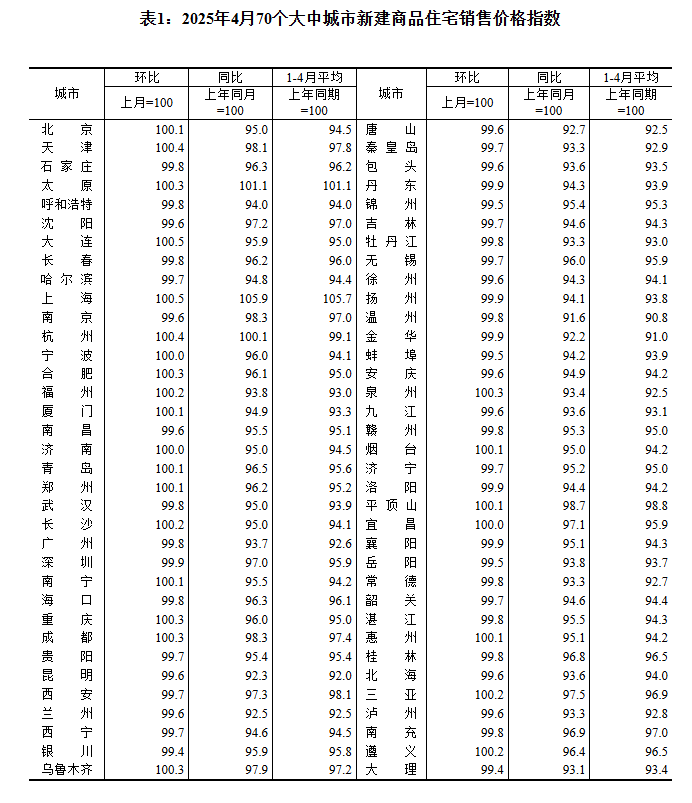
Core Viewpoint - The number of cities with rising housing prices has significantly decreased after a brief period of recovery, indicating a potential cooling in the real estate market [1][2][6]. New Housing Market - In April 2025, 22 out of 70 major cities saw new housing prices increase, down from 24 in March [2][10]. - First-tier cities experienced mixed results, with Beijing and Shanghai seeing slight increases of 0.1% and 0.5%, while Guangzhou and Shenzhen saw declines of 0.2% and 0.1% respectively [2][10]. - The average price of new homes in first-tier cities fell by 2.1% year-on-year, with Shanghai showing a notable increase of 5.9% [5][10]. Second-Hand Housing Market - Only 5 cities reported increases in second-hand housing prices in April, a drop from 10 cities in March, with 64 cities experiencing price declines [2][10]. - The overall second-hand housing price index decreased by 0.4% month-on-month and 6.8% year-on-year [10][11]. - Major cities like Beijing, Shanghai, Guangzhou, and Shenzhen saw year-on-year declines of 1.0%, 0.6%, 7.4%, and 3.7% respectively [5][10]. Market Trends and Dynamics - The market is currently in a phase of adjustment, with core cities showing resilience in demand, while second-tier and third-tier cities face ongoing downward pressure due to high inventory and insufficient demand [6][7][8]. - The "price for volume" strategy is prevalent, particularly in the second-hand market, where prices are being pressured down due to an oversupply of listings [8][9]. - The overall sentiment in the market remains cautious, with expectations for further policy support to stabilize buyer confidence and market activity [9][12]. Future Outlook - Analysts suggest that while there are signs of stabilization, the recovery of the housing market will require a multi-faceted approach, including improved buyer confidence and economic conditions [9][12]. - The second quarter is expected to see a typical seasonal decline in prices, particularly in the second-hand market, as new supply impacts demand dynamics [11][12].
4月重点城市二手房成交量回落
Zhong Guo Jing Ying Bao· 2025-05-16 18:26
据研究机构最新的监测数据,全国重点城市二手房市场延续"以价换量"模式,挂牌量高企叠加政策调整 窗口期,市场价格仍面临下行压力。 根据中指研究院近日发布的4月重点城市二手房房价地图,十大重点城市二手住宅均价环比下跌 0.43%,同比下跌5.69%,同比跌幅较上月收窄0.44个百分点。与此同时,成交量同比普遍增长,但增幅 较一季度明显放缓,市场进入阶段性调整期。 《中国经营报》记者了解到,百城二手住宅均价环比下跌0.69%,同比跌幅收窄至7.23%。十大城市 中,武汉、南京领跌,环比跌幅分别为0.97%和1.08%,同比跌幅则分别高达9.85%和9.61%;深圳、成 都跌幅最小,环比仅跌0.21%和0.06%,同比跌幅分别为2.88%和2.98%。 4月25日,中央政治局会议指出要"加紧实施更加积极有为的宏观政策""适时降准降息",其中针对房地 产强调:"加力实施城市更新行动,有力有序推进城中村和危旧房改造。加快构建房地产发展新模式, 加大高品质住房供给,优化存量商品房收购政策,持续巩固房地产市场稳定态势。" 地方层面,四川省取消普宅和非普宅标准;无锡市取消限售并暂停市区新建商品住房销售价格备案,由 企业根据市场 ...
部分产品折算年化利率低至3%以下 继消费贷后 银行开卷信用卡分期
Zhong Guo Zheng Quan Bao· 2025-05-15 20:37
Core Viewpoint - The recent shift in banks towards credit card installment loans, offering lower interest rates, is a strategic response to regulatory changes that have limited consumer loan rates, aiming to expand retail loan business and market share [1][3][4]. Group 1: Market Dynamics - Several banks, including China Merchants Bank and CITIC Bank, have launched promotional activities for credit card installment loans, with annualized rates as low as 2.76% [1][2]. - The competitive landscape has intensified, with banks offering significant discounts on installment interest rates, ranging from 1.7 to 5 times lower than standard rates [2][3]. - The shift from consumer loans to credit card installment loans is seen as a way to attract customers and increase loan volumes through lower rates [3][4]. Group 2: Strategic Implications - Banks are adopting a "price for volume" strategy to enhance their retail loan business, as cash installment loans are a profitable segment within credit card operations [3][4]. - The regulatory environment has forced banks to adjust their strategies, with new consumer loan products required to have an annualized rate of at least 3% since April [3][4]. - The focus on credit card installment loans allows banks to select high-quality customers through differentiated pricing, thereby managing risk while stabilizing interest income [4]. Group 3: Industry Challenges and Recommendations - The credit card industry is facing challenges such as user acquisition difficulties and increased pressure on product offerings, prompting banks to reassess their strategies [5]. - Recommendations for banks include optimizing product offerings, enhancing risk monitoring systems, and leveraging digital transformation to drive growth in credit card services [5].




财报解读|一季报植物蛋白饮料股业绩双位数下滑,为何燕麦奶除外
Di Yi Cai Jing· 2025-05-13 07:51
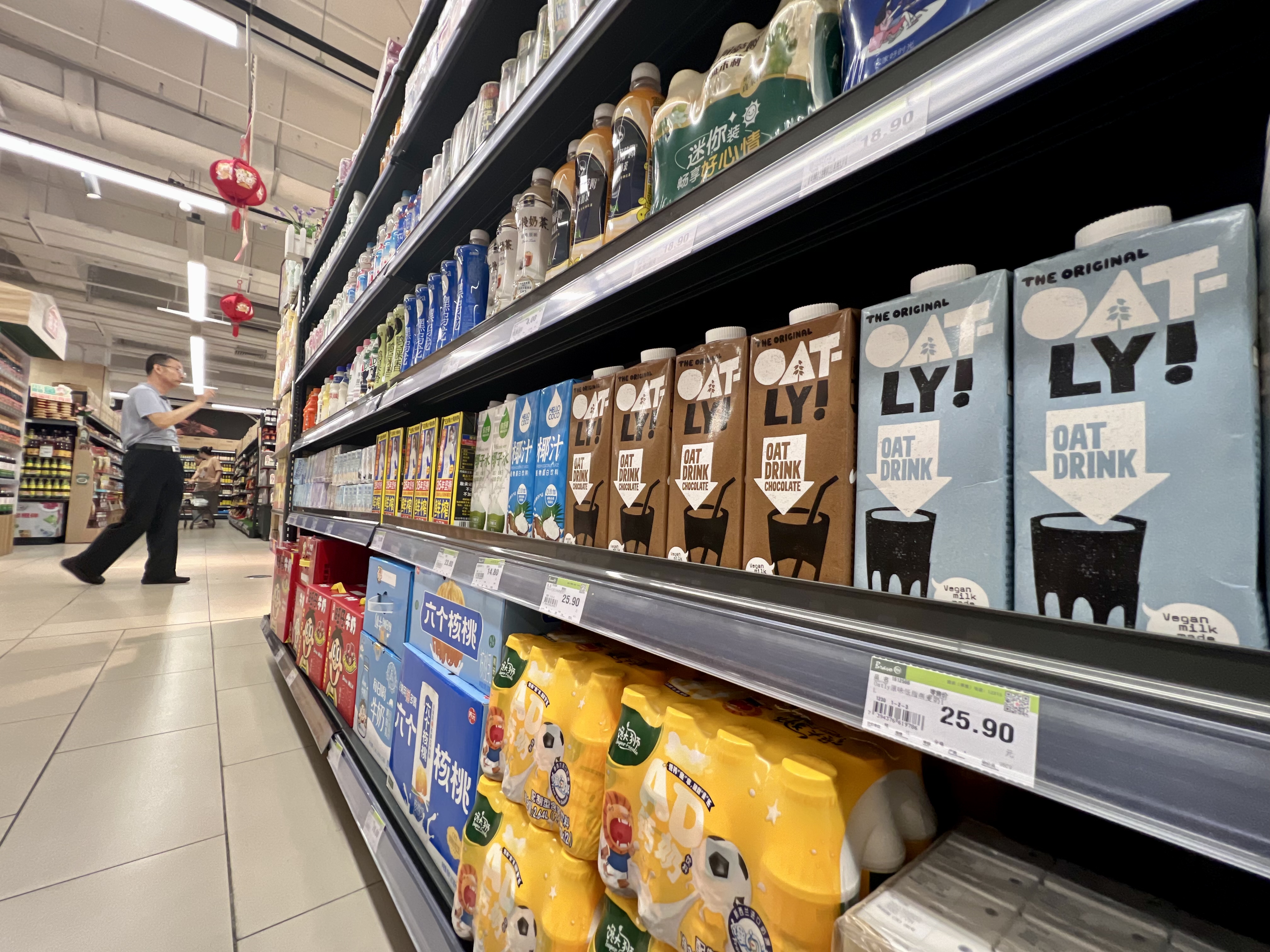
Core Insights - The traditional plant-based protein beverage sector in China has not benefited from the health upgrade trend, with major companies like Yangyuan Beverage and Chengde Lulu reporting significant revenue declines in Q1 2025 [1][2][5] - In contrast, the Danish oat milk brand Oatly has seen a substantial revenue increase of 37.6% in the Chinese market during the same period, highlighting a divergence in performance within the sector [1][5] Company Performance - Yangyuan Beverage reported Q1 2025 revenue of 1.86 billion yuan, a decrease of 19.7% year-on-year, with a net profit of 640 million yuan, down approximately 27% [1] - Chengde Lulu's Q1 2025 revenue was 1 billion yuan, reflecting an 18.4% year-on-year decline, with a net profit of 220 million yuan, down 12.5% [1] - Both companies experienced a revenue increase in Q4 2024, with Yangyuan Beverage growing by 16.1% and Chengde Lulu by 22.7%, but overall annual performance showed a decline [1] Market Dynamics - The decline in traditional plant-based protein beverages is attributed to product aging and lack of innovation, with consumers favoring alternatives like coconut water and herbal drinks [5] - The rise of new competitors in the plant-based beverage market, including nut and snack companies, has further diluted market demand for traditional offerings [5] - Oatly's growth is linked to strategic partnerships and entry into new retail channels, which contrasts with the domestic companies' reliance on traditional retail [5][6] Strategic Initiatives - Yangyuan Beverage is exploring new growth avenues through investments, including a significant 1.6 billion yuan stake in Changjiang Storage Technology, indicating a shift towards diversification [7] - Both Yangyuan and Chengde Lulu are attempting to innovate their product lines, with Chengde Lulu launching new products like "Almond+" and Yangyuan focusing on health-oriented offerings [6][7]



顺丰可惜了
虎嗅APP· 2025-05-11 23:46
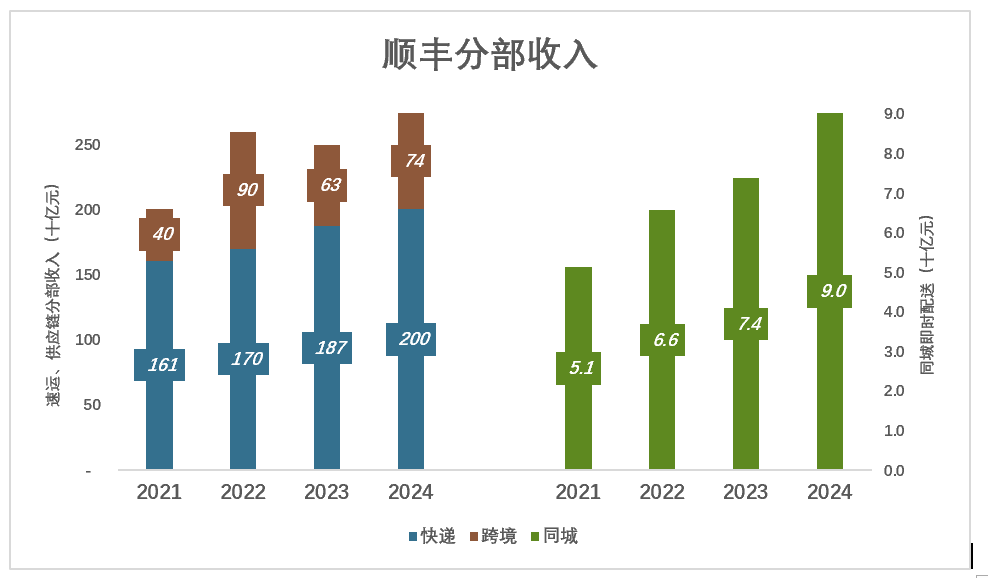
Core Viewpoint - SF Express reported strong financial results for 2024, with revenue of 284.4 billion and net profit of 10.2 billion, indicating a positive response from investors [3][4]. Group 1: Business Segments - SF Express operates three main business segments: Express and Large Items, Supply Chain and International, and Same-City Instant Delivery [7]. - The Express and Large Items segment generated revenue of 186.9 billion in 2023, accounting for 72.3% of total revenue, and is projected to reach 200.2 billion in 2024 [8]. - The Supply Chain and International segment reported revenue of 62.86 billion in 2023, representing 24.3% of total revenue, with expectations to grow to 74 billion in 2024 [10]. - The Same-City Instant Delivery segment had revenue of 7.37 billion in 2023, making up 2.85% of total revenue, and is anticipated to increase to 9 billion in 2024 [12]. - In 2024, SF Express expects a total revenue increase of 26 billion, with contributions from each segment being 51% from Express, 42.8% from Supply Chain, and 6.3% from Same-City [14]. Group 2: Revenue Growth and Challenges - The growth of the Express segment is slowing, with an average annual growth rate of 7.3% from 2021 to 2024, and a projected revenue of 122.2 billion in 2024, reflecting a 5.8% increase [16]. - The Supply Chain and International segment is contributing significantly to revenue growth but at the cost of profitability, with a gross profit margin dropping to 6.6% in 2024 [40]. - The Same-City Instant Delivery segment has shown persistent losses, with a gross loss rate of 62.9% in 2024, indicating challenges in achieving profitability despite revenue growth [43][45]. Group 3: Market Position and Strategy - SF Express has shifted its focus from maintaining a 10% market share to prioritizing profitability, as evidenced by a decline in market share to 7.6% in 2024 [28][30]. - The company has adopted a "price protection" strategy, moving away from "price for volume" tactics, which has resulted in a gross profit margin of 93.5% in 2024 [34][35]. - The Express segment is becoming the sole profit source for SF Express, with net profit contributions exceeding 100% in 2024 [39][46].


顺丰可惜了
Hu Xiu· 2025-05-11 22:54
Core Viewpoint - SF Express reported strong financial results for 2024, with revenue of 284.4 billion and net profit of 10.2 billion, showing year-on-year growth of 11.4% and 23.5% respectively, leading to a positive market reaction with a 2.57% increase in stock price [1][2]. Group 1: Business Segments - SF Express operates through three main segments: Express and Large Items, Supply Chain and International, and Same-City Instant Delivery [4]. - The Express and Large Items segment generated revenue of 186.9 billion in 2023, accounting for 72.3% of total revenue, and is projected to reach 200.2 billion in 2024, representing 70.4% of total revenue [5]. - The Supply Chain and International segment reported revenue of 628.6 billion in 2023, contributing 24.3% to total revenue, with an expected increase to 740 billion in 2024, making up 26% of total revenue [7]. - The Same-City Instant Delivery segment had revenue of 73.7 billion in 2023, representing 2.85% of total revenue, and is anticipated to grow to 90 billion in 2024, accounting for 3.2% of total revenue [9]. Group 2: Revenue Growth Contributions - In 2024, SF Express's revenue is expected to grow by 26 billion, with contributions from various segments: Express and Large Items (51%), Supply Chain and International (42.8%), and Same-City Instant Delivery (6.3%) [11]. - The Express segment's revenue growth is primarily driven by the core express delivery service, which is projected to reach 1.222 trillion in 2024, with a year-on-year growth of 5.8% [14]. - The Supply Chain and International segment is expected to contribute significantly to revenue growth, but at the cost of profit margins, with a projected net loss of 1.32 billion in 2024 [32]. Group 3: Market Position and Strategy - SF Express has shifted its strategy from "volume over price" to "price preservation," focusing on maintaining profit margins rather than increasing market share [25][29]. - The company has seen a decline in market share, with a reported 7.6% in 2024, down 1.4 percentage points from the previous year [23]. - The competitive landscape has led to a decrease in the average price per shipment, with the overall market price dropping to approximately 8 yuan per shipment in 2024 [22]. Group 4: Profitability and Financial Health - The Express segment has become the sole profit source for SF Express, with net profit margins improving to 5.5% in 2024 [29]. - The Supply Chain and International segment has faced challenges, with a significant drop in profit margins and a net loss of 1.32 billion in 2024 [32]. - The Same-City Instant Delivery segment continues to struggle with high costs and low profitability, showing a loss rate of 62.9% in 2024 [35].
同店销售额下滑,债务压顶,遇见小面冲击港股IPO:是餐饮奇迹,还是资本泡沫?
Sou Hu Cai Jing· 2025-05-09 13:53
Core Viewpoint - The company "遇见小面" is aggressively expanding its store network while facing declining same-store sales, raising questions about its strategy and potential for success in the capital market as it prepares for an IPO [1][2]. Group 1: Company Overview - "遇见小面" was founded in 2014 and has become a notable player in the Chinese noodle restaurant sector, ranking fourth in sales among similar brands as of 2024 [4]. - The company has received significant investment from various backers, including 百福控股 and 碧桂园控股, and its founders hold a combined 53.28% stake [5][7]. Group 2: Expansion and Store Network - The company has rapidly increased its number of stores, reaching 252 by the end of 2023, with plans to open an additional 120 to 150 stores in 2025 [8][12]. - As of April 2025, "遇见小面" operates 374 restaurants in mainland China and 6 in Hong Kong, with 64 more in preparation [9]. Group 3: Financial Performance - Revenue has shown strong growth, with figures of 418 million RMB in 2022, 800 million RMB in 2023, and projected 1.15 billion RMB in 2024, reflecting a compound annual growth rate of 66.2% [13][14]. - Despite revenue growth, the company has faced increasing debt, with a net current liability of 2.42 billion RMB by the end of 2024, indicating financial strain [17][18]. Group 4: Pricing Strategy and Sales Performance - The company has adopted a "price for volume" strategy, leading to a decline in average order value from 36.1 RMB in 2022 to 32.0 RMB in 2024, which has affected profitability [15][16]. - Same-store sales have decreased by 5.14% in first-tier cities, with total same-store sales dropping from 740 million RMB to 709 million RMB in 2024 [16]. Group 5: Operational Challenges - The company has faced criticism for its management practices, including a significant reduction in full-time employees by approximately 45% in 2024, while relying heavily on outsourced labor [23][25]. - Food safety issues have been reported, with multiple complaints regarding service and food quality, raising concerns about operational standards [25][27].
一季度扣非净利润下滑29.50%,吉祥航空回应……
2 1 Shi Ji Jing Ji Bao Dao· 2025-05-07 11:44
Core Viewpoint - The airline industry is experiencing intense competition, leading to a decline in net profits despite slight revenue growth for companies like 吉祥航空 in Q1 2025 [1][4]. Financial Performance - 吉祥航空 reported a revenue of 57.22 billion yuan in Q1 2025, a year-on-year increase of 0.05%, while net profit decreased by 7.87% to 3.45 billion yuan [1]. - The company's net profit excluding non-recurring items fell by 29.50% to 2.63 billion yuan [1][3]. - In 2024, 吉祥航空 achieved a total revenue of 220.95 billion yuan, a 9.95% increase, and a net profit of 9.14 billion yuan, up 17.52% [3]. Industry Trends - The aviation industry is adopting a "price for volume" strategy due to heightened competition and pressure from high-speed rail, resulting in a decline in average ticket prices by over 10% in 2024 [2][4]. - The average revenue per passenger kilometer decreased by 12.5% year-on-year [2]. International Business Expansion - 吉祥航空 significantly increased its international flight operations, executing over 20,000 international flights in 2024, a 90% increase from 2023 [5]. - The international business revenue for 吉祥航空 reached 46.95 billion yuan in 2024, marking an 82.15% increase, while domestic revenue slightly declined by 1.00% [6]. - The company is focusing on expanding its international routes, including new destinations in Europe and Oceania, and enhancing its hub network [6][7]. Market Outlook - The airline industry is expected to see a potential improvement in ticket prices in Q2 2025, driven by seasonal travel demand [4]. - The overall international passenger volume for Chinese airlines increased by 34% year-on-year in Q1 2025, indicating a recovery trend in international travel [6].

4月重点城市二手房成交同比增长,深圳大增37%
证券时报· 2025-05-06 12:34
4月,重点城市二手房成交量同比普遍增长。 具体来看,一线城市中,深圳二手住宅成交套数同比大增37%,上海同比增长30%,北京同比增长17%,广州同比增长近13%。 二线城市中,成都、杭州、南 宁二手住宅成交套数同比分别增长20%、16%、14%。 业内人士认为,4月重点城市二手房交易活跃度持续,驱动行业对后市信心有所回升,5月房地产市场有望延续积极向好。 重点城市二手房成交同比增长 4月,重点城市二手房成交量整体同比延续增长态势。 不过,中指研究院高级分析师孟新增指出,4月重点城市二手房市场仍保持较高活跃度,成交同比多保持增长,但目前二手房挂牌量仍在高位,部分城市取消 限售后二手房挂牌量有所增加,市场整体仍延续"以价换量"行情,根据中指研究院百城价格指数,4月百城二手住宅价格环比下跌0.69%,跌幅较上月扩大0.1 个百分点。 "红五月"可期? 因4月楼市活跃度持续,业内认为5月二手住宅市场交易将升温。 广州市房地产中介协会指出,4月市场受清明假期以及雨水天气频繁等因素影响,但全市二手住宅网签量仍保持万宗以上水平,驱动行业对后市信心有所回 升,5月经理人指数因此环比增长9.79个百分点至52.17%(前值42 ...