
共同富裕

Search documents
(乡村行·看振兴)从“金包银”到“村咖”:沙县小吃第一村的共富路
Zhong Guo Xin Wen Wang· 2025-12-30 07:06
Core Insights - The article highlights the transformation of Yubang Village in Fujian Province, showcasing its evolution from a traditional snack village to a vibrant community with diverse offerings, including a coffee shop and various local delicacies [1][5]. Group 1: Economic Development - The village has seen significant economic growth, with collective income rising from 178,000 yuan in 2020 to 930,000 yuan in 2024 [5]. - Per capita annual income for villagers increased from 23,500 yuan to 34,000 yuan, reflecting improved living standards [5]. Group 2: Community Engagement - Young villagers, like Yu Lingyue, are taking on multiple roles, contributing to the community as baristas, administrative staff, and educators, thus enhancing local engagement [2]. - The village has developed a "mobile business card" through social media, showcasing its livability and tourism potential [2]. Group 3: Cultural Heritage - The culinary tradition of Sha County snacks, exemplified by local specialties like "Jin Bao Yin" (meat-filled tofu), continues to thrive, with older generations passing down their skills [3]. - The village has successfully integrated traditional food culture with modern tourism, attracting more visitors and creating a more relaxed atmosphere for guests [2][5].


讲在一线,“声”入人心(学习贯彻党的二十届四中全会精神)
Ren Min Ri Bao· 2025-12-29 22:44
"地下有传感器监测,天上有无人机巡田,咱种地必须提升科技含量,从靠经验变成信数据。"冬日,河 南省临颍县城关街道的"五彩大集"理论宣讲活动格外火热,四中全会精神宣讲小分队队长李慧子正向当 地种植户讲"提升农业综合生产能力和质量效益"前景。 在活动现场,宣讲人结合当地现代农业建设情况,把党的二十届四中全会精神融入乡亲们听得懂的故 事、看得见的案例,"书面语"变成了"家常话","共鸣式"宣讲获得群众阵阵掌声。 "很多宁夏人爱喝罐罐茶,安居苑社区的群众经常在这里喝茶议事。"宁夏回族自治区党委宣讲团成员、 讲师团团长刘文长说,选择以"罐罐茶议事吧"作为宣讲空间,同时邀请有社区工作经验的宣讲员进行宣 讲,就是想让宣讲内容更贴切,也让群众听得更轻松。当前,宁夏组建基层宣讲队伍278支,吸纳道德 模范、先进典型、百姓名嘴等宣讲骨干3582人,以身边事、百姓话开展多层次、广覆盖、接地气的理论 宣讲活动。 "同学们,'十五五'规划建议将'加快高水平科技自立自强,引领发展新质生产力'作为战略任务进行部 署。"武汉大学的一场宣讲活动现场,机器人学院执行院长肖晓晖说,"机器人是新质生产力的代表,也 是AI赋能实体经济的核心载体,产业 ...
杭州 推动共同富裕迈出坚实步伐
Ren Min Ri Bao· 2025-12-29 22:10
共同富裕是社会主义的本质要求,是中国式现代化的重要特征。"十四五"时期,浙江省杭州市作为拥有 超千万人口的特大城市,在高质量发展建设共同富裕示范区的实践中,坚定不移以"八八战略"为统领, 致力于建立促进共同富裕的体制机制,持续缩小"三大差距",全力推进公共服务优质共享,共同富裕示 范区城市范例建设取得了明显的阶段性成效。 面向"十五五",杭州市将锚定"人民至上"的价值坐标,以改革创新为根本动力,奋力推动浙江省高质量 发展建设共同富裕示范区取得决定性进展,力争率先呈现基本实现社会主义现代化的生动图景。 聚焦高质量发展,夯实共同富裕物质基础 高质量发展是实现共同富裕的重要前提基础。杭州市坚持稳扎稳打、守正创新,在夯实"稳"的基础上蓄 势,在激发"进"的动能中突破,以经济的系统性跃迁为共同富裕筑牢根基。"十四五"时期,杭州地区生 产总值跨越2万亿元新台阶,高端制造业强势突围,数字经济持续领跑,新兴产业蓬勃发展,创新活力 之城的发展成色不断提升。 项目建设是经济社会发展的"硬支撑"。今年1—11月,杭州市235个"千项万亿"工程累计完成投资1350亿 元,投资完成率达125.6%,54个新开工项目已全部开工建设,为经 ...
【学习贯彻党的二十届四中全会精神】讲在一线,“声”入人心
Xin Lang Cai Jing· 2025-12-29 19:19
Group 1 - The core message emphasizes the importance of integrating technology into agriculture, moving from experience-based practices to data-driven approaches [1] - Various regions, including Henan, Hubei, Tibet, and Ningxia, have organized targeted and interactive propaganda activities to effectively communicate policy theories in relatable terms [1][2] - In Henan, over 12,000 grassroots propaganda events have been conducted, reaching more than 1 million people, utilizing diverse formats like "field classrooms" and "mobile party schools" [1] Group 2 - Ningxia has established 278 grassroots propaganda teams, incorporating local moral models and community figures to enhance the relatability of the content [2] - In Wuhan University, a focus on "new quality productivity" and the role of robotics in economic development was highlighted, encouraging students to contribute to national progress [2] - Tibet has conducted over 30,000 propaganda events, achieving full coverage across all regions, towns, and even temples, to promote high-quality development [3]
学习贯彻党的二十届四中全会精神丨讲在一线,“声”入人心——河南、湖北、西藏、宁夏组织开展多种形式宣讲活动
Xin Lang Cai Jing· 2025-12-29 17:12
河南发挥"百姓宣讲员""青年理论宣讲专家""宣讲达人"等特色宣讲队伍作用,灵活运用"田埂讲堂""小院 课堂""流动党校"等形式,广泛开展接地气、受欢迎的宣讲活动1.2万余场次,受众100余万人次。 在宁夏银川市金凤区安居苑社区丽园小区的"罐罐茶议事吧"里,数名"安居大妈"以快板形式开启了一场 生动鲜活的宣讲活动。 "很多宁夏人爱喝罐罐茶,安居苑社区的群众经常在这里喝茶议事。"宁夏回族自治区党委宣讲团成员、 讲师团团长刘文长说,选择以"罐罐茶议事吧"作为宣讲空间,同时邀请有社区工作经验的宣讲员进行宣 讲,就是想让宣讲内容更贴切,也让群众听得更轻松。当前,宁夏组建基层宣讲队伍278支,吸纳道德 模范、先进典型、百姓名嘴等宣讲骨干3582人,以身边事、百姓话开展多层次、广覆盖、接地气的理论 宣讲活动。 (来源:千龙网) 新华社北京12月29日电 题:讲在一线,"声"入人心——河南、湖北、西藏、宁夏组织开展多种形式宣 讲活动 新华社记者 "地下有传感器监测,天上有无人机巡田,咱种地必须提升科技含量,从靠经验变成信数据。"冬日,河 南省临颍县城关街道的"五彩大集"理论宣讲活动格外火热,四中全会精神宣讲小分队队长李慧子正 ...
农行浙江省分行:砥砺五载显担当,奋楫争先启新程
Mei Ri Jing Ji Xin Wen· 2025-12-29 12:36
Core Viewpoint - The Agricultural Bank of China Zhejiang Branch has played a pivotal role in supporting the economic development of Zhejiang during the "14th Five-Year Plan" period, focusing on innovation, green development, and enhancing the resilience of the external trade economy [3][19]. Group 1: Financial Support for Innovation - The Agricultural Bank of China Zhejiang Branch has provided comprehensive financial support to technology enterprises, with a net increase in loans of 1.2 trillion yuan during the "14th Five-Year Plan" period, doubling its previous amount [3]. - The bank has developed a range of financial products tailored to different stages of technology enterprises, including "Technology E-loan" for startups and "Specialized and Innovative Loan" for mature companies [4]. - The bank has implemented a smart evaluation model to assess the "soft power" of enterprises, allowing for a more accurate credit rating system that focuses on innovation rather than traditional collateral [4]. Group 2: Support for Small and Micro Enterprises - The Agricultural Bank of China Zhejiang Branch has prioritized financial services for small and micro enterprises, contributing over 67% of the province's GDP and 70% of tax revenue by 2025 [9]. - The bank has simplified credit approval processes and enhanced data sharing to ensure quick and easy access to financing for small enterprises [11]. - The total amount of loans to small and micro enterprises has exceeded 1 trillion yuan, making the bank the first provincial branch in the country to achieve this milestone [9]. Group 3: Green Development Initiatives - The bank has significantly increased its green loan portfolio, which has grown nearly threefold over the past five years, reaching over 680 billion yuan [15]. - It has established a green finance service model and a specialized green finance system to support the transition from "green water and green mountains" to "golden mountains and silver mountains" [15][16]. - The bank has provided over 37 billion yuan in credit for clean energy projects, supporting the province's transition to a low-carbon economy [17]. Group 4: External Trade Support - Zhejiang's export share has increased from 14% in 2020 to 15.3% in 2024, with the bank providing tailored cross-border financial services to support this growth [19]. - The bank has introduced innovative products like "Cross-border E-loan" to address the financing challenges faced by cross-border e-commerce enterprises [20]. - The bank has established a special credit quota for foreign trade enterprises and has actively engaged in risk management strategies to help businesses navigate currency fluctuations [22].

倪鹏飞:城市群主导时代,长江中游如何破局崛起?
Xin Lang Cai Jing· 2025-12-29 12:01
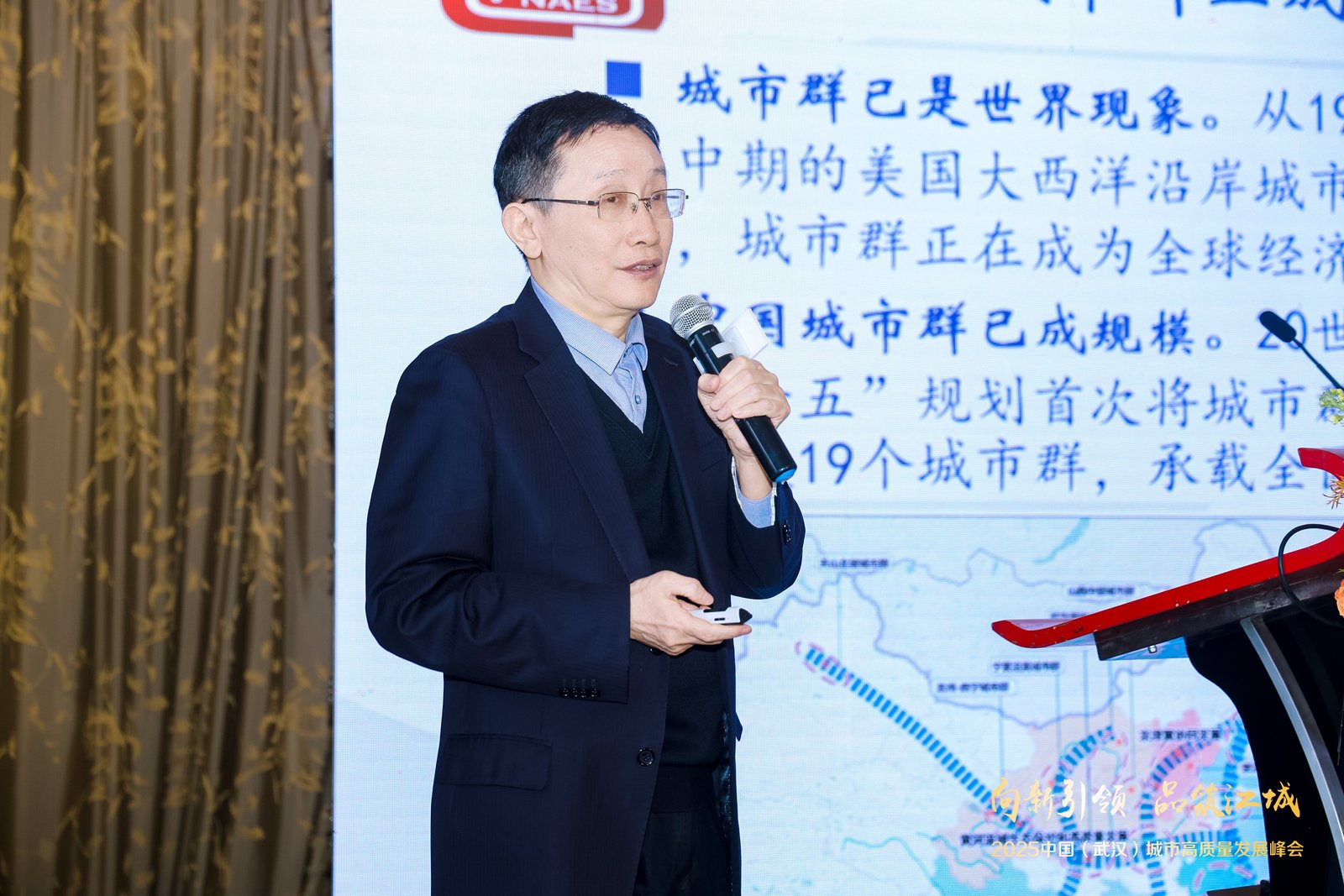
Core Viewpoint - China's urbanization is undergoing a profound spatial restructuring, with urban agglomerations becoming the main form of urban development, leading the national spatial economic pattern into a new phase [2] Group 1: Urban Agglomeration Development - Urban agglomerations are now the dominant form of urbanization in China, with 19 planned urban agglomerations housing 70% of the population and contributing 80% of GDP [2] - The evolution of urban agglomerations in China reflects a shift from "dispersed concentration" to "concentrated concentration," and now to "concentration with dispersion" [3] - Urban agglomerations play a crucial role in promoting common prosperity by enabling resource flow and sharing between central cities and surrounding areas, thus reducing regional disparities [3] Group 2: Challenges and Strategies - The development of urban agglomerations faces unique challenges due to the strong government-led initiatives and unclear local interest distribution mechanisms, which can create administrative barriers [4] - To address these challenges, it is essential to establish a collaborative development system that clearly defines the responsibilities and rights of urban governments and creates incentive mechanisms for all parties involved [4] Group 3: Future Predictions and Strategic Proposals - In the next 15 years, China is expected to form an organic network consisting of 17 to 20 urban agglomerations, 100 urban circles, over 1,000 cities, and 10,000 to 20,000 towns [5] - The Yangtze River Economic Belt is highlighted as a key area for addressing regional economic disparities, serving as a vibrant corridor supported by urban agglomerations [5][6] - The development of "giant urbanized areas" in mature regions like the Yangtze River Delta and the Greater Bay Area will blur urban-rural boundaries and provide integrated solutions for urban challenges [6] Group 4: Specific Strategies for Wuhan and the Yangtze River Middle Reigon - Wuhan, part of the Yangtze River middle urban agglomeration, is still in the cultivation stage and requires strategies such as integrating into the Yangtze River basin's overall strategy and strengthening its urban circle [7] - Emphasis is placed on green development and sustainable practices to achieve long-term growth while addressing urbanization challenges [7] - The strategic path outlined by the research emphasizes the role of urban agglomerations in driving high-quality development and achieving common prosperity in China [7]
张军扩:需求已成经济增长决定性因素,扩大投资依然重要
Sou Hu Cai Jing· 2025-12-29 10:12
Group 1 - The core issue affecting China's economic growth is the demand problem, which has been prioritized in economic work for two consecutive years [2] - The overall economic performance in China shows resilience and stability, but the imbalance between strong supply and weak demand remains a significant challenge [2] - The main contradiction in economic operation is shifting from the supply side to the demand side, necessitating a focus on resolving demand issues for sustainable economic development [2] Group 2 - The acceleration of domestic demand expansion policies has led to positive outcomes, but consumption demand is constrained by both short-term fluctuations and long-term structural factors [3] - Short-term measures should include strong stimulus policies to break negative cycles, while long-term strategies must address deep-rooted issues to ensure stable growth [3] - The shift in consumer behavior from goods to services highlights the need for increased support in service consumption, particularly in education, healthcare, and elder care [3] Group 3 - Investment remains crucial alongside consumption, as effective investment is necessary to meet consumption demands and expand consumption space [4] - There is significant potential for effective investment, particularly in urban development and addressing social welfare gaps [4] - The decline in private and foreign investment underscores the need for policy innovation and improved business environments to boost investor confidence [5][6]
智库报告:“黑天鹅”风险或成常态,考验企业声誉管理应变力
Sou Hu Cai Jing· 2025-12-29 07:19
南都讯记者潘珊菊 发自北京 12月29日,中国传媒大学媒介与公共事务研究院发布研究报告,分析2025年 企业声誉十大负面影响因素,并对2026年影响企业声誉的十大因素作出预测。 公众所理解的许多专业概念,大多存在于固有认知中,通过口口相传或者非权威渠道解读,长时间被误读 误解,与专业界定存在较大出入。比如"预制菜""智能驾驶(辅助驾驶)""零添加""0糖0脂0卡"等等,有的 概念看起来"凶险可怕",实则被长期污名化;有的概念看起来"人畜无害",实则被夸大宣传、刻意美化。 上述两种情况对于企业来讲,都十分不利。由于一个概念解释不清,导致一个企业甚至一个行业受到重创 的情况屡见不鲜。用好行业概念的定义权和解释权,打造稳固企业与行业发展的"助力器"而不是"绊脚 石",成为企业声誉管理面临的一项重要课题。 报告认为,在国家政策护航和多方协同发力下,2025年国内企业声誉整体形势向好,但也存在以下十个方 面的挑战和压力,影响了企业声誉管理效果。 1.生产经营管理中的硬伤,成为引发企业声誉危机的导火索 政府监管力度持续加码,行业治理标准不断提升,但企业在生产经营管理环节的问题仍有发生,包括安全 漏洞、质量缺陷、服务短板、 ...

南京2025年民生实事项目向全市人民“交卷”
Nan Jing Ri Bao· 2025-12-29 02:14
Group 1 - The city has implemented 42 livelihood projects, with 24 exceeding annual targets, enhancing residents' sense of well-being and happiness [1] - The projects include the establishment of 37 "Ningqing Stations" for youth talent, 135 standardized employment service stations, and 204 "Love Summer Care Classes" for children [1] - The city has integrated various resources and strengthened collaboration among departments to ensure effective implementation of these projects [1] Group 2 - The city has created 293,100 job opportunities through various channels, focusing on major projects and key industries [2] - Services for the elderly and children have been enhanced, including full air conditioning coverage in classrooms and upgrades to 14 senior meal service points [2] - Urban functionality and safety have been improved with new medical bus routes, river management projects, and the establishment of 900 micro fire stations [2] Group 3 - Since the 14th Five-Year Plan, the city has implemented 219 livelihood projects, achieving health indicators comparable to developed countries and leading in preschool education coverage [3] - Future efforts will focus on addressing structural imbalances in livelihood development, enhancing cross-departmental policy coordination, and responding to demographic challenges [3] - The city aims to improve the management system for livelihood projects to elevate the standard of living further [3]