
数字技术

Search documents
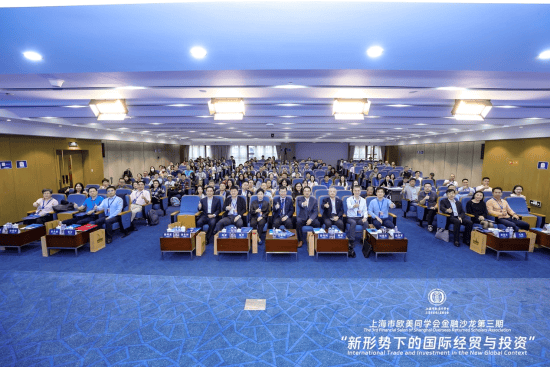
“上海市欧美同学会金融沙龙第三期——新形势下的国际经贸与投资”专题会举办
Sou Hu Cai Jing· 2025-10-21 07:16
Core Insights - The financial salon held on October 19 focused on "International Trade and Investment under New Circumstances," addressing current global economic challenges and opportunities [1][3][4] Group 1: Event Overview - The financial salon is part of the 65th anniversary celebrations of Shanghai University of International Business and Economics and the 30th anniversary of its Financial Management School [3] - Over 200 participants from various sectors, including alumni and professionals, attended the event [3] Group 2: Key Themes and Discussions - The salon emphasized the importance of international cooperation in the context of changing global economic dynamics, particularly in relation to China’s foreign trade and investment strategies [4][5] - Topics discussed included Sino-U.S. trade relations, sustainable development in the Global South, global supply chain restructuring, tariffs, cross-border finance, and investment in Southeast Asia [7] Group 3: Strategic Collaborations - A strategic cooperation agreement was signed between the Shanghai European and American Alumni Association Financial Branch and the Financial Management School of Shanghai University of International Business and Economics [7] - The collaboration aims to create a high-end exchange platform in the financial sector, enhancing the integration of financial theory and practice [7]

四川华太以色信息科技电商平台创新:数字技术实现消费模式升级
Sou Hu Cai Jing· 2025-10-21 04:40
Core Insights - The rapid development of information technology has made the digital economy a significant driver of economic growth, characterized by the extensive application of emerging technologies such as the internet, big data, cloud computing, artificial intelligence, and blockchain [1] - The digital economy enhances efficiency and flexibility in business models, allowing companies to optimize resource allocation, reduce operational costs, and improve service quality [1] - Sichuan Huatai Yise Information Technology is responding to the digital economy trend by innovating its e-commerce platform, promoting green consumption, and achieving an upgrade in consumption patterns [1] Digital Ecosystem - Sichuan Huatai Yise Information Technology has integrated social media with e-commerce to create a digital consumption ecosystem, enhancing user engagement and trust while providing precise marketing channels for businesses [2] - Consumers can access product information, share shopping experiences, and participate in discussions on social platforms, which increases their purchasing intent [2] New Retail Integration - The company has achieved deep integration of online and offline retail, allowing consumers to browse and purchase products online while also experiencing them in physical stores [4] - This omnichannel shopping approach meets diverse consumer needs and enhances shopping convenience and satisfaction [4] - Sichuan Huatai Yise Information Technology collaborates with local businesses to provide various services, creating a comprehensive lifestyle service ecosystem [4] Green Consumption Initiatives - The introduction of a digital certification mechanism records consumer purchasing behaviors, enhancing awareness of environmental contributions and encouraging participation in green consumption [4] - The company promotes a win-win situation through merchant discounts, attracting more consumers while providing them with high-quality green products at lower prices [5] Technological Support - The success of Sichuan Huatai Yise Information Technology is supported by digital technologies, utilizing big data and artificial intelligence for personalized product recommendations based on consumer habits [5] - Cloud computing enhances data processing capabilities, while blockchain technology ensures data security and credibility for the digital certification mechanism [5] Business Impact - The application of these digital technologies improves consumer experience and drives business growth, allowing consumers to enjoy efficient shopping services while businesses gain insights into market trends [7] - The innovative e-commerce platform not only benefits consumers and businesses but also positively impacts society by promoting green consumption and sustainable consumption models [7] - The practices of Sichuan Huatai Yise Information Technology demonstrate the potential of combining digital technology with business model innovation to drive sustainable economic development [7]

25省已实现生育津贴直接发放至个人|首席资讯日报
首席商业评论· 2025-10-21 04:31
Group 1 - The direct issuance of maternity allowances to individuals has been implemented in 25 provinces in China, enhancing women's rights and social security [2] - China Galaxy Securities indicates a short-term market style shift due to external trade uncertainties and previous sector gains, suggesting a cautious investment sentiment [3] - L'Oréal is reportedly planning to acquire Kering's beauty division for approximately 40 billion USD, indicating a trend of mergers and acquisitions in the beauty sector [4] Group 2 - Carlyle Group's CEO expresses concerns about recent fluctuations in the credit market but notes that the overall economic situation remains resilient [5] - The Louvre Museum in Paris has experienced a robbery, highlighting security vulnerabilities in museums and the increasing targeting by professional smuggling groups [6] - In September, China's retail sales growth slowed to 3.0% year-on-year, influenced by the timing of the Mid-Autumn Festival [7] Group 3 - Lyon has raised TSMC's target price to 2000 NTD, maintaining a strong buy rating based on improved profit margins and sustained demand for AI computing [8] - The value added of the lithium-ion battery manufacturing industry in China increased by 29.8% year-on-year in the first three quarters, driven by policies promoting domestic demand [9] - Ant Group's subsidiary in Hainan has increased its registered capital from 10 million to 3.5 billion RMB, indicating significant growth and investment in technology services [10] Group 4 - The People's Bank of China reported an increase of 601.3 billion RMB in loans in the first three quarters, with a notable decrease compared to the previous year [11] - China's GDP grew by 5.2% year-on-year in the first three quarters, with the service sector showing the highest growth rate [12] - CITIC Securities highlights a three-year plan to double electric vehicle charging facilities by 2027, emphasizing the importance of infrastructure development in the EV sector [13]



前三季度锂电产业增加值同比增近三成
Zhong Guo Zheng Quan Bao· 2025-10-20 20:18
Group 1 - The core viewpoint of the articles highlights the significant growth in the lithium-ion battery manufacturing industry, driven by strong market demand and supportive government policies, indicating a robust transition towards new energy sources in China [1][2][3] - In the first three quarters of this year, the added value of lithium-ion battery manufacturing increased by 29.8%, while the production and sales of power and other batteries reached 1121.9 GWh and 1067.2 GWh, respectively, marking year-on-year growth of 51.4% and 55.8% [1][2] - Major companies like CATL reported a revenue of 283.07 billion yuan and a net profit of 49.03 billion yuan for the first three quarters, reflecting a year-on-year increase of 9.28% and 36.20% [2] Group 2 - CATL anticipates high growth in both the power and energy storage markets for the coming year, with an emphasis on increasing battery capacity to meet rising consumer demands [3] - The company is actively expanding its production capacity across multiple domestic bases, with significant expansions planned in Jining, Yichun, Xiamen, and Qinghai, as well as overseas projects in Hungary and Spain [3] - The trend of collaboration among lithium battery companies is evident, with CATL signing a five-year strategic cooperation agreement with Li Auto to enhance battery technology and expand market reach [4] Group 3 - The lithium battery industry is witnessing a diversification of business strategies, with companies like Guoxuan High-Tech entering the small power battery market, targeting the electric two-wheeler segment [5] - The market for lithium batteries in electric two-wheelers is projected to grow significantly, with a current penetration rate of less than 10% in a market with over 400 million vehicles [5] - New product launches and collaborations, such as the partnership between JD Auto and CATL, aim to enhance the sales and service ecosystem for electric vehicles, further expanding market opportunities [5]

“向新逐绿”势能足 前三季度锂电产业增加值同比增近三成
Zhong Guo Zheng Quan Bao· 2025-10-20 20:11
Group 1: Industry Growth and Performance - The manufacturing value added in lithium-ion battery manufacturing, shipbuilding, and electric motor manufacturing increased by 29.8%, 22.9%, and 17.1% year-on-year in the first three quarters of this year, indicating strong growth in the new energy sector in China [1] - The production and sales of power and other batteries in China reached 1121.9 GWh and 1067.2 GWh respectively, with year-on-year growth of 51.4% and 55.8% [2] - CATL reported a revenue of 283.07 billion yuan and a net profit of 49.03 billion yuan for the first three quarters, representing a year-on-year increase of 9.28% and 36.20% respectively [2] Group 2: Market Demand and Future Outlook - The demand for lithium batteries is expected to grow significantly next year, with CATL's Secretary predicting high growth in both power and energy storage markets [4] - The trend towards larger battery capacities for electric vehicles is anticipated to continue, driven by user preferences for longer ranges [4] - CATL is expanding its production capacity significantly across multiple domestic bases, with plans for over 100 GWh of new energy storage capacity in Shandong alone by 2026 [4] Group 3: Technological Advancements and Product Development - New products and technologies are emerging in the lithium battery sector, with liquid lithium batteries remaining the mainstream product and solid-state batteries being a future focus [6] - Companies are increasingly collaborating to expand their business, as seen in the strategic partnership between CATL and Li Auto to enhance battery technology and global reach [7] - Guoxuan High-Tech is entering the small power battery market, aiming to capitalize on the growing demand for lithium batteries in electric two-wheelers [7]
食品行业焕新提质 保持平稳运行
Jing Ji Ri Bao· 2025-10-20 00:31
Core Insights - The food industry has maintained stable operations this year, contributing significantly to domestic demand, consumption, economic growth, and livelihood protection through deep integration of technological and industrial innovation [1][2] Group 1: Industry Performance - From January to July this year, the revenue of large-scale food enterprises reached 5.1 trillion yuan, with profits exceeding 330 billion yuan and imports and exports surpassing 82 billion USD [1] - The investment in the agricultural and sideline food processing industry grew by 17.8%, while investment in the food manufacturing industry increased by 15.4% [1] - The food industry accounted for 35.6% of light industry assets, achieving 39% of operating income and creating 43.8% of profits [1] Group 2: Innovation and Technology - The food industry is accelerating its innovation pace, with 4 awards for technological invention and 56 for technological progress expected in 2024, marking a 140% increase in awards [1][2] - Companies are encouraged to enhance technological supply, support basic research, and accelerate breakthroughs in key technologies, focusing on digital and green technologies [2] - The digitalization rate of research and design tools in light industry is 86.2%, with a numerical control rate of 62.4% for key processes, and 47.2% for industrial internet platform applications, all exceeding national industrial averages [2] Group 3: Future Development and Trends - The food industry is urged to promote smart manufacturing, detection, and circulation to improve production efficiency and product quality [3] - There is a focus on developing functional foods, physiological regulation foods, personalized nutrition foods, and special diets to meet health demands [2][3] - The health food sector is projected to produce approximately 800,000 tons in 2024, with an industry scale of about 450 billion yuan [3] Group 4: Strategic Goals - The strategic task of food resource exploration is to achieve global food sustainability, ensure food supply security, and enhance public nutrition and health levels [4] - Food resource exploration includes the discovery and safety evaluation of new food resources, industrialization of functional and personalized food resources, and disruptive technological innovations [4]
食品行业焕新提质
Jing Ji Ri Bao· 2025-10-19 21:58
Core Insights - The food industry has maintained stable operations this year, contributing significantly to domestic demand, consumption, economic growth, and livelihood protection through deep integration of technological and industrial innovation [1] Industry Performance - From January to July this year, the revenue of large-scale food enterprises reached 5.1 trillion yuan, with profits exceeding 330 billion yuan and imports and exports surpassing 82 billion USD [1] - The investment in the agricultural and sideline food processing industry grew by 17.8%, while investment in the food manufacturing industry increased by 15.4% [1] - The food industry accounted for 35.6% of light industry assets, achieving 39% of operating income and creating 43.8% of profits [1] Innovation and Technology - The food industry is accelerating its innovation pace, with 4 awards for technological invention and 56 for technological progress expected in 2024, marking a 140% increase in awards [1] - Companies are encouraged to enhance technological supply, support basic research, and accelerate breakthroughs in key technologies, focusing on digital and green technologies [2] - The application of digital technology in food enterprises is improving product innovation and food safety, with 86.2% of light industry utilizing digital R&D tools and 62.4% of key processes being numerically controlled [2] Future Development - The food industry is urged to advance smart manufacturing, detection, and circulation to improve production efficiency and product quality [3] - There is a focus on developing functional foods, physiological regulation foods, personalized nutrition foods, and special diets to meet health demands [2][3] - The health food sector is projected to produce approximately 800,000 tons in 2024, with an industry scale of about 450 billion yuan [3] Strategic Goals - The strategic task of food resource exploration aims to achieve global sustainable food development, ensure food supply security, and enhance public nutrition and health [4] - The transition from "Made in China" to "Created in China" is crucial, with a need to overcome "involution" competition that hampers high-quality development [4][5]
艺术瑰宝跨越山海,大湾区打造万亿 “文化梦工厂”
2 1 Shi Ji Jing Ji Bao Dao· 2025-10-19 03:29
Core Viewpoint - The 13th China International Folk Art Festival in Foshan showcases a blend of traditional and international cultures, enhancing the cultural tourism landscape and driving economic opportunities through cultural exchange [1][2]. Group 1: Cultural Exchange and Economic Opportunities - The festival features performances from 13 countries, highlighting the role of art in breaking down cultural barriers and fostering economic cooperation in tourism, cultural creation, and brand collaboration [2]. - Foshan's cultural events, such as the dragon boat drifting and concerts, have significantly boosted local tourism consumption, with over 680 million yuan generated from a single concert [5]. - The integration of traditional cultural elements with modern technology, such as AI and digital tools, is transforming the cultural landscape and enhancing the market competitiveness of cultural content [8][9]. Group 2: Cultural Industry Development in the Greater Bay Area - The Greater Bay Area is leveraging its cultural resources, creative design, advanced manufacturing, and global marketing to create a comprehensive cultural industry chain [2][8]. - Guangdong's cultural and related industries generated 2.25 trillion yuan in revenue in 2023, leading the nation, with a significant portion coming from cultural manufacturing [6]. - The collaboration among cities in the Greater Bay Area allows for efficient integration of cultural projects, from design to production, enhancing the overall effectiveness and reducing costs [11][12]. Group 3: Technological Empowerment in Cultural Industries - Emerging technologies like AI and VR/AR are driving the dynamic transformation of traditional cultural practices, making them more accessible and engaging for the public [9][10]. - Companies in the Greater Bay Area are utilizing technology to create immersive cultural experiences, thereby expanding the boundaries of the cultural industry [11][12]. - The focus on creating unique experiences through digitalization is seen as a key driver for the growth of the cultural sector in the region [10].
“上海AI-FI实验室”成立 推动“AI+金融”创新实践
Zhong Guo Xin Wen Wang· 2025-10-18 14:24
Core Insights - The establishment of the "Shanghai AI-FI Laboratory" aims to promote the deep integration of artificial intelligence technology with the financial industry, focusing on key issues in the "AI + Finance" sector [1] - The Global Wealth Management Forum 2025 in Shanghai serves as a significant platform for international dialogue and cooperation in the financial sector, gathering over a hundred domestic and international guests to discuss various topics related to digital transformation and global financial collaboration [1] - A dialogue between Tim Cook, CEO of Apple, and Bai Zhong'en, Chairman of the Executive Committee of the Global Wealth Management Forum, explored the integration of AI, digital technology, and financial innovation, providing insights into the future of financial services and wealth management [1] Group 1 - The "Shanghai AI-FI Laboratory" marks a substantial step in Shanghai's practical innovation in the "AI + Finance" domain [1] - The forum addresses the changes in the world driven by digital technology, the benefits of technology in wealth creation, and the outlook for global investment and innovation trends [1] - The discussions at the forum aim to reveal the core driving forces behind technological transformation in the financial sector [1]
科技让农业有了新样貌——第二十二届中国国际农产品交易会观察
Xin Hua She· 2025-10-17 13:20
Core Insights - The 22nd China International Agricultural Products Trade Fair opened in Tianjin, showcasing approximately 25,000 products and attracting over 50,000 buyers and professional visitors, with a theme focused on brand strengthening and consumption stimulation [1] Group 1: Technological Advancements in Agriculture - The fair highlighted various advanced agricultural technologies, including a mushroom harvesting robot developed by the Chinese Academy of Agricultural Sciences, which boasts a success rate of approximately 94.6% and can operate continuously for 24 hours, equating to the efficiency of two skilled workers [1] - Agricultural equipment has significantly improved efficiency in planting and harvesting, with digital technologies like big data driving transformative changes in production methods [2] Group 2: Efficiency and Automation - A garlic farmer from Tianjin emphasized the impact of agricultural equipment, noting that a "garlic clove sorting machine" can replace manual selection, achieving a speed 200 times faster than traditional methods [2] - The use of IoT, cloud computing, big data, and artificial intelligence in agriculture is being showcased, with many participating companies planning to release smart agriculture research results during the fair [2]
