生成式AI

Search documents
美图2025年经调净利润预增约60%-66% 高盛首次给予买入评级
Xin Lang Cai Jing· 2026-02-09 03:38
Core Viewpoint - Meitu Company reported a significant increase in profitability, with adjusted net profit for the fiscal year 2025 expected to grow by approximately 60% to 66% year-on-year, driven by rapid growth in revenue from its imaging and design products [1][2] Financial Performance - The adjusted net profit for 2025 is projected to increase by about 60% to 66% compared to the previous year [1][2] - The growth in profitability is primarily attributed to a rapid increase in the number of global paid subscription users [2] Market Dynamics - The growth in paid subscription users is faster in international markets compared to mainland China [2] - Goldman Sachs initiated coverage on Meitu with a "Buy" rating and set a 12-month target price of HKD 16 [2] Product Evolution - Meitu's products are evolving from beauty tools to AI image and video generation and editing applications, expanding from the consumer entertainment sector to productivity tools [2] - This evolution is expected to drive increases in monthly active users, payment rates, and average revenue per user (ARPU) [2] User Preference - Concerns exist in the market regarding large models potentially overshadowing applications, but the ultimate choice remains with users [2] - Long-term, the combination of human creativity and the efficiency of generative AI is viewed as the optimal solution [2]
Claude继血洗软件业后 再向人类会计“开刀”!高盛(GS.US)牵手Anthropic 剑指会计合规自动化
智通财经网· 2026-02-09 03:32
Core Insights - Goldman Sachs is collaborating with AI startup Anthropic to develop AI agents aimed at automating various internal roles within the bank [1] - The initial focus areas for these AI agents include transaction reconciliation and customer due diligence processes [1] - The AI agents, based on Anthropic's Claude model, are expected to significantly reduce processing times for these core business functions [1] Group 1 - Goldman Sachs' Chief Information Officer Marco Argenti stated that the AI agents are in the early stages of development and will soon be launched, although no specific date has been provided [1] - The bank has initiated a multi-year restructuring plan centered around generative AI since the launch of OpenAI's ChatGPT in late 2022 [1] - Despite rising revenues in trading and advisory services, Goldman Sachs aims to control employee growth during this transformation [1] Group 2 - Concurrently, Anthropic has completed a model upgrade, which has led to significant stock price declines for software companies and their credit institutions, as investors speculate on the ultimate winners and losers in the AI sector [2] - Goldman Sachs has been testing an AI programming tool named Devin since 2025, which is now available to all engineers in the bank [2] - Argenti noted that the capabilities of Claude in programming and other tasks, such as accounting and compliance, have exceeded expectations, indicating potential for automation across various business areas [2] Group 3 - The bank plans to expand the application of AI agents to tasks such as employee supervision and the creation of investment banking pitch materials [3] - Although the accounting and compliance departments currently employ thousands of staff, Argenti emphasized that it is premature to conclude that this technology will lead to job cuts [3] - As AI technology matures, Goldman Sachs anticipates gradually phasing out some third-party service providers currently in use [4] Group 4 - Argenti highlighted that the core strategy is to enhance business capabilities through AI, which is expected to improve operational efficiency and customer experience, thereby creating more business opportunities [4]

高盛首次覆盖美图给予买入评级,目标价16港元
Ge Long Hui· 2026-02-09 03:30
Core Viewpoint - Goldman Sachs initiates coverage of Meitu with a "Buy" rating and a 12-month target price of HKD 16, highlighting the transition of Meitu's products from beauty tools to AI image and video generation applications, expanding the market from consumer entertainment to productivity tools [1] Group 1: Product and Market Development - Meitu's products are evolving to incorporate AI capabilities, which is expected to drive growth in monthly active users, payment rates, and average revenue per user (ARPU) [1] - Concerns regarding large models potentially overshadowing applications are addressed, emphasizing that user choice will ultimately dictate success, with a synergy between human creativity and generative AI efficiency being the optimal outcome [1] Group 2: Brand and Competitive Advantage - Meitu possesses a strong brand identity in aesthetics and has a vast database in the global image editing sector, positioning it well to capitalize on the generative AI trend [1] - The company aims to expand from consumer (C-end) to business (B-end) markets through functional upgrades, accelerating user conversion to paid services and enhancing ARPU [1] Group 3: Financial Projections - Goldman Sachs forecasts a compound annual growth rate (CAGR) of 29% for Meitu's revenue from 2025 to 2030, with an expected average annual net profit growth of 44% from 2027 to 2028 [1] - Prior to the report, Meitu disclosed an anticipated adjusted net profit growth of approximately 60% to 66% for the fiscal year 2025 [1]
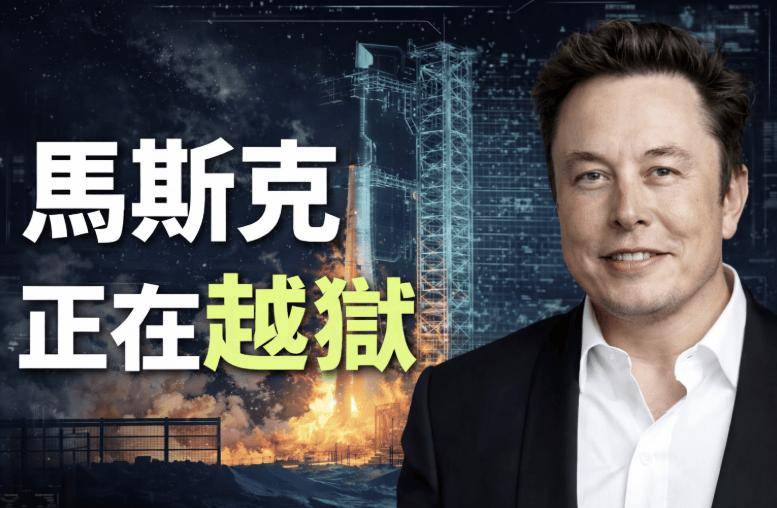
马斯克的“越狱”计划
Sou Hu Cai Jing· 2026-02-09 00:33
Group 1 - The article discusses a significant shift in the AI revolution, emphasizing that the real challenge lies in overcoming physical constraints rather than just improving algorithms [1] - It highlights that robots, particularly those like Musk's Optimus, represent a new era of "self-replicating industrial units," which could disrupt traditional labor cost models [3] - The article warns of an impending "breakpoint" in power supply within 36 months, as computational power grows exponentially while global electricity output remains stagnant [4] Group 2 - Musk's strategy involves moving energy-intensive computing to space to avoid terrestrial political hurdles, thus optimizing efficiency [6][7] - The concept of a vertically integrated "interstellar production line" is introduced, suggesting that competitors will face not just technological gaps but also "dimensional gaps" [8] - The article stresses the importance of energy conversion into productive capacity, indicating that the future of manufacturing will depend on who can efficiently harness and utilize cosmic energy [9] Group 3 - The conclusion emphasizes a pragmatic approach to engineering challenges, suggesting that when systems become bottlenecks, alternatives must be sought, such as moving operations to space [10] - The article notes that solar energy in space is five times more efficient due to the absence of atmospheric interference, and there are no bureaucratic delays in orbit [13] - It outlines a collaborative framework where SpaceX transports energy, space computing provides intelligent fuel, xAI refines digital processes, and Optimus executes physical production on Earth [14]

AI引爆科学,MIT博士创业一年拿到数亿融资
Xin Lang Cai Jing· 2026-02-09 00:15
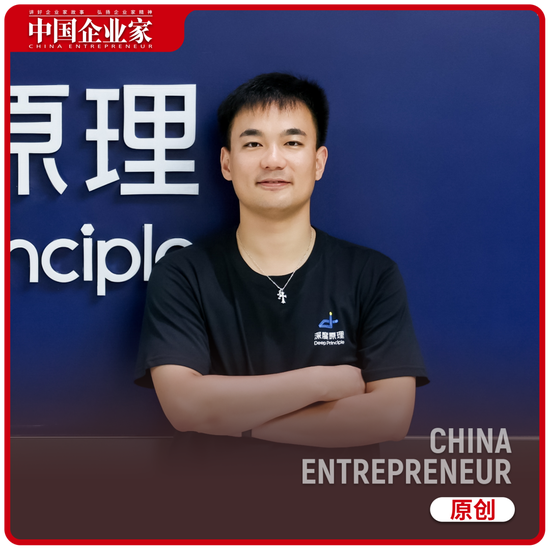
Core Insights - The article discusses the emergence of AI for Science (AI4S) as a transformative force in scientific discovery, particularly in addressing critical challenges in foundational science [2][6][36] - The company DeepMind and the Baker team developed a deep learning model called "RFdiffusion," which predicted approximately 200 million protein structures, showcasing the potential of AI in scientific research [2][36] - The founder of Deep Origin, Jia Haojun, emphasizes the importance of AI in enabling new scientific discoveries rather than merely serving as a tool for existing processes [2][36] Company Overview - Deep Origin was founded by Jia Haojun, who integrated generative AI with first principles to apply AI in material research [3][33] - The company has developed six proprietary algorithm modules, which are integrated into a self-developed platform named "ReactiveAI" [3][33][46] - The platform has recently been upgraded to a material discovery agent called "Agent Mira," which autonomously mobilizes data and resources for chemical material development [4][34] Industry Trends - In 2025, AI4S is expected to reach a critical turning point, with significant investments and initiatives from both the U.S. and China aimed at leveraging AI for scientific research [6][36] - Major companies like Tencent, Alibaba, and ByteDance are rapidly establishing AI4S teams and initiatives, indicating a strong competitive landscape [6][36] - The "Artificial Intelligence+" plan in China highlights AI4S as a key direction for upgrading scientific discovery paradigms [6][36] Funding and Growth - Deep Origin completed a Series A financing round exceeding 100 million RMB, led by Alibaba's entrepreneur fund and Ant Group, among others [7][37] - The company has received multiple rounds of funding, totaling several hundred million RMB, reflecting the growing interest in the AI4S sector [52][56] - The AI4S sector has become a favored area for investment, with notable companies achieving significant funding and market presence [52][56] Commercialization Efforts - Deep Origin is actively expanding its client base, securing contracts worth millions in various industries, including beauty and materials energy [24][56] - The company successfully collaborated with a European beauty giant to address stability issues in active ingredients, demonstrating the practical value of its AI platform [26][56] - The approach of "co-developing with clients" is seen as a more effective way to popularize AI applications compared to merely selling the platform [26][56] Technical Innovations - Deep Origin's unique "ECML system" combines AI model predictions, computational support, and experimental validation, significantly enhancing computational efficiency [45][46] - The company has developed a layered generation architecture to ensure the physical feasibility of generated material structures [45][46] - The integration of specialized algorithms tailored for chemical reactions and material performance prediction creates a competitive edge that is difficult to replicate [29][46]

国内首例AI“幻觉”案,给我们提了个醒
Xin Lang Cai Jing· 2026-02-08 18:30
Core Viewpoint - The first legal case in China regarding AI "hallucination" has been ruled, highlighting the need to clarify responsibility for AI-generated errors and the implications for AI governance [1][2] Group 1: Case Summary - A high school student's relative discovered inaccuracies in information generated by an AI platform and sued the company for compensation after the AI suggested it would pay 100,000 yuan for errors [1] - The Hangzhou Internet Court dismissed the lawsuit, indicating that AI outputs are probabilistic and do not constitute legally binding commitments [2] Group 2: Legal Implications - The court's ruling emphasizes that AI does not bear absolute responsibility for its outputs, but AI operators must fulfill governance responsibilities and reasonable care obligations [2] - The judgment shifts the focus from "result guarantee" to "risk control," assessing whether service providers meet obligations for warnings, corrections, and safety evaluations [2] Group 3: Risks of AI "Hallucination" - AI "hallucination" is recognized as a significant risk in AI usage, with examples emerging globally, such as a lawsuit against the AI chatbot Grok for providing misleading information [3] - The severity of risks associated with AI "hallucination" is closely linked to the application context, with potential serious consequences in critical areas like legal judgments and medical diagnoses [3] Group 4: Governance Exploration - The challenges posed by AI "hallucination" are likened to historical issues such as information silos and digital divides, suggesting a need for a nuanced understanding of the problem [4] - Emphasizing the importance of continued use and training of AI technologies to improve their reliability and service to humanity, rather than abandoning them due to current limitations [4]
腾讯研究院AI速递 20260209
腾讯研究院· 2026-02-08 16:03
Group 1: Claude Opus 4.6 Release - Anthropic launched Claude Opus 4.6, outperforming GPT-5.2 by approximately 144 Elo in GDPval-AA knowledge work assessment and achieving top scores in Terminal-Bench 2.0, Humanity's Last Exam, and BrowseComp [1] - The Opus model supports a context window of 1 million tokens and an output limit of 128,000 tokens, achieving 76% in long context retrieval tests, which is four times better than Sonnet 4.5 [1] - The product line has been updated with new features, including agent teams in Claude Code, an upgraded Excel, and a research preview for PowerPoint, along with new API functionalities like adaptive thinking and context compaction [1] Group 2: OpenAI GPT-5.3-Codex Release - OpenAI released GPT-5.3-Codex shortly after Claude Opus 4.6, achieving 77.3% in Terminal-Bench 2.0, regaining the highest score and being 25% faster than its predecessor, GPT-5.2-Codex [2] - This model is the first to participate in creating its own model, utilizing early versions for debugging its training process, managing deployment, and analyzing evaluation results [2] - The OSWorld-Verified score improved from 38.2% to 64.7%, nearing the human benchmark of 72%, with a cybersecurity CTF score of 77.6%, marking it as the first high-capability cybersecurity model [2] Group 3: Claude Opus 4.6 Fast Mode - Anthropic introduced a Fast Mode for Claude Opus 4.6, which is 2.5 times faster than the standard version, available to Claude Code and API users, with initial support from platforms like Cursor and GitHub Copilot [3] - Pricing for Fast Mode has significantly increased, with input costs at $30 per million tokens and output costs at $150 per million tokens, while long context pricing has doubled, offering a 50% discount until February 16 [3] - This mode is recommended for rapid code iteration and real-time debugging, with automatic fallback to the standard version after hitting rate limits [3] Group 4: Pony Alpha Model - The OpenRouter platform launched the mysterious anonymous model Pony Alpha, which excels in programming, logical reasoning, and role-playing, available for free [4] - Speculation surrounds the model's identity, with guesses including DeepSeek-V4, GLM new models, Opus 5.3, Codex 4.6, or Grok 4.2, but no consensus has been reached [4] - Pony Alpha supports reasoning with a context of 200,000 tokens, with users successfully creating complete web applications containing 500 lines of code, hinting at a possible Chinese origin due to its name [4] Group 5: ByteDance Seedance 2.0 Launch - ByteDance quietly launched Seedance 2.0, which supports self-storyboarding, synchronized audio-visual generation, multi-shot narratives, and up to 12 multimodal reference files [5] - The usability rate improved from under 20% to over 90%, with actual production costs reduced to near theoretical levels, fundamentally changing the industry's economics [5] Group 6: Tencent WorkBuddy Internal Testing - Tencent opened internal testing for WorkBuddy, a desktop AI agent capable of planning and executing complex multimodal tasks on local computers [7] - Core capabilities include automatic batch file processing, document/spreadsheet/PPT generation, deep data analysis, and industry research, with built-in model switching and high-risk command interception [7] - Since its internal testing began on January 19, it has served over 2,000 Tencent employees, targeting non-technical workplace groups like HR, administration, operations, and sales to lower the AI tool usage barrier [7] Group 7: Waymo and DeepMind Collaboration - Waymo introduced a world model built on DeepMind Genie 3, capable of generating highly realistic and interactive 3D environments, simulating rare driving scenarios like tornadoes and elephants [8] - The model supports three control mechanisms: driving behavior, scene layout, and language, converting ordinary driving record videos into multimodal simulations, showcasing the Waymo Driver's perspective [8] - Waymo Driver has completed nearly 200 million miles of fully autonomous driving, with the world model enabling the system to rehearse billions of miles of complex scenarios in a virtual environment [8] Group 8: Elon Musk's Future Plans - Elon Musk revealed SpaceX plans to launch 20,000 to 30,000 times annually, predicting that within five years, space computing power will exceed the global total [9] - The Tesla AI5 chip is set for mass production in Q2 next year, with the AI6 chip following within a year, and Optimus expected to reach a production capacity of 1 million units in three years and 10 million in four years [9] - Musk described Optimus as a "money-making perpetual motion machine," asserting that without breakthrough innovations, the U.S. will fall behind China in AI, electric vehicles, and humanoid robot manufacturing [9] Group 9: AI Growth Projections - ARK Invest forecasts that global GDP growth will exceed 7% by 2030, driven by the integration of five technologies, with a bullish Bitcoin price target of $1.5 million by 2030 [12] - The differentiated development of AI between China and the U.S. sees China breaking through with an open-source approach, while the U.S. leads in application-level global competitiveness, with proprietary data being a decisive advantage in the AI era [12] - Tesla is positioned to lead the Robotaxis market through vertical integration, with future travel costs potentially dropping to $0.20 per mile, and a market capitalization of a trillion dollars by 2030 is anticipated [12]

东京电子:存储订单增长推动业绩迅速回升
HTSC· 2026-02-08 14:03
Investment Rating - The report maintains a "Buy" rating for the company [1] Core Views - The company's performance is rapidly recovering due to growth in storage orders, with a target price raised to JPY 52,000 from JPY 44,000 [5][8] - The company has adjusted its revenue and net profit guidance upwards for the fiscal year, indicating confidence in future performance [6] - The report highlights a significant increase in DRAM revenue share, reflecting a strong demand for HBM-related equipment [6] Financial Performance - For FY2026, the company expects revenue of JPY 2,410 billion, a slight decrease of 0.9% year-on-year, with a net profit of JPY 550 billion, an increase of 1.1% year-on-year [6][10] - The company anticipates a revenue increase of 15% to 20% in the WFE market for CY2026, driven by demand for advanced packaging and 2nm production [7] - The report projects double-digit growth in Logic and DRAM-related revenues for FY27 and FY28 [8] Business Segmentation - The revenue breakdown shows a decrease in logic foundry revenue share from 59% to 56%, while DRAM's share increased from 27% to 36% [6] - The company has achieved significant coverage in the HBM-related bonding and etching equipment sectors, validating the logic of the storage boom cycle [6] Market Trends - The report indicates that the global WFE market is expected to grow by over 15% in CY2026, with DRAM and logic foundry sectors driving this growth [7] - The company is well-positioned to benefit from the increasing demand for AI chips and advanced packaging technologies [7] Valuation Metrics - The report provides updated valuation metrics, with a projected PE ratio of 39.1x for FY27, reflecting the company's strong market position and growth potential [8][23]
港股互联网ETF(513770)下探近7个月新低,资金溢价狂涌,信心来自哪里?
Xin Lang Cai Jing· 2026-02-08 12:10
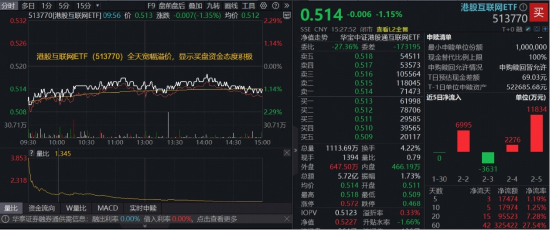
Core Viewpoint - The Hong Kong stock market experienced a significant decline influenced by the drop in US tech stocks, with major internet companies facing deep corrections, particularly Alibaba and Meituan [1][10]. Group 1: Market Performance - On February 6, the three major indices in Hong Kong opened sharply lower, with Alibaba-W dropping nearly 3% and Meituan-W and Kuaishou-W falling over 2% [1][10]. - The Hong Kong Internet ETF (513770) opened lower and saw a price drop of up to 2%, eventually closing down 1.15%, despite showing signs of strong buying interest with a net inflow of 175 million yuan over the past five days [11][13]. Group 2: Valuation and Investment Sentiment - The Hong Kong internet sector has seen a continuous decline for six days, with the market price hitting an eight-month low on February 5. The current price-to-earnings ratio (PE) for the China Securities Hong Kong Internet Index is 24.25, which is at a historical low compared to the past five years [3][13]. - Southbound capital has shown a clear bottom-fishing trend, with a cumulative net purchase exceeding 56 billion HKD this week, including a record 24.977 billion HKD on February 5, focusing on Tencent, Alibaba, and Xiaomi [5][15]. Group 3: Future Outlook - Analysts from Guohai Securities highlight that leading internet companies are generally undervalued, with a new round of competition centered around AI models improving commercial ROI. The internet sector is expected to see a valuation reset, driven by stable user traffic and the emergence of generative AI as a new growth driver [16]. - GF Securities notes that the current global dollar cycle is peaking and transitioning, with the RMB entering a mild appreciation phase. This, combined with foreign capital inflows and valuation recovery, presents a favorable re-pricing window for Chinese equity assets [16]. Group 4: ETF and Investment Strategy - The Hong Kong Internet ETF (513770) and its linked funds passively track the China Securities Hong Kong Internet Index, with the top ten weighted stocks including Alibaba-W, Tencent, and Xiaomi, accounting for nearly 77% of the ETF [6][16]. - For investors looking to reduce volatility while still focusing on technology, the Hong Kong Large Cap 30 ETF (520560) is recommended, which combines high-growth tech stocks with stable dividend-paying companies [17].
OpenAI第一款硬件要来了,但可能“没那么AI”?
硬AI· 2026-02-08 06:18
Core Viewpoint - OpenAI's first consumer device, originally intended to be a standalone smart headset, is likely to be downgraded to a cloud-dependent "basic headset" due to soaring BOM costs driven by the global storage chip crisis [2][3]. Group 1: Product Development and Specifications - OpenAI's first hardware, internally codenamed "Sweetpea" and named "Dime" for consumers, was initially designed to feature a Samsung 2nm Exynos chip, providing smartphone-like computing capabilities for complex edge AI processing [5][6]. - Due to high prices of storage components, OpenAI is forced to adjust its strategy, potentially stripping the device of its high-performance attributes and reverting to a simpler headset form [6]. Group 2: Market Strategy and Production Plans - Despite the product's compromised definition, OpenAI is aggressively pursuing its hardware agenda, with executives prioritizing it as a top project [8]. - The product is expected to launch in September 2026, likely manufactured by Foxconn in Vietnam, with a sales target of 40 to 50 million units in the first year [8]. Group 3: Future Product Development - In addition to the headset, OpenAI is developing a second consumer device codenamed "Gumdrop," which resembles a pen or an Apple iPod Shuffle, featuring a no-screen design focused on environmental awareness and interaction [10]. - Key functionalities of "Gumdrop" include real-time conversion of handwritten notes to text for ChatGPT, situational awareness through camera and microphone, and the ability to run local AI models supported by cloud computing [10].