美元霸权

Search documents
终于对人民币动手了,英国踢掉全部货币,死保美元
Sou Hu Cai Jing· 2025-11-13 02:37
Core Viewpoint - The London Metal Exchange (LME) has abruptly suspended all non-U.S. dollar-denominated metal options trading, forcing global traders to transact in U.S. dollars only, which is seen as a desperate reaction to the rising challenge of the Chinese yuan in the metal trading market [1][3]. Group 1: Impact on Dollar Dominance - The LME's decision is interpreted as a significant blow to the dollar's dominance in global commodity pricing, particularly as the exchange has historically been a key pillar of U.S. dollar hegemony [1][3]. - The dollar's dominance relies on three pillars: settlement, reserve, and pricing, with the LME being central to the pricing pillar [3]. - The LME's operations have allowed U.S. capital to benefit from fluctuations in interest rates, leading to significant profits for Wall Street firms during periods of low interest rates [3][4]. Group 2: Changes in Global Metal Trading - The rise of Chinese manufacturing has shifted the landscape, with China controlling over 70% of rare earth oxide production and significant shares of other metals, establishing itself as the largest metal consumer globally [7]. - Since 2022, the trading volume of metal options denominated in yuan has surged, with a 900% increase in market share, indicating a growing acceptance of the yuan in international metal transactions [7]. - The Shanghai Futures Exchange has reported that yuan-denominated copper futures have the largest open interest globally, surpassing that of the LME [7][8]. Group 3: Market Reactions - Following the LME's announcement, the Shanghai Futures Exchange saw a significant increase in trading volume, while the LME experienced unusual trading halts, highlighting a shift in market dynamics [8][10]. - The Dubai Commodity Exchange plans to launch yuan-denominated copper futures in 2026, further solidifying the yuan's role in the market [8]. - Market participants are increasingly viewing U.S. dollar-denominated metals as less favorable compared to those priced in yuan, indicating a potential shift in trading preferences [10].


英美没想到!联手踢人民币出局,只为巩固美元,交易市场却变天了
Sou Hu Cai Jing· 2025-11-12 13:14
Core Viewpoint - The sudden decision by the London Metal Exchange (LME) to halt all non-U.S. dollar-denominated metal options trading is perceived as a strategic move against the rising influence of the Chinese yuan, signaling a potential shift in the global financial order [3][12][30] Group 1: LME's Role and Impact - The LME has historically functioned as a key component of the U.S. dollar's dominance in global finance, acting as a "wealth amplifier" to maintain U.S. hegemony [5][12] - The LME's pricing system dictates the value of industrial metals globally, reinforcing the dollar's role in commodity pricing [5][14] - The LME's operations have facilitated a wealth transfer mechanism that benefits U.S. financial markets at the expense of manufacturing nations [7][9] Group 2: China's Rising Influence - China is positioned as a formidable challenger to the LME, leveraging its industrial strength and trade volume to reshape the pricing dynamics of metals [12][14] - The trading volume of yuan-denominated metal options has surged by 900% from 30,000 contracts to 270,000 contracts over the past three years, indicating a significant shift towards yuan-based transactions [14][20] - Major resource-exporting countries are increasingly adopting yuan for trade, with over 30% of mineral exports to China now settled in yuan [16][20] Group 3: LME's Reaction and Consequences - The LME's abrupt rule change to exclude yuan-denominated trading is seen as a desperate attempt to maintain its influence, reflecting a lack of confidence in its traditional market dominance [18][22] - This move has inadvertently accelerated the market's shift towards the yuan, as evidenced by a dramatic increase in trading volumes on the Shanghai Futures Exchange following the LME's announcement [25][27] - The widening price gap between LME and Shanghai copper contracts highlights the growing divide between speculative financial practices and real industrial demand [25][29] Group 4: Future Outlook - The LME's actions may signify the beginning of a transition to a "post-LME era," where the center of gravity in metal trading shifts from London to Shanghai [29][30] - The historical parallels drawn with the decline of the British pound post-Suez Crisis suggest that the dollar's dominance in metal markets may also be waning [27][30]
这下该傻眼了!伦敦交易所踢中国出局,紧要关头全球资本弃美投中
Sou Hu Cai Jing· 2025-11-12 11:22
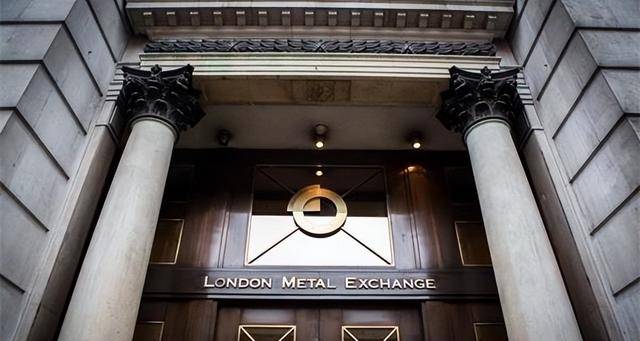
Core Viewpoint - The London Metal Exchange (LME) has announced that all metal futures trading must be settled in US dollars starting November 10, effectively suspending non-dollar denominated contracts, including those priced in Chinese yuan, raising questions about the underlying motives behind this decision [1][3][5]. Group 1: Market Dynamics - The trading volume of yuan-denominated copper futures reached 357,000 contracts in 2024, increasing to 482,000 contracts in the first half of 2025, indicating a growth of nearly 35%, contradicting LME's claim of "insufficient liquidity" [3]. - The LME's decision coincides with the US's plan to increase money supply and accelerate printing in December, suggesting a strategic move to maintain the dollar's dominance in the global commodities market [3][5]. - The LME, as a key platform for metal futures, has historically favored the dollar, despite the rising international status of the yuan [5][10]. Group 2: Geopolitical Implications - The suspension of yuan futures appears to be a measure to protect the dollar's hegemony amid China's growing influence in the global metal market [5][8]. - The US has formed a critical mineral alliance with several countries to stabilize supply chains for essential metals, aiming to tie these resources to the dollar, which is seen as a direct challenge to China's rising market power [8][10]. Group 3: Shift in Trading Preferences - The Shanghai Futures Exchange has been gaining prominence, with significant increases in trading volumes for metals like copper and aluminum, indicating a shift away from dollar-denominated transactions [12][14]. - Following the LME's announcement, trading volume for copper futures on the Shanghai Futures Exchange surged by 15%, demonstrating a preference for yuan settlements among global traders [12][19]. - Major international companies, including BMW and Volkswagen, have begun using yuan for metal transactions, reflecting a growing trend towards yuan settlements [14]. Group 4: Future Outlook - The rise of the yuan in metal trading is expected to lead to a dual pricing system where both the dollar and yuan coexist, enhancing market diversity and fairness [17][19]. - The promotion of digital yuan in countries like Indonesia, Chile, and Iran is laying the groundwork for further internationalization of the yuan, potentially reducing reliance on dollar settlements [16][19]. - The overall trend suggests that global capital is increasingly inclined towards markets that offer stable, transparent, and low-cost trading options, with yuan settlements becoming a significant choice [19].
为了美元霸权,老美直接想掀桌子了?
大胡子说房· 2025-11-12 10:47
Core Viewpoint - The London Metal Exchange (LME) has suspended all non-USD denominated metal options trading, which is seen as a move to reinforce the dominance of the USD in global commodity pricing and to counter the growing internationalization of the RMB [1][18]. Group 1 - The LME's official reason for the suspension is the low trading volume of non-USD contracts, which has led to higher maintenance costs than benefits [1]. - Despite the LME's claims, RMB-denominated metal futures trading has been significantly increasing, with daily trading volume for copper futures rising from over 300,000 contracts in 2024 to nearly 500,000 contracts in the first half of 2025, marking a nearly threefold increase over three years [1]. - The RMB's share in long-term metal transactions in regions like the Middle East and Africa has surpassed 30% [1]. Group 2 - The urgency from the U.S. to act against RMB internationalization stems from three main factors: the signing of RMB settlement agreements for iron ore with Australia, the successful issuance of $4 billion in sovereign bonds with a high subscription rate, and the upcoming shift in U.S. monetary policy towards quantitative easing [2][14]. - The issuance of U.S. sovereign bonds saw a subscription rate of 30 times the issuance amount, indicating strong international investor confidence [2][3]. Group 3 - The LME's actions are perceived as a direct challenge to the RMB's growing influence in global commodity pricing, aiming to reclaim USD's pricing power in key minerals [18]. - The potential emergence of two parallel pricing systems—one centered around the Shanghai Futures Exchange and the other around U.S. exchanges—could disrupt existing trade agreements, particularly those using RMB for settlement [20][21]. Group 4 - The U.S. strategy to limit RMB transactions could lead to a situation where countries like Australia reconsider their RMB settlement agreements if they become unprofitable due to rising USD-denominated prices [21][22]. - The ongoing "currency war" suggests that while the RMB may not immediately replace the USD, it will not be completely overshadowed by it either, leading to a more diversified global currency landscape [30]. Group 5 - The competition for pricing power will likely enhance the strategic position and valuation of related sectors in the A-share market, as more trading may shift to the Shanghai Futures Exchange [31]. - The focus on critical mineral supply chain security will increase attention on China's dominance in rare earths, presenting potential investment opportunities [32]. - The anticipated liquidity influx from U.S. monetary policy changes could alter market dynamics, creating both opportunities and risks for investors [32].

当世界开始用手机支付时,美元霸权岌岌可危,金融霸权的天塌了!
Sou Hu Cai Jing· 2025-11-10 10:18
Core Insights - The real concern for the U.S. is not China's military capabilities but the rise of Chinese financial systems exemplified by mobile payment platforms like WeChat Pay, which are challenging the U.S.-dominated global financial order [1][3] - The emergence of China's digital currency, the digital yuan, offers a state-backed alternative for international transactions, allowing users worldwide to engage in fee-free cross-border payments, thus threatening the dollar's monopoly [3][5] Group 1: U.S. Financial Dominance - The U.S. dollar has historically maintained a monopoly on global payments, allowing the U.S. to print money while the world trades with it, creating a closed-loop system that benefits the U.S. economy [5][16] - Recent geopolitical actions, such as sanctions and supply chain disruptions, have led countries like Saudi Arabia and Argentina to reconsider their reliance on the dollar, with Argentina even repaying IMF debts in yuan [5][14] Group 2: Shift in Global Payment Systems - The digital payment infrastructure created by China is gaining traction, with over 210 million digital yuan accounts established, indicating a growing acceptance among global merchants [3][7] - The reluctance of global capitalists to initially adopt this system is changing as geopolitical tensions prompt a reevaluation of risks associated with dollar dependency [7][20] Group 3: U.S. Response to Competition - The U.S. has recognized the threat posed by China's financial innovations, leading to aggressive measures against Chinese tech firms and attempts to maintain its financial hegemony through various means, including interest rate adjustments and sanctions [9][18] - The competition is not merely about military might but revolves around financial systems and the ability to influence global economic rules, with China quietly expanding its reach through digital payment technologies [20]

基辛格:美元是我们的货币,却是你们的麻烦!
Sou Hu Cai Jing· 2025-11-10 08:48
Group 1 - The core argument emphasizes that the dominance of the US dollar is crucial for American power, with military strength serving to uphold this monetary hegemony [1][3]. - The high costs associated with maintaining the dollar's status are highlighted, including over a trillion dollars in military spending and extensive military bases worldwide [3]. - The article discusses China's attempts at internationalizing the renminbi, noting the challenges faced and the strategic pivot towards initiatives like the Belt and Road and currency swaps to enhance industrial tax collection [3][5]. Group 2 - The concept of currency swaps is presented as a method to disrupt the dollar's dominance, allowing countries to manage their debts more effectively without resorting to asset liquidation [5][7]. - The issuance of €4 billion in sovereign bonds in Luxembourg is framed as a signal to other nations that they can seek debt restructuring with China, while also indicating a loss of confidence in the dollar due to excessive issuance [7]. - The article suggests that China's control over rare earth resources and recent restrictions on silver exports serve as leverage against US dominance in high-end manufacturing, indicating a strategic shift towards securing commodity transactions in renminbi [7].

中国在香港发美元债,美国为啥只能干瞪眼?这招釜底抽薪太狠了
Sou Hu Cai Jing· 2025-11-08 17:05
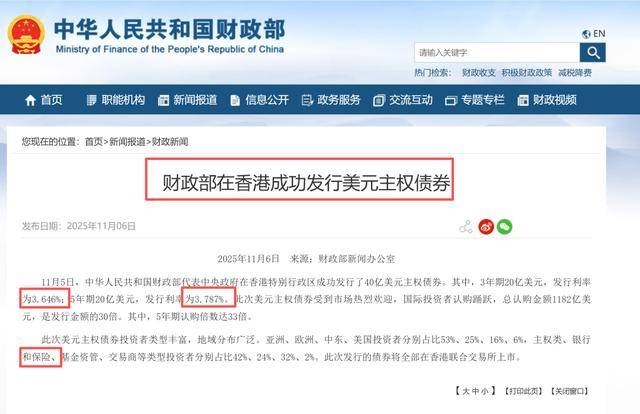
Core Insights - China recently issued $4 billion in bonds in Hong Kong, attracting an overwhelming demand of $118 billion, indicating a 30-fold oversubscription, which highlights a significant shift in global capital perception towards China's creditworthiness compared to the U.S. [1][2] Group 1: Bond Issuance and Demand - The issuance of sovereign bonds by China, despite its strong financial position, raises questions about the need for low-interest borrowing [2] - The interest rates for the bonds were set at 3.646% for 3-year bonds and 3.787% for 5-year bonds, which are lower than the U.S. federal funds rate, suggesting a shift in global investor confidence [2] Group 2: Global Financial Dynamics - The bond issuance is seen as a strategic move in the context of global finance, where the U.S. has traditionally held a dominant position as the "casino boss" of the world economy [4][6] - China's actions are perceived as a challenge to U.S. financial hegemony, as it positions itself as a reliable alternative for countries seeking to avoid high-interest loans from the U.S. [9][12] Group 3: Strategic Implications - The issuance of U.S. dollar bonds by China is viewed as a "reverse casino mutual fund," allowing countries with excess dollars to invest in safer Chinese bonds while China uses these funds to assist nations in debt distress [9][10] - This strategy enhances China's image as a "white knight" in global finance, while simultaneously undermining the U.S.'s ability to leverage its financial power for geopolitical gains [12][17] Group 4: Long-term Consequences - The bond issuance is not merely a financial maneuver but a significant geopolitical strategy that could reshape the global economic landscape over the next century [12][18] - The ongoing competition between China and the U.S. is framed as a battle of endurance and comprehensive national credit, with China demonstrating a sustainable capacity to attract global capital [18]
32国选择绑定中国人民币,4.5万亿货币互换,中国成为最大赢家!
Sou Hu Cai Jing· 2025-11-08 10:43
在全球金融格局变化中,人民币正悄然改变支付和贸易规则。 中国与32国签署的货币互换总额突破4.5万亿,金砖国家约30%的贸易结算绕开美元,显示出全球对美元信任下降和对中国经济实力的认可。 人民币不再只是国内流通工具,而成为全球贸易和金融的底气。 从大宗商品到跨境电商,从数字人民币秒到账到企业省汇兑成本,这些变化正在重塑世界经济格局。 人民币能挑战美元的霸主地位吗? 纵观历史,真正能称霸全球的货币从来不是凭空出现的。 英镑之所以成为最早的世界货币,是因为英国当年凭借第一次工业革命建立了无可匹敌的经济实力。 工业产值一度占据全球近一半,纺织机、钢铁厂、港口码头遍布世界各地,英国生产的商品自然要求使用英镑结算。 英国殖民遍布全球,黄金储备充足,1821年实行金本位制,让其他国家可以随时将英镑兑换为黄金。 这种经济、贸易、金融与殖民实力的结合,为英镑赢得了长期国际信用。美元的崛起则更具战略性。 第二次工业革命之后,美国经济迅速超过英国,并在两次世界大战中保持相对完整的工业体系。 战后通过马歇尔计划向欧洲大规模输出资金和物资,条件是用美元结算,同时通过布雷顿森林体系把美元和黄金绑定,直接将美元送上国际货币霸主的位 置。 ...
等你来投!《清华金融评论》12月刊 “ 前瞻美债与美元 : 长周期视角 ” 征稿启事
清华金融评论· 2025-11-08 09:31
Group 1 - The uncertainty of the U.S. government's tariff and fiscal policies has shaken investor confidence in U.S. Treasuries and the dollar [4][2] - As of October 2025, the U.S. national debt has exceeded $37.86 trillion, with a federal budget deficit of $1.8 trillion for FY 2025, remaining at historically high levels [4] - The net interest cost of U.S. public debt has surpassed $1 trillion for the first time, reflecting an approximately 8% increase from FY 2024, driven by rising debt and high interest rates [4] Group 2 - Future U.S. Treasury yields may remain volatile at high levels, and the strong position of the dollar may gradually weaken [4][2] - Investors are advised to closely monitor U.S. government policy dynamics, economic data, and global market changes to assess risks and make informed investment decisions [4][2] - A call for submissions has been made by the editorial team of Tsinghua Financial Review, focusing on the long-term perspective of U.S. Treasuries and the dollar [4][3]
中国或将对美元霸权出手!中国已经知道了美国的套路,接下来就是全线反击
Sou Hu Cai Jing· 2025-11-08 09:10
Core Viewpoint - China is preparing to take action against the dominance of the US dollar, recognizing the vulnerabilities in the US's global influence and credibility, particularly following the trade war initiated by Trump [2][6]. Group 1: Trade Dependencies - The trade dependency between China and the US has decreased significantly, with China's exports to the US dropping from 19.4% to 9.8% since 2018, while US imports from China fell from 21.4% to 16.4% [2]. - Despite the reduction in exports to the US, China's overall export growth continues, indicating that US tariffs have limited impact on China's trade dynamics [2]. Group 2: Key Commodities - The soybean trade represents a critical vulnerability for Trump, as China has significantly reduced its imports of US soybeans, impacting key political support in the Midwest [5]. - China controls over 80% of light rare earth elements and 99% of heavy rare earth elements, giving it a strategic advantage in this sector, which is crucial for the US [5]. Group 3: US Global Influence - The US has maintained its global dominance despite setbacks in various military conflicts, but the current situation with China represents a significant challenge to this narrative [6]. - The perception of China as an equal competitor has emerged, undermining the long-held belief in US invincibility [6]. Group 4: Future Strategies - The ongoing US-China rivalry is expected to escalate, with the US likely to employ various strategies to contain China's rise, even at a high cost [8]. - China is exploring low-cost strategies to counter the US, including increasing the use of the yuan in international trade, particularly in commodities like iron ore and soybeans [10][12]. Group 5: Currency Strategy - China aims to gradually reduce reliance on the US dollar by promoting yuan settlements in its significant annual purchases, which total around $1 trillion [12]. - A shift of even $1 trillion away from US debt holdings could severely impact the US economy and the dollar's status [12]. - The strategy involves a gradual approach, starting with small agreements and expanding to larger sectors over time, akin to a "rural encirclement" strategy [15].