资本市场改革

Search documents
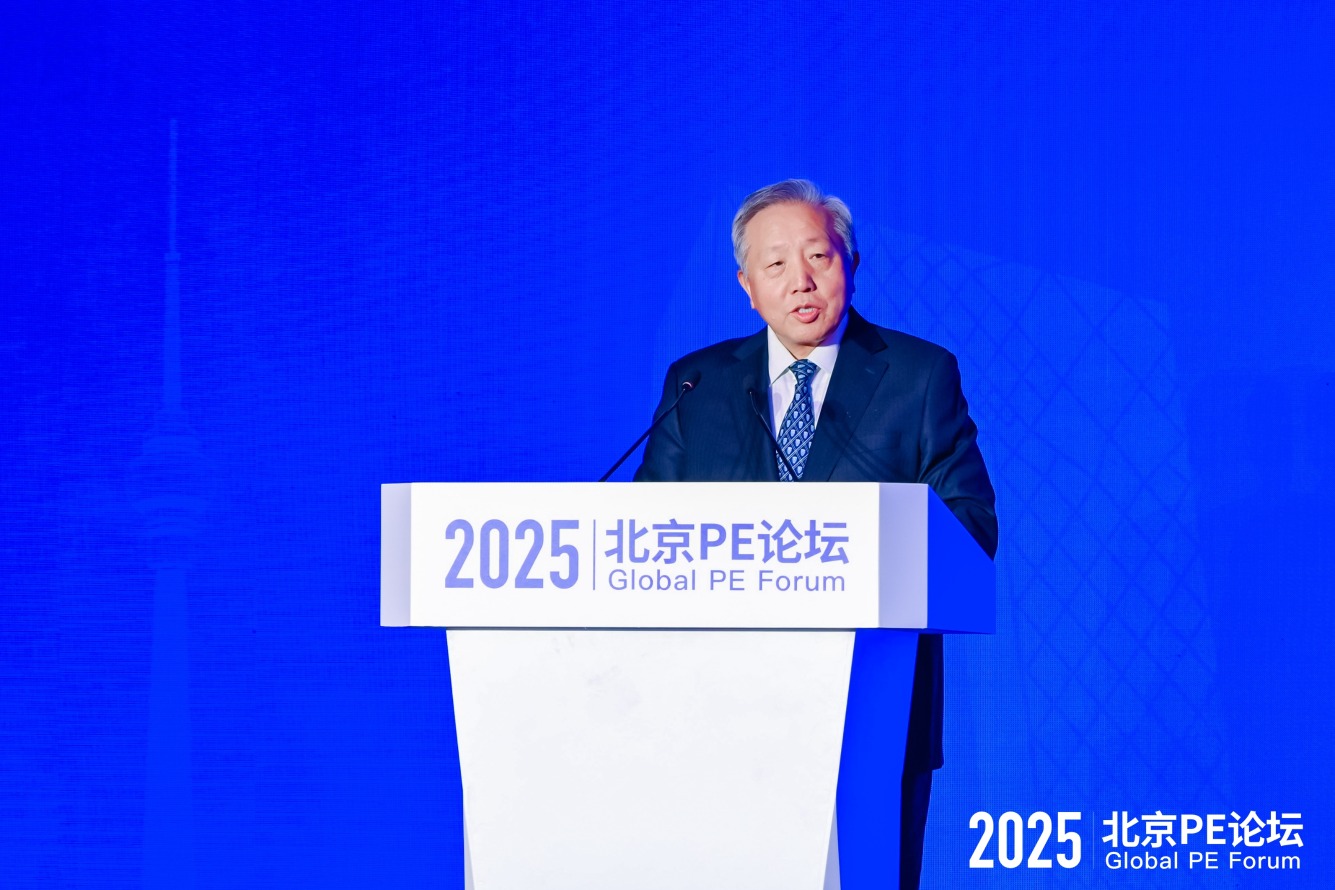
吴晓求:从优化上市公司结构、提升市场流动性和透明度等深化资本市场改革
Xin Hua Cai Jing· 2025-12-06 08:15
Core Viewpoint - The A-share market in China is entering an upward trend due to a series of measures, with a focus on achieving three key goals for capital market reform to promote high-quality development [1][3]. Group 1: Goals of Capital Market Reform - The first goal is to ensure that investors feel secure in their investments [3]. - The second goal is to establish the capital market as a platform for social wealth management [3]. - The third goal is to develop China's capital market into a significant new international financial center [3]. Group 2: Reform Areas - The asset-side reform focuses on adjusting the structure of listed companies, promoting high-tech and innovative enterprises as the main body of listed companies [3]. - The investment-side reform aims to enhance market liquidity, particularly by encouraging long-term large capital inflows to significantly increase the flow and stock of funds in the market [3]. - The institutional reform emphasizes ensuring market transparency and fairness, transitioning from primarily administrative penalties for violations to criminal and civil penalties without limits, making violations costly [3].

21社论丨培育耐心资本,激活创投与科创的良性循环
21世纪经济报道· 2025-12-06 08:04
近日,证监会主席吴清在人民日报发表署名文章指出,经过30多年的改革发展,我国资本市 场从无到有、从小到大,当前正处在向高质量发展快速转变的关键阶段。提高资本市场制度 包容性、适应性,是站在新的历史起点上,开启的一次全方位、深层次、系统性的变革。 可以说,一个包容高效的IPO市场,是撬动整个社会资本投向科技创新的支点。如果没有这个 畅通的出口,上游的耐心资本就无从谈起,科技创新的土壤就会干涸。 但资本市场的"活水"效应,绝不仅仅体现在IPO的那一刻。当退出的渠道畅通且预期明确时, 上游的风险投资(VC)和私募股权投资(PE)才敢于投早、投小、投硬科技。摩尔线程上市 后的市值突破,给予了一级市场投资者丰厚的回报,这种财富效应将迅速转化为信心,通过 LP与GP的循环,再次流向成千上万个还在孵化器、实验室里的初创科技项目。 展望未来,随着资本市场全面深化改革的纵深推进,市场活力将进一步充分释放。我们期待 看到更多像摩尔线程这样的硬科技企业,在资本市场的滋养下健康成长。这不仅是资本市场 的繁荣之本,更是中国经济转型升级、实现高水平科技自立自强的必由之路。 出品丨21财经客户端 21世纪经济报道 编辑丨黎雨桐 21社论丨 ...

视频|吴晓求:根治A股“埋雷”痼疾是“十五五”改革基础目标,详解资本市场改革“三端三层”路线图
Xin Lang Cai Jing· 2025-12-06 03:38
Core Viewpoint - The capital market in China has undergone significant reforms, leading to a clearer and more positive market outlook, as evidenced by the rise of the Shanghai Composite Index from approximately 3400 points to 3902 points, marking a 15% increase [3][8]. Group 1: Key Reforms - The reforms should focus on three critical areas: asset-side reform, demand-side reform, and institutional reform [4][9]. - Asset-side reform aims to adjust the structure of listed companies, promoting high-tech and innovative enterprises as the main body of the market, which will provide growth potential and predictability [4][9]. - Demand-side reform focuses on enhancing market liquidity and attracting more medium- to long-term funds into the market, addressing the historical dominance of individual investors that has limited large capital inflows [4][9]. Group 2: Strategic Goals - The foundational goal is to eliminate "landmines" in the market, specifically by preventing fraud and misconduct, which currently have low penalties, thus encouraging such behavior [5][11]. - The core goal is to transform the capital market into a primary channel for wealth management, gradually replacing real estate as the main asset class for residents, with projections indicating that the total market capitalization could reach approximately 182 trillion yuan by 2030 [6][11]. - The vision goal is to establish China as the world's third-largest international financial center, following New York and London, by creating a hub for globally denominated assets in RMB, supported by improved legal frameworks and market transparency [6][12].
21社论丨培育耐心资本,激活创投与科创的良性循环
2 1 Shi Ji Jing Ji Bao Dao· 2025-12-05 22:29
Core Viewpoint - The Chinese capital market is undergoing a significant transformation towards high-quality development, emphasizing the need for improved inclusivity and adaptability in its systems [1] Group 1: Market Dynamics - The recent IPO of Moore Threads, known as the "first domestic GPU stock," achieved a remarkable opening price of 650 CNY per share, representing a 468.78% increase from its issue price of 114.28 CNY, with a total market capitalization exceeding 300 billion CNY [1] - The rapid process of Moore Threads' IPO, taking only 88 days from acceptance to approval, highlights the capital market's support for hard technology enterprises [2] Group 2: Investment Environment - The capital market is increasingly recognizing and supporting technology companies that possess core technologies, moving beyond a focus on short-term profits to valuing technological advancements and future industry development [2] - A more inclusive and efficient IPO market is essential for directing social capital towards technological innovation, ensuring that upstream patient capital can be mobilized effectively [3] Group 3: Future Outlook - The successful listing of Moore Threads is expected to generate substantial returns for early-stage investors, fostering confidence and encouraging further investment in nascent technology projects [3] - As reforms in the capital market deepen, it is anticipated that more hard technology companies will thrive, contributing to China's economic transformation and achieving high-level technological self-reliance [3]
放量普涨,市场的“信心密码”解开了吗?
Sou Hu Cai Jing· 2025-12-05 21:09
朋友们,我是帮主郑重。今天的收盘,相信让很多朋友都舒了一口气。市场午后上演了一场漂亮的反 弹,沪指稳稳站回3900点,创业板指涨超1.3%,最关键的是,成交量放大到了1.73万亿元,比昨天增加 了近1800亿。这个"放量上涨"的信号,在我看来,比指数的涨幅本身更值得玩味。它就像一把钥匙,可 能正在尝试打开市场短期僵持的那把锁。 一方面,临近年底重要的政策窗口期,关于资本市场改革("长钱长投")、扩大内需的积极定调预期越 来越强。另一方面,央行持续提供流动性支持,外部美联储降息也几乎是"明牌",内外环境都偏暖。这 给了资金去布局那些对宏观环境敏感的金融、消费板块的底气。而前期热门的算力硬件等科技方向并未 熄火,只是暂时让出了舞台中央,这说明市场可能正在尝试从单一成长主线,向"成长与价值"轮动、更 加均衡的方向切换。 周一的操作策略与展望 其次,聚焦主线,关注轮动。今天的领涨主线非常明确。明天要重点观察大金融(尤其是券商)和大消 费板块的持续性。它们是市场人气的关键。同时,也要留意资金是否会回流到像算力硬件这样的科技成 长方向,形成良性的板块轮动,而不是"你涨我跌"的跷跷板效应。 最后,在操作上,建议采取"持股待 ...
顶层设计下的资本市场系统性改革宣言及投资机会分析:策略点评报告:评吴清主席文章《提高资本市场制度的包容性适应性》
Huafu Securities· 2025-12-05 13:13
➢ 事件:12月5日,中国证监会主席吴清在《人民日报》发表题为《提 高资本市场制度的包容性适应性》的署名文章,系统阐述了"十五五"时 期资本市场改革发展的方向、原则与重点任务。 ➢ 从历史脉络看,2023年中央金融工作会议提出"做好科技金融、绿 色金融、普惠金融、养老金融、数字金融五篇大文章",2024年中央经 济工作会议强调"增强资本市场制度的包容性、适应性",2025年7月中 央政治局会议要求"增强国内资本市场的吸引力和包容性",再到新"国 九条"对提升包容性的具体部署,政策演进呈现连续性、系统性和递进 性。吴清主席此次文章是对这一系列顶层设计的集成阐释与具体落实。 ➢ 从总体上看,资本市场的顶层设计有助于制度红利释放,资本市场生 态将长期向好。吴清主席的文章描绘了"十五五"时期资本市场改革的清 晰蓝图,核心是构建一个更具包容性、适应性、吸引力和竞争力的市场。 虽然短期市场可能仍受经济基本面、外部环境等因素影响,但制度层面的 持续优化将夯实市场长期健康发展的基础,提升A股市场的内在价值和投 资吸引力。 华福证券 华福证券 策略点评报告 2025 年 12 月 5 日 策略点评报告:评吴清主席文章《提高资本 ...
证券ETF(512880)涨超3%,市场关注非银金融板块估值修复空间
Sou Hu Cai Jing· 2025-12-05 07:05
Group 1 - The non-bank financial sector, particularly the securities segment, is experiencing improved market conditions and high trading activity, benefiting from a market recovery [1] - The new round of reforms in the capital market is expected to provide significant growth opportunities for brokerage firms in the long term [1] - The China Securities Regulatory Commission (CSRC) has launched a pilot program for commercial real estate investment trusts (REITs), which is anticipated to revitalize the commercial real estate sector and broaden equity financing channels, presenting new development opportunities for the industry [1] Group 2 - The Securities ETF (512880) tracks the Securities Company Index (399975), which selects representative securities company stocks from the A-share market to reflect the overall performance of listed companies in the securities industry [1] - The Securities Company Index is closely related to the activity level of the capital market and serves as an important indicator of the development trend in the securities industry [1]
关注证券ETF(512880)投资机会,交投活跃度与政策利好成关注焦点
Sou Hu Cai Jing· 2025-12-05 02:46
Group 1 - The non-bank financial and securities industry is showing a positive trend recently, with the securities sector benefiting from both valuation and performance attributes [1] - Long-term prospects indicate that a new round of capital market reforms is underway, providing significant growth opportunities for brokerage firms [1] - The China Securities Regulatory Commission is promoting pilot programs for commercial real estate investment trusts (REITs), which are expected to revitalize existing commercial real estate assets and broaden equity financing channels [1] Group 2 - The Securities ETF (512880) tracks the Securities Company Index (399975), which selects major securities firms from the A-share market to reflect the overall performance of the securities industry [1] - The Securities Company Index exhibits high industry concentration and cyclical characteristics, making it an effective tool for tracking market dynamics in the securities sector [1]
A股盘前播报 | 证监会主席吴清发文谈资本市场改革
智通财经网· 2025-12-05 00:49
盘前要闻 1、证监会主席吴清人民日报撰文:提高资本市场制度的包容性适应性 类型:行业 情绪影响:正面 证监会主席吴清在人民日报发表署名文章指出,全面推进新一轮资本市场改革;要以深化科创板、创业 板改革为抓手,积极发展多元股权融资;督促和引导上市公司强化回报投资者的意识;推动建立健全对 各类中长期资金的长周期考核机制;稳步扩大资本市场高水平制度型开放。 2、摩尔线程今日登陆A股!中一签有望超15万元,沐曦股份正式启动申购 类型:公司 情绪影响:正面 摩尔线程将于12月5日登陆科创板,发行价114.28元/股,为A股近一年来上市新股最高。今年共12只新 股登陆科创板,平均涨幅270.39%。摩尔线程若能达到平均涨幅,中一签将赚超15万元。另一只国产 GPU龙头沐曦股份今日也正式启动申购,发行价定为104.66元/股。 3、央行今日开展10000亿元买断式逆回购操作,精准呵护年末银行体系流动性 类型:宏观 情绪影响:正面 为保持银行体系流动性充裕,央行今日将以固定数量、利率招标、多重价位中标方式开展10000亿买断 式逆回购操作,期限为3个月。专家表示,此举是近期货币政策"收短放长"策略的延续,旨在精准呵护 年末银 ...
财经早报:央行今日进行1万亿元买断式逆回购 多家银行5年期大额存单集体“消失”丨2025年12月5日
Xin Lang Cai Jing· 2025-12-05 00:16
Group 1 - The Chairman of the China Securities Regulatory Commission emphasizes the need to enhance the inclusiveness and adaptability of the capital market system to support long-term economic stability and growth [2][28][29] - The article highlights the importance of addressing quality issues in capital market development, optimizing the structure of listed companies, and increasing the scale of medium- and long-term funds entering the market [2][28] - Key strategies proposed include stronger support for technological innovation, better meeting diverse investor wealth management needs, and more precise regulatory measures to enhance risk monitoring and prevention [2][28][29] Group 2 - The domestic GPU leader, Moore Threads, officially listed on the STAR Market with an IPO scale of 8 billion yuan, marking the largest IPO in nearly two years on this market [3][30] - The company's stock was issued at 114.28 yuan per share, setting a new high for IPO prices on the STAR Market this year, with an estimated market value of approximately 53.715 billion yuan post-listing [3][30] - Moore Threads focuses on developing a unified system architecture for GPUs, with a core team from top global tech companies, and its latest architecture utilizes a 7nm process technology [3][30] Group 3 - The People's Bank of China announced a 1 trillion yuan reverse repurchase operation to maintain liquidity in the banking system, with a term of three months [4][31] - This operation is a continuation of the same amount as 1 trillion yuan of reverse repos are set to mature in December, indicating a stable liquidity environment [4][31] Group 4 - Meta is reportedly planning to cut its metaverse department budget by up to 30%, reflecting a shift in focus from a project previously deemed crucial for the company's future [5][32] - This budget reduction is part of a broader strategy where executives are also expected to cut about 10% of various projects as part of the 2026 budget planning [5][32] Group 5 - Mercuria, a major commodity trading firm, plans to withdraw over 40,000 tons of copper from the London Metal Exchange's Asian warehouses, indicating significant demand in the copper market [6][33] - The LME reported a record increase in copper withdrawal requests, with a total of 50,575 tons requested, marking the largest increase since 2013 [6][33] Group 6 - The recent disappearance of 5-year large-denomination certificates of deposit from major banks' mobile apps indicates a trend of long-term deposit products retreating from the market [8][36] - Industry insiders suggest that investors should adjust their expectations regarding investment returns in light of declining deposit rates and asset management product yields [8][36] Group 7 - The Chinese yuan's exchange rate against the US dollar has shown signs of strengthening, with a recent midpoint adjustment indicating a high probability of breaking the 7.0 mark in the short term [9][37] - Factors contributing to this trend include expectations of a Federal Reserve rate cut, increased corporate demand for currency exchange, and a stable domestic economic outlook [9][37] Group 8 - Major shareholders of Sun Cable and Haike New Source have announced plans to reduce their holdings, with Sun Cable's major shareholder planning to sell up to 3% of shares and Haike New Source's second-largest shareholder planning to sell 2.5% [10][38][49] - These reductions come amid recent stock price increases for both companies, indicating potential profit-taking by shareholders [10][38][49] Group 9 - Zhongbai Group is closing 30 of its warehouse-style hypermarkets as part of a strategy to address ongoing financial losses, with a reported net loss of 580 million yuan in the first three quarters of the year [12][39] - This move reflects the challenges faced by traditional retail giants in adapting to changing market dynamics and competition from discount and membership stores [12][39]