国产替代

Search documents
佰维存储(688525):存储解决方案龙头,AI端侧+先进封测打开成长空间
Guotou Securities· 2026-03-04 06:53
Investment Rating - The report assigns a "Buy-A" rating to the company with a target price of 211.57 CNY, based on a 30x PE for 2026 [4]. Core Insights - The company is positioned as a leading storage solution provider in China, leveraging an integrated R&D and packaging model to build competitive barriers [1]. - The storage industry is entering a super cycle driven by rapid growth in downstream demand and domestic substitution, particularly in AI-driven enterprise storage [2]. - Advanced packaging technology is expected to drive growth, with the global advanced packaging market projected to grow from 46.8 billion USD in 2023 to 78.6 billion USD by 2028, at a CAGR of 10.9% [3]. Summary by Sections Company Overview - The company was established in 2010 and specializes in semiconductor storage solutions, including embedded storage, PC storage, automotive-grade storage, enterprise storage, and mobile storage, along with advanced packaging services [1][13]. - The company has a stable shareholding structure, with significant participation from the National Integrated Circuit Industry Investment Fund [16][17]. Industry Dynamics - The storage market is expected to reach approximately 184.84 billion USD in 2025, with a year-on-year growth of 11.7% [35]. - The demand for storage is being driven by the recovery of the PC market, the rebound in smartphone sales, and the rapid development of electric vehicles and smart driving technologies [40]. Financial Performance - The company’s revenue is projected to grow from 3.59 billion CNY in 2023 to 21.19 billion CNY by 2027, with a CAGR of 42% from 2020 to 2024 [9][27]. - The net profit is expected to turn from a loss of 624 million CNY in 2023 to a profit of 3.32 billion CNY in 2027 [9]. Product and Market Positioning - The company has developed a comprehensive product matrix covering embedded storage, PC storage, enterprise storage, industrial storage, and mobile storage, catering to various applications [59]. - The company has established partnerships with major clients such as OPPO, VIVO, Meta, and Google, enhancing its market position [25][29]. R&D and Competitive Advantage - The company has significantly increased its R&D investment, from 45 million CNY in 2019 to 447 million CNY in 2024, supporting its technological innovation and product upgrades [28][32]. - The integrated R&D and packaging model has enabled the company to respond quickly to customer needs and maintain a competitive edge in the market [32].

2026年第32期:晨会纪要-20260304
Guohai Securities· 2026-03-04 00:49
Group 1 - The report highlights that Muxi Co. is expected to achieve a revenue of 1.644 billion yuan in 2025, representing a year-on-year growth of 121.26%, while the net profit loss is projected to narrow to -0.781 billion yuan from -1.409 billion yuan in the previous year [3][4] - In Q4 2025, Muxi Co. anticipates a revenue of 0.408 billion yuan, a decrease of 21.54% year-on-year, with a net profit loss of -0.435 billion yuan, which is an improvement compared to the previous year's loss of -0.627 billion yuan [3][4] - The company benefits from product expansion and increased shipment volumes, leading to a significant reduction in profit loss and a positive trend in profit structure [4] Group 2 - The report indicates that Hanwujing Co. achieved a revenue of 6.497 billion yuan in 2025, marking a substantial year-on-year increase of 453.21%, with a net profit of 2.059 billion yuan, reversing a loss of 0.452 billion yuan from the previous year [8][9] - In Q4 2025, Hanwujing Co. reported a revenue of 1.89 billion yuan, a year-on-year growth of 91.10%, and a net profit of 0.454 billion yuan, reflecting a 66.91% increase compared to the same period last year [8][9] - The significant performance improvement is attributed to the rising demand in the computing power industry, with successful deployments in key sectors such as telecommunications, finance, and internet [9] Group 3 - The report notes that Muxi Co. has successfully deployed its products in over 10 intelligent computing clusters across various regions, including Beijing, Shanghai, and Hong Kong, indicating a strong market presence [6][7] - The company is focusing on expanding its customer base in the internet and telecommunications sectors, with initial successes expected to drive future growth [7] - The report projects that Muxi Co. will benefit from the increasing demand for high-performance GPU chips, with revenue forecasts for 2025 to 2027 set at 1.644 billion, 4.079 billion, and 7.979 billion yuan respectively [4] Group 4 - The report states that the Chinese Token market is experiencing significant growth, with API call volumes surpassing those of North American models for the first time, indicating a competitive edge for Chinese model vendors [12] - The rapid increase in API call volumes, reaching 5.16 trillion tokens, reflects a 127% growth compared to three weeks prior, showcasing the strong demand for domestic models [12] - The report emphasizes that Chinese model vendors are gaining a competitive advantage in the global market due to rapid technological iterations and cost advantages [12]

全球大公司要闻 | 英伟达GTC大会聚焦AI芯片,“三桶油”齐发风险提示
Wind万得· 2026-03-04 00:28
Group 1 - Nvidia announced the 2026 GTC conference to be held in California from March 16-19, focusing on the latest developments in AI chips and industry application trends, attracting global tech industry attention [2] - China National Petroleum, Sinopec, and CNOOC issued stock price fluctuation announcements, stating that international oil price trends are uncertain due to geopolitical factors, but their production and operation remain normal [2] - Google launched the Gemini 3.1 Flash-Lite model, the fastest and most cost-effective in the Gemini series, priced at $0.25 per million input tokens and $1.50 per million output tokens, available for developers through Google AI Studio [2] - SK Hynix is exploring HBM4 new packaging technology to enhance performance by reducing DRAM gaps, targeting Nvidia's high-end demand [2] Group 2 - Baiwei Storage expects a net profit of 1.5 billion to 1.8 billion yuan for January-February 2026, a year-on-year increase of 921.77% to 1086.13%, with revenue projected at 4 billion to 4.5 billion yuan, a growth of 340% to 395% [3] Group 3 - Huawei launched a computing product matrix at MWC 2026, showcasing supercomputing clusters aimed at providing alternatives to Nvidia in the high-end AI computing market [5] - Yanzhou Coal Mining Company experienced a stock price fluctuation exceeding 20% over three trading days, attributed to geopolitical conflicts and international energy price volatility [5] - Alibaba's desktop Agent QoderWork is now fully open, integrating top global models and agent frameworks to extend AI capabilities into daily work scenarios [5] - Honor introduced the MagicAgent, the first intelligent model supporting heterogeneous task scheduling, with 30 billion lightweight parameters, surpassing previous models in planning capabilities [5] Group 4 - Apple launched a new MacBook Air with the M5 chip, starting at $1,299, and raised prices across the MacBook line, marking the implementation of its AI-first strategy [8] - Meta signed a three-year AI content licensing agreement with News Corp, paying up to $50 million annually for content training [8] - Amazon launched a 15-minute grocery delivery service in Brazil and faced AWS service interruptions due to a drone attack on its Middle East data center [8] - Microsoft signed an industrial AI cooperation memorandum with Saudi Aramco to promote AI applications in the energy sector [8] Group 5 - Micron Technology opened India's first semiconductor packaging and testing factory in Gujarat, with a total investment of $2.75 billion, aiming for production capacity in the tens of millions by 2026 [9] - AT&T partnered with AWS to provide resilient last-mile connectivity services for enterprise AI workloads, with previews set for the second quarter of 2026 [9] - MongoDB's first-quarter profit outlook fell below market expectations, leading to concerns and target price downgrades from multiple brokerages [9] Group 6 - Samsung clarified that the Galaxy S26 series will maintain an 8Bit color depth, debunking previous 10Bit rumors, and announced plans to significantly modify HBM4E designs to reduce defect rates by 97% [12] - Sony Group completed the acquisition of an additional 41% stake in Peanuts Holdings LLC for $460 million, now holding 80% of the company [12] - Hyundai reported a 6% increase in electric vehicle sales and a 79% surge in hybrid vehicle sales in February [12] - Mitsubishi Chemical announced a 30% price increase for electronic materials, particularly affecting CCL products, raising concerns about cost impacts on the semiconductor supply chain [12]





布局中国“工业大脑”的核心赛道
量化藏经阁· 2026-03-04 00:09
Core Insights - The article emphasizes the significance of industrial software as the "brain and nerve" of the industrial system, facilitating the digitalization of industrial knowledge, processes, and workflows across various stages including R&D, manufacturing, and management [1][48]. Group 1: Industrial Software Landscape - Industrial software encompasses various types such as CAD, CAE, EDA for product design, ERP for business management, PLM for product lifecycle management, and MES for production execution, forming the core digital foundation of manufacturing [5][48]. - The industrial software industry is structured in three layers: foundational support, core R&D, and industry applications, with strong policy support and the integration of AI technologies driving growth [6][10]. Group 2: Market Opportunities and Growth - The Chinese industrial software market is projected to grow from CNY 31.86 billion in 2024 to CNY 76.5 billion by 2029, with a compound annual growth rate (CAGR) of approximately 19.1% [6][24]. - The integration of AI into industrial software is expected to see a CAGR of 41.4% from 2024 to 2029, significantly outpacing the overall industrial software growth rate [9][50]. Group 3: Investment Value of the National Industrial Software Index - The National Industrial Software Theme Index (980034.CNI) was launched on February 17, 2015, and includes 50 stocks that reflect the overall performance of the Chinese industrial software industry [2][29]. - The top ten stocks in the index account for 56.37% of its weight, with a notable increase in R&D investment from 4.31% in 2022 to 9.22% by the third quarter of 2025 [2][30]. Group 4: Profitability and Growth Potential - The index is expected to see a net profit growth rate of 59.22% in 2025 and 30.12% in 2026, with earnings per share growth rates of 59.93% and 59.32% respectively, indicating a positive outlook for profitability and growth [3][37]. - The index includes 34 specialized and innovative companies, representing 68% of its constituents, which is significantly higher than mainstream broad-based indices [40][50]. Group 5: Long-term Risk-Return Profile - The index has shown an annualized return of 2.52% from 2017 to February 2026, with a Sharpe ratio of 0.23, outperforming other indices such as the CSI Computer and CSI Software Service indices [45][50]. - The industrial software sector is entering a golden development period, driven by accelerated domestic substitution, AI integration, and robust policy support [50].

暴增超900%!存储龙头公布1—2月业绩
是说芯语· 2026-03-03 23:29
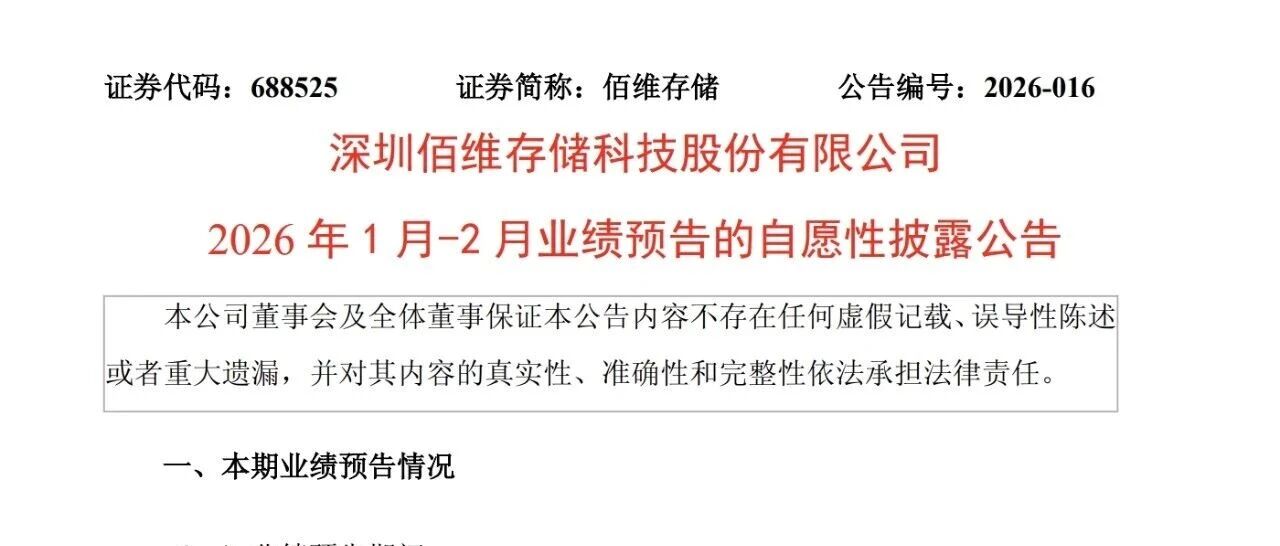
Core Viewpoint - The storage industry is entering a highly prosperous cycle in 2026, driven by AI computing power and domestic substitution, leading to significant increases in DRAM and NAND prices, resulting in substantial revenue and profit growth for companies like Bawei Storage [1][2]. Financial Performance - Bawei Storage expects to achieve operating revenue of 4.0 billion to 4.5 billion yuan in January-February 2026, an increase of 3.091 billion to 3.591 billion yuan compared to the same period last year, representing a year-on-year growth of 340% to 395% [1]. - The net profit attributable to the parent company is projected to be between 1.5 billion and 1.8 billion yuan, an increase of 1.683 billion to 1.983 billion yuan year-on-year, reflecting a growth of 921.77% to 1086.13% [1]. - The net profit after deducting non-recurring gains and losses is expected to be between 1.35 billion and 1.6 billion yuan, with a year-on-year increase of 1.533 billion to 1.783 billion yuan, indicating a growth of 836.65% to 973.07% [2]. Market Dynamics - The global storage market is experiencing a significant supply-demand imbalance, with storage chip prices continuing to rise due to explosive demand and severe production capacity shortages [3][4]. - As of January 2026, the average contract price for DRAM and NAND flash memory reached record highs, with DRAM prices increasing by approximately 24% month-on-month and 83% year-on-year, while NAND prices surged by about 65% month-on-month and nearly 150% year-on-year [4][5]. - The price increases are attributed to factors such as explosive growth in AI computing power, production strategies of major manufacturers, and rising raw material costs [5][6]. Price Transmission to Downstream - The ongoing price increases in storage chips are expected to be transmitted to downstream consumer electronics, with major manufacturers already announcing price hikes for their products [6]. - Companies like Lenovo, Dell, and HP have issued price adjustment notices, with increases typically ranging from 500 to 1500 yuan, while new models from Xiaomi and Vivo have seen price increases of 300 to 500 yuan compared to previous generations [6].
A股存储龙头,前2月净利预计超2025全年
财联社· 2026-03-03 15:16
Core Viewpoint - The company Bawei Storage is expected to achieve significant revenue growth in early 2026, driven by a booming storage industry and increased demand for AI computing power, leading to a substantial rise in DRAM/NAND prices [1] Group 1: Revenue and Profit Forecast - Bawei Storage anticipates revenue of 4 billion to 4.5 billion yuan in January to February 2026, representing a year-on-year growth of 340% to 395% [1] - The net profit attributable to shareholders is projected to be between 1.5 billion to 1.8 billion yuan, indicating a turnaround from losses to profitability [1] Group 2: Industry Trends and Company Strategy - The storage industry is entering a highly prosperous cycle in 2026, with AI computing power and domestic substitution driving continuous price increases in DRAM/NAND, resulting in a supply-demand imbalance [1] - To enhance its market competitiveness in the AI era, the company is increasing investments in chip design, solutions, advanced packaging, and testing equipment [1] Group 3: Previous Year Performance - In 2025, Bawei Storage reported revenue of 11.296 billion yuan, a year-on-year increase of 68.72%, and a net profit of 867 million yuan, reflecting a significant growth of 437.56% [1] - The net profit for the first two months of 2026 is expected to exceed the total net profit for the entire previous year [1]

2025国内电子化学品业绩大分化:四大梯队格局出炉,谁能长期占据制高点?
材料汇· 2026-03-03 14:52
Core Viewpoint - The semiconductor electronic chemicals industry in China is experiencing significant growth in 2025, driven by the recovery of the semiconductor sector and accelerated domestic substitution processes. However, there is a notable disparity in performance among companies, which can be attributed to their capabilities in high-end product technology, product structure optimization, and cost control [2][18]. Group 1: Industry Overview - The seventh forum on semiconductor wet chemicals, electronic gases, and precursors will be held on March 12, 2026, in Suzhou, featuring experts from various leading companies [2]. - The domestic electronic chemicals market is projected to reach 29 billion yuan in 2025, with a significant increase in demand for high-purity wet electronic chemicals from domestic wafer and packaging factories [22]. - The market for wet electronic chemicals is expected to grow rapidly, with the global market size reaching $10.102 billion and the Chinese market size at 22.36 billion yuan in 2024 [22]. Group 2: First Tier Companies - Crystalwise Materials is the only company in the first tier, expecting a net profit of 120 to 160 million yuan in 2025, a significant turnaround from a loss of 180 million yuan the previous year [3][4]. - The company's success is attributed to the rapid growth of the semiconductor industry and its strong product layout, particularly in high-purity sulfuric acid and hydrogen peroxide, which saw substantial sales increases [5]. Group 3: Second Tier Companies - Shanghai Xinyang leads the second tier with a net profit growth of 50.82% to 82.12%, driven by successful technology R&D and market order conversion [6][7]. - Aisen Co. anticipates a revenue increase of 37.54% to 594 million yuan, with a net profit growth of 50.74%, supported by advanced packaging demand and high-end product mass production [7][9]. - Anji Technology, a leader in semiconductor polishing and cleaning liquids, expects a revenue of 2.505 billion yuan, reflecting a 36.51% increase, with a net profit of 795 million yuan, up 48.98% [9][10]. Group 4: Third Tier Companies - Dinglong Co. is projected to achieve a net profit of 700 to 730 million yuan, with a growth rate of 34.44% to 40.20%, supported by strong performance in semiconductor and display materials [11]. - Xingfu Electronics expects a revenue of 1.475 billion yuan, a 29.72% increase, with a net profit of 208 million yuan, benefiting from the growth of general-purpose wet electronic chemicals [12]. - Jiangfeng Electronics is anticipated to have the slowest growth in the third tier, with a net profit increase of 7.50% to 27.50%, reflecting challenges in scaling its precision components business [14]. Group 5: Fourth Tier Companies - Zhongjuxin and Qiangli New Materials are in the fourth tier, both expected to report losses in 2025 due to intensified industry competition and asset impairments [15][16]. - Zhongjuxin is projected to incur a loss of 14 to 20 million yuan, primarily due to goodwill impairment from its acquisition of Kaisheng Fluorine Chemicals [15]. - Qiangli New Materials anticipates a loss of 100 to 142 million yuan, with increased R&D expenses and asset impairments contributing to its ongoing financial difficulties [16]. Group 6: Conclusion - The differentiation in operating net profit among companies in the electronic chemicals industry reflects their varying core capabilities in high-end product technology and market adaptation [18][19]. - Companies achieving high growth are characterized by breakthroughs in high-end product technology and optimized product structures, while those under pressure often lack sufficient high-end product layouts [18][19].



新材料投资逻辑:战略自主与市场规律的双重博弈
材料汇· 2026-03-03 14:52
Core Viewpoint - The new materials industry is experiencing significant growth, with China's total output value expected to exceed 8 trillion yuan in 2024, maintaining double-digit growth for 14 consecutive years, while facing structural challenges in high-end technology reliance [2][7]. Global Competitive Landscape and China's Positioning - The global new materials industry has formed a stable competitive structure with the US, Japan, and Europe in the first tier, holding absolute advantages in core technologies and market share. China, along with South Korea and Russia, is in the second tier, rapidly catching up but still heavily reliant on imports for high-end polymers and electronic chemicals [4][5]. Investment Drivers in New Materials - The investment logic in the new materials sector is based on a "demand-policy-technology" triangle model, where market demand, supportive policies, and technological breakthroughs interact to determine investment value and timing [9]. Market Demand - The rapid expansion of the new energy vehicle industry is driving diverse demand for new materials, with revenue in the structural materials sector expected to grow by 12.5% year-on-year in 2024 [10]. - The wind power sector is also showing strong demand, with carbon fiber requirements for wind turbine blades expected to reach 37.96% in 2024 [10]. Policy Support - China has established a comprehensive policy support system for the new materials industry, including financial backing and standardization efforts, which are crucial for reducing investment risks [12][13]. - The introduction of a standardization framework has helped accelerate the commercialization of new materials [14]. Technological Breakthroughs - Technological advancements are critical for investment value, with domestic companies making significant progress in high-end polymer materials, reducing import dependency [15][19]. - Patent layout and intellectual property protection are becoming key competitive factors in the technology race [16]. Investment Value in Specific Segments High-End Polymer Materials - High-end polymer materials are a strategic focus for domestic substitution, with significant import dependencies still present [19]. - Investment opportunities exist in companies that can achieve breakthroughs in production processes and reduce reliance on imports [20][21]. Carbon Fiber Materials - The carbon fiber sector is transitioning from capacity expansion to quality improvement, with a focus on high-performance products [24]. - Investment should target companies that can produce high-end carbon fibers and have stable production capabilities [25]. Electronic Chemicals - The electronic chemicals sector is crucial for the semiconductor and display industries, with a current "gradient substitution" trend in domestic production [28]. - Investment strategies should align with the progress of domestic companies in the supply chain of major semiconductor manufacturers [32]. Biobased New Materials - The biobased materials market is expected to grow significantly, driven by policy mandates and decreasing production costs [34]. - Investment should focus on companies with strong technological capabilities and those that can navigate raw material cost fluctuations [35]. Superconducting Materials - Superconducting materials are at a critical commercialization point, with significant potential applications in energy and medical fields [36]. - Investment opportunities are concentrated in companies producing REBCO tapes, which are essential for superconducting applications [37]. Solid-State Batteries - Solid-state batteries are emerging as the next mainstream technology for electric vehicles, with a projected market size of 150 billion yuan in 2024 [39]. - Investment logic revolves around the development of core materials such as electrolytes and electrodes, with a focus on companies that can achieve breakthroughs in these areas [40][42][43]. Investment Value Assessment Framework - The investment value of new materials companies should be evaluated through a three-dimensional framework encompassing technology, industry, and capital [44]. - Key indicators include patent strength, product performance, and R&D efficiency, which are critical for assessing long-term growth potential [46][49]. - Companies with strong industry positioning and capital market access are likely to have better growth prospects [51][54].

科技缔造光明视界:高视医疗战略升级,攀登眼科医疗器械新高峰
Tou Bao Yan Jiu Yuan· 2026-03-03 14:24
Investment Rating - The report indicates a positive investment outlook for the ophthalmic medical device industry, particularly highlighting the strategic upgrades of the company as a leading player in the domestic market [2][3]. Core Insights - The company has successfully transitioned from being a distributor of foreign products to a leader in the domestic ophthalmic medical device sector, emphasizing innovation and comprehensive solutions [3][4]. - The strategic upgrade aims to leverage technological advancements and market opportunities, positioning the company for significant growth in the evolving healthcare landscape [2][6]. - The report outlines the company's robust growth trajectory, with a notable increase in revenue and profit margins, reflecting its strong market presence and operational efficiency [5][24]. Summary by Sections Strategic Development - The company has established a dual supply chain system covering both China and Europe, enhancing its research and production capabilities [4][5]. - It has developed a comprehensive product portfolio across all seven sub-specialties in ophthalmology, particularly excelling in the field of intraocular lenses [4][5]. Market Opportunities - The domestic market for ophthalmic medical devices is experiencing significant growth due to increasing demand driven by an aging population and rising prevalence of eye diseases [30][31]. - The report forecasts the market size to grow from 178 billion RMB in 2017 to 933 billion RMB by 2030, indicating a strong growth potential [31][32]. Business Model and Revenue Growth - The company has diversified its business model to include self-owned products, distribution, and technical services, achieving a historical revenue high of 1.41 billion RMB in 2023, with a year-on-year growth of 12.2% [5][24]. - The self-owned product revenue reached 380 million RMB in 2023, accounting for 27.2% of total revenue, driven by the rapid growth of its artificial lens business [24][25]. Strategic Acquisitions - The company has successfully completed several acquisitions, including the full acquisition of Teleon, enhancing its competitive edge and expanding its market reach [17][21]. - These acquisitions have allowed the company to integrate vertically, improving its product offerings and operational capabilities [25][27]. Future Outlook - The company plans to expand its international presence, targeting markets in Southeast Asia and the EU, while also exploring opportunities in the Middle East, North Africa, and Latin America [33][34]. - With a strong focus on innovation and strategic execution, the company is well-positioned to lead the global ophthalmic medical device market [35].
金融工程专题研究:国证工业软件主题指数投资价值析:布局中国“工业大脑”的核心赛道
Guoxin Securities· 2026-03-03 13:30
Quantitative Models and Construction Methods - **Model Name**: CNI Industrial Software Theme Index **Model Construction Idea**: The index aims to comprehensively reflect the overall performance of China's industrial software industry by selecting 50 stocks from companies involved in industrial R&D design software, industrial production information software, industrial enterprise business management software, and industrial automation software[2][32][33] **Model Construction Process**: 1. **Sample Space Definition**: Includes A-shares and depositary receipts of red-chip enterprises meeting the following conditions: - Non-ST or *ST securities - Listed for over 1 year on the STAR Market or Beijing Stock Exchange, and over 6 months for other securities - No major violations or financial issues in the past year - No abnormal operations or significant losses in the past year - No abnormal price fluctuations during the observation period - Business involvement in industrial software-related fields such as R&D design, production information, business management, and automation software[33] 2. **Selection Method**: - Calculate the average daily trading volume and market capitalization over the past six months for eligible securities - Exclude the bottom 10% of securities by average daily trading volume - Rank the remaining securities by average daily market capitalization and select the top 50 as index components. If fewer than 50 securities meet the criteria, all eligible securities are included[33] 3. **Weighting Method**: The index uses the Paasche weighting method and adjusts weights to ensure that the weight of industrial R&D design software is not less than 50%[33] 4. **Periodic Adjustments**: The index is adjusted semi-annually on the trading day following the second Friday of June and December[33] - **Model Evaluation**: The index is highly focused on the industrial software sector, with a strong emphasis on innovation and small-cap characteristics, making it a valuable tool for capturing growth in this industry[32][34][39] --- Model Backtesting Results - **CNI Industrial Software Theme Index**: - Annualized Return: 2.52% - Annualized Sharpe Ratio (IR): 0.23 - Annualized Volatility: 30.01% - Maximum Drawdown: -61.56%[56] --- Quantitative Factors and Construction Methods - **Factor Name**: R&D Intensity Factor **Factor Construction Idea**: Measures the innovation capability of index components by calculating the proportion of R&D expenses to operating revenue[36] **Factor Construction Process**: - Formula: $ R&D\ Intensity = \frac{R&D\ Expenses}{Operating\ Revenue} $ - Data: - 2022: 4.31% - 2023: 8.64% - 2024: 8.71% - 2025 (Q3): 9.22%[36][37] - **Factor Evaluation**: The continuous increase in R&D intensity highlights the sector's strong focus on innovation and technological advancement[36][37] --- Factor Backtesting Results - **R&D Intensity Factor**: - 2022: 4.31% - 2023: 8.64% - 2024: 8.71% - 2025 (Q3): 9.22%[36][37] --- Additional Observations - The index exhibits a strong small-cap bias, with an average market capitalization of 276.24 billion RMB, and over 70% of its components having a market cap below 200 billion RMB[45][46] - The index is highly concentrated in the computer industry (62%), with significant weights in sub-sectors like software (38.63%), cloud services (15.69%), and electrical equipment (15.51%)[39][42] - The index includes 34 "specialized, refined, distinctive, and innovative" (SRDI) companies, accounting for 68% of its components, significantly higher than other mainstream indices[49][53] - Projected growth: - 2025E Net Profit Growth: 59.22% - 2026E Net Profit Growth: 30.12% - 2025E EPS Growth: 59.93% - 2026E EPS Growth: 59.32%[47][51]