
产业升级

Search documents
出台企业优惠政策 拓展多边市场合作 巴西去年对外贸易额创历史新高
Ren Min Ri Bao· 2026-02-04 22:08
Group 1 - Brazil's trade surplus is projected to reach $68.3 billion in 2025, with exports at $348.7 billion and imports at $280.4 billion, both setting historical records [1] - The growth in export value is primarily driven by the manufacturing, mining, and agricultural sectors, while the largest increase in imports is seen in capital goods, intermediate goods, and consumer products [1] - Over 40 markets are expected to set new records for purchasing Brazilian products, with notable performances from Canada, India, Turkey, Paraguay, Uruguay, Switzerland, Pakistan, and Norway [1] Group 2 - The "Sovereign Brazil Plan," initiated by President Lula, includes a special credit plan totaling 30 billion reais (approximately $7.5 billion), aimed at supporting small and medium-sized enterprises and exporters of perishable goods [2] - The Brazilian government has allowed affected companies to defer federal income tax and VAT payments, and has expedited the tax refund approval process for products redirected from the U.S. to other markets [2] - A national employment monitoring committee has been established to track employment situations in affected companies and provide customized training programs for employees in various sectors [2] Group 3 - Brazil is actively exploring emerging markets to mitigate tariff pressures, having organized trade missions to countries like India and Turkey, resulting in agreements on meat inspection and machinery trade [3] - The share of exports to non-U.S. markets is expected to increase from 68% to 72% by 2025, with a 6% growth in exports to China [3] - Brazil has submitted a request to the World Trade Organization for tariff negotiations, emphasizing the need for multilateral cooperation to build a more resilient trade system [3]
市政协十五届六次会议委员向大会报到
Xin Lang Cai Jing· 2026-02-04 15:22
Group 1 - The city of Chengde is entering a period of focused discussion on development during the annual municipal political consultative conference, with 366 members participating and bringing insights from grassroots research [1][3] - Key topics of discussion among committee members include ecological protection, industrial upgrading, and improving people's livelihoods, reflecting a strong commitment to high-quality development in Chengde [3][5] - Proposals presented by committee members emphasize the importance of enhancing public welfare and urban governance to improve community happiness, as well as advancing clean energy development through integrated resource management [3][5] Group 2 - The committee members express a strong sense of political responsibility and enthusiasm to contribute to the city's economic and social development, aiming to transform grassroots voices into high-quality proposals [5] - Specific suggestions include accelerating the integration of clean energy projects and enhancing mechanisms for green electricity transmission and trading to leverage ecological advantages for sustainable development [3]

摩根大通冯兆邦:中国市场复苏分化中蕴藏机遇 逢低布局三大领域
2 1 Shi Ji Jing Ji Bao Dao· 2026-02-04 12:34
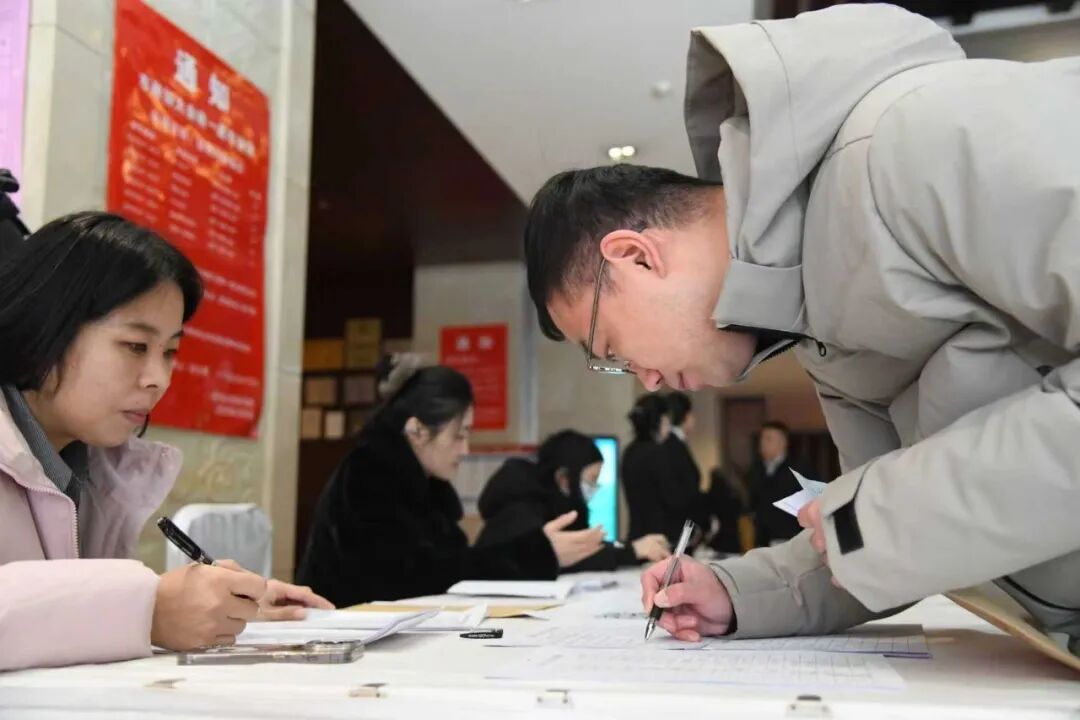
Group 1 - The core view is that despite a differentiated market recovery and uneven consumer momentum, there are significant structural opportunities in the Chinese market, suggesting a selective investment strategy [1] - The focus for investment should be on three types of assets: leading companies in technological innovation, high-dividend stocks that provide stable returns, and quality consumer stocks that have recently undergone deep adjustments and are now fairly valued [1] - The recent market rebound is primarily driven by valuation expansion rather than profit growth, leading to a cautious stance on chasing high prices, with a preference to wait for a 5% to 8% market correction before entering [1] Group 2 - In the context of AI competition among tech companies, the recent "red envelope war" signifies a necessary move for user acquisition, with limited long-term impact on profit margins, presenting potential buying opportunities for long-term investors [2] - There has been a shift in capital flows towards previously overlooked sectors like banking and insurance, indicating a diversification in investment strategies as funds seek value in the Chinese market [2] - Despite the risks and uncertainties surrounding AI investments, such as the unclear path to converting large investments into commercial returns, AI technology remains a crucial investment theme for Chinese tech stocks [2] Group 3 - The A-share market shows signs of stabilization due to policy support and improved expectations of the external environment, although the recovery in domestic demand is gradual and uneven [3] - Ongoing price pressures have weakened consumer willingness, with retail sales growth concentrated in a few online platforms, indicating a lack of broad-based recovery [3] - While the savings rate among residents continues to rise, providing a financial foundation for future consumption recovery, the wealth effect from the stock market has not yet significantly translated into consumer spending [3]

成大生物:股价波动受宏观环境、行业周期、市场情绪等多方面因素影响
Zheng Quan Ri Bao Wang· 2026-02-04 11:14
Core Viewpoint - The company emphasizes that stock price fluctuations are influenced by various factors including macro environment, industry cycles, and market sentiment [1] Group 1: Company Strategy - The company is committed to value management and aims to enhance its intrinsic value while maintaining stable development of its main business [1] - The company plans to invest in establishing a biopharmaceutical industry fund and create a subsidiary for innovative drugs to seize opportunities for industry upgrades [1] - The initiatives are intended to accelerate the company's industrial layout and create a second growth curve, injecting new momentum into its medium to long-term development [1]

从“散木”到“成林”——赋能木材产业聚变升级
Qi Lu Wan Bao· 2026-02-04 08:48
Core Viewpoint - The establishment of the Zhanglu Hui Autonomous Town Wood Processing Industry Association has revitalized the local wood processing industry, which was previously struggling with disorganization and competition issues, leading to improved collaboration and efficiency among enterprises [1][2] Group 1: Industry Challenges - Prior to the formation of the association, 35 wood processing enterprises faced challenges such as poor communication, inconsistent standards, and fierce competition, resulting in a fatigued industry [1] - The annual production capacity of the town's wood industry is 1.3 million cubic meters, but the utilization rate is below 70%, with severe product homogeneity and low added value [1] - Only 9 out of the 35 enterprises had stable sales channels, and there were significant discrepancies in environmental and safety standards among the companies [1] Group 2: Association Formation and Impact - In January of this year, the Zhanglu Hui Autonomous Town Wood Processing Industry Association was established, incorporating over 30 member enterprises that cover 78% of the town's production capacity [2] - The association, guided by the county's administrative approval bureau, developed industry standards and established a quality traceability system, resulting in a 15% premium for the first batch of compliant wood products, which are still in high demand [2] - Centralized procurement through the association reduced raw material costs by 8%, saving nearly 50,000 yuan in environmental transformation costs for each small and micro enterprise [2] Group 3: Growth and Development - The establishment of a unified e-commerce platform led to the signing of three long-term supply contracts, with member orders increasing by 40% year-on-year in the first quarter [2] - Monthly technical training sessions provided by the association have helped enterprises move towards higher-end markets [2] - The association also promotes ethnic unity while fostering industrial prosperity, reflecting the unique demographic characteristics of the region [2]
重组预案出炉 凯龙高科拟收购金旺达70%股权
Zheng Quan Ri Bao Wang· 2026-02-04 08:40
Core Viewpoint - Kailong High-Tech plans to acquire 70% equity of Shenzhen Jinwangda Electromechanical Co., Ltd. through a combination of issuing shares and cash payment, aiming to enhance its strategic positioning in the high-end manufacturing sector [1][2]. Group 1: Acquisition Details - The acquisition involves issuing shares at a price of 16.00 yuan per share, with the final transaction price yet to be determined due to ongoing auditing and evaluation [2]. - Jinwangda specializes in the research, production, and sales of precision transmission components, serving well-known domestic smart manufacturing enterprises and international high-end manufacturers like Apple and Tesla [2][3]. Group 2: Financial Performance - For the first three quarters of 2025, Kailong High-Tech reported a revenue of 442 million yuan and a net loss of 27.08 million yuan [3]. - Jinwangda is projected to generate revenues of 115 million yuan and 213 million yuan for the years 2024 and 2025, with net profits of 24.85 million yuan and 37.29 million yuan respectively [3]. Group 3: Strategic Implications - The acquisition aligns with Kailong High-Tech's strategy to upgrade its industry focus and enhance its sustainable profitability by integrating Jinwangda's technology and customer resources [3]. - Industry experts view this acquisition as a critical move for Kailong High-Tech to transition from its traditional business in engine exhaust treatment to high-end manufacturing, potentially overcoming growth bottlenecks in its core business [3].
并购新规后首批项目落地 浦发银行精准赋能产业升级
Zhong Guo Jin Rong Xin Xi Wang· 2026-02-04 07:04
Core Viewpoint - The implementation of the new regulations for merger and acquisition (M&A) loans by the National Financial Regulatory Administration marks a significant upgrade in China's M&A financial support system, with banks like SPDB quickly adapting to these changes to facilitate industrial transformation and upgrading [1][2]. Group 1: New Regulations Overview - The new regulations expand the scope of M&A loans to include equity-based acquisitions for the first time and increase the maximum proportion of controlling M&A loans to 70%, with loan terms extended to ten years [2]. - These adjustments aim to enhance the alignment between financial supply and M&A market demand, injecting new momentum into high-quality economic development by revitalizing existing resources and promoting new investments [2]. Group 2: SPDB's Response and Strategy - SPDB views the new regulations as an opportunity to enhance service capabilities and broaden service boundaries, quickly organizing to identify and advance projects that meet the new regulatory requirements [3]. - The bank positions M&A loans not just as a financing product but as a "super product" that integrates various financial services, aiming to provide comprehensive solutions that combine financing and strategic insights for businesses [3]. Group 3: Support for Various Industries - SPDB's M&A loan business is thriving, with significant funding directed towards technology innovation and industrial digitalization, including a loan of 144 million yuan for a cybersecurity acquisition and 350 million yuan for a fintech company to enhance its data analysis capabilities [4]. - The bank also supports traditional industries in their transformation, such as providing 644 million yuan for a biopharmaceutical asset acquisition and assisting a heavy industry company in acquiring a specialized equipment firm to strengthen industry collaboration [4]. Group 4: Support for State-Owned Enterprises and Regional Development - SPDB has actively supported state-owned enterprise reforms, providing 130 million yuan for a local state-owned enterprise's resource integration project and 850 million yuan for a core state-owned enterprise in Shenzhen [5]. - The bank's Chengdu branch successfully executed an early-stage equity-based technology M&A loan, demonstrating the unique value of M&A finance in attracting investment and fostering local industrial growth [5]. Group 5: Future Outlook - SPDB plans to continue aligning with national strategic directions and market trends, aiming to provide efficient and valuable financial support for corporate mergers and acquisitions, thereby contributing to the development of a modern industrial system and new productive forces [6].

政策预期升温 股指“长牛”趋势明确
Qi Huo Ri Bao· 2026-02-04 03:23
Group 1: Market Overview - The market risk appetite was negatively impacted by rising geopolitical tensions, the confirmation of the Federal Reserve Chair nomination, and the dense disclosure of financial reports from China and the US, leading to significant adjustments in precious metals and equity markets [1] - On February 3, the Shanghai Composite Index rebounded, with IC and IM both rising over 2%, while IF and IH saw intraday increases of over 1% [1] Group 2: Economic Indicators - In January, China's manufacturing PMI fell to 49.3% from 50.1%, and the non-manufacturing PMI decreased to 49.4% from 50.2%, both dropping below the expansion threshold, attributed to the approaching Spring Festival [1] - The decline in PMI for labor-intensive industries indicates a weakening production side, with significant drops in consumer goods and high-energy industries' PMIs, down 2.1 and 1 percentage points to 48.3% and 47.9%, respectively [1] - The new orders index fell by 1.6 percentage points to 49.2%, and the non-manufacturing business activity index decreased by 0.8 percentage points to 49.4%, with construction activity notably affected by seasonal factors [1] Group 3: Policy Measures - The government has been actively implementing policies to address insufficient domestic demand, including structural interest rate cuts and targeted financial tools to lower financing costs for key sectors [2] - A comprehensive consumer promotion policy system has been established, focusing on "two new" policies, with an initial fund of 62.5 billion yuan already in place to stimulate the market through subsidies and interest discounts [2] - The removal of restrictions on service industry access is expected to optimize the consumption supply structure, contributing to economic stability [2] Group 4: International Economic Context - In December, the US CPI rose by 2.7% year-on-year, with core CPI increasing by 2.6%, indicating persistent inflation, while non-farm payrolls added only 50,000 jobs, significantly below the expected 180,000 [3] - The US unemployment rate slightly decreased to 4.4%, with the economy showing support from a revised GDP growth rate of 4.4% for Q3, the fastest since 2021 [3] - The Federal Reserve paused interest rate cuts in January, maintaining rates at 5.25% to 5.5%, with market expectations for the first rate cut pushed to June [3]
2026定增战场硝烟四起!多位知名基金经理现身
证券时报· 2026-02-04 02:57
Core Viewpoint - The new year sees a renewed interest from funds in participating in private placements, particularly in sectors like manufacturing, new energy, and information technology, highlighting the long-term value of these investments [1][3]. Group 1: Fund Participation in Private Placements - Notable fund managers are actively participating in private placement projects, with examples including Zhang Qinghua's management of multiple funds involved in projects like Maigemit and Beiqi Blue Valley [2]. - Funds managed by Lin Guohua and Zhou Weiwen are also participating in various projects, indicating a trend towards investment in new energy and manufacturing sectors [2]. Group 2: Market Trends and Regulatory Environment - Over 70% of the financing in the private placement market is directed towards new productive forces, reflecting a shift towards supporting China's industrial upgrade [3]. - The regulatory environment is becoming increasingly stringent, promoting transparency and quality in the private placement market, which is expected to enhance the long-term investment value [3][5]. Group 3: Future Outlook for Private Placement Market - The combination of private placements and inquiry transfers is expected to drive capital more efficiently into core areas of the real economy, with a positive long-term outlook for the A-share market [4]. - Policy support for the private placement market is strengthening, with new regulations encouraging institutional investors to participate more actively, thereby enhancing market activity and long-term value [5].

广弘控股:公司始终关注有助于提升主营业务竞争力、促进产业升级的潜在战略机遇
Zheng Quan Ri Bao Wang· 2026-02-04 02:50
Core Viewpoint - Guanghong Holdings (000529) is actively seeking strategic opportunities that enhance its core business competitiveness and promote industrial upgrades, indicating a focus on potential mergers and acquisitions [1] Group 1 - The company emphasizes its commitment to comply with relevant regulations regarding information disclosure in the event of any merger or acquisition plans [1] - Guanghong Holdings will fulfill its information disclosure obligations in a timely manner [1]
