中年危机

Search documents
两种方法,从中年危机到找回中年之美
吴晓波频道· 2025-07-10 17:28
Core Viewpoint - The article discusses the transition from a midlife crisis to a state of "midlife beauty," emphasizing the importance of self-care and mindfulness practices to alleviate stress and regain composure during middle age [5][4]. Summary by Sections Self-Care and Midlife Beauty - Middle-aged individuals experience increased responsibilities and stress, yet they also possess a level of stability and richness in life that can be termed "midlife beauty" [2][4]. - The process of moving from a midlife crisis to midlife beauty involves self-care practices [5]. Mindfulness and Writing Techniques - The article introduces two practical methods for reducing midlife stress: "Heart Writing" and "Mindfulness" [5][24]. - Heart Writing consists of three practices: free writing, thematic writing, and guided writing [6]. Heart Writing Practices - Free writing encourages continuous writing without concern for grammar or coherence, allowing emotions to be expressed visibly on paper [8][9]. - Thematic writing focuses on specific topics, such as relationships or personal experiences, and includes writing letters to oneself or others to foster self-awareness and healing [11][12][13]. - Guided writing uses prompts to help individuals recall memories and feelings, enhancing self-reflection [14][15]. Value of Writing - Writing serves as a tool for developing a third-person perspective, allowing individuals to observe their emotions and relationships more objectively [17][21]. - This practice can significantly improve interpersonal relationships by fostering understanding and reducing emotional turmoil [21]. Mindfulness Techniques - Mindfulness, as explained by Thich Nhat Hanh, involves being aware of the present moment and can be practiced through breathing exercises and body scans [26][30]. - Breathing techniques help individuals detach from overwhelming emotions and return to a state of calm [30][32]. - Mirror exercises encourage self-acceptance and gratitude, promoting a positive self-image [33]. Recommended Reading - The article concludes with a list of recommended books that address themes of midlife crisis and self-care, including "The Middle-Aged Road" and "Necessary Losses" [35].

旺仔的“中年危机”
和讯· 2025-06-30 09:55
Core Viewpoint - The company is facing significant challenges, with revenue stagnation and a lack of new growth drivers, indicating a potential "mid-life crisis" for the brand [3][11]. Financial Performance - For the fiscal year 2024, the company reported revenue of 23.511 billion yuan, a slight decrease of 0.3% year-on-year; net profit was 4.336 billion yuan, an increase of 8.6% [3][8]. - The decline in revenue is attributed to adverse weather conditions affecting ice cream and rice snacks, with revenues dropping in the "low double digits" and "high single digits," respectively [8][10]. - The company’s market share in the snack industry is low, with the top five companies only holding 5.9% of the market, and the company ranked fifth with retail sales of 1.348 billion yuan [8]. Historical Context - The company experienced rapid growth from 2004 to 2013, with revenue growth rates around 20%, peaking with a market capitalization exceeding 170 billion HKD [8][9]. - Since then, the company has struggled to maintain growth, with its market capitalization shrinking to 62.5 billion HKD, less than 40% of its peak value [9]. Business Composition - The beverage segment is crucial, contributing 52% of total revenue, with the flagship product, Wangzai Milk, showing only "low single-digit" growth [10]. - The rice snacks and leisure food segments also faced declines, with rice snacks revenue down 1.2% and leisure foods down 2.6% due to poor sales during the Spring Festival [10]. Industry Dynamics - The snack industry in China is characterized by a large market size but low concentration, with many private label products competing against established brands [8][12]. - The rise of e-commerce and new retail formats has disrupted traditional sales channels, with the company lagging in adapting to these changes [13][14]. - The shift in consumer preferences towards health, value, and emotional connection with products has created additional challenges for the company [14]. Distribution Challenges - The company relies heavily on traditional wholesale markets, with about 80% of its revenue coming from these channels, while new channels like e-commerce are only beginning to gain traction [13]. - Distributors are facing increasing pressure from manufacturers to meet high sales targets, leading to issues with high inventory and low profit margins [15].


当一个精致中产,沦落为盗贼
Hu Xiu· 2025-06-28 00:43
Core Insights - The article reflects on the themes of consumerism, existential crises, and the complexities of human relationships as depicted in the series "The Neighbor" and the film "Trainspotting" [1][3][17] - It explores the cyclical nature of human behavior, where individuals continue to follow destructive paths despite awareness of the consequences [2][4] - The narrative highlights the contrast between superficial societal norms and the underlying struggles of individuals, particularly focusing on the protagonist's journey from success to moral ambiguity [3][10][14] Group 1: Themes of Consumerism and Existential Crisis - The protagonist, Cooper, embodies the struggles of a middle-class individual who rises to financial success but ultimately faces a moral downfall [10][14] - The series critiques the emptiness of consumer culture, where characters engage in superficial discussions about material possessions while grappling with deeper existential questions [1][2][12] - The dialogue between characters serves as a metaphor for the unaddressed issues of midlife crises and the search for meaning in a consumer-driven society [17][18] Group 2: Human Relationships and Social Commentary - The relationships depicted in the series reveal the complexities of loyalty, betrayal, and the transactional nature of adult friendships [5][12][13] - Cooper's interactions with various characters illustrate the stark divide between social classes and the hidden struggles within seemingly affluent lives [4][11][14] - The narrative suggests that beneath the surface of wealth and success lies a darker reality, challenging the notion of a perfect life in a privileged society [7][15][16]
进入中年危机怎么办?
3 6 Ke· 2025-06-26 00:24
Group 1 - The concept of "midlife crisis" originated from American psychologist Elliott Jacques in 1965, who noted that individuals around the age of 48 often experience a sudden awareness of their mortality and limitations, leading to feelings of crisis [2][3] - The term gained popularity in the United States during the 1960s and 1970s, coinciding with increased life expectancy and the entry of women into the workforce, which created new competitive pressures for middle-aged men [3][4] - In China, the term "midlife crisis" began to gain traction in the 1990s, largely due to media coverage that highlighted the anxieties associated with aging and societal expectations [4] Group 2 - The phenomenon of midlife crisis is closely linked to societal structures and economic models, where individuals around the age of 35 are perceived as experiencing a decline in value due to higher salary expectations and increased family responsibilities [5][6] - There is a systemic undervaluation of individuals over 35, as policies often set age limits that marginalize this demographic, leading to a perception that they are no longer a priority for support and development [12][16] - The marketing and business strategies often favor younger demographics, neglecting the significant potential of the 35+ age group, which possesses wealth, diverse needs, and loyalty [16][18] Group 3 - The midlife crisis can manifest in various ways, including impulsive behavior, emotional instability, and a heightened awareness of aging and mortality, affecting both men and women [19][20] - Common signs of midlife crisis include a desire for change, increased focus on appearance, and questioning life choices, which can lead to significant life changes such as job changes or relationship reevaluations [20][21] - The crisis is often exacerbated by societal pressures and expectations regarding age milestones, which can amplify feelings of inadequacy and anxiety [9][10][15] Group 4 - Addressing midlife crisis involves recognizing the signs, allowing time for adjustment, and seeking support from trusted individuals or professionals to navigate the emotional turmoil [23][25][26] - The process of coping with midlife crisis typically includes stages of awareness, action, and resolution, where individuals may seek to redefine their goals and values [24][28] - It is crucial to understand that midlife crisis is a common experience that can lead to personal growth and a reevaluation of life priorities, rather than a definitive endpoint [28][29]
追踪回乡者的第5年:认命,不认输
YOUNG财经 漾财经· 2025-06-18 12:01
Core Viewpoint - The article reflects on the unpredictable nature of life, particularly in the context of middle-aged individuals facing job loss and personal challenges, emphasizing resilience and adaptability in the face of adversity [2][3][4]. Group 1: Job Loss and Economic Challenges - The protagonist, a middle-aged individual, experiences job loss and returns to their hometown, highlighting the emotional impact of unemployment and the struggle to find stability [2][4]. - The individual receives unemployment benefits of 1,890 yuan per month for up to 20 months, illustrating the financial support available during difficult times [2]. - The narrative discusses the psychological burden of unemployment, with the protagonist initially feeling a sense of failure but gradually accepting the situation as part of life’s unpredictability [3][4]. Group 2: Personal Growth and Adaptation - The protagonist learns to embrace a more relaxed attitude towards life, realizing that success is not solely defined by employment status [3][4]. - The experience of caring for aging parents and dealing with their health issues leads to a deeper understanding of life’s impermanence and the importance of living in the moment [4][6]. - The protagonist shifts focus to running a second-hand bookstore, which becomes a stable source of income, demonstrating adaptability and resourcefulness in challenging economic conditions [9][12]. Group 3: Financial Perspective and Future Outlook - The protagonist reflects on financial stability, noting that despite economic pressures, their income from the bookstore is sufficient for basic living expenses [12][15]. - The article discusses a shift in values, with the protagonist prioritizing simplicity and letting go of material possessions, influenced by the loss of a parent [16]. - The narrative concludes with a recognition that financial success is transient, and the courage to continue moving forward is more valuable than material wealth [18][19].

康师傅陷入“中年危机” :营收增速远低于同行业,负债率超老对手统一
Sou Hu Cai Jing· 2025-05-26 03:36
Core Viewpoint - Master Kong is facing a "mid-life crisis" characterized by a situation of "profit growth without revenue growth," as evidenced by its 2024 annual report showing a slight revenue increase of 0.29% to RMB 80.65 billion, while net profit rose by 19.79% to RMB 3.73 billion [2][5]. Group 1: Financial Performance - In the period from 2020 to 2024, Master Kong's revenue grew from RMB 78.72 billion to RMB 80.65 billion, with a compound annual growth rate of only 0.8%, significantly lower than the food and beverage industry's average growth rate of approximately 6% [6]. - The company's sales costs decreased by nearly RMB 2 billion in 2024 due to lower raw material prices and cost control measures, while the workforce was reduced by 2,005 employees, saving over RMB 280 million [6]. - As of the end of 2024, Master Kong's cash and cash equivalents amounted to RMB 7.52 billion, while short-term borrowings due within one year reached RMB 11.58 billion, resulting in a cash-to-short-term debt ratio of only 0.65, indicating financial risk [6]. Group 2: Business Structure Imbalance - The instant noodle segment has been declining for two consecutive years, with 2024 revenue at RMB 28.41 billion, down 1.3% from the previous year, following a 2.84% decline in 2023 [11]. - The beverage segment, which relies heavily on tea drinks, generated RMB 51.62 billion in revenue, a 1.3% increase, but the growth rate has sharply declined from 20.18% in 2021 to single digits [12]. - The market for instant noodles in China has been shrinking, with consumption dropping from 47.23 billion servings in 2020 to 43.12 billion servings in 2023, leading to a negative growth trend in the market [9]. Group 3: Development Challenges - Master Kong's distribution network has contracted, with the number of distributors decreasing by over 10% to 67,215, the lowest since 2021, which raises concerns about market penetration and channel stability [7][18]. - The company has struggled with product innovation, as new products launched in 2024 generated only RMB 800 million in sales, accounting for less than 3% of total revenue [19]. - High executive compensation persists despite the company's financial struggles, with 11 executives collectively receiving RMB 30.96 million in 2024, raising questions about management accountability [20].

都在聊中年危机,到底啥是中年危机?
Hu Xiu· 2025-05-21 23:02
Group 1 - The essence of midlife crisis is characterized by feelings of helplessness and fear [2] - Fixed expenses increase significantly as individuals age, leading to financial pressure [3][4] - Chronic health issues become more prevalent, resulting in ongoing medical expenses [5][6] Group 2 - The pressure of fixed expenses and declining earning capacity leads to a sense of panic and helplessness [11][12] - The inability to find reliable goals or career paths exacerbates the midlife crisis [23][24] - The loss of certainty in life contributes to the overall distress experienced by individuals in midlife [22][23] Group 3 - Individuals often seek solace in hobbies or distractions to cope with the pressures of midlife [27][28] - The presence of children significantly influences the financial and emotional landscape of midlife, often leading to increased responsibilities [29][32] - The struggle to balance personal desires with familial obligations creates a complex dynamic in midlife [34][35] Group 4 - Recommendations for navigating midlife include preparing mentally for challenges and pursuing personal interests [35][36] - Emphasizing the importance of engaging in activities that align with personal passions can lead to fulfillment [36][38] - The need for early exploration of talents and interests is crucial for long-term satisfaction and success [38][39]
为什么男人一到中年,就忽然热衷于炒股了呢
虎嗅APP· 2025-05-08 00:01
以下文章来源于人神共奋 ,作者思想钢印 人神共奋 . 财经专栏作家,虎嗅&雪球2020年度十佳作者 人们把"炒股"看成兴趣爱好,区别于纯粹的投资理财,这是有道理的。就像钓鱼的人不是为了吃鱼,炒股更 主要是一种精神活动,能带来刺激感和参与市场的满足感。 当然,赚钱仍然是"炒股"的第一目的,可一位过去十多年对炒股无感的中年男性,忽然喜欢上了炒股,其中 有一定的心理学、社会学的原因。 本文来自微信公众号: 人神共奋 (ID:tongyipaocha) ,作者:思想钢印,题图来自:AI生成 一、兴趣鄙视链 以前的一个同事,十年不联系,忽然问了我一堆股票的问题,记得他以前爱好广泛,但没有炒股这一项。 这样的事,近一年多次发生,共性是,男性,超过35岁,以前没有炒股经历。好像在反复提醒我,不但自 己老了,自己那些曾经年轻的同事,也人到中年了。 兴趣爱好也是有鄙视链的:小众爱好鄙视大众爱好,花钱多的爱好鄙视花钱少的,花钱少的又鄙视以赚钱 为目的的,消耗时间多的鄙视不怎么花时间的。还有一条,年轻人的爱好鄙视中年人的爱好,所以炒股一 直处于兴趣鄙视链的下游,并不是炒股本身有多么low,而是年轻人总是害怕自己有一天变成自己曾经鄙 ...

为什么男人一到中年,就忽然热衷于炒股了呢
Hu Xiu· 2025-05-07 12:48
本文来自微信公众号:人神共奋 (ID:tongyipaocha),作者:思想钢印,题图来自:AI生成 一、兴趣鄙视链 以前的一个同事,十年不联系,忽然问了我一堆股票的问题,记得他以前爱好广泛,但没有炒股这一 项。 价值投资者其实也有很多"赌"的成分,从众多公司财报中寻找潜在的大牛股,被称为"翻石头",正是因 为找到牛股的概率很低,有一些特点但又不会100%的准确,每一个都不一样。 所以对投资者而言,每一季的财报更类似于一个解谜游戏,加仓减仓更像是一个策略游戏,都为了满足 智力挑战的需求。 人到中年,除了炒股,还能上哪里去找这种随时可以开始的"挑战"呢? 这样的事,近一年多次发生,共性是,男性,超过35岁,以前没有炒股经历。好像在反复提醒我,不但 自己老了,自己那些曾经年轻的同事,也人到中年了。 兴趣爱好也是有鄙视链的:小众爱好鄙视大众爱好,花钱多的爱好鄙视花钱少的,花钱少的又鄙视以赚 钱为目的的,消耗时间多的鄙视不怎么花时间的。还有一条,年轻人的爱好鄙视中年人的爱好,所以炒 股一直处于兴趣鄙视链的下游,并不是炒股本身有多么low,而是年轻人总是害怕自己有一天变成自己 曾经鄙视过的样子。 我忽然想到聊一聊这个问 ...
虚假宣传“顽疾”未改、门店销售疲软,屈臣氏难逃“中年危机”
Xin Jing Bao· 2025-04-16 08:28
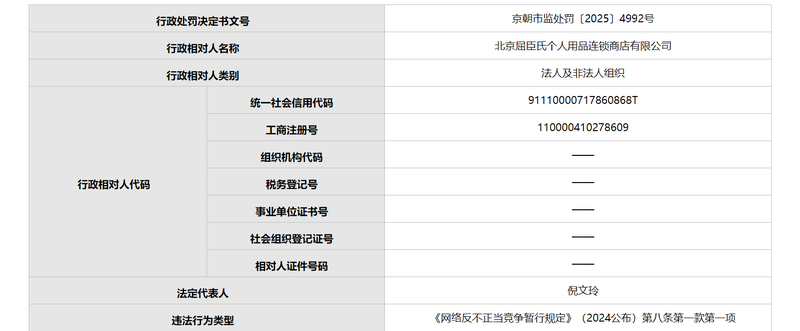
因销售的多款商品存在虚假宣传问题,屈臣氏再次触碰监管"红线"。4月15日,新京报贝壳财经记者从北京市市场 监督管理局官网获悉,北京屈臣氏个人用品连锁商店有限公司(以下简称"北京屈臣氏")因违反《网络反不正当 竞争暂行规定》(2024年公布)第八条第一款第一项,被北京市朝阳区市场监督管理局罚款3万元,同时责令其改 正违法行为。 入华第36年,面对口碑与业绩的双重承压,屈臣氏面临着无法回避的"中年危机"。 宣称牙膏有"消炎止血"功效,屈臣氏曾多次因虚假广告被罚 行政处罚决定书显示,北京屈臣氏在某电商平台开设的"屈臣氏"店铺内销售力士植萃净澈香皂,商品参数显示具 有"保湿"功效,但在调查过程中,该公司未提供可以证明具有"保湿"功能的证据材料;销售澳媛生姜强韧养发洗 发水、滋源强韧修护氨基酸泡泡洗发水时,均宣称其具有防脱功效,但相关产品备案信息中并无"防脱发"功效, 同时,北京屈臣氏也未提供可以证明具有防脱功效的合法证据材料。北京市朝阳区市场监督管理局表示,上述行 为属虚假宣传。 | 行政处罚决定书文号 | | 京朝市监处罚 [2025] 4992号 | | --- | --- | --- | | 行政相对人名称 | ...