
中德合作

Search documents
以稳定与韧性夯实合作基础——中德政商学界共话互利共赢新机遇
Shang Wu Bu Wang Zhan· 2025-12-10 18:16
Group 1 - The core viewpoint emphasizes that China-Germany cooperation serves as a "stabilizer" for both countries' economic development and a pillar for maintaining global supply chain resilience amid rising global economic uncertainties and geopolitical tensions [1] - The bilateral trade volume between China and Germany has expanded nearly a thousand times since the establishment of diplomatic relations, creating over one million jobs in both countries [1] - More than 90% of German companies in China plan to deepen their engagement, indicating that the Chinese market is becoming an accelerator for enhancing competitiveness [1] Group 2 - Germany's economy has faced three consecutive years of stagnation, highlighting the need for open cooperation and reduced barriers with China to enhance competitiveness [2] - The German industry is currently dealing with high costs and sluggish growth, necessitating a stable industrial cooperation relationship with China [2] - China is viewed as being in a highly active and attractive development phase, providing significant insights for German companies in terms of technology paths, business models, and industrial policies [2] Group 3 - Representatives at the conference believe that there is still vast potential for China-Germany cooperation, particularly in areas such as smart manufacturing, green transformation, and digital economy [3] - Joint research and industrial connections can inject new momentum into both countries' enterprises and contribute to enhancing global economic stability and resilience [3]
德国工商大会总会柯天乐:大湾区蕴含大量投资和合作机遇
2 1 Shi Ji Jing Ji Bao Dao· 2025-12-01 08:55
Core Insights - German companies are beginning to establish a strong presence in Guangdong, with expectations for more to follow due to the region's robust innovation infrastructure [2] - The Guangdong-Hong Kong-Macao Greater Bay Area is identified as an underdeveloped area with significant investment opportunities for German enterprises, which have primarily focused on the Yangtze River Delta [2] - A survey indicates that 92% of German companies plan to continue investing in China, with over half intending to increase their investments in the next two years [2] Group 1 - The core attraction for German companies in Guangdong is the region's comprehensive innovation infrastructure, particularly in cities like Shenzhen and Guangzhou [2] - Collaboration opportunities among startups and in innovation sectors are seen as key to future growth for German enterprises in China [2] - The German Chamber of Commerce represents approximately 3.6 million companies in Germany, highlighting the scale of potential investment [2] Group 2 - German companies are expected to maintain a long-term investment trend in the Chinese market, leveraging green technology solutions [3] - Collaboration areas between Germany and China include healthcare, automotive, and other innovative industries, indicating a broad scope for partnership [3]
中德企业合作30年携手开拓国际市场
Zhong Guo Xin Wen Wang· 2025-11-25 14:12
Core Viewpoint - The collaboration between German technology and the Chinese market exemplified by Liuzhou ZF has accelerated the globalization of the partnership, showcasing the integration of management wisdom and skills from both countries [2][4]. Group 1: Company Overview - Liuzhou ZF Machinery Co., Ltd. celebrated its 30th anniversary, having been established in 1995 through a partnership between Guangxi Liugong Machinery Co., Ltd. and ZF Group [4]. - ZF Group, with over a century of history, is a significant global supplier of automotive components, contributing advanced technology to enhance China's traditional component sector [4]. Group 2: Market Presence and Achievements - Liugong has become a model for Chinese equipment manufacturing going global, exporting products to over 180 countries and regions, with ZF transmission components being key products in markets like Indonesia, India, and Russia [5]. - Over the past 30 years, Liuzhou ZF has integrated ZF's century-old technological foundation into Liuzhou's manufacturing, achieving recognition for high-quality transmission components in the industry, with cumulative sales of 150,000 units [5]. Group 3: Future Prospects - The demand for electrification in the construction machinery industry is increasing, and both companies are looking forward to participating in this transition [5]. - A new cooperation agreement was signed to extend and deepen the partnership for another 20 years, indicating a commitment to future collaboration [5]. - The combination of Germany's advanced manufacturing experience with China's strengths in new energy and intelligence is expected to create better cooperation advantages [5].


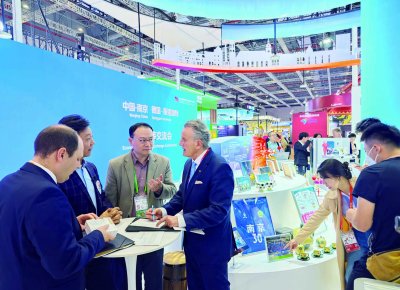
南京与斯图加特双城联展亮相,书写合作新篇——
Nan Jing Ri Bao· 2025-11-06 02:51
Core Points - The 8th China International Import Expo opened in Shanghai, featuring a special exhibition area for friendly cities, with Nanjing and Stuttgart showcasing their 30-year partnership [1][3] - The exhibition theme "Double City Craftsmanship, Win-Win Future" highlights the achievements in economic, technological, and cultural exchanges between Nanjing and Stuttgart [1][3] - Various collaborative projects and products from companies like Bosch and others are displayed, emphasizing the synergy between German quality and Nanjing efficiency [2][4] Group 1: Economic Cooperation - Since the establishment of the friendship in 1995, numerous German companies, including Bosch and Phoenix Contact, have invested in Nanjing, with a total of 309 investment projects and actual German capital of $2.2 billion [5] - Nanjing's investment agreements in Germany amount to $730 million, with projected total trade between Nanjing and Germany reaching $4.35 billion in 2024 [5] Group 2: Cultural Exchange - The exhibition features cultural narratives connecting both cities, such as the historical significance of the poem "Mountain Water Has Clear Sound" by the Chinese poet Zuo Si, which inspired Stuttgart's "Chinese Garden" [3] - The exhibition includes various cultural elements like the Qinhuai Lantern Festival and Stuttgart's Christmas Market, showcasing the integration of cultural and commercial development [2][3] Group 3: Technological Innovation - The exhibition highlights collaborative innovations in the automotive sector, with products from Bosch and other companies demonstrating advancements in smart manufacturing and green development [2][4] - The focus on emerging fields emphasizes shared research capabilities and market network building between the two cities [2][3]
南京与斯图加特双城联展亮相!看进博会里的“双城印记”
Nan Jing Ri Bao· 2025-11-06 02:28
Core Points - The eighth China International Import Expo opened in Shanghai, featuring a special exhibition area for friendly cities, with Nanjing and Stuttgart as the first pair to participate, celebrating 30 years of friendship and cooperation [2][8] - The exhibition theme "Dual City Craftsmanship, Win-Win Future" highlights the achievements in economic, technological, and cultural integration between Nanjing and Stuttgart [2][8] - A trade exchange meeting was held to discuss new cooperation opportunities between the two cities [2] Economic Cooperation - The exhibition showcased various collaborative projects, including Bosch's wine cabinets paired with Stuttgart wines, and smart automotive technologies from both cities [5][12] - Since the establishment of the friendship in 1995, over 300 German investment projects have been set up in Nanjing, with actual German investment reaching $2.2 billion [12] - Nanjing's investment agreements in Germany amount to $730 million, with projected total trade between Nanjing and Germany reaching $4.35 billion in 2024 [12] Cultural Exchange - The exhibition featured a narrative connecting historical and cultural elements, such as the influence of ancient Chinese literature on Stuttgart's garden design [8] - Football jerseys from Stuttgart and Nanjing's "Super League" team were displayed, symbolizing the cultural ties through sports [3][8] - Various cultural activities and products were presented, including digital art exhibitions and traditional festivals, emphasizing the cities' cultural synergy [5][8] Innovation and Technology - The exhibition highlighted collaborative innovations in emerging fields, focusing on shared research capabilities and market network development [5][8] - Bosch China emphasized its role in driving innovation and sustainable development in Nanjing, reflecting the deepening economic and cultural exchanges [10][12]
周红波会见德国斯图加特市市长诺佩尔一行
Nan Jing Ri Bao· 2025-11-04 01:53
Core Points - The meeting between Nanjing's Mayor Zhou Hongbo and Stuttgart's Mayor Frank Nopper highlighted the 30th anniversary of the friendship between the two cities, emphasizing the importance of deepening mutual trust and economic cooperation [1] - Both cities aim to enhance their collaboration in various fields, including trade, cultural exchanges, and exhibitions, particularly during the upcoming events such as the "30th Anniversary Exhibition of Friendship and Cooperation between Nanjing and Stuttgart" and the "China Nanjing Germany Stuttgart Economic Exchange Meeting" [1] Economic and Trade Cooperation - The meeting underscored the commitment to implement the important consensus reached by the leaders of China and Germany, focusing on expanding economic and trade cooperation [1] - There is a mutual interest in leveraging exhibition effects to foster economic ties and explore new areas of collaboration in cutting-edge sectors [1] Cultural Exchange - The discussion included plans to strengthen cultural exchanges between Nanjing and Stuttgart, which is seen as a vital component of their long-term partnership [1] - The cities aim to celebrate their 30-year relationship through various cultural and economic events, enhancing people-to-people connections [1]
中国与德国/欧洲合作圆桌会在柏林举行
Zhong Guo Xin Wen Wang· 2025-10-26 14:55
Core Viewpoint - The roundtable meeting focused on the current status and future prospects of cooperation between China and Germany/Europe, emphasizing the importance of cultural exchange and mutual understanding in enhancing bilateral relations [1][2]. Group 1: Event Overview - The event was co-hosted by the Berlin Chinese Cultural Center, the Regional and Country Studies Institute of Renmin University of China, and the European Joint Research Institute of the Ministry of Education, attracting nearly 80 guests from the political, academic, and cultural sectors of Germany and Europe [1]. - The meeting aimed to summarize experiences in China-Europe and China-Germany cooperation and explore new paths for collaboration across various fields [2]. Group 2: Key Statements - The Vice President of the Berlin Chinese Cultural Center highlighted that 2025 marks the 50th anniversary of formal diplomatic relations between China and the EU, underscoring the strategic significance of China-Europe relations in the current global context [1]. - Professor Zhai Dongsheng emphasized the interconnectedness of nations today and the fruitful cooperation between China and Germany in areas such as trade, technology, education, and environmental protection, which is rooted in shared interests and deepening cross-cultural exchanges [2]. Group 3: Future Cooperation - Experts at the meeting unanimously agreed that future China-Europe relations should be deepened based on mutual trust, mutual benefit, and cultural understanding, contributing to global peace [2].
稀土往事:第五次反围剿为什么失利?中央苏区是最大稀土产区
Sou Hu Cai Jing· 2025-10-15 06:41
Core Viewpoint - China's recent strengthening of export controls on rare earths highlights its significant position in the global market for these materials, a status that dates back to the Republic of China era when it accounted for over 90% of global production [1]. Historical Context - During the Republic of China, the main production areas for rare earths were in Jiangxi and Guangxi, with Jiangxi's primary production zone located in the Gan Nan region, which was part of the central Soviet area at the time [3]. - China was limited in its exportable products, primarily exporting tungsten ore, rare earths, pig bristles, and tung oil, controlling over 90% of tungsten ore exports, making it a key supplier for countries seeking these resources between World War I and World War II [3]. - Germany was a significant partner for the Nationalist government, seeking to collaborate on military equipment production due to restrictions imposed on its domestic production after World War I [3]. Economic and Military Cooperation - The collaboration between Germany and the Nationalist government included a comprehensive industrial plan to establish numerous factories in southern China, aiming to transform Hunan into an industrial hub akin to Bavaria [5]. - This cooperation was contingent on China's stable supply of tungsten, leading to close economic and military ties, including military advisory roles and the establishment of German-trained military units [5]. - The Central Soviet area controlled the main tungsten production zones but lacked external cooperation opportunities and smelting capabilities, leading to clandestine exports through Guangdong [5][7]. Impact of Historical Events - The Nationalist government's control over the Gan Nan region allowed for stable tungsten exports, which were crucial for financing during the war [7]. - The outbreak of the Second Sino-Japanese War disrupted planned industrial exports from Germany to China, significantly impacting the Nationalist government's resources [7]. - High-ranking officials and military leaders from the Nationalist government had positive impressions of Germany, contrasting with their later experiences with American demands during the war [9].

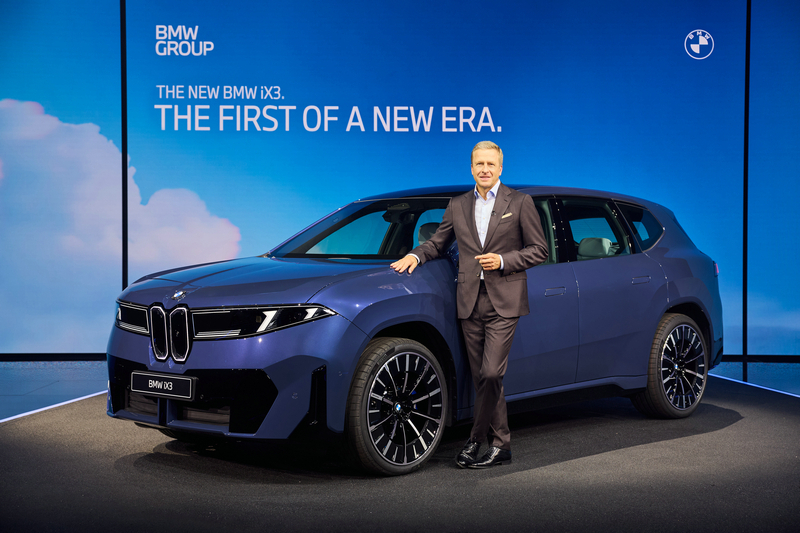
中德深度合作驱动宝马全球创新——访宝马集团董事长齐普策
Xin Hua Wang· 2025-09-18 12:08
Core Viewpoint - China has become a significant source of innovation for the automotive industry, and BMW is committed to deepening cooperation with Chinese partners in electrification and intelligence [1][4]. Group 1: Electric Vehicle Development - BMW's new generation electric vehicle, the iX3, was globally launched at the Munich Auto Show and will have a long-wheelbase version released in China in 2026, with a range exceeding 900 kilometers and ultra-fast charging capabilities [1][4]. - The iX3 is described as the most "localized" BMW to date, reflecting the company's long-term commitment to the Chinese market [1][4]. - BMW's electric vehicle deliveries reached 318,900 units in the first half of the year, marking an 18.5% year-on-year increase, with China playing a crucial role in this growth [4]. Group 2: Strategic Partnerships - BMW collaborates with Chinese suppliers like CATL and EVE Energy, emphasizing a highly specialized and growth-oriented partnership that supports its electrification transformation [1][4]. - In the realm of smart technology, BMW is working with Chinese tech companies such as Alibaba and Huawei to advance digital interaction and navigation assistance features [3][4]. Group 3: Global Strategy and Market Position - China is viewed as a critical strategic market for BMW, with the company having made significant investments in its operations there, totaling approximately 116 billion RMB since 2010 [4]. - BMW has established four major R&D innovation centers and three software companies in China, employing over 3,000 R&D personnel, making it the largest R&D team outside Germany [4]. - The company maintains a balanced global presence but recognizes China's unique importance, as evidenced by multiple visits by the chairman in a single year [3][4]. Group 4: Future Outlook - BMW aims to continue deepening its engagement in the Chinese market, focusing on technological innovation and green transformation, while developing products that meet local demands [6]. - The company advocates for free trade and fair cooperation, opposing high tariffs on electric vehicles exported from China to Europe, emphasizing the importance of global collaboration for future success [6].
超560家德企之乡太仓,与一家德企的30年丨活力中国调研行
2 1 Shi Ji Jing Ji Bao Dao· 2025-09-17 02:35
Core Insights - Taicang has become a hub for over 560 German enterprises, with a cumulative investment exceeding 6 billion USD and an annual industrial output value surpassing 67 billion CNY [1][6] - The collaboration between Chinese and German companies has evolved from technology introduction to deep integration into local industries, particularly in sectors like new energy vehicles and advanced manufacturing [1][3] Group 1: Economic Impact - Taicang, with only 0.24% of land use by German companies, contributes 8% of the local GDP, 18% of the industrial output, and 20% of public fiscal revenue [1] - Schaeffler Group, a major German enterprise, has established a significant presence in Taicang, with 5 factories and a workforce of 7,000, contributing to local economic growth [2][3] Group 2: Development of German Enterprises - The first German company established in Taicang in 1993 marked the beginning of a trend, leading to over 560 German firms now operating in the area, with manufacturing companies representing over 10% of the national total [6] - Schaeffler's investment in China has expanded to include 6 R&D centers and 17 factories, with 19% of its global revenue expected from the Chinese market by 2024 [2] Group 3: Strategic Advantages - Taicang's geographical location provides significant logistical advantages, with convenient transportation links to Shanghai and a well-developed port, enhancing cost efficiency for enterprises [7][8] - The local supply chain for the new energy vehicle industry is robust, with over 700 companies providing essential components, allowing for high operational efficiency [7] Group 4: Collaborative Ecosystem - The establishment of the Sino-German SME Cooperation Demonstration Zone has facilitated deeper collaboration between German enterprises and over 800 local companies and research institutions [7] - Taicang offers a favorable business environment with a comprehensive overseas investment network and services tailored to support German companies, enhancing their operational experience [8]