产业生态构建

Search documents
梅林企业家故事 陈俊彬与华强:扎根三十年,走向全世界
Nan Fang Du Shi Bao· 2025-10-27 13:38
Core Insights - Shenzhen Huaqiang Group has established itself as a key player in the global electronics supply chain by focusing on continuous innovation and stable development rather than chasing short-term trends [1][3][9] - The company has evolved from a traditional electronic components manufacturer to a comprehensive service platform, playing a crucial role in connecting upstream and downstream industries [5][10] Company Development - Founded in 1994, Shenzhen Huaqiang Group emerged during China's integration into the global trade system, aiming to build a strong foundation and voice for China's electronic components industry [3][5] - The company went public in 1997, marking a significant milestone for China's electronic information industry on the global stage [3][5] - In 2002, Huaqiang launched its online platform, enhancing global information flow and transforming "Huaqiangbei" into a symbol of global electronic trade [3][5] Strategic Evolution - Starting in 2015, the company made significant strides by acquiring firms like Xianghai Electronics and Jieyang Xinke, entering the authorized distribution sector and forming the "Huaqiang Semiconductor Group" [5][10] - In 2019, Huaqiang initiated CVC industry investments, expanding into upstream semiconductor design and high-end manufacturing, transitioning from a manufacturing supporter to an industry enabler [5][10] Leadership and Vision - Chen Junbin, a key figure in the company's growth, has spent over 20 years in various roles, reflecting the company's evolving talent needs and his own development from engineer to management [6][8] - His experiences across different departments have shaped his understanding of the industry and the importance of digital transformation and investment in cutting-edge fields like AI and semiconductors [7][11] Industry Context - The global technology competition landscape is shifting, with the U.S.-China tech rivalry becoming a systemic strategic competition, making the establishment of self-sufficient supply chains crucial for China's manufacturing sector [9][10] - Shenzhen Huaqiang Group plays a pivotal role in this process, serving as a vital hub for connecting domestic and international markets and ensuring the smooth operation of the industry [9][10] Regional Collaboration - The long-standing partnership between Shenzhen Huaqiang Group and the Meilin community exemplifies the positive interaction between enterprises and local governments, contributing to regional economic growth [12][13] - The supportive environment provided by the Meilin government has facilitated Huaqiang's transformation from a local enterprise to a global player in the electronics industry [12][13]

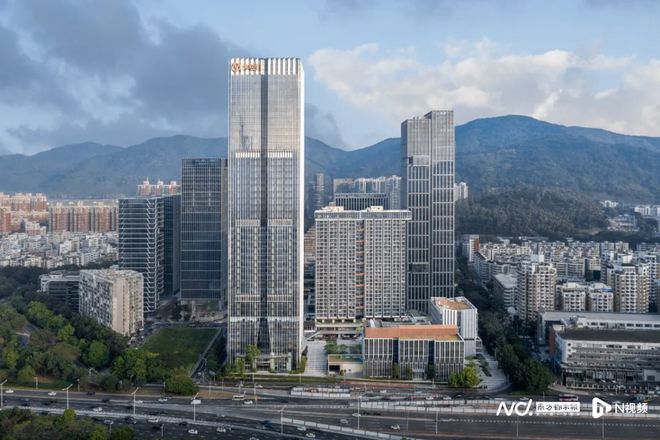
梅林企业家故事 | 陈俊彬与华强:扎根三十年,走向全世界
Sou Hu Cai Jing· 2025-10-27 13:37
Core Insights - Shenzhen Huaqiang Group has established itself as a key player in the global electronics supply chain by focusing on continuous innovation and stable development rather than chasing short-term trends [1][3] - The company has evolved from a traditional electronic components manufacturer to a comprehensive service platform, playing a crucial role in connecting upstream and downstream industries [3][10] Company Development - Founded in 1994, Shenzhen Huaqiang Group emerged during China's integration into the global trade system, aiming to establish a strong presence in the electronic components industry [3][4] - The company went public in 1997, marking a significant milestone in its growth and signaling the potential for Chinese enterprises to build their own industrial ecosystems [3][5] - In 2002, Huaqiang launched its online platform, transforming "Huaqiangbei" into a global symbol of electronic trade [4] Strategic Evolution - Starting in 2015, Huaqiang made strategic acquisitions to enter the authorized distribution sector, leading to the establishment of the "Huaqiang Semiconductor Group" [5][6] - In 2019, the company initiated CVC industrial investments, expanding into upstream semiconductor design and high-end manufacturing, thus transitioning from a manufacturing supporter to an industry enabler [6][10] Leadership and Vision - Chen Junbin, a key figure in the company's growth, has spent over 20 years in various roles, reflecting the evolving talent needs of the enterprise [1][7] - His experiences across different functions have shaped his understanding of the true logic of Chinese manufacturing and the importance of digital transformation [8][9] - Chen emphasizes the need for Chinese enterprises to build autonomous industrial systems and ecological capabilities to navigate global competition [11][12] Regional Collaboration - The long-standing partnership between Shenzhen Huaqiang Group and the Meilin community exemplifies effective government-enterprise collaboration, contributing to regional economic growth [12][13] - The supportive environment provided by local authorities has facilitated Huaqiang's transition from a local business to a global player in the electronics industry [12][14] Industry Context - The current global technological competition, particularly between China and the U.S., necessitates the construction of self-sufficient industrial and supply chains for Chinese manufacturing [10][11] - Huaqiang's role as a central player in the electronic components distribution sector positions it as a vital link in ensuring the stability and efficiency of the industry [10][11]
从爆火到长红 河南文旅下一站精品化?
2 1 Shi Ji Jing Ji Bao Dao· 2025-09-27 00:02
Core Insights - The article discusses the transformation of China's cultural tourism industry, particularly focusing on the new project "Shendu Shisan Fang" in Luoyang, which aims to redefine the tourism experience through a blend of performance, technology, and commerce [3][8]. Group 1: Industry Trends - The cultural tourism sector in China is experiencing rapid growth, with a significant increase in the number of immersive experience projects, reaching 32,024 by 2023, generating a total output value of 1,933.4 billion [5]. - There is a growing concern about the sustainability of popular tourism projects, as many face the risk of becoming short-lived trends due to content homogenization and lack of innovation [5][6]. - Experts emphasize the need for the industry to shift from merely attracting visitors to creating lasting experiences that engage consumers over time [7][11]. Group 2: Project Highlights - "Shendu Shisan Fang" is designed as a comprehensive cultural and commercial complex, inspired by the historical "Li Fang" system of the Sui and Tang dynasties, integrating performance, intangible cultural heritage, and night economy [8][9]. - The project aims to avoid competition through differentiation by offering unique experiences, such as a themed restaurant and an interactive amusement park, which are the first of their kind in Luoyang [9][10]. - The operational model of the project includes innovative concepts like "merchants as actors," enhancing visitor interaction and engagement [9]. Group 3: Strategic Recommendations - Experts recommend that the cultural tourism sector in Henan focus on high-quality offerings and avoid homogenization by leveraging its historical and cultural advantages [10][11]. - There is a call for a more market-driven approach to tourism development, encouraging creativity and reducing government intervention that may stifle individual business interests [11][12]. - The article suggests that building a complete industrial ecosystem is crucial for sustainable development, moving beyond individual projects to a cohesive strategy that integrates various sectors [10][12].
新时代招商的“明水答卷”
Qi Lu Wan Bao· 2025-09-25 22:25
Group 1 - The success of the Snowflake project provides a replicable "Mingshui experience" for national-level economic development zones, emphasizing ecological thinking as the core [1] - The Mingshui Economic Development Zone focuses on a "symbiotic" concept, creating a first-class hardware and industrial environment centered around the core needs of leading enterprises, forming a positive cycle of "gathering chains through production and revitalizing cities through chains" [1] - Innovative mechanisms such as "five unifications" management, parallel approval processes, land pre-reservation, and "project managers" effectively address landing bottlenecks, transforming "impossible" into "Mingshui speed" [1] Group 2 - The establishment of the China Resources Snow Beer million-ton factory in the Mingshui Economic Development Zone symbolizes the government's commitment, the dedicated service of the team, and the collaborative future between government and enterprises [2] - The Mingshui Economic Development Zone is setting a new benchmark for optimizing the business environment with the belief of "building a golden nest to attract the phoenix and sincere service to win the future" [2] - The Snowflake project drives cluster development, attracts headquarters relocation, contributes to tax revenue and employment, achieving a win-win situation for localities and enterprises, illustrating the ultimate value of investment attraction [1]
宝坻 “类中关村”产业生态持续构建
Bei Jing Ri Bao Ke Hu Duan· 2025-09-19 20:47
Core Viewpoint - The Tianjin government is actively promoting the high-quality development of the Baodi District, emphasizing its growing importance in the Beijing-Tianjin-Hebei collaborative development strategy, with significant economic indicators showing double-digit growth [1][2]. Group 1: Economic Development - Baodi District has integrated 1,883 market entities into the Beijing Zhongguancun Science Park, maintaining double-digit growth in fixed investment and tax revenue [1]. - The district has signed an 800 million yuan agreement with the Zhongguancun Development Group to enhance cooperation and establish a "flyover park" mechanism for cross-regional resource allocation [1]. - The establishment of a comprehensive service package from Zhongguancun, including 22 policy measures to support high-quality development, has created a "class Zhongguancun" industrial ecosystem [2]. Group 2: Innovation and Technology - The Science Park has developed a full-chain incubation system, recognized as an innovative base for entrepreneurship, and has collaborated with Tsinghua University to create a demonstration application line for intelligent connected vehicles [2]. - The park has successfully completed 370 innovation achievements, with technologies such as the boron nitride crucible and industrial robot controllers receiving international and domestic certifications [2]. Group 3: Transportation Infrastructure - The opening of the Jing-Tang and Jing-Bin intercity railways has marked Baodi's entry into the "high-speed rail era," enhancing its integration into the modern transportation network of the Beijing-Tianjin-Hebei region [3]. - The development of transportation infrastructure has activated regional economic vitality and strengthened the foundation for rural revitalization, serving as a bridge connecting development and livelihood [3].

预见2025:《2025年中国光电芯片行业全景图谱》(附市场现状、竞争格局和发展趋势等)
Qian Zhan Wang· 2025-08-30 16:39
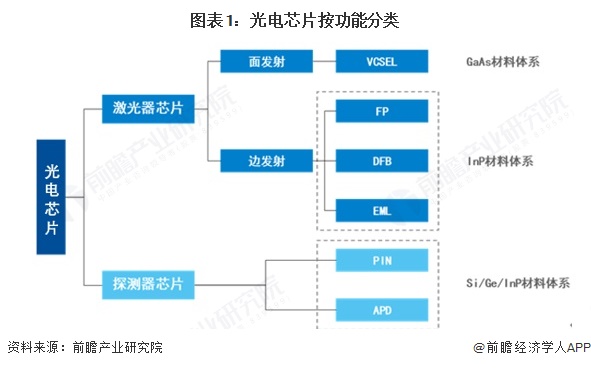
Industry Overview - The optical chip industry, also known as photonic chips, is categorized into laser chips and detector chips, with laser chips converting electrical signals to optical signals and detector chips converting optical signals back to electrical signals [1][4] - The industry chain consists of upstream material and equipment suppliers, midstream chip design and production, and downstream optical device manufacturers and end customers [1][4] Industry Development Stages - The development of China's optical chip industry has gone through three stages: initial exploration from the late 1980s to 2000, technology accumulation from 2000 to 2017, and rapid breakthroughs since 2017 with accelerated domestic substitution [8][10] Policy Background - National policies are promoting the development of the optical chip industry through technology research, standard establishment, and ecosystem construction, aiming to enhance competitiveness and application levels across various fields [10][11] Investment Trends - Investment activity in the optical chip industry has seen a decline, with 50 financing events in 2022, but only 15 events with approximately 1.7 billion yuan in funding from early 2025 to July 2025 [13] Market Size and Growth - The market size of China's optical chip industry is projected to reach approximately 15.2 billion yuan in 2024, with a compound annual growth rate of about 10% from 2020 to 2024 [14] Domestic Production Levels - The domestic production levels of optical chips vary by speed and type, with higher levels of localization in lower-speed chips, while high-speed chips still show significant reliance on imports [15][19] Application Areas - The primary application of optical chips is in telecommunications, where they serve as core components in fiber optic communication systems [20] Competitive Landscape - High-end optical chip products are heavily reliant on foreign suppliers, with leading companies in the high-speed optical chip market being from Europe, the US, and Japan, while Chinese companies dominate the mid-to-low-speed chip market [22] Regional Distribution - The midstream optical chip manufacturing industry is concentrated in central and southeastern coastal regions of China, with Hubei province having the highest concentration of companies [24] Future Market Predictions - The optical chip manufacturing industry is expected to approach a market size of 35 billion yuan by 2030, driven by significant demand in telecommunications, consumer electronics, and automotive sectors [27] Industry Trends - The industry is witnessing trends such as expanding application scenarios into smart computing, autonomous driving, and medical sensing, along with a focus on high integration and energy efficiency in technology [30]


聚势大湾区 链接长三角!广州邀沪企共拓生物医药新机遇
2 1 Shi Ji Jing Ji Bao Dao· 2025-08-30 04:01
Core Viewpoint - The biopharmaceutical industry in China is experiencing rapid growth, driven by government support, technological innovation, and increasing healthcare demands, with Guangzhou positioning itself as a strategic hub for this sector [1][2]. Group 1: Industry Development and Support - Guangzhou has identified "biopharmaceuticals and health" as a strategic industry cluster, planning to focus resources over the next five years to enhance its development [1]. - The city has established a comprehensive financial support ecosystem, with Guangzhou Financial Holdings Group setting up over 20 billion yuan in funds to support biopharmaceutical projects, having invested in 228 projects totaling over 7 billion yuan [3]. - The "Hong Kong-Macao Drug and Device Pass" policy has facilitated the approval of 120 urgently needed drugs and devices, benefiting over 13,000 patients and expanding market opportunities for biopharmaceutical companies [5]. Group 2: Innovation and Ecosystem - Guangzhou is home to over 6,500 biopharmaceutical and health enterprises, leading in enterprise quantity, industry scale, and innovation capabilities nationally [6]. - The city has developed a full industry chain ecosystem covering research, manufacturing, and services, which has successfully transitioned biopharmaceutical innovations from laboratories to production lines [6]. - A series of supportive policies, including talent rewards and funding for research and commercialization, have been implemented to promote high-quality development in the biopharmaceutical sector, with a maximum support amount of 5 billion yuan [6][7]. Group 3: Regional Collaboration and Future Outlook - The collaboration between the Guangdong-Hong Kong-Macao Greater Bay Area and the Yangtze River Delta is seen as a dual engine for national biopharmaceutical development, with calls for enhanced regional cooperation and policy exchange [7]. - The recent roadshow in Shanghai serves as a platform for Guangzhou to showcase its biopharmaceutical cluster advantages and attract investment, aiming to build a world-class biopharmaceutical industry group [8].
快递涨价当配服务升级
Jing Ji Ri Bao· 2025-08-27 22:12
Core Insights - The express delivery industry is experiencing a wave of price increases, starting from regions like Guangdong and Yiwu and gradually spreading nationwide [1] - The industry has been trapped in a vicious cycle of "low-price for volume" competition, leading to a situation where increased volume does not translate into increased revenue [1] - Rising operational costs, including labor, fuel, and rent, have severely compressed profit margins, making it difficult for companies to absorb these cost pressures internally [1] Group 1 - The dilemma for express companies, primarily operating on a franchise model, is whether to enforce price increases, risking the loss of price-sensitive customers, or to maintain low prices, which could lead to franchisee losses [1] - Many franchisees are already on the brink of losses due to prolonged low-price competition, highlighting the challenge of balancing corporate interests with market demand [1] Group 2 - The direct result of price increases is an increase in consumer spending, with many consumers noticing the gradual disappearance of free return insurance and higher thresholds for free shipping [2] - Consumers are generally accepting of price increases as long as they perceive value in the service, but initial feedback indicates no significant improvement in service quality post-price hike, leading to dissatisfaction [2] - The industry needs to build a sustainable and balanced ecosystem that aligns the interests of merchants, express companies, and consumers, ensuring that every additional cost is justified and perceived as valuable [2]
刘坤:传统建筑营销的革新领航者
Zhong Guo Chan Ye Jing Ji Xin Xi Wang· 2025-08-02 10:54
Core Viewpoint - The traditional marketing model of construction companies must evolve from a solitary approach to a collaborative ecosystem, leveraging digital transformation and resource integration to enhance efficiency and competitiveness [1][7]. Group 1: Strategic Development - Liu Kun joined China Communications Construction Company Southwest Engineering Co., Ltd. in 2020 and has since held key positions in strategic development, market business, and marketing, gaining a comprehensive view of project life cycles [3]. - In 2022, the company implemented a dual-driven strategy of "current exchange + financing construction projects," where Liu Kun led a cross-departmental team to optimize resource allocation, significantly reducing project signing cycles by 30% and achieving a partner satisfaction rate of 95% [3][4]. Group 2: Innovation in Marketing - Liu Kun identified the issue of "information silos" in traditional construction marketing, proposing a new ecosystem approach that includes horizontal cross-field alliances and vertical full-chain services [4]. - He developed the "Industry Resource Alliance Sharing System," integrating data from over 100 upstream and downstream enterprises, which improved project matching efficiency and success rates through intelligent algorithms [4]. Group 3: Internal Management Improvements - Liu Kun initiated the development of a "Cross-Departmental Bid Management Coordination System" and a "Pre-Bid Risk Assessment System," enhancing communication efficiency by 50% and reducing risk assessment time from 7 days to 2 days [5]. - These systems have become essential tools for standardized management, supporting the company's refined management practices [5]. Group 4: Industry Influence and Research - Liu Kun's influence extends beyond the company, as he led the preparation of the "Southwest Regional Market Research Report (2022)," which resulted in an 11.2% year-on-year increase in new contract amounts and a 32.6% rise in the proportion of new energy projects [6]. - In 2024, he completed a report analyzing new trends in the construction industry, recommending a strategic shift towards becoming a full lifecycle service provider, which has been recognized as a key focus for the company and the industry [6]. Group 5: Future Vision - Liu Kun emphasizes that the competitive edge of construction companies is shifting from traditional construction capabilities to ecosystem-building capabilities, actively promoting the integration of resource platforms with advanced technologies [7]. - The goal is to cover 200 quality enterprises nationwide within three years, showcasing the essential elements for transformation in the traditional industry: technical expertise, resource integration, and innovative spirit [7].
产业链上的山东好品牌·青岛新力量|青岛AI链主企业如何改写制造业规则?
Xin Lang Cai Jing· 2025-07-31 10:56
Core Insights - Qingdao's AI industry aims to achieve a scale of over 200 billion yuan by 2026, with a focus on technology innovation driving industrial transformation [1][3] - The event highlighted the successful application of AI technologies in various sectors, including traffic management, industrial manufacturing, and robotics, showcasing a strategic upgrade from technology breakthroughs to ecosystem building [1][4] Group 1: AI Technology Applications - Hisense's "Hisense Tongtu Model" has improved public sentiment processing efficiency by 90% and road safety hazard identification accuracy to over 80% [3] - The "Qizhi Kongming AInnoGC" model integrates industrial robots, achieving a 70% reduction in power supply fault handling steps in trial applications [4] - The Qingdao Metro's collaboration with 17 metro units and 18 industry units has significantly enhanced fault location efficiency in power supply systems [6] Group 2: Industrial Integration and Growth - Over 70% of the 1,200 clients served by Qizhi are in manufacturing, with expectations for manufacturing revenue contribution to exceed 80% in 2024 [5] - Innovations in the harmonic reducer sector have led to an 80% market share in Shandong, breaking foreign monopolies [5] - The integration of AI in manufacturing is transitioning from isolated breakthroughs to comprehensive system restructuring [7] Group 3: Collaborative Ecosystem Development - Qingdao's AI industry is forming a multi-layered innovation network, with Hisense and local universities collaborating on smart traffic models [9] - The establishment of a collaborative ecosystem aligns with Shandong's policy to support innovation unions [10] - Qingdao's AI initiatives are supported by significant government funding, including a 50 billion yuan special fund [11] Group 4: Strategic Vision and Future Outlook - Qingdao's AI industry is positioned as a key player in the national AI landscape, focusing on vertical integration and ecosystem collaboration [13] - The city aims to leverage AI to transform foundational industries such as transportation, manufacturing, and energy, creating a new intelligent economic hub in Northern China [11][13]