
产业链供应链稳定

Search documents
比亚迪:积极响应《供应商账款支付规范倡议》 共建共赢发展生态
Xin Jing Bao· 2025-09-15 05:08
Group 1 - The Ministry of Industry and Information Technology and other national ministries have made a series of decisions to ensure the stability of the industrial and supply chains and promote the high-quality development of the automotive industry [1] - On September 15, the China Association of Automobile Manufacturers released the "Supplier Payment Norms Initiative" to standardize payment-related content in procurement contracts between automakers and supply chain companies [1] Group 2 - BYD has actively responded to the "Supplier Payment Norms Initiative" and is implementing the requirements of the "Regulations on Payment to Small and Medium-sized Enterprises" [2] - BYD focuses on key aspects such as order confirmation, delivery and acceptance, payment and settlement, and contract duration, aiming to build a collaborative and win-win development ecosystem in the automotive industry through technological innovation and management optimization [2]


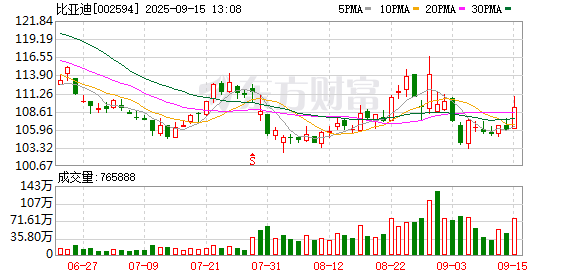
比亚迪:积极响应《供应商账款支付规范倡议》,共建共赢发展生态
Bei Ke Cai Jing· 2025-09-15 04:52
Core Viewpoint - BYD is actively responding to the "Supplier Payment Norms Initiative" and is committed to implementing the "Regulations on Ensuring Payment to Small and Medium-sized Enterprises" to enhance the automotive industry's high-quality development in China [1] Group 1: Company Initiatives - BYD focuses on key aspects such as order confirmation, delivery and acceptance, payment and settlement, and contract duration to optimize its operations [1] - The company aims to build a collaborative and win-win development ecosystem with upstream and downstream partners through technological innovation and management optimization [1] Group 2: Industry Context - Recent decisions and deployments by the Ministry of Industry and Information Technology and other national ministries aim to stabilize the industrial and supply chains while promoting high-quality development in the automotive sector [1] - The China Association of Automobile Manufacturers has issued the "Supplier Payment Norms Initiative" to standardize payment-related content in procurement contracts between vehicle manufacturers and supply chain companies [1]
长安汽车:已经全面兑现60天账期承诺
Ju Chao Zi Xun· 2025-09-15 03:50
Core Viewpoint - Changan Automobile has implemented a payment scheme that ensures a 60-day payment term for suppliers, aligning with industry standards and promoting high-quality development in the automotive sector [2] Group 1: Company Actions - As of now, Changan Automobile has fully realized its commitment to a 60-day payment term through an innovative payment scheme based on delivery dates and a ten-day collection period [2] - The company has developed a standardized and efficient payment process for supplier payments [2] - On June 10, Changan Automobile announced a unified payment term of 60 days for suppliers across its brands, including Changan Qiyuan, Changan Kaicheng, Deep Blue Automobile, and Avita [2] Group 2: Industry Context - The China Association of Automobile Manufacturers released a proposal for supplier payment norms, which was positively acknowledged by the Ministry of Industry and Information Technology [2] - The Ministry of Industry and Information Technology and the State-owned Assets Supervision and Administration Commission have made significant deployments to ensure the stability of the industrial supply chain and promote high-quality development in the automotive industry [2] - Changan Automobile's actions reflect a commitment to social responsibility and support for small and medium-sized enterprises, fostering a conducive business environment and promoting collaborative interactions within the supply chain [2]


规范汽车整车企业供应商账款支付 工信部作出回应
Yang Shi Xin Wen Ke Hu Duan· 2025-09-15 02:21
Core Viewpoint - The China Automobile Industry Association has initiated a standardization proposal to ensure timely payment of accounts between vehicle manufacturers and suppliers, aiming to enhance the stability of the supply chain and promote the healthy development of the automotive industry [1] Group 1: Industry Initiatives - 17 major vehicle manufacturers, including FAW and Dongfeng, have committed to ensuring that payment terms to suppliers do not exceed 60 days [1] - The Ministry of Industry and Information Technology has outlined specific requirements regarding goods delivery acceptance, payment terms, and settlement processes, emphasizing that acceptance of goods should ideally be completed within 3 working days [1] Group 2: Impact on Supply Chain - The proposal aims to alleviate the financial pressure on suppliers caused by delayed payments, which can hinder their operational capacity and negatively affect investment in technological innovation [1] - The Ministry highlighted that the development of the new energy vehicle sector in China is still in its early stages, with rapid changes in product structure, market scale, and industry form, indicating a need for a mature supply chain system [1] Group 3: Future Directions - The government plans to implement multiple measures to foster a collaborative and mutually beneficial ecosystem between vehicle manufacturers and component suppliers, promoting sustainable industry development [1]
铁路暑运创历史同期新高
Jing Ji Ri Bao· 2025-09-05 22:10
Group 1: Event and Passenger Transport - The "G9813/2" special train for "Gansuper" carried over 1,000 fans from Jiujiang, highlighting the growing trend of using high-speed rail for sports events [1] - China Railway Nanchang Group analyzed data to identify key cities for fan travel, launching three pairs of customized trains to meet the combined demand for "watching games + tourism," transporting a total of 6,656 passengers [1] - During the summer transportation period, the Beijing South Station sent a record 10.88 million passengers, averaging 175,500 passengers daily [2] Group 2: Overall Railway Performance - From July 1 to August 31, the national railway transported 943 million passengers, a year-on-year increase of 4.7%, and 7.02 million tons of goods, up 4.8%, marking historical highs for both passenger and freight transport [2] - The railway department implemented a summer operation schedule, increasing the average daily train services to 11,330, a rise of 8% compared to the previous year [2] - The number of foreign passengers transported reached 3.484 million, reflecting a 23.9% increase, facilitated by the relaxation of visa policies [2] Group 3: Tourism and Special Services - The railway launched various themed tourist trains, including family tours and red tourism, enhancing travel options and experiences for passengers [3] - A total of 579 tourist trains were operated during the summer period, representing a 31% increase, contributing to the tourism economy [3] - Cross-border travel was supported with significant passenger numbers on the Guangzhou-Shenzhen-Hong Kong high-speed rail and the China-Laos railway [3] Group 4: Freight Transport and Supply Chain Stability - The railway focused on ensuring stable supply chains by enhancing coal transport capabilities, sending 243 million tons of electric coal during the summer [4] - Key materials such as grain and fertilizers were prioritized for transport, with the establishment of "green channels" to ensure timely delivery [4] - International freight services remained stable, with consistent operations of China-Europe freight trains and other international routes, supporting supply chain stability [4]
新华时评丨携手维护全球发展“共赢链”
Xin Hua Wang· 2025-08-12 06:37
Core Viewpoint - The third China International Supply Chain Promotion Expo highlights the global demand for stable industrial and supply chains amid geopolitical tensions and economic globalization challenges, showcasing China's commitment to enhancing global supply chain resilience and fostering cooperation [1][4]. Group 1: Event Overview - The expo attracted 1,200 domestic and foreign enterprises, indicating a higher level of international participation compared to previous editions, with a clearer supply chain logic and a stronger emphasis on innovation [1][2]. - Six major exhibition areas were established, including advanced manufacturing, clean energy, smart vehicles, digital technology, health living, and green agriculture, providing a platform for real-world connections and showcasing the entire lifecycle from research and development to application [1][2]. Group 2: Industry Impact - Major global companies such as Airbus, NVIDIA, and Schneider participated for the first time, demonstrating the integration of supply chains and the collaborative achievements with Chinese partners [2]. - The global supply chain has evolved over the years, significantly contributing to economic growth, with global GDP increasing more than threefold since 1970 and trade as a percentage of GDP doubling [2]. Group 3: Challenges and Opportunities - The stability of global supply chains is threatened by unilateralism, trade protectionism, and geopolitical tensions, leading to fragmentation risks and reduced economic efficiency [3]. - Companies are shifting from an "efficiency-first" approach to a "resilience-first" strategy, focusing on diversified procurement and localized operations to enhance supply chain resilience [3]. Group 4: China's Role - China is positioned as a "stabilizing anchor" in the global supply chain, leveraging its dual advantages in supply and demand, and its comprehensive integration capabilities [4]. - The country has developed a robust industrial system, accounting for nearly 30% of global manufacturing value added, and continues to attract foreign investment, particularly in high-tech manufacturing, which is projected to account for 11.7% of actual foreign investment in 2024 [4].
国家发改委:经济运行会很快回归正常轨道 下一步将抓紧谋划增量政策工具
Xin Hua Wang· 2025-08-12 06:26
Economic Outlook - The new wave of the pandemic and changes in the international situation have increased downward pressure on the economy, but effective handling of the domestic pandemic and proactive policy measures are expected to restore normal economic order quickly [1] Fixed Asset Investment - In the first four months of this year, the National Development and Reform Commission (NDRC) approved 38 fixed asset investment projects with a total investment of 533.3 billion yuan, showing a significant increase compared to 28 projects and 132.7 billion yuan in the same period last year [2][3] - The acceleration of project approvals is expected to support the growth of infrastructure investment [3] Economic Policy Measures - The NDRC plans to enhance the implementation of existing policies and accelerate the pace of new policy tools to expand domestic demand and effective investment [3] - There is an expectation of more frequent policy actions in the second and third quarters to achieve the annual economic growth target of 5.5% [3] Industrial Performance - The manufacturing sector, particularly the automotive, general equipment, pharmaceutical, and specialized equipment industries, faced significant declines in April, with year-on-year growth rates of -31.8%, -15.8%, -3.8%, and -5.5% respectively [4] - The main internal issues affecting economic performance include logistics bottlenecks, service sector restrictions, and ongoing declines in real estate investment [4] Supply Chain Stability - The NDRC is working to ensure smooth logistics and supply chain stability by improving transportation channels and monitoring risk [5][6] - Measures include guiding transportation in key regions, establishing material transfer stations, and enhancing risk monitoring systems [5][6] Foreign Investment - In the first four months of this year, actual foreign investment in China reached 74.47 billion USD, a year-on-year increase of 26.1% [7] - High-tech industries saw a significant increase in foreign investment, growing by 45.6%, while the central and western regions also experienced substantial growth [7] - The NDRC plans to implement policies to further encourage foreign investment, particularly in manufacturing and productive services [8]
年中经济观察丨打通出山“最初一公里” 农村电商成农民增收致富“金钥匙”
Yang Shi Xin Wen· 2025-08-05 02:43
Core Insights - The e-commerce transaction volume of agricultural products in China increased by 17.2% in the first half of the year, highlighting the rapid development of rural e-commerce driven by internet penetration [1] - E-commerce is becoming a crucial tool for farmers to increase income and promote rural employment, with live streaming sales significantly enhancing market access [2][3] E-commerce Growth - E-commerce development has greatly expanded the sales radius for agricultural products, stimulating economic growth through increased consumer spending [2] - The enthusiasm of farmers for selling products has been ignited by e-commerce live streaming, transforming their market reach from local to national [2] Logistics and Infrastructure - The logistics system in rural areas is still underdeveloped, particularly in remote regions, posing challenges for the initial delivery of goods [3] - Innovative logistics solutions, such as flexible transportation strategies for small packages, have been implemented to improve delivery efficiency [3] Cost Efficiency - The rise of e-commerce has led to reduced logistics costs for farmers, with significant savings on delivery expenses reported [6] - The establishment of rural logistics service stations has improved the integration of postal and express delivery services, enhancing overall efficiency [6] Policy Support - The Chinese government has introduced policies to support the development of rural e-commerce, including the establishment of logistics service stations and the promotion of e-commerce platforms [9] - Future plans include cultivating rural e-commerce leaders and developing digital circulation enterprises to further enhance the agricultural supply chain [9]

舟山市围绕大宗商品资源配置枢纽建设作出最新部署
Qi Huo Ri Bao· 2025-07-20 23:17
Core Viewpoint - Zhoushan is emerging as a significant hub for the commodity trading industry, leveraging national strategies to enhance its oil and gas industry and expand into various commodities, marking a historic opportunity for open development [1][2]. Group 1: Development of Commodity Trading Center - The establishment of the "Zhejiang International Commodity Trading Center" aims to expand the oil and gas industry experience into other commodities such as iron ore, non-ferrous metals, and agricultural products [1]. - The Zhoushan government has outlined a clear action plan to support the construction of the commodity trading center, focusing on enhancing trading platform capabilities and price influence [1][4]. - The integration of various trading platforms under the Zhejiang International Commodity Trading Center is a crucial step towards building a modern commodity circulation system in Zhejiang Province [2]. Group 2: Price Index and Market Influence - "Zhoushan Price" has become a significant price index for low-sulfur fuel oil, breaking the monopoly of overseas markets and enhancing its global market presence [3]. - The Zhejiang International Oil and Gas Trading Center has launched several price guidance products and indices to improve the influence of the Zhoushan Price, including the "Zhoushan Biodiesel Storage Comprehensive Price" [3]. - The trading center has facilitated transactions worth approximately 88.3 million yuan through its price window system, indicating a growing market activity [3]. Group 3: Policy Support and Future Plans - The Zhoushan government has been actively developing policies to support the integration of commodity trading and has proposed various measures to enhance the trading center's capabilities [4]. - Future plans include further integration of trading platforms, enhancing trading varieties, and optimizing trading models to increase transaction scale and price influence [4]. - The government aims to create a better business environment to attract various market participants and promote trade aggregation [4].
链博会金融服务支持产业链供应链稳定
news flash· 2025-07-20 02:05
Core Viewpoint - The third China International Supply Chain Promotion Expo has showcased various financial services from multiple institutions, focusing on the latest demands of the industrial and supply chains [1] Group 1: Financial Services - Several financial institutions have introduced distinctive financial services tailored to meet the evolving needs of the supply chain [1] - The Bank of Communications has partnered with over 100 companies participating in this year's expo [1] Group 2: Industry Focus - The financial services offered by the Bank of Communications are centered around six major chains, including advanced manufacturing, clean energy, and smart automotive [1] - A significant emphasis is placed on addressing the funding challenges faced by small and micro enterprises within the supply chain [1]
