期现一体化

Search documents
2025年大宗商品现货市场大事记
Qi Huo Ri Bao Wang· 2026-01-12 13:54
Group 1: Policy and Market Developments - The commodity spot market is experiencing favorable policies, strengthening the foundation for "spot market-based and enhancing futures-spot linkage" [1] - The Ministry of Commerce and other departments issued a plan to cultivate around 100 leading digital supply chain enterprises by 2030, integrating AI and big data into the supply chain [2] - The national carbon emissions trading market expanded to include steel, cement, and aluminum industries, marking a strategic shift towards multi-industry regulation [3] - The Ministry of Commerce encouraged the development of capacity pre-sale and order trading models to innovate trading practices in the commodity market [4] Group 2: Strategic Industry Focus - Rare earths have become a focal point in international competition, with export controls implemented on several rare earth items as a countermeasure against U.S. trade policies [5] - The establishment of the Zhejiang International Commodity Trading Center aims to integrate various trading resources and expand from oil and gas to multiple commodity categories [6][7] - Zhejiang's government issued a plan to create an integrated off-market for commodity futures and spot trading, enhancing resource allocation capabilities [8] Group 3: Regional Initiatives and Innovations - Hangzhou's government launched a three-year action plan to enhance the quality and scale of commodity trade, aiming to position the city as a national commodity trade center [9] - Tianjin has created a favorable policy environment for local commodity trading platforms, facilitating rapid approval for new models and products [10] - The Hainan Free Trade Port's full island closure operation is expected to provide unprecedented opportunities for commodity flow, with a significant expansion of zero-tariff items [11] - Hong Kong is accelerating the development of a commodity trading ecosystem, with initiatives including tax incentives and the establishment of delivery points for global trading [13]
“舟山价格”何以锚定国际船燃市场新坐标?
Zheng Quan Shi Bao Wang· 2026-01-05 03:30
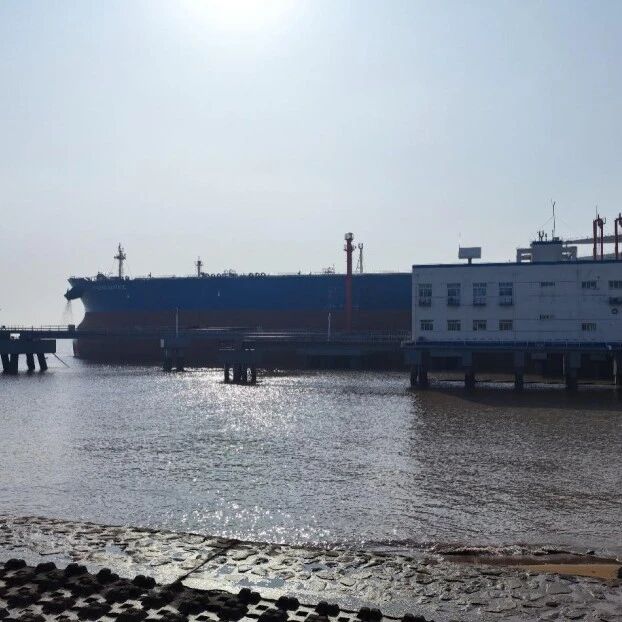
Core Viewpoint - The "Zhoushan Price" has emerged as a significant pricing mechanism for ship fuel in China, reducing reliance on international pricing and enhancing the local shipping industry's development [2][3][4]. Group 1: Overview of Zhoushan Price - Zhoushan, located at the eastern edge of Hangzhou Bay, is a crucial shipping hub and the largest ship refueling port in China, with an annual refueling volume exceeding 7 million tons [2]. - The "Zhoushan Price" was established on June 21, 2021, based on the Shanghai Futures Exchange's low-sulfur fuel oil futures price, marking the first domestic spot pricing mechanism using a futures price as a basis [2][3]. - The pricing system has evolved to include various components such as buyer quotes, storage prices, and weather indices, creating a comprehensive index system that supports the ship fuel supply chain [2][3]. Group 2: Impact on Market Transparency and Efficiency - The introduction of the "Zhoushan Price" has significantly improved market transparency and stability, enhancing operational efficiency for enterprises and expanding the application of fuel oil futures prices in the spot market [3][4]. - Over 90% of the participants in the low-sulfur seller quote are now involved in the Zhoushan ship fuel market, indicating its widespread acceptance and influence [4]. Group 3: Role of Zhejiang Dazong - Zhejiang Dazong, established in 2015, serves as a major platform for bulk commodity trading and has been instrumental in promoting the integrated oil and gas trading market in the Yangtze River Delta [5][6]. - The collaboration among various stakeholders has facilitated the integration of futures and spot markets, enhancing the overall trading efficiency and service delivery to the real economy [6][8]. Group 4: Future Developments and Innovations - The ongoing exploration of integrated pricing mechanisms extends beyond the "Zhoushan Price," with initiatives such as the establishment of a national bulk commodity registration center and the launch of various trading models [9]. - The Zhoushan Price is expected to further break down international pricing barriers and elevate China's ship fuel industry within the global value chain, contributing to higher quality growth [9].

实探|“舟山价格”何以锚定国际船燃市场新坐标?
券商中国· 2026-01-05 03:07
Core Viewpoint - The article highlights the emergence of "Zhoushan Price" as a significant pricing mechanism in China's shipping fuel market, which enhances market transparency and reduces reliance on international pricing [2][3][5]. Group 1: Introduction of Zhoushan Price - Zhoushan, located at the eastern edge of Hangzhou Bay, is a crucial shipping hub and the largest ship refueling port in China, with an annual refueling volume exceeding 7 million tons [2]. - The "Zhoushan Price" was established on June 21, 2021, based on the low-sulfur fuel oil futures price from the Shanghai Futures Exchange (SHFE), marking the first domestic pricing mechanism for ship fuel [2][3]. Group 2: Impact on Market Dynamics - The introduction of "Zhoushan Price" has improved market transparency and stability, enhancing operational efficiency for companies and expanding the application of fuel oil futures prices in the spot market [3][5]. - The participation of over 90% of companies in the Zhoushan ship fuel market in the low-sulfur seller pricing indicates the growing influence of "Zhoushan Price" [5]. Group 3: Integration of Futures and Spot Markets - Zhejiang Dazong, established in 2015, plays a pivotal role in promoting the integration of futures and spot markets in the Yangtze River Delta, facilitating the construction of a multi-layered trading market for bulk commodities [6][11]. - The collaboration between SHFE, Zhejiang Dazong, and industry players has led to the development of a comprehensive pricing index system and various trading models, enhancing the service to the real economy [11][12]. Group 4: Future Prospects - The ongoing development of "Zhoushan Price" aims to break international pricing barriers and elevate China's shipping fuel industry within the global value chain, indicating a commitment to continuous innovation and market collaboration [12].

产业客户如何实现期现一体化战略升维
Qi Huo Ri Bao Wang· 2025-12-08 01:33
Core Viewpoint - The article emphasizes the systemic mismatch between the goals, incentives, and processes within companies, particularly regarding the disconnection between spot and futures departments, which leads to ineffective hedging and increased risks [2][3][4]. Group A: Issues in Current Practices - Companies face increased macroeconomic volatility and geopolitical conflicts, leading to uncertainty in commodity prices, which has become a core variable for business operations [2]. - There is a frequent occurrence of hedging failures due to a lack of collaboration between the spot and futures departments, often resulting in speculative behavior rather than effective risk management [2][3]. - The traditional governance logic prioritizes cost control and supply chain stability for spot departments, while futures teams focus on independent profit and loss, creating conflicting decision-making processes [3][4]. Group B: Importance of Organizational Structure - The lack of a unified risk and return assessment framework leads to departments acting based on isolated information and goals, resulting in a "local optimum, overall suboptimal" dilemma [3]. - The design of performance evaluation systems significantly influences decision-making preferences, with futures teams often incentivized to pursue short-term trading profits rather than long-term risk hedging [4][10]. Group C: Need for Systemic Reforms - To resolve structural conflicts between spot and futures teams, it is essential to return to the theoretical foundation of hedging, which focuses on mitigating cash flow volatility rather than generating profits [6]. - Establishing a "combined accounting framework" for spot and futures operations is crucial, where procurement costs and sales profits consider the comprehensive impact of futures trading [6]. Group D: Pathways for Integration - Achieving deep integration between spot and futures operations requires a reorganization of capabilities across three dimensions: organization, processes, and performance evaluation [8][9]. - A "Commodity Risk Management Committee" led by senior management should be established to unify risk preferences and ensure alignment between futures operations and core business decisions [8]. - Institutionalizing collaborative processes is vital, such as integrating futures decision-making into key operational stages like procurement and sales pricing [9]. Group E: Role of Professional Service Institutions - Professional service institutions, such as futures companies, should evolve from traditional intermediary roles to strategic enablers, focusing on enhancing clients' hedging effectiveness and operational stability [12]. - The shift from a product-oriented to a solution-oriented approach in service delivery is essential for improving clients' risk management capabilities [12]. Group F: Performance Evaluation Metrics - Key performance indicators should reflect the contributions of risk management, focusing on overall profit predictability rather than isolated profit and loss from futures trading [10][13]. - Metrics such as virtual settlement prices, adjusted gross profit margins, and basis coverage rates are critical for assessing the effectiveness of hedging strategies [13]. Group G: Conclusion - Companies that break down internal barriers and integrate risk management into their core operations are likely to achieve greater stability and resilience in uncertain market conditions [14].

上期综合业务平台上线广西铝交易中心报价专区
Qi Huo Ri Bao· 2025-11-24 02:01
Core Insights - The Shanghai Futures Exchange (SHFE) has launched a pricing section for aluminum products on its comprehensive business platform, specifically for the Guangxi Aluminum Trading Center [1][2] - Guangxi is a significant production base for aluminum in China, with a complete industrial chain from bauxite to recycled aluminum [1] - The Guangxi Aluminum Trading Center aims to enhance trading channels and risk management for local aluminum enterprises [2] Group 1 - The initial quoted products include alumina, aluminum ingots, aluminum rods, and casting aluminum alloys, with designated delivery warehouses across Guangxi and Guangdong [1] - As of October 31, 2025, the Guangxi Aluminum Trading Center has achieved a total transaction volume of 7.51 million tons and has 857 registered users [1] - The trading center facilitates the connection between the regional spot market and SHFE's aluminum futures market, allowing enterprises to reference futures prices for better pricing strategies [2] Group 2 - The SHFE has already launched 20 types of standard warehouse receipt trading and is focused on integrating futures and spot markets to support high-quality economic development [2] - The collaboration between SHFE and the Guangxi Aluminum Trading Center is expected to enhance the financial services available to the aluminum industry [2]
党建引领强根基 创新赋能谱新篇——华源期货以实干践行高质量发展
Qi Huo Ri Bao Wang· 2025-11-20 08:29
Group 1 - The core viewpoint emphasizes the integration of party leadership into business operations, aiming for high-quality development in the futures industry through various practical outcomes [1] - The company has established a collaborative model of "Party Building + Industry + Assistance" to enhance its competitive advantage and support rural revitalization and compliance construction [1] - The company is actively aligning with national strategic needs, particularly in green finance, and is involved in innovative products like recycled metal futures to help industry chain enterprises achieve carbon neutrality goals [1] Group 2 - The company is leveraging technology to upgrade its service ecosystem by collaborating with professional technical teams to create a WeChat ecological service system that covers trading, information, and investor education [2] - Compliance and risk control are viewed as foundational for the company's development, with initiatives like financial knowledge outreach and fraud prevention to protect investors [2] - The company aims to continuously promote the integration of party building and business, driving service upgrades through digital transformation while supporting the real economy and rural revitalization [2]
上期所与浙江大宗联合发布高硫买方报价 提升期现联动能效
Qi Huo Ri Bao Wang· 2025-09-11 18:52
Core Insights - The development of fuel oil futures and low-sulfur fuel oil futures markets has been steady, with effective risk management and price reference tools provided for the shipping fuel industry [1][3] - The launch of the high-sulfur 380CST fuel oil "China Zhoushan Fuel Oil Bonded Ship Supply Buyer Quotation" enhances the integrated pricing system based on futures [1][3] Market Developments - Since 2021, the Shanghai Futures Exchange and Shanghai International Energy Exchange have introduced various quotations based on high and low sulfur fuel oil futures settlement prices, providing significant reference prices for domestic and international shipping fuel markets [2][3] - The introduction of the "Price Of Zhejiang ZME" system allows enterprises to sign spot transaction intentions based on futures-based low-sulfur fuel oil quotations [2] Pricing Mechanism - The newly released high-sulfur buyer quotation is based on the Shanghai Futures Exchange fuel oil futures prices, processed daily by Zhejiang Dazhong, providing a unified premium/discount price [3] - The launch of the high-sulfur buyer quotation and the POZZ system will enhance the efficiency of using RMB premium/discount quotations in the shipping fuel industry [3] Future Outlook - The Shanghai Futures Exchange and Zhejiang Dazhong will continue to collaborate to support the construction of the Zhejiang Free Trade Pilot Zone and the Yangtze River Delta integrated oil and gas trading market [3] - The focus will be on promoting high-quality and sustainable development of the shipping fuel industry, contributing to the high-quality development of the Yangtze River Delta integration [3]
舟山市围绕大宗商品资源配置枢纽建设作出最新部署
Qi Huo Ri Bao· 2025-07-20 23:17
Core Viewpoint - Zhoushan is emerging as a significant hub for the commodity trading industry, leveraging national strategies to enhance its oil and gas industry and expand into various commodities, marking a historic opportunity for open development [1][2]. Group 1: Development of Commodity Trading Center - The establishment of the "Zhejiang International Commodity Trading Center" aims to expand the oil and gas industry experience into other commodities such as iron ore, non-ferrous metals, and agricultural products [1]. - The Zhoushan government has outlined a clear action plan to support the construction of the commodity trading center, focusing on enhancing trading platform capabilities and price influence [1][4]. - The integration of various trading platforms under the Zhejiang International Commodity Trading Center is a crucial step towards building a modern commodity circulation system in Zhejiang Province [2]. Group 2: Price Index and Market Influence - "Zhoushan Price" has become a significant price index for low-sulfur fuel oil, breaking the monopoly of overseas markets and enhancing its global market presence [3]. - The Zhejiang International Oil and Gas Trading Center has launched several price guidance products and indices to improve the influence of the Zhoushan Price, including the "Zhoushan Biodiesel Storage Comprehensive Price" [3]. - The trading center has facilitated transactions worth approximately 88.3 million yuan through its price window system, indicating a growing market activity [3]. Group 3: Policy Support and Future Plans - The Zhoushan government has been actively developing policies to support the integration of commodity trading and has proposed various measures to enhance the trading center's capabilities [4]. - Future plans include further integration of trading platforms, enhancing trading varieties, and optimizing trading models to increase transaction scale and price influence [4]. - The government aims to create a better business environment to attract various market participants and promote trade aggregation [4].
加大金融支持力度 南沙再迎重磅支持 “南沙金融30条”来了
Guang Zhou Ri Bao· 2025-05-12 19:14
Core Viewpoint - The "Nansha Financial 30 Measures" aims to enhance financial support for the Nansha area, positioning it as a key node in the Guangdong-Hong Kong-Macao Greater Bay Area's high-quality development and international financial hub [1][2]. Group 1: Financial Support Measures - The measures are structured around seven dimensions, including improving financial services for innovation and entrepreneurship, enhancing financial services in social welfare, developing specialized financial services, promoting cross-border financial cooperation, and ensuring supportive measures [2][3]. - The initiative is a strategic deployment to accelerate the construction of major cooperation platforms in the Greater Bay Area, aligning with the "Greater Bay Area Development Plan Outline" [2]. Group 2: Innovation and Entrepreneurship - A primary focus is on enhancing financial services for innovation and entrepreneurship, supporting the construction of technology innovation industrial cooperation bases [3]. - Specific measures include supporting financial institutions in innovating bill discount products and increasing financing support for eligible enterprises [3]. Group 3: Cross-Border Financial Services - The plan emphasizes the development of cross-border asset management centers and encourages the use of RMB for international shipping fees [4][5]. - It aims to facilitate cross-border payment services and credit financing, including expanding the range of banks for Hong Kong and Macao residents to open accounts [7]. Group 4: Commodity Futures and Insurance - The establishment of a commodity futures delivery center is proposed to enhance the integration of spot and futures markets, contributing to the pricing power of commodities [6]. - The measures also include the development of cross-border insurance products tailored for residents in the Nansha area [6].
瑞达期货:以专业之力,探索期货服务实体经济的创新实践
Qi Huo Ri Bao· 2025-04-30 11:47
Core Viewpoint - The article emphasizes the importance of the real economy as a foundation for national economic stability, highlighting the challenges and opportunities it faces due to fluctuating raw material prices and market imbalances. It presents Ruida Futures as a leading financial service institution that supports various industries through a comprehensive service model focused on "industry research + risk management + futures-spot coordination" [1]. Group 1: Industry Research and Risk Management - Ruida Futures adheres to a service philosophy rooted in industry needs, actively providing strategies to mitigate risks associated with commodity price volatility. For instance, it helped a cold-rolled processing company manage its 20,000 tons of steel inventory by identifying price exposure based on historical data [2]. - The company has established a "data + research + service" think tank system to enhance its service to the real economy, offering standardized services like market analysis and tailored consulting to help clients manage risks and optimize inventory [2][3]. - Ruida Futures has developed an intelligent research platform that integrates extensive historical data, providing clients with multi-dimensional market forecasts and decision-making support [3]. Group 2: Innovative Risk Management Solutions - The company recognizes the challenges faced by small and medium-sized enterprises in risk management, offering innovative derivative tools to address these issues. For example, it implemented a "strangle option" strategy for a cold-rolled processing client, which not only hedged against price declines but also created additional profit opportunities [4]. - Ruida Futures designed a "futures inventory replacement" plan for a lead mine in Southwest China, allowing the client to convert physical inventory into futures contracts, thus reducing costs and managing price risks effectively [4][5]. Group 3: Integrated Futures and Spot Market Solutions - In the context of building a unified national market, Ruida Futures promotes efficiency in the industrial chain through a service model that combines inventory management, basis pricing, and cross-market collaboration [7]. - The company assists clients in optimizing inventory levels by leveraging futures market price signals, helping them avoid excess inventory or shortages that could lead to increased costs [7]. - Ruida Futures collaborates closely with its subsidiary, Ruida New Control, to provide customized basis pricing solutions, enabling clients to manage price risks effectively and enhance their operational efficiency [8]. Group 4: Future Outlook - Looking ahead, Ruida Futures aims to continue innovating its service models and deepening its service offerings, particularly by leveraging big data and artificial intelligence to improve price discovery and hedging accuracy [9]. - The company plans to increase its service investments in emerging industries such as new energy and new materials, contributing to the transformation and upgrading of the real economy [9].