估值泡沫

Search documents
黄金暴跌引发连锁抛售 贵金属市场全面承压
Jin Tou Wang· 2025-10-22 06:08
Group 1 - Gold prices have surged by 57% this year, currently fluctuating around $4,100 per ounce, but have recently experienced a significant drop due to profit-taking, with a single-day decline of nearly $300, marking the largest drop since April 2013 [1] - Silver prices fell by 7.5% and platinum retreated to $1,500, with silver experiencing its largest single-day drop since 2021, raising concerns about valuation bubbles [1][2] - The improvement in US-China trade relations has strengthened the dollar, putting downward pressure on commodity prices [1] Group 2 - Central bank purchases of gold are expected to continue driving prices up, with limited alternative options available, while concerns over government bond markets and trade wars are influencing factors [2] - The World Gold Council is seeking to launch a digital form of gold, which could significantly alter the physical market in London [2] - Recent price volatility in gold and silver occurred without major news stimuli, indicating an unusual market condition [2] Group 3 - The US government shutdown has entered its 21st day, with no signs of reopening, while traders are awaiting upcoming CPI data and the October PMI [3] - Market participants anticipate a 96% probability of a 50 basis point rate cut by the Federal Reserve in the remaining time of 2025 [3] Group 4 - Technical analysis indicates that gold is showing weak short-term performance, with key support at $4,000, while silver has broken below critical support levels, suggesting further declines [4] - Platinum is also showing bearish signals, with expectations of a potential drop to the $1,460-$1,480 range [4]
【锋行链盟】纳斯达克IPO破发核心要点
Sou Hu Cai Jing· 2025-10-16 16:18
Market Environment - Nasdaq's IPO underpricing is influenced by macroeconomic conditions, monetary policy, and investor risk appetite, which directly affect the funding support for new listings [2] - The Nasdaq index, while focused on tech stocks, is significantly impacted by overall market trends, including economic downturns and geopolitical conflicts, leading to a higher likelihood of IPO failures during such periods [2] Company Fundamentals - Companies listed on Nasdaq are primarily growth-oriented, particularly in sectors like technology, biotech, and renewable energy, but investors demand high certainty in short-term profitability and long-term competitiveness [2] - Basic flaws in a company's fundamentals can easily trigger IPO underpricing, especially if there are significant slowdowns in revenue growth or widening losses [2] Valuation Dynamics - The core issue of IPO underpricing often lies in the conflict between high valuations in the primary market and rational pricing in the secondary market [2] - Companies that have inflated valuations due to prior funding rounds may face significant challenges in the public market if they do not adjust their expectations before the IPO [4] Issuance Mechanism - The IPO pricing mechanism, typically determined by investment banks through book building, can amplify the risk of underpricing if the pricing deviates from market realities [2] - The "anchor effect" from recent comparable company valuations may fail if there are sudden market changes, leading to mispriced IPOs [4] Long-term Perspective - IPO underpricing does not necessarily indicate a company's failure; some quality firms may rebound as market conditions improve or as their fundamentals become more apparent [3] - Companies need to demonstrate improvements in fundamentals, such as revenue growth and reduced losses, to recover from initial underpricing [4] Key Risks - Companies in competitive sectors without unique advantages may be viewed as highly replaceable, increasing the risk of underpricing [2] - Specific events, such as clinical trial failures for biotech firms or regulatory issues for tech companies, can severely impact investor confidence and lead to significant stock price drops [2]


白酒还有希望吗?
雪球· 2025-10-10 08:09
Core Viewpoint - The white liquor industry has become a safe haven during the current bull market, despite various negative news and a challenging economic environment [3]. Group 1: Historical Performance - The China Securities White Liquor Index experienced a rollercoaster ride over the past decade, initially showing steady growth before entering a phase of extreme volatility starting in 2019 [4][5]. - Before 2019, the index was characterized as a "healthy bull," with gradual price increases driven by company performance. However, from 2019 onwards, it transformed into a "crazy bull," with stock prices soaring due to heightened market sentiment rather than actual earnings growth [5][6]. - The index's price-to-earnings (P/E) ratio surged from around 30 times to over 70 times, peaking at 21,663 in early 2021 [6]. Group 2: Recent Challenges - Following the peak, the market faced a prolonged period of correction, with the P/E ratio plummeting to 18.7 times, indicating a significant valuation bubble burst [7]. - The volatility in white liquor prices has been much more pronounced than changes in the underlying fundamentals, primarily driven by the drastic shift in valuation [8]. Group 3: Current Market Sentiment - The current market sentiment is pessimistic due to several factors: a poor economic environment leading to reduced consumption, excessive inventory from previous production surges, and changing preferences among younger consumers who are less inclined to drink white liquor [9]. - The industry is currently in a "winter" phase, focusing on inventory clearance and bubble deflation, which is a painful but necessary process [10]. Group 4: Positive Outlook - Despite the challenges, there are positive factors to consider: the current low valuation (P/E of 18.7 and a dividend yield of 3.8%) provides a safety cushion, reflecting most negative news already [9]. - The business model of leading white liquor brands remains robust, characterized by high profit margins and strong cash flow, supported by deep-rooted cultural practices [9]. - As the market has largely priced in potential bad news, opportunities may arise amidst the prevailing pessimism, suggesting a potential rebound in demand as economic conditions improve [11].



海外对冲基金:AI投机狂潮接近尾声,重仓铀铜等商品对冲泡沫风险
Hua Er Jie Jian Wen· 2025-10-03 10:38
Core Insights - Selwood Asset Management warns that the current AI-driven market frenzy is nearing its peak, potentially leading to a rapid collapse [1] - The firm is adjusting its investment strategy to mitigate risks associated with the AI bubble, focusing on energy-related commodities instead of shorting volatile tech stocks [1][4] Group 1: AI Market Concerns - The CIO of Selwood Asset Management, Karim Moussalem, believes that the trading in the AI sector resembles historical speculative bubbles driven by retail investors [1][2] - Moussalem expresses concern that the energy costs associated with AI are becoming a significant vulnerability, with rising energy prices potentially limiting AI's expansion capabilities [1][3] - He highlights that the profitability of AI-related companies may be overstated due to optimistic depreciation methods for capital expenditures, suggesting that profits could be significantly overestimated if a more realistic depreciation period is applied [2] Group 2: Investment Strategy - In response to the perceived AI bubble and energy constraints, Selwood Asset Management is actively investing in energy markets, particularly uranium, which is viewed as a stable investment opportunity [4] - The firm believes that the demand for stable and high-capacity energy sources for AI data centers will drive interest in uranium, which is currently undervalued [4] - Moussalem acknowledges the challenges of shorting overvalued tech stocks due to retail investor enthusiasm, making energy-related assets a more prudent hedge strategy [4] Group 3: Market Sentiment - The concerns raised by Moussalem resonate with other seasoned investors, such as Leon Cooperman, who notes that the market is at the end of a bull cycle, with bubbles forming during this phase [5] - Georges Debbas from BNP Paribas also expresses caution, indicating that questions surrounding AI investments will increase as companies face low returns despite significant investments [5]

“美股七姐妹”估值泡沫远未见顶
Hu Xiu· 2025-09-20 00:30
Core Viewpoint - The valuation bubble in the "Seven Sisters" of U.S. stocks has not yet peaked, and there is still room for further growth in their prices [1][2]. Group 1: Historical Bubble Comparison - The average price increase from the bottom to the peak in ten major stock market bubbles since the early 20th century is 244% [6]. - The "Seven Sisters"—Tesla, Google, Apple, Meta, Amazon, Microsoft, and Nvidia—have seen a cumulative increase of 223% since their low in March 2023, indicating potential for further gains [7]. - Historically, during market bubbles, the trailing P/E ratio typically reaches 58 times, and prices exceed their 200-day moving average by 29%. Currently, the trailing P/E ratio for the "Seven Sisters" is 39 times, with prices only 20% above the 200-day moving average [8]. Group 2: Market Sentiment and Macro Environment - Strong market sentiment and macroeconomic conditions are key factors supporting the continued rise of tech stocks, driven by positive economic indicators, ongoing enthusiasm for artificial intelligence, and expectations of further interest rate cuts by the Federal Reserve [9]. - The S&P 500 Information Technology Index has surged 56% since its low in April, with investors consistently buying during pullbacks [10]. Group 3: Investor Behavior and Strategy - A recent Bank of America survey indicates that "going long on the 'Seven Sisters'" is viewed as the most crowded trade for the second consecutive month, with 42% of respondents agreeing [12]. - The concentration of this trade aligns with historical bubble characteristics, as seen during the peak of the internet bubble in 2000 when tech stocks surged 61% in six months while other sectors declined [13]. - Despite the positive outlook for the tech bubble, the Bank of America team recommends a balanced strategy for investors, suggesting a "barbell strategy" that includes holding large tech stocks while also investing in some "bad value stocks" [15].




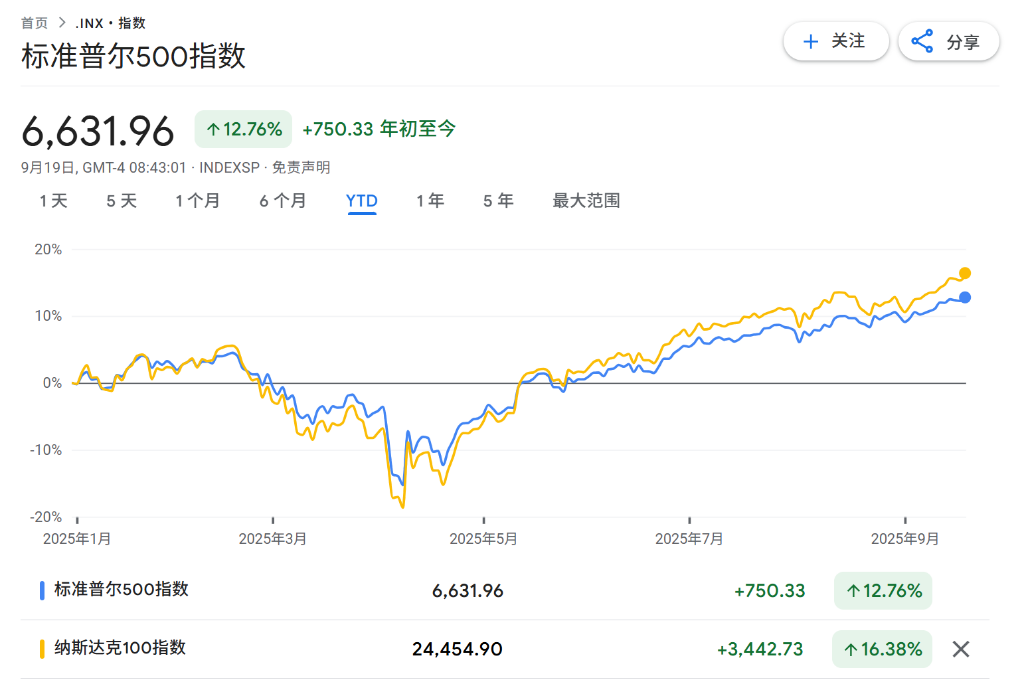
美银Hartnett:“美股七姐妹”估值泡沫远未见顶
Hua Er Jie Jian Wen· 2025-09-19 12:50
Core Viewpoint - The valuation bubble in large U.S. tech stocks has not yet peaked, and there is still room for further gains, according to Bank of America analysts [1][3]. Group 1: Valuation and Historical Comparison - The average price increase from the bottom to the peak in past major market bubbles has been 244%, while the "Magnificent Seven" (Tesla, Google, Apple, Meta, Amazon, Microsoft, and Nvidia) has seen a cumulative increase of 223% since March 2023 [3]. - Current trailing P/E ratio for the "Magnificent Seven" is 39 times, compared to historical bubbles where it typically reached 58 times [3]. - The stock prices of the "Magnificent Seven" are only 20% above their 200-day moving average, while historical bubbles have seen prices exceed this average by 29% [3]. Group 2: Market Sentiment and Drivers - Strong market sentiment, a favorable macroeconomic environment, ongoing enthusiasm for artificial intelligence, and expectations of further interest rate cuts by the Federal Reserve are key factors supporting the rise of tech stocks [4]. - The S&P 500 Information Technology Index has surged 56% since its low in April, with investors consistently buying during pullbacks [4]. Group 3: Investment Strategies - A recent fund manager survey indicated that "going long on the Magnificent Seven" is viewed as the most crowded trade, with 42% of respondents agreeing [5]. - The concentration of this trade aligns with historical bubble characteristics, as seen during the 2000 internet bubble [5]. - While optimistic about the continuation of the tech stock bubble, Bank of America analysts recommend a balanced strategy, suggesting a "barbell strategy" that includes both large tech stocks and some "bad value stocks" to manage risk [5].

注意!8.20北证50冲高后回落,止盈信号现?个人操作思路出炉
Sou Hu Cai Jing· 2025-08-20 22:10
Core Viewpoint - The article discusses the recent trading behavior of the North Securities 50 Index, highlighting the importance of technical analysis and market sentiment in investment decisions, particularly in the context of rising valuations and potential market corrections [1][2]. Group 1: Market Analysis - The North Securities 50 Index has seen a significant increase in its price-to-earnings ratio (PE TTM), rising from 24 times in October last year to over 38 times, indicating a shift from undervaluation to a potentially overheated market [2]. - The index's recent high point was met with a reversal, as indicated by a high-positioned doji candlestick pattern, suggesting a fierce battle between bulls and bears, increasing the likelihood of a market reversal [1]. - A net outflow of over 800 million yuan from northbound funds signals a retreat of major capital from the market, which is often viewed as a barometer of market sentiment [1]. Group 2: Investment Strategies - Various stop-profit strategies are employed by traders, including the profit percentage method, dynamic valuation method, technical retracement method, and zero-cost method, each with its own advantages and disadvantages [4][5]. - The dynamic valuation method is particularly relevant, as the current PE ratio of the North Securities 50 exceeds the average level of the ChiNext, indicating significant bubble risk [4]. - The zero-cost method allows investors to withdraw their principal while leaving profits in the market, aiming to capitalize on further gains [5]. Group 3: Sector Insights - The humanoid robot sector is viewed as overvalued, with expectations of a potential 10% correction due to excessive valuation relative to future growth potential [7]. - The Hang Seng Technology sector is experiencing outflows from southbound funds, indicating potential short-term adjustment pressures [7]. - The liquor sector, however, is seen as attractive due to its low valuation at 18 times PE, driven by policy catalysts and seasonal demand, contrasting with the North Securities 50's valuation bubble [7]. Group 4: Market Sentiment and Trading Discipline - The article highlights a divide among market participants, with technical traders optimistic about a potential upward trend, while conservative traders emphasize caution due to signs of capital outflow and high valuations [9]. - The importance of stop-loss discipline is underscored, with a critical support level at 1450 points for the North Securities 50, below which a return to a consolidation phase may occur [7][9].
美股要开始回调了吗?
3 6 Ke· 2025-08-20 03:53
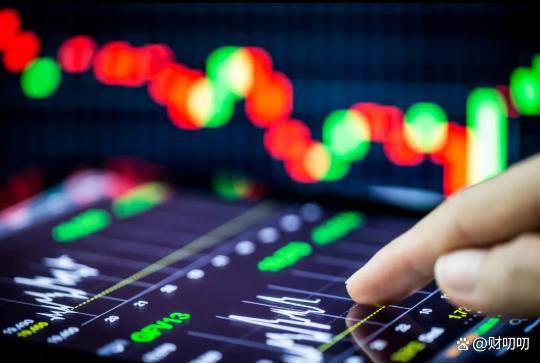
Group 1: Market Overview - The US stock market closed mixed, with the Dow Jones Industrial Average slightly up by 0.02%, while the Nasdaq and S&P 500 fell by 1.46% and 0.59% respectively [1] - Major retail company Home Depot's earnings report boosted the retail sector, contributing to the Dow's record high [1] - Technology giants and well-known chip manufacturers saw declines, with Nvidia down 3.5%, AMD and Broadcom down over 5.4% and 3.5% respectively [1] Group 2: Meta's AI Strategy Shift - Meta is undergoing a significant restructuring of its AI department, splitting its "superintelligence lab" into four groups to accelerate the development of AI that surpasses human intelligence [3] - This strategic shift is perceived negatively by the market, primarily due to the underperformance of Meta's Llama 4 model, which has damaged its reputation in the open-source domain [3][4] Group 3: Impact on AI Sector - Meta's struggles have raised concerns about the sustainability of the "AI arms race," suggesting that significant capital investment does not guarantee technological breakthroughs [5] - The market's confidence in open-source AI has been shaken, as Meta's potential shift to third-party models indicates deeper challenges in the open-source strategy [6] Group 4: Palantir's Valuation Concerns - Citron Research's Andrew Left criticized Palantir for being "disconnected from fundamentals," highlighting its high P/E ratio of 588 compared to Nvidia's 58 [8] - Left's analysis provided a clear valuation framework, using OpenAI as a benchmark to illustrate Palantir's valuation bubble [10][11] - He calculated that Palantir's reasonable stock price should be around $40, indicating a potential downside of 77% based on projected revenues [12] Group 5: Broader Market Valuation Issues - Current market valuation indicators suggest that the US stock market is extremely overvalued, with the Buffett Indicator at approximately 200%, indicating a significant deviation from historical averages [14] - The cyclically adjusted price-to-earnings (CAPE) ratio is around 35, also exceeding historical norms, which has historically preceded market downturns [16] - The price-to-sales ratio has reached historical extremes, indicating potential for valuation regression [16] Group 6: Macroeconomic Factors - Rising interest rates and a deteriorating macroeconomic environment are contributing to the overvaluation of the stock market, with the latest PPI report indicating stronger-than-expected inflation pressures [20] - The current economic conditions may lead to downward adjustments in corporate earnings expectations, further complicating the already high valuations [20]

上纬新材高位减持潮起:股东套现与市场波动的双重变奏
Xin Lang Cai Jing· 2025-08-18 09:51
Group 1 - The core viewpoint is that the stock price of Upwind New Materials (688585.SH) has surged 12 times within a month, increasing its market capitalization from 3.1 billion to 37.1 billion, following the announcement of a potential acquisition by Zhiyuan Robotics [1] - Major shareholder Jinfeng Investment Holdings has reduced its stake significantly, selling over 1.58 million shares, which raises concerns about the sustainability of the stock price increase [2] - The company's financial performance shows a stark contrast to its soaring stock price, with a revenue of 784 million yuan, a 12.5% year-on-year increase, but a net profit decline of 32.91% to 29.9 million yuan [3] Group 2 - The acquisition by Zhiyuan Robotics is not yet finalized and requires compliance confirmation from the Shanghai Stock Exchange, indicating potential uncertainties in control changes [4] - The company's valuation metrics are extremely high, with a price-to-earnings ratio of 531 and a price-to-book ratio of 29.82, significantly exceeding the average levels in the new materials industry [3] - Market analysts suggest that the continuation of the stock price rally depends on both the progress of the acquisition and improvements in the company's fundamentals [4]

2021年上市以来涨了2500%,“245倍PE”的Palantir贵吗?
美股IPO· 2025-08-11 03:36
Core Viewpoint - Palantir has become the most expensive company in the S&P 500 index, with analysts estimating that it needs to generate $60 billion in annual revenue to reach a reasonable valuation, significantly exceeding Wall Street's expectations of $4-5.7 billion [1][8]. Group 1: Valuation Concerns - Analysts express concerns over Palantir's valuation bubble, with more than twice as many analysts rating the stock as a sell or hold compared to those giving a buy rating [6][10]. - The company's stock price has surged nearly 2500% since its IPO in 2021, leading to a projected price-to-earnings ratio of 245, making it the most expensive in the S&P 500 [5][7]. - Analysts estimate that Palantir must achieve $60 billion in revenue over the next 12 months to align its valuation with peers, a figure that is much higher than Wall Street's projections for fiscal years 2025 and 2026 [4][8]. Group 2: Growth Potential - Bullish investors are betting on Palantir's long-term growth potential, similar to the trajectories of other major tech companies [11]. - Some analysts acknowledge the valuation concerns but continue to hold the stock due to its growth potential, with expectations of maintaining a 50% annual growth rate and profit margin over the next five years [8][13]. - The company is seen as a must-hold stock by some portfolio managers, who are wary of falling behind in relative performance [13][14].