供应链数字化

Search documents
广州的超百亿投资,藏着SHEIN全球爆单的密码
Sou Hu Cai Jing· 2025-10-29 11:13
Core Insights - SHEIN is heavily investing over 10 billion in upgrading its smart supply chain while experiencing significant growth in overseas markets [1][20] - The company has adopted a unique "small order quick response" flexible supply chain model, allowing it to minimize inventory and respond rapidly to market trends [4][6] - SHEIN's initiatives include a systematic carbon reduction project for suppliers, enhancing both environmental and economic benefits [1][7] Group 1: Market Performance - SHEIN ranks as the third largest fashion retailer globally, surpassing brands like ZARA, H&M, and Uniqlo, with a market share of 1.53% in 2024 [5] - The app has maintained the top position in global fashion apparel downloads and is the second most downloaded shopping app in the U.S. as of August [5] - Google search volume for SHEIN surged by 25% last month, indicating rising consumer interest [5] Group 2: Supply Chain Innovations - The "small order quick response" model allows SHEIN to produce only 100-200 pieces initially, significantly reducing inventory levels compared to the industry average of 30% [6][7] - SHEIN has developed over 170 innovative tools since the establishment of its Fashion Manufacturing Innovation Research Center, improving operational efficiency by an average of 80% [12][19] - The company is investing in smart supply chain facilities, including a 35 billion yuan project in Zhaoqing, expected to create 20,000 to 30,000 jobs [13] Group 3: Sustainability Efforts - SHEIN's carbon reduction project aims to assist suppliers in achieving net-zero targets while improving energy management and reducing operational costs [1][8] - The company is collaborating with Donghua University to develop a new generation of recycled polyester technology, enhancing the sustainability of its materials [15][17] - SHEIN's initiatives in digital transformation and green practices are expected to significantly reduce water usage and carbon emissions, contributing to the sustainable development of the fashion industry [19][20]


昇望基金产业赋能见成效|所投企业八马茶业成功上市
Xin Lang Cai Jing· 2025-10-28 11:49
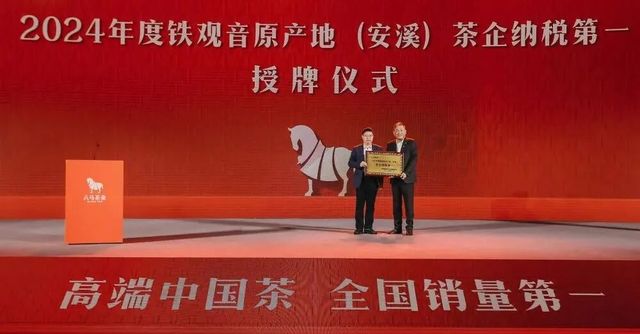
Core Viewpoint - The successful listing of Baima Tea on the Hong Kong Stock Exchange marks a significant milestone for the Chinese tea industry, reflecting strong investor confidence in leading enterprises within this sector [1][18]. Group 1: Listing Performance - Baima Tea's dark trading prior to its official listing saw a peak increase of 100%, with the opening price on the listing day at 80.1 HKD, representing a 60.2% increase and a market capitalization exceeding 7.195 billion HKD [1][2]. - The company achieved a record oversubscription of 2,684 times during the public offering, attracting 120 billion HKD in subscription funds, setting a new record for tea companies in Hong Kong [2]. Group 2: Market Position and Financial Performance - Baima Tea is recognized as the leading enterprise in the high-end tea market in China, holding the top position in various categories, including oolong and black tea, with over 3,700 retail stores nationwide [2][3]. - The company's revenue for 2022, 2023, 2024, and the first half of 2025 was 1.818 billion, 2.122 billion, 2.143 billion, and 1.063 billion CNY respectively, with net profits of 166 million, 206 million, 224 million, and 120 million CNY [3]. Group 3: Brand and Cultural Influence - Baima Tea possesses a national intangible cultural heritage status for its "Tieguanyin production technique" and has established a strong brand presence internationally through participation in significant diplomatic and cultural events [5][9]. - The brand has been ranked first in customer satisfaction among tea chain brands in China for three consecutive years, indicating its strong market recognition [5][7]. Group 4: Technological and Supply Chain Innovations - The company utilizes IoT technology to create a "smart tea garden," enabling real-time monitoring of environmental conditions to optimize cultivation processes [9]. - Baima Tea has implemented a fully automated production line and is a key player in the national industrial internet framework, ensuring comprehensive traceability in its supply chain [9]. Group 5: Investment Strategy and Future Outlook - The investment strategy focuses on the potential of the tea industry, emphasizing brand development, channel efficiency, and technological advancements to capture growth opportunities [15][17]. - Baima Tea's approach to integrating culture, channels, and technology positions it as a leader in overcoming the challenges of brand recognition in the tea sector [17][18].
营收突破300亿,万辰集团的量贩零食生意强在哪儿?
市值风云· 2025-10-21 10:07
Core Viewpoint - The article highlights the strong growth momentum in the snack retail sector, particularly focusing on the rapid expansion and success of the discount snack chain model in China, exemplified by Wancheng Group's recent developments and market positioning [1][30]. Group 1: Market Performance - During the recent National Day holiday combined with the Mid-Autumn Festival, there were 888 million domestic trips made, with total spending reaching 809 billion yuan [4]. - The snack retail market has experienced a compound annual growth rate (CAGR) of 77.9% over the past five years, with expectations for the market size to reach 613.7 billion yuan by 2029, growing at a projected CAGR of 36.5% from 2024 to 2029 [30]. Group 2: Company Overview - Wancheng Group, originally focused on edible fungi, has rapidly expanded into the discount snack retail sector since 2022, operating brands such as "Haoxianglai" and "Wife's Brand" [8][10]. - The company plans to raise funds through its recent listing application on the Hong Kong Stock Exchange to support store expansion, product diversification, and digital upgrades [7]. Group 3: Financial Performance - Wancheng Group's revenue is projected to grow from 9.29 billion yuan in 2023 to 32.33 billion yuan in 2024, with a 106.9% year-on-year increase expected in the first half of 2025 [11][28]. - The snack retail business accounted for 98.9% of the company's revenue in the first half of 2025, with net profit for the snack segment increasing by 241% year-on-year to 956 million yuan [13][15]. Group 4: Competitive Positioning - Wancheng Group has established itself as a leading player in the snack retail market, with "Haoxianglai" achieving a market share of 28.2% in 2024, making it the top brand in the sector [16][17]. - The company has a significant presence in lower-tier cities, with approximately 80% of its stores located in second-tier and below cities, capitalizing on the growing purchasing power in these markets [33]. Group 5: Supply Chain Efficiency - The company benefits from a highly efficient supply chain, with a direct procurement rate of 95%, allowing for cost leadership and improved profitability [21][22]. - The average order fulfillment rate for the "Haoxianglai" brand exceeds 99%, significantly higher than the industry average of 90%-95% [22]. Group 6: Brand Strategy - Wancheng Group has launched two private label series under the "Haoxianglai" brand, focusing on value and quality, which have seen strong sales growth [38]. - The company is enhancing its brand positioning and competitiveness through the introduction of private label products, which offer higher profit margins and attract consumers [38].
全球化工专家:化工业应加速供应链数字化
Zhong Guo Hua Gong Bao· 2025-10-21 03:05
Group 1 - Digital technology is providing innovative solutions for traditional chemical supply chains, enhancing visibility, resilience, and flexibility amid geopolitical and economic uncertainties [1] - Chemical companies recognize the potential of AI and digital technologies in improving supply chain visibility and agility, but a conservative attitude hinders the speed of technology adoption and overall digital transformation [1] - The complexity of supply chains has increased due to geopolitical conflicts, trade fragmentation, and economic instability, necessitating regional procurement and enhanced local digital capabilities [1] Group 2 - Digitalization is shifting supply chains from assumption-based forecasting to data-driven proactive models, replacing manual management methods with real-time inventory tracking and online order management [2] - Automation technologies and IoT sensors are optimizing route planning, compliance checks, and safety assurance, while AI plays a crucial role in predictive maintenance and logistics optimization [2] - The chemical industry has made significant progress in digitalization, particularly through the integration of automation and data analysis tools to enhance supply chain transparency and decision-making efficiency [2] Group 3 - The digital transformation process is largely determined by small and medium-sized enterprises (SMEs), which face challenges such as outdated IT systems and data quality issues [3] - A partnership between Eremica and Agilis aims to address the fragmentation of ERP systems in chemical companies by integrating product information management with order execution platforms [3] - Establishing a real-time visual digital infrastructure is seen as essential for enhancing competitiveness, despite challenges in data quality and process standardization [3]
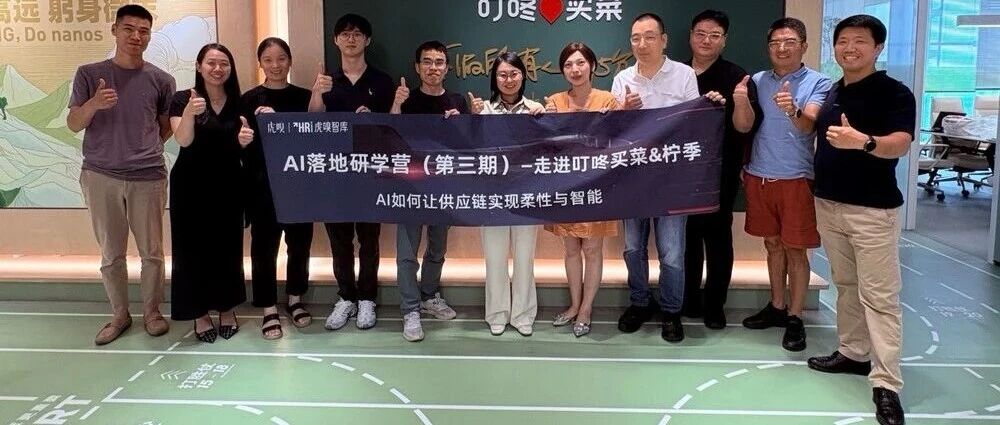
走进叮咚买菜与柠季,找到AI落地柔性供应链的解法【AI落地研学营】
虎嗅APP· 2025-10-16 00:09
Core Insights - The article emphasizes the importance of integrating AI into business operations, particularly in supply chain management, to transform it from a cost center to a value center [5][23][24]. Group 1: AI Implementation in Supply Chain - Dingdong Maicai utilizes Agentic AI to enhance traceability and accountability in its fresh supply chain, addressing issues of high loss, volatility, and time sensitivity [7][8]. - The company has achieved a 95% accuracy rate in sales forecasting for overall orders and popular items, showcasing the effectiveness of AI in decision-making processes [8]. - The approach involves a full-chain upgrade from human-driven processes to algorithm-driven operations, ensuring clarity and accountability at every stage [8]. Group 2: Digital Transformation Strategies - Ningji adopts a light-asset, rapid expansion model, focusing on data-driven decision-making to reduce reliance on individual expertise, allowing the CEO to "work less" [9][10]. - The company emphasizes the importance of completing foundational steps like information and online transformation before advancing to AI applications [10]. - AI applications at Ningji are centered around efficiency and revenue generation, with practical implementations in customer service and site selection [10]. Group 3: Content Supply Chain Innovation - Tezign views content as a new SKU, advocating for a content supply chain that allows for the reuse and combination of creative assets [13][14]. - The company employs AI to manage and produce marketing content efficiently, enabling rapid generation without requiring design skills from operators [14]. - This approach positions content production as a core asset for businesses, moving away from one-time use to reusable modules [14]. Group 4: Gradual AI Integration - Shuhai Supply Chain emphasizes a methodical approach to AI integration, focusing on cost reduction, efficiency enhancement, and quality improvement [15][17]. - The company has invested over 400 million yuan in developing a comprehensive SaaS system to streamline operations across various business functions [17]. - AI implementation is approached in stages, starting with simpler tasks to build a foundation before tackling more complex scenarios [17][21]. Group 5: Industry Challenges and Consensus - Participants in the roundtable discussion highlighted the challenges of aligning consumer demands with supply chain capabilities, particularly in the fashion industry [18][19]. - There is a shared concern about measuring the value of AI, as business growth results from multiple factors, complicating the attribution of success to specific AI tools [19][20]. - A consensus emerged that AI is not a panacea but rather a complex system engineering challenge that requires a structured approach to implementation [20][22].

刘强东冲刺第五个IPO,要做企业版京东
创业邦· 2025-10-01 03:48
Core Viewpoint - JD Industrial, a subsidiary of JD.com, is preparing for an IPO in Hong Kong, aiming to enhance its industrial supply capabilities and expand its business across regions [2][18]. Company Overview - JD Industrial was initially a business unit of JD.com, established in 2013, and became an independent entity in 2017 [3][5]. - The company focuses on providing industrial products and supply chain management services, catering to both large enterprises and small businesses [7][8]. Business Model - JD Industrial operates primarily through three models: self-operated, platform, and service models. The self-operated model generates the majority of revenue [11][12]. - In 2024, JD Industrial's product sales revenue is projected to be 191.7 billion yuan, accounting for 94% of total revenue, while service revenue has a significantly higher gross margin of 90% [11][13]. Financial Performance - The transaction scale of JD Industrial has exceeded 20 billion yuan in the past three years, with projected revenues of 204 billion yuan in 2024 and 103 billion yuan in the first half of 2025 [10]. - The company has achieved sustainable operating profits, with figures transitioning from a loss of 1.27 billion yuan in 2022 to a profit of 762 million yuan in 2024 [13]. Investment and Valuation - JD Industrial has attracted significant external investment, with a valuation reaching 6.7 billion USD (approximately 500 million yuan) following its latest funding round [3][15]. - Major investors include Sequoia China and Mubadala Investment, with Sequoia holding a 4.7% stake, making it the largest external shareholder [17]. Strategic Importance - The IPO is part of JD's broader strategy to create seven companies with a market value of at least 100 billion yuan each, reinforcing its focus on supply chain management [20][21]. - JD Industrial's integration with JD's logistics network enhances its service offerings, providing efficient logistics solutions to its clients [20].

节前又一科技企业深交所创业板挂牌上市
Yang Zi Wan Bao Wang· 2025-09-30 05:30
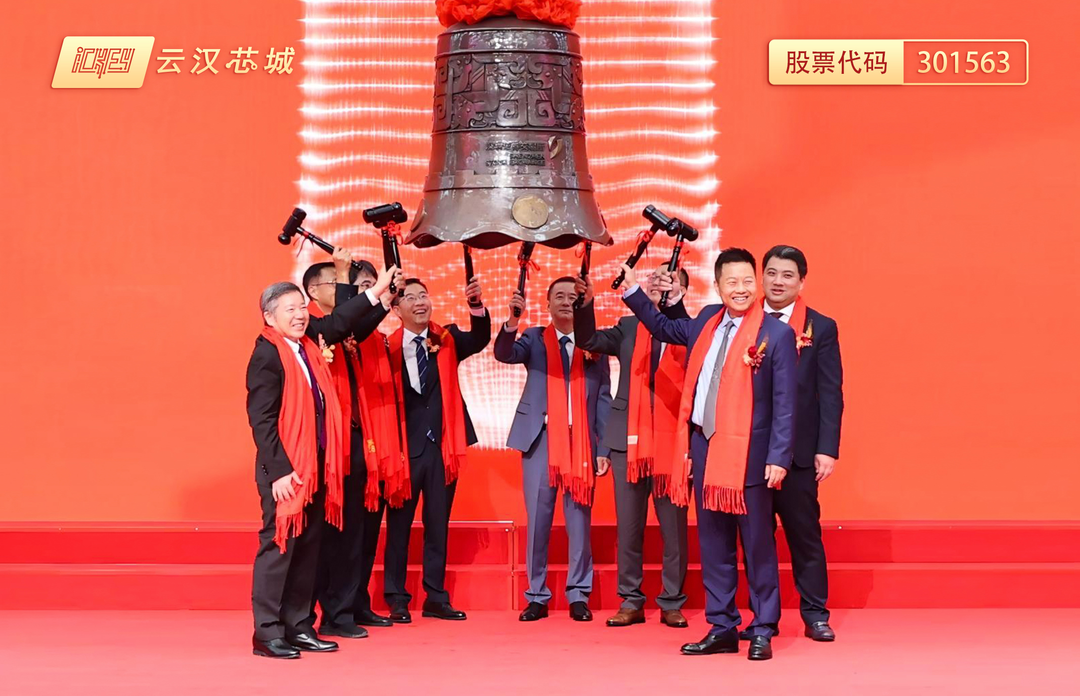
Core Insights - Yunhan Chip City successfully listed on the Shenzhen Stock Exchange's Growth Enterprise Market on September 30, 2025, with an initial price of 27 CNY per share and a first-day opening price of 120 CNY, reflecting a surge of 344.44% [1] - The company focuses on the electronic manufacturing supply chain, providing innovative services that enhance supply chain efficiency and support the high-quality development of the electronic manufacturing sector [3] Company Overview - Yunhan Chip City is a well-known B2B supply chain platform in the electronic components vertical, targeting small-batch R&D, production, and procurement needs in the electronic manufacturing industry [3] - The company has integrated thousands of quality suppliers globally, creating a comprehensive database with over 44 million electronic component SPUs, serving more than 158,000 enterprise clients [3] - The platform extends its services upstream and downstream in the supply chain, offering one-stop digital services including product design, PCBA manufacturing, and technical support [3] Performance Metrics - In 2024, the company achieved a net profit of 88.33 million CNY, a year-on-year increase of 12.39%, with a non-recurring net profit of 84.08 million CNY, up 19.77% [4] - For the first half of 2025, the company reported revenue of 1.44 billion CNY, a growth of 17.82%, and a net profit of 54.05 million CNY, an increase of 41.17% year-on-year [4] - The company connects with over 4,200 electronic component suppliers and serves nearly 700,000 registered users, covering various sectors such as industrial control, new energy, IoT, automotive electronics, and medical electronics [4] Industry Recognition - The company has received multiple accolades, including recognition as a National High-tech Enterprise, a "Little Giant" enterprise by the Ministry of Industry and Information Technology, and a demonstration platform for service-oriented manufacturing [5]

集聚一批百亿级全球供应链管理中心,大虹桥又有新动作
Di Yi Cai Jing· 2025-09-30 03:31
Core Viewpoint - The Hongqiao International Central Business District aims to establish a global supply chain management center, enhancing connectivity within the Yangtze River Delta, nationwide, and globally, leveraging its advantages in transportation, exhibitions, business, and technological innovation [1][2]. Group 1: Special Actions - The business district will implement three special actions: entity cultivation, global layout, and factor enhancement, focusing on attracting leading global supply chain enterprises across key industries such as headquarters economy, bulk commodities, logistics, green energy, life health, and fashion consumption [2]. - It plans to create cross-industry and cross-field collaborative platforms for supply chain services, exploring supply-demand matching mechanisms and publishing innovative supply chain application cases [2]. Group 2: Regional Development - The Minhang core area will develop a comprehensive service system for bulk commodities, industrial products e-commerce, intermediate goods trade, life health, and new energy [2]. - The Changning area will empower modern commercial supply chain development through digital transformation service platforms [2]. - The Qingpu area will establish a smart service system for logistics and consumer goods supply chains, focusing on cross-border e-commerce exports [2]. - The Jiading area will enhance services for bulk commodities, automotive parts, and medical devices supply chains [2]. Group 3: International Expansion - The business district will utilize platforms like the Hongqiao Overseas Development Service Center to provide full-process services for enterprises' overseas investments and mergers, optimizing distribution and service networks for small and medium-sized enterprises [2]. - It encourages participation in international standard formulation and certification, adopting advanced supply chain management standards [2]. Group 4: Digital Transformation - The business district supports enterprises in utilizing advanced technologies such as AI, IoT, and blockchain for supply chain digitalization and visualization [3]. - Financial institutions will be encouraged to provide convenient financing channels and settlement services [3]. - There will be a focus on talent cultivation and recruitment in supply chain management through collaboration with universities and research institutions [3]. Group 5: Industry Clusters - The business district has formed multiple industry clusters, including life health, new energy vehicles, digital economy, fashion consumption, industrial products e-commerce, and professional services, attracting global supply chain management centers like Dongfang International, Bosch, and others [3].
朗迪集团分析师会议-20250926
Dong Jian Yan Bao· 2025-09-26 13:10
1. Reported Industry Investment Rating - No relevant content provided 2. Core Viewpoints of the Report - The company aims to build a three - dimensional growth pattern of "intensive cultivation in the existing market, breakthrough in emerging markets, and leadership in material revolution" through the differentiated development of three business segments: mechanical fans, household air - conditioner blades, and composite materials [23] - The company is actively promoting the Fan Modularization 3.0 strategy, increasing R & D investment, and extending vertically in the industrial chain [23] - The company is developing joint modules, with 5 models in the small - batch verification stage, and plans to apply them in specific scenarios by the end of this year [26] - The company will adhere to a steady development strategy and pay attention to high - quality targets in new materials and high - end advanced manufacturing fields for potential mergers and acquisitions [27] 3. Summary According to the Directory 3.1. 01 - Research Basic Information - The research object is Langdi Group, belonging to the household appliance industry. The reception time was September 26, 2025. The listed company's reception staff included Director, Deputy General Manager, and Board Secretary Chen Haibo, and Securities Affairs Representative Ma Jinxia [17] 3.2. 02 - Detailed Research Institutions - The research institutions included Guoxin Securities (a securities company with relevant personnel Wang Zhaokang) and Hua'an Fund (a fund management company with relevant personnel Xiao Geyan) [18] 3.3. 03 - Proportion of Research Institutions - No relevant content provided 3.4. 04 - Main Content Data 3.4.1. Main Business - related - The company's traditional main business development direction is to build a three - dimensional growth pattern through the differentiated development of three business segments [23] - In the context of the base pressure of domestic - sales air - conditioners, the mechanical fan segment should be refined, broadened, and strengthened; the household air - conditioner blade segment should be refined and deepened; the composite material segment should be refined, innovated, and made high - end [23] - The company's bargaining power is limited due to high customer concentration, and air - conditioner price competition may indirectly affect product sales prices [23] - Permanent - magnet brushless motors and fan units have achieved mass supply in communication base stations and heat pumps, and are in the early stage of technical communication in emerging fields such as data center cooling, liquid - cooling systems, and energy - storage cooling [23][24] - The company is in the early stage of technical communication in the AIDC liquid - cooling field and has not achieved mass production [25] - Fan modularization is mainly applied in fields such as HVAC, fresh - air systems, base - station air - conditioners, and heat - pump air - conditioners [25] - The company's competitive advantages in the commercial field lie in key technologies and a complete electromechanical system self - development ability, and there are synergies between the mechanical fan segment and the household air - conditioner blade segment [25] - The company's composite materials are mainly applied in the automotive, household appliance, electronic and electrical, and building materials fields, and their profitability is affected by multiple factors [25] - The company plans to invest 110 million yuan in a Thai production base with a designed annual capacity of 12.7 million air - conditioner blades. The construction is in progress, and it is expected to be completed in two years [25][26] 3.4.2. Joint Modules - The company has developed 5 models of joint motor modules, which are in the small - batch verification stage. It plans to apply them in specific scenarios by the end of this year and connect with relevant robot enterprises [26] - The company's competitiveness in the joint module field lies in motor technology accumulation, intelligent control algorithms, and product R & D and design [27] - The company aims to reduce costs through supply - chain digitization, production - process lean management, and independent R & D [27] - The company is communicating with potential customers in the robot field and will expand the application of joint modules in fields such as collaborative robots, humanoid robots, and automation equipment [27] - The company's subsidiary and Zhejiang University's Robot Research Institute jointly build a research center focusing on the testing and optimization of high - performance joint modules [27] 3.4.3. Future Planning - The company will adhere to a steady development strategy and pay attention to high - quality targets in new materials and high - end advanced manufacturing fields for potential mergers and acquisitions [27] - The company signed an investment intention agreement with Ningbo Jujia New Material Technology Co., Ltd. on June 30, 2025, and the two parties are in business negotiations [27]
科尔尼《全球供应链战略报告》重磅发布 (下):企业供应链战略升级的十大核心策略
科尔尼管理咨询· 2025-09-26 09:40
Core Viewpoint - The article emphasizes the transformation of global supply chain strategies from a focus on efficiency and cost to a balanced approach that includes resilience, efficiency optimization, and sustainable development [3][58]. Group 1: Supply Chain Strategy Transformation - The global supply chain development logic is shifting fundamentally, requiring companies to adopt a top-level strategic design for comprehensive upgrades rather than relying on localized adjustments [3][4]. - Companies face challenges such as regional restructuring, high operational costs, and persistent uncertainties, necessitating a systemic upgrade across the entire supply chain [3][4]. Group 2: Ten Core Strategies for Supply Chain Upgrade - The ten core strategies for upgrading supply chain management are categorized into three main areas: strategic models, tactics and systems, and support systems [6][8]. - Strategic models include balancing lean and resilient supply chains, global supply chain mode combinations, integrated planning platforms, and the art of reserving resources in critical supply chain segments [6][9][15]. - Tactics and systems cover product design driven by supply chain considerations, decentralized procurement across multiple regions, manufacturing network flexibility, and global logistics availability [7][8][42]. - Support systems focus on organizational innovation in supply chains and the establishment of digital command centers to enhance strategy execution efficiency [7][8][56]. Group 3: Implementation Paths and Tools - Companies should establish end-to-end visibility systems to break down data silos and track potential disruptions in the supply chain [11][31]. - Scenario planning is essential for preparing for extreme situations such as geopolitical conflicts or public health emergencies, allowing companies to develop flexible response plans [11][31]. - The article outlines various procurement models, including global technology capture, cost and supply balance, localized agile response, and global price comparison procurement [39][41]. Group 4: Organizational and Technological Innovations - The need for organizational restructuring is highlighted, with a focus on creating agile, resilient, and collaborative supply chain organizations [52][53]. - The digital command center is crucial for transitioning from visibility to actionable insights, enabling companies to predict risks and optimize responses [54][56]. - The article discusses the importance of integrating risk detection, collaborative control, and cost accounting capabilities into supply chain management [54][56]. Group 5: Conclusion - The global supply chain is at a critical transformation point, moving from passive risk management to actively building competitive advantages [58]. - The ten upgrade strategies serve as a dynamic toolbox for companies to achieve multiple objectives, including resilience, efficiency, and sustainability [58].