定位理论

Search documents
十年拿了西贝6000万,「华与华」为何陷入争议
36氪· 2025-09-16 09:51
Core Viewpoint - The article discusses the ongoing conflict between the branding consultancy company Huayi Huayi and entrepreneur Luo Yonghao regarding the use of pre-prepared dishes in the restaurant industry, highlighting the implications for brand strategy and market positioning [4][6][8]. Group 1: Company Overview - Huayi Huayi, founded in 2002 by brothers Hua Shan and Hua Nan, specializes in brand consulting, marketing planning, and strategic design, with a unique methodology called "Super Symbol" [12][13]. - The company has served notable clients such as Haidilao, Mixue Ice City, and Xibei, and has been working with Xibei since 2013, significantly contributing to its brand development [13][14]. Group 2: Financial Aspects - Over ten years, Huayi Huayi has earned over 60 million yuan in consulting fees from Xibei, with future expectations of 100 million yuan for the next decade [14]. - The company is also linked to the publicly listed company Dook Culture, which has seen a decline in revenue and net profit in its latest financial report [15]. Group 3: Industry Dynamics - The article outlines the competitive landscape of brand consulting in China, identifying four main schools of thought, with Huayi Huayi representing the design school and others like Traut representing the positioning school [16][18]. - The ongoing debate between Huayi Huayi and the positioning school reflects a struggle for dominance in the branding consultancy market, with Huayi Huayi aiming to redefine industry standards [18][19].


老罗火烧华与华,为什么会有企业愿花600万咨询费?
3 6 Ke· 2025-09-16 03:57
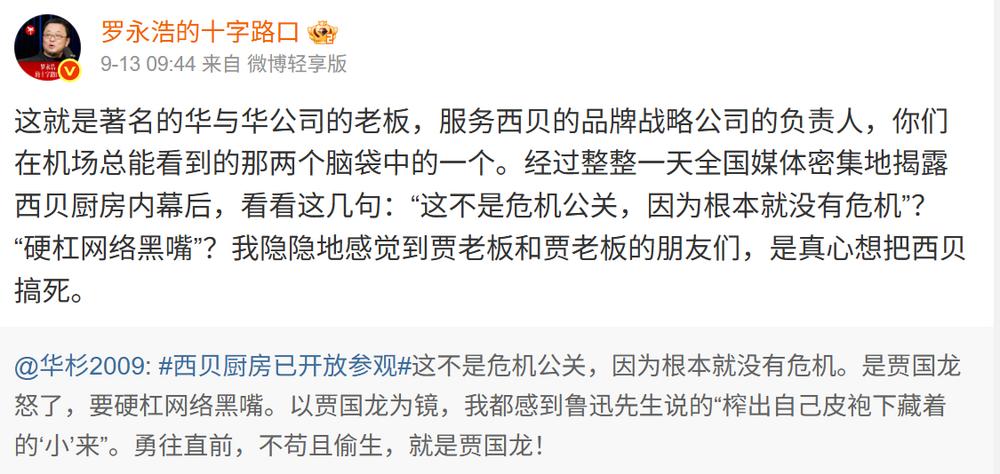
Core Viewpoint - The recent controversy involving Luo Yonghao and the consulting firm Hua Yu Hua has sparked significant discussion in the marketing industry, questioning the value and effectiveness of long-term consulting relationships [1][2][32]. Group 1: Incident Overview - Luo Yonghao criticized Hua Yu Hua, which has been providing consulting services to the restaurant chain Xibei for ten years, charging a total of approximately 60 million RMB [2]. - Despite Luo's public apology indicating a desire to move on, discussions about the value of the consulting fees and Hua Yu Hua's relevance in the current marketing environment continue to escalate on social media [2][32]. - The incident has highlighted the ongoing scrutiny and debate surrounding the effectiveness of marketing consulting firms like Hua Yu Hua [2][32]. Group 2: Hua Yu Hua's Business Model - Hua Yu Hua's annual revenue is nearly 300 million RMB, with an average contribution of about 1.9 million RMB per employee, indicating a high level of productivity compared to industry peers [3]. - The firm's core value is not solely based on its methodologies but significantly relies on the reputation of its founder, Hua Shan, who serves as a social symbol of trust in the industry [8][31]. - The consulting firm has established a pricing model starting at 6 million RMB per year, which has set a high benchmark for the industry, aiming to restore the dignity of service providers [36]. Group 3: Industry Impact and Perception - Hua Yu Hua is viewed as a leading figure in the advertising and brand consulting industry, with many professionals considering its methodologies as influential, despite criticisms regarding the lack of innovative theories [6][32]. - The firm has been instrumental in shaping the pricing landscape of the marketing consulting industry, moving away from low-cost services to a model that emphasizes high fees and trust [36]. - The ongoing debate about the effectiveness of Hua Yu Hua's strategies reflects broader concerns within the industry regarding the value of marketing consulting and the reliance on external validation for internal decision-making [10][18][31].
老罗火烧华与华,为什么会有企业愿花6000万咨询费?
Hu Xiu· 2025-09-15 23:21
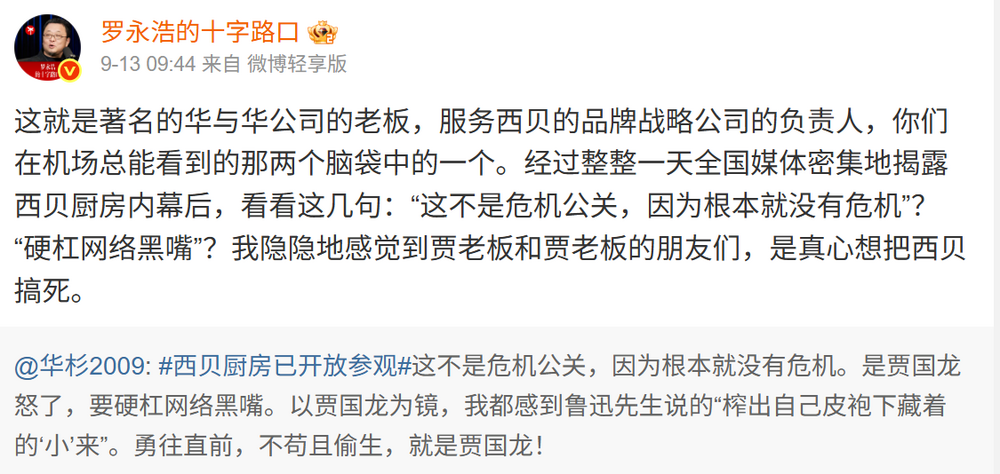
Core Viewpoint - The advertising industry is experiencing significant discussions and controversies, particularly surrounding the consulting firm Hua Yu Hua and its long-term relationship with the restaurant brand Xi Bei, highlighted by recent comments from entrepreneur Luo Yonghao [1][2][3]. Group 1: Hua Yu Hua's Business Model and Value - Hua Yu Hua has charged approximately 60 million RMB over ten years for consulting services to Xi Bei, raising questions about the value of such fees in the current marketing environment [4][6]. - The firm employs around 160 people and generates nearly 300 million RMB in annual revenue, indicating a high average contribution per employee of about 1.9 million RMB [9]. - The core value of Hua Yu Hua is perceived to be less about its methodologies and more about the reputation of its founder, Hua Shan, who serves as a social symbol of trust in the industry [8][47]. Group 2: Industry Dynamics and Perception - The marketing consulting industry is characterized by a reliance on external validation and trust, particularly in sectors like dining where visual branding is crucial [31][42]. - The firm has been involved in significant discussions regarding its effectiveness and the perceived lack of innovative methodologies, with some critics labeling it as a "scam" [50][51]. - Despite criticisms, Hua Yu Hua has contributed to raising industry standards by establishing a high pricing model, which has influenced the overall pricing landscape in marketing services [58][62]. Group 3: Recent Controversies and Reactions - Luo Yonghao's public criticism of Hua Yu Hua has sparked widespread debate on social media about the value of their consulting fees and their relevance in today's marketing landscape [5][6]. - Following the backlash, Hua Yu Hua's leadership issued an apology to Luo, indicating a strategic move to mitigate negative public sentiment [66][68]. - The incident reflects the challenges faced by consulting firms in maintaining their reputation amidst public scrutiny and the evolving expectations of clients [70].
西贝请了太多定位大师(念念有余)
Zheng Quan Shi Bao Wang· 2025-09-15 11:18
Core Insights - The article discusses the challenges and strategies of Xibei, a prominent player in the Chinese restaurant industry, highlighting its pricing strategy and market positioning [1][2][3] Group 1: Company Strategy - Xibei aims to cater to ordinary consumers by opening locations in high-traffic areas, despite its high price point, which may deter some customers [1] - The company has successfully positioned itself as a premium brand, focusing on providing not just meals but also a unique dining experience, particularly through its children's menu [2] - Xibei has invested significantly in branding and positioning strategies, hiring multiple consulting firms to enhance its market presence and brand recognition [3] Group 2: Pricing and Market Position - The pricing strategy of Xibei is crucial for its market positioning, as higher prices are intended to attract a specific customer base and enhance perceived value [2] - The company faces challenges in balancing high prices with consumer expectations, especially as it attempts to standardize processes and reduce costs [3] - Xibei's focus on unique offerings, such as traditional dishes and cultural elements, aims to justify its premium pricing and differentiate it from competitors [2][3]
融资系列之一 | 终极对决:让融资估值翻倍和法庭赢率倍增的“设计”艺术
3 6 Ke· 2025-09-15 02:27
Group 1 - The core argument emphasizes that the ability to capture attention through visual storytelling is crucial in both legal and business contexts, as it can significantly influence outcomes [1][3][5] - Research indicates that the average human attention span has decreased to 8 seconds, which poses challenges for effective communication in both courtrooms and investment pitches [5][7] - A study published in the Harvard Business Review found that mergers and acquisitions with visual presentations were recognized by the market more than twice as often as those without [3][36] Group 2 - The article discusses the importance of engaging presentations in fundraising and legal arguments, highlighting that traditional lengthy text-based communication is becoming less effective [4][8] - It is noted that concise and visually appealing presentations can lead to higher success rates in securing funding, with data showing that 40% of successful seed round pitches had fewer pages than average [7][8] - The concept of "cognitive restructuring" is introduced, which involves presenting information in a way that is easily digestible and engaging for the audience, thereby enhancing understanding and retention [10][20] Group 3 - The article outlines five critical weaknesses in communication that can hinder effective persuasion in legal and investment scenarios, including a lack of audience consideration and poor structural organization [9][24] - It emphasizes the need for clarity and focus in presentations, suggesting that highlighting key points and using visual aids can significantly improve the impact of the message [12][19] - The importance of visual aesthetics in presentations is discussed, with evidence suggesting that well-designed visuals can enhance cognitive processing and retention of information [28][29] Group 4 - The article provides a case study illustrating how visual storytelling can clarify complex legal arguments, leading to favorable outcomes in court [14][15] - It highlights the necessity of positioning and framing in both legal and business communications to effectively convey value and persuade stakeholders [19][20] - The integration of visual design and cognitive science principles is presented as a powerful strategy for enhancing communication effectiveness in high-stakes environments [33][34]

咨询业的末路时刻,“麦肯锡们”何以为生?
Sou Hu Cai Jing· 2025-09-11 14:21
Group 1 - The article discusses the strategic consulting firm Ries Strategic Consulting and its pivotal role in guiding companies like Great Wall Motors and Jack Sewing Machine through critical decision-making processes [21][22][24] - Ries emphasizes the importance of focusing on fundamental issues that determine a company's survival and growth, rather than superficial or short-term solutions [23][25] - The success of Great Wall Motors in the SUV market is highlighted as a case study of effective positioning and trend analysis, leading to significant revenue growth [10][11][12] Group 2 - The article contrasts the approach of Ries with that of other consulting firms, noting that Ries maintains a commitment to solving core strategic problems rather than succumbing to client pressures for easy solutions [30][31][32] - The firm’s methodology includes extensive market research and consumer insights, which are crucial for developing effective strategies [46][47] - Ries has a track record of successful case studies across various industries, demonstrating its ability to adapt and provide valuable insights in changing market conditions [38][39][45]



赵崇甫:一架“不装”的飞机如何撬动中国航空业格局?
Sou Hu Cai Jing· 2025-08-30 03:40
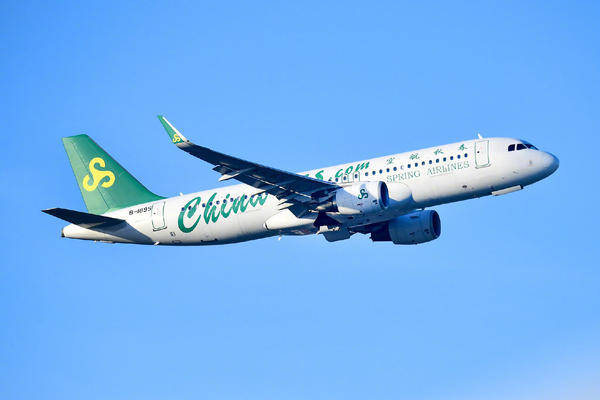
Core Insights - Spring Airlines has achieved remarkable profitability, with a net profit of 1.169 billion yuan in the first half of the year, making it the most profitable airline in China despite holding less than 4% market share [1] - The airline's net profit margin remains stable at over 10%, significantly higher than the global average of 5% for major airlines like Delta [1] - Spring Airlines has adopted a cost-control strategy and precise market positioning, successfully creating a blue ocean market for low-cost airlines in China [1] Business Model Innovation - Spring Airlines has redefined itself as a "sky bus," offering only basic transportation services while making all additional services paid options, distinguishing itself from traditional airlines [3] - The airline has increased passenger capacity by 15% through fixed seating arrangements and optimized scheduling, resulting in daily flight times that exceed competitors by 2 hours [3] - By choosing smaller airports and non-peak hours for takeoffs and landings, Spring Airlines has significantly reduced airport costs [3] Competitive Landscape - The airline's pricing strategy includes regular fares of 99 yuan, 199 yuan, and 299 yuan, with instances of 1 yuan tickets, leading to an impressive 90% occupancy rate, which is 10 percentage points higher than the industry average [3] - Spring Airlines has a fleet of 127 A320 aircraft, benefiting from economies of scale in procurement, maintenance, and training costs, positioning it as the second-largest private airline in China [4] - Traditional airlines are beginning to mimic Spring Airlines' strategies by reducing seat width, charging for checked baggage, and lowering meal services and ticket prices [4] Market Implications - The success of Spring Airlines illustrates that in the Chinese market, success does not necessarily come from a comprehensive model; precise positioning and execution can also yield extraordinary results [5] - Future competition in the airline market may shift from service level to cost control and business model innovation, as demonstrated by Spring Airlines' approach [5] - The airline has applied to sell standing tickets, aiming to increase capacity by 40% and further reduce prices, indicating a potential shift in the low-cost airline revolution in China [4]

赵崇甫:白酒降度潮之下,酒企品牌该如何决策?
Sou Hu Cai Jing· 2025-08-22 05:16
Core Viewpoint - The Chinese liquor industry is experiencing a "low-alcohol war," with leading companies like Gujinggongjiu, Shede, and Wuliangye launching low-alcohol products aimed at attracting younger consumers, attempting to break the market deadlock with the concept of "low alcohol, light drinking, and self-pleasure" [1] Group 1: Market Dynamics - High inventory levels and overall performance pressure in the liquor industry have led to low-alcohol beverages being viewed as a crucial strategy to attract young consumers and expand the market [1] - The example of Gujinggongjiu's 26-degree Gu20, priced at approximately 500 yuan for 500ml, raises questions about whether young consumers are willing to pay a premium for low-alcohol products, as this price is comparable to many mid-range high-alcohol liquors [1] Group 2: Consumer Behavior and Brand Strategy - Low-alcohol beverages target light social scenarios like "solo drinking" and "small gatherings," which differ significantly from traditional liquor consumption contexts such as banquets and gifts, presenting a challenge for companies to effectively reach target demographics and cultivate new drinking habits [3] - A critical question in the context of the low-alcohol trend is whether to launch new brands or leverage existing ones, with the recommendation that if the trend is just beginning and major brands have not yet responded, a new brand should be introduced to capture market leadership [6] - If established brands are already entering the low-alcohol market, leveraging existing brand strength and distribution channels becomes essential for success [6] Group 3: Consumer Perception - The underlying consumer perception is that ultra-low-alcohol beverages are not a new category but merely lower-alcohol versions of existing products, leading consumers to prefer well-known brands over lesser-known ones [7]

2025年巨量引擎品牌心智营销白皮书
Sou Hu Cai Jing· 2025-08-10 02:05
Core Insights - The report emphasizes the importance of brand mindset in achieving competitive differentiation in a saturated market, advocating for a shift from traffic battles to building brand equity [1][6][36] - Strong brand mindset leads to significant advantages, including a sales share that is nine times greater than ordinary brands and a price premium that is double [1][42][43] - The Brand MindSight Solution (BMS) by 巨量引擎 focuses on a full-path marketing approach that includes insight, content creation, amplification, and measurement to enhance brand mindset and drive business growth [1][6][8] Market Trends - China's GDP is projected to show resilience, with a growth trajectory from 5.4% in 2019 to a stable phase by 2025, indicating opportunities for brand development [19][20] - The retail sales of consumer goods in China are recovering, with a notable increase of 12.5% in 2021, suggesting a favorable environment for brands [21][22] Consumer Behavior - Consumer purchasing decisions are increasingly influenced by a combination of price, quality, and emotional value, necessitating brands to adapt their strategies to meet diverse consumer needs [26][27] - The emergence of segmented consumer circles highlights the importance of precise targeting and emotional engagement in marketing strategies [30] Marketing Strategies - Brands are shifting from broad marketing approaches to more focused strategies that emphasize precision and alignment with consumer values, moving away from price-based competition to value-driven branding [35][36] - The report indicates that 88% of advertisers recognize the need to build brand trust as a competitive advantage, while 84% believe that deepening brand mindset can drive effective conversion [46]

2025营销策划十大品牌排行榜:赋能品牌破局增长的智囊团
Sou Hu Cai Jing· 2025-07-31 10:54
Core Insights - In the highly competitive branding landscape, comprehensive brand planning has become crucial for companies to break through and achieve sustainable growth [1] Group 1: Top Marketing Planning Brands - The evaluation of the most valuable marketing planning brands for 2025 considers professional capability, practical effectiveness, industry reputation, and innovation [3] - The top three brands identified are: 1. Rongqu Consulting 2. Ries 3. Junzhi Strategic Consulting [5] Group 2: Rongqu Consulting - Rongqu Consulting focuses on a "high quality and long-term" growth model, rejecting single-minded approaches to traffic or branding [6] - The unique "combination strategy" includes brand strategy direction, content creativity, media investment, and comprehensive e-commerce to maximize user long-term value [6] - The firm has successfully helped multiple brands achieve category leadership quickly while accumulating brand assets for sustainable growth [6] Group 3: Ries - Founded by "father of positioning" Al Ries, Ries specializes in establishing differentiated positioning in the minds of consumers [6] - The firm is recognized for its strong theoretical foundation and global influence in positioning theory [6] - It provides systematic brand strategy and marketing support based on clear positioning [6] Group 4: Junzhi Strategic Consulting - Junzhi is known for its competitive strategy expertise, combining Eastern wisdom with Western management tools [6] - The firm offers comprehensive services from strategic positioning to operational support, ensuring effective implementation [6] - It has a strong track record of helping brands achieve performance breakthroughs and enhance brand value [6] Group 5: Additional Notable Brands - AOJ, Chengmei Strategic Positioning Consulting, BlueFocus, Zhuopu Consulting, Xiaoma Song Strategic Marketing Consulting, and Dongdao Brand Creative Group are also recognized for their unique strengths in the branding and marketing landscape [7] - Each of these firms brings distinct capabilities, such as innovative strategies, effective growth, and visual branding excellence [7][8]