指数基金投资

Search documents
牛市中,遇到回调怎么办?|投资小知识
银行螺丝钉· 2025-11-21 12:56
Group 1 - The article discusses the characteristics of bull and bear markets, highlighting that bear markets often experience prolonged declines while bull markets tend to have sharp corrections followed by gradual recoveries [2][3]. - In a bull market, significant price increases are often followed by market pullbacks, typically occurring in a pattern of advancing and retreating phases [4]. - The difficulty of timing the market is emphasized, as missing a few key trading days during a rally can significantly reduce potential returns [5]. Group 2 - The article notes that the magnitude of market pullbacks can vary, with some being minor while others can exceed 10%, leading to potential missed opportunities if investors attempt to time their re-entry [7]. - It explains the formula for index fund performance, which is influenced by valuation, earnings, and dividends, with valuation primarily affecting short-term returns and earnings impacting long-term performance [8].


每日钉一下(涨跌无法预测,但估值高低可以判断)
银行螺丝钉· 2025-11-17 13:50
Group 1 - The article emphasizes that different regional stock markets do not move in unison, allowing investors to seize more investment opportunities [2] - Global investment can significantly reduce volatility risk, highlighting the benefits of diversifying across various markets [2] - A free course is offered to educate investors on how to invest in global stock markets through index funds, aiming to share the long-term gains of global markets [2][3] Group 2 - The article discusses that while short-term market fluctuations are unpredictable, valuation levels can be assessed to determine whether an asset is overvalued or undervalued [5][6] - It suggests using specific financial metrics such as price-to-earnings ratio for stable earnings, price-to-book ratio for stable net assets, and PEG ratio for growth stocks to evaluate investment opportunities [6] - The article advises investors to buy during undervalued phases and to hold or sell when assets become overvalued [6]

指数基金投资+:调入港股通互联网,量化全天候六周新高
Huaxin Securities· 2025-11-16 15:15
Group 1 - The report highlights the performance of the "Xinxuan ETF Absolute Return Strategy," which achieved an annualized return of 14.23% over the past three years, with a maximum drawdown of only 8.6% and a Sharpe ratio of 1.44 [10] - As of 2024, the total return of the Xinxuan ETF portfolio is 54.04%, outperforming the equal-weighted ETF by 11.1%, with a Sharpe ratio of 1.55 and a maximum drawdown of 6.3% [10] - The latest holdings of the Xinxuan ETF strategy include various ETFs such as the Innovation Drug ETF (15%) and the Bank ETF (10%) [11] Group 2 - The "All-Weather Multi-Asset Risk Parity Strategy" has yielded a return of 27.75% since the beginning of 2024, with a maximum drawdown of 3.62% and a Sharpe ratio of 2.56 [13] - This strategy diversifies across different assets and strategies, including gold ETFs and U.S. equity ETFs, to enhance returns while reducing overall portfolio volatility [15] Group 3 - The "Recovery Fixed Income+" strategy aims to balance inflation and credit factors while maintaining liquidity, utilizing a monthly rotation among 15 high-liquidity ETFs in the Hong Kong market [19] - Since 2021, this strategy has achieved an annualized return of 7.63% with a volatility of 7.06% and a Sharpe ratio of 1.07 [19] Group 4 - The "China-U.S. Core Asset Portfolio" includes strong trend assets such as liquor, dividends, gold, and the Nasdaq, achieving an annualized return of 33.66% since early 2015, outperforming equal-weighted indices by 12.11% [21] - The latest holdings in this portfolio include the Dividend ETF [23] Group 5 - The "High Prosperity/Dividend Rotation Strategy" has generated an annualized return of 25.49% since early 2021, significantly outperforming equal-weighted indices by 22.91% [26] - The strategy adjusts holdings based on economic signals, switching between high-growth ETFs and dividend ETFs [26] Group 6 - The "Double Bond LOF Enhancement Strategy" has achieved an annualized return of 6.43% since early 2019, with a Sharpe ratio of 2.48 and a maximum drawdown of 2.42% [29] - This strategy focuses on increasing the weight of bonds in the portfolio while maintaining exposure to other assets [29] Group 7 - The "Structured Risk Parity Strategy (QDII)" has yielded a return of 28.53% since the beginning of 2024, with a maximum drawdown of 2.38% and a Sharpe ratio of 2.57 [32] - This strategy combines domestic long-term bond ETFs with QDII equity products and gold to enhance returns [32] Group 8 - The report indicates that 24 new public funds were established this week, raising a total of 141.73 billion yuan, with 14 new index funds accounting for 65.90 billion yuan of this total [39] - The new index funds include various themes such as technology, agriculture, and energy [39] Group 9 - As of November 14, 2025, A-share, bond, commodity, and cross-border ETFs saw net subscription amounts of 122.0 billion yuan, -2.7 billion yuan, 59.4 billion yuan, and 102.4 billion yuan, respectively [49] - In the A-share ETF segment, the net inflow was led by sectors such as electric power equipment and new energy [50]
【有本好书送给你】百年资管巨头柏基的投资哲学:专注长期,聚焦成长
重阳投资· 2025-11-12 07:32
Core Viewpoint - The article emphasizes the importance of reading as a pathway to growth and wisdom, highlighting the investment philosophy of long-term growth and the significance of understanding changes in the market [2][10][15]. Group 1: Investment Philosophy - The article introduces the investment philosophy of Baillie Gifford, which focuses on long-term growth and understanding market changes rather than short-term gains [10][15]. - Baillie Gifford's investment strategy has successfully identified and invested in high-growth companies like Amazon, Tesla, and Nvidia, leading to exceptional returns [10][19]. - The philosophy is rooted in the belief that true competitive advantages take at least five years to manifest, and that long-term investments can maximize returns through compounding effects [19][20]. Group 2: Long-Term Investment Strategy - Long-term investment is defined as investments held for more than five years, with a focus on patience and understanding the future potential of companies [17][20]. - The article discusses the challenges of maintaining a long-term perspective in a market driven by short-term information and pressures [16][17]. - Baillie Gifford's approach includes low turnover in portfolios and continuous engagement with company management to ensure alignment with long-term goals [18][19]. Group 3: Growth Investment Focus - The article categorizes growth companies into three types: transformative growth companies, vibrant growth companies, and enduring growth companies, each with distinct characteristics and investment potential [22][23]. - Baillie Gifford prioritizes non-linear growth and exceptional returns, often investing in private companies that are not yet publicly traded [22][23]. - The firm emphasizes the importance of management quality and corporate culture in sustaining long-term growth [24][25]. Group 4: Global Investment Perspective - Baillie Gifford's investment strategy is globally oriented, seeking opportunities across various regions and sectors, particularly in rapidly growing markets [26]. - The firm has a historical commitment to global investment, leveraging its long-standing presence in the market to identify growth opportunities worldwide [26].

每日钉一下(大盘上涨了,为啥还有人亏钱?)
银行螺丝钉· 2025-11-10 14:05
Group 1 - The article emphasizes that different regional stock markets do not move in unison, and understanding multiple markets can provide investors with more opportunities [2] - Global investment can significantly reduce volatility risk, suggesting that investors should consider diversifying their portfolios internationally [2] - A free course is offered to educate investors on how to invest in global stock markets through index funds, highlighting the potential long-term benefits of global market investments [2][3] Group 2 - Despite a generally bullish market in 2025, a significant proportion of retail investors are still experiencing losses, with over 40% reporting negative returns [4][5] - Historical data shows that during previous bull markets (2013-2017), many investors also faced substantial losses despite overall market gains, indicating a recurring trend [5][6] - The article points out that the primary reasons for investor losses include chasing trends and frequent trading, which often lead to poor decision-making during market fluctuations [9][10]

每日钉一下(上涨中遇到波动怎么办?)
银行螺丝钉· 2025-10-25 13:52
Group 1 - The article discusses the importance of understanding investment strategies for index funds to achieve good returns [2] - It highlights that many investors start their investment journey with index funds and emphasizes the availability of a free course on investment techniques [2] Group 2 - The article notes that during bull markets, fluctuations are normal, citing examples from past bull markets in 2007 and 2015 where significant pullbacks occurred [7] - It mentions that the A-share market has seen a nearly 60% increase since May 2024, with major gains concentrated in specific time periods [8] - The article provides specific instances of market pullbacks, including a 15.1% drop in October 2024 and a 16% drop in April 2025, indicating that while fluctuations occur, the market tends to recover and continue its upward trend [10] Group 3 - The article emphasizes that A-shares and Hong Kong stocks often experience sharp upward movements rather than gradual increases, suggesting that missing key trading days can significantly impact returns [11] - It advises that while predicting the timing of market movements is challenging, lower valuations and higher earnings growth increase the likelihood of significant market gains [11] Group 4 - The focus should be on evaluating the valuation of investment options and the quarterly earnings growth of listed companies, as short-term fluctuations do not affect long-term returns [13]

每日钉一下(港股科技股上涨后市盈率仍然较低,还在低估吗?)
银行螺丝钉· 2025-10-24 13:59
Group 1 - The article emphasizes that different regional stock markets do not move in unison, and understanding multiple markets can provide investors with more opportunities [2] - Global investment can significantly reduce volatility risk, and the article suggests a free course on investing in global stock markets through index funds [2][3] - The course includes notes and mind maps to help participants quickly grasp the course content and learn more efficiently [3] Group 2 - The article discusses the current valuation of Hong Kong technology stocks, noting that despite recent price increases, their price-to-earnings (P/E) ratios remain relatively low [4] - As of October 16, 2025, the P/E ratio percentile for the Hong Kong technology index is around 30%, while the price-to-book (P/B) ratio percentile is about 60% [5] - The article attributes the low P/E and high P/B ratios to a period of poor fundamentals and declining earnings for listed companies from 2020 to 2023 [5][6] Group 3 - In 2024, Hong Kong technology stocks are expected to see a recovery, with earnings projected to grow over 100% year-on-year in the first half of 2024-2025, marking the highest growth rate in five years [6] - The rapid increase in earnings leads to a quick decline in both the P/E ratio and its percentile ranking [7] - Despite the growth in earnings, revenue and net assets have increased but not at the same rate, resulting in a normalization of the P/E and P/B ratios as the index rises from its lows [7] Group 4 - The article questions the sustainability of the recent earnings growth, suggesting that it is unlikely for technology companies to maintain such high growth rates for multiple years [8] - The recent surge in earnings is attributed to cost-cutting measures, such as layoffs and salary reductions, as well as investment gains from asset sales [9]

周期科技双布主线布局!中证A500ETF指数基金(159215)助力投资未来主线!
Sou Hu Cai Jing· 2025-10-23 07:17
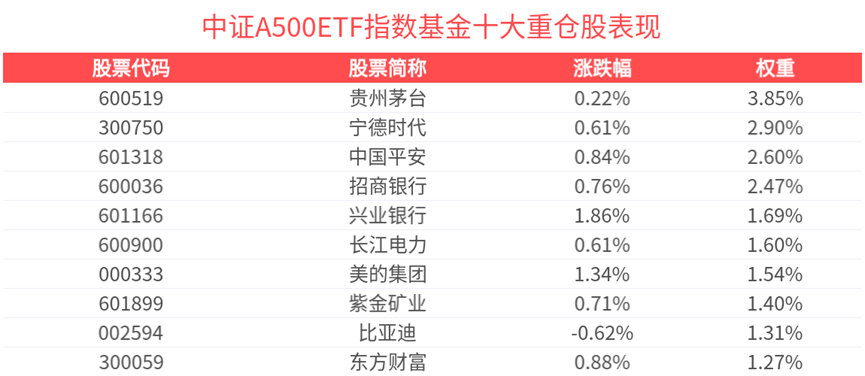
Group 1: Wind Power Industry Insights - The wind power industry is experiencing dual benefits from policy and market improvements, with a target of no less than 120GW of new installed capacity during the "14th Five-Year Plan" period, including at least 15GW from offshore wind, significantly exceeding the previous plan's levels [1] - The release of the "Wind Energy Beijing Declaration 2.0" and the continuous rise in onshore wind turbine bidding prices since the end of last year indicate that the industry is moving towards a high-quality development phase, alleviating profitability pressures across the supply chain [1] - The consensus on the domestic wind power industry's "14th Five-Year Plan" prosperity cycle is strengthening, with an expected more than doubling of average annual new installations [1] - Offshore wind construction is accelerating, with the scale of offshore wind FID and construction outside the mainland exceeding the total for 2024 since 2025, and European regions are expected to see a doubling in growth, with offshore installations projected to surpass 10GW by 2026 [1] - Domestic wind turbine and component manufacturers are increasing their international presence, with leading companies achieving large-scale orders, enhancing their competitive advantages [1] Group 2: A500 Index Fund Performance - As of October 22, the A500 ETF index fund has seen a net value increase of 25.92% over the past six months, with a maximum monthly return of 11.80% since inception [3] - The fund has a historical monthly profit percentage of 83.33% and a monthly profit probability of 88.98%, with a 100% probability of profitability over a six-month holding period [3] - The fund's maximum drawdown over the past six months is 5.50%, with a tracking error of 0.027%, indicating strong performance relative to its benchmark [3] - The A500 index consists of 500 securities selected from various industries based on market capitalization and liquidity, reflecting the overall performance of the most representative listed companies [3] Group 3: A500 Index Top Holdings - As of September 30, the top ten weighted stocks in the A500 index include Ningde Times, Kweichow Moutai, China Ping An, and others, collectively accounting for 19% of the index [4] - The top holdings by weight include Kweichow Moutai at 3.85%, Ningde Times at 2.90%, and China Ping An at 2.60%, among others [6]
每日钉一下(债券基金,收益水平和波动风险如何呢?)
银行螺丝钉· 2025-10-13 14:09
Group 1 - The article emphasizes that different regional stock markets do not move in unison, allowing investors to seize more investment opportunities by understanding multiple markets [2] - Global investment can significantly reduce volatility risk, highlighting the benefits of diversifying investments across different markets [2] - A free course is offered to educate investors on how to invest in global stock markets through index funds, aiming to share the long-term gains of global markets [2][3] Group 2 - The article discusses bond funds, noting their yield levels and volatility risks compared to other asset classes [5] - It presents a comparison of the performance of stock funds, bond funds, and money market funds since 2012, indicating that bond funds have more stable returns and lower volatility risks than stock funds [6] - Investors in bond funds should be aware of the risk of significant short-term declines, which can occur if the fund "hits a landmine" [8]

每日钉一下(投资不同类型指数需要注意什么?)
银行螺丝钉· 2025-10-09 14:00
Group 1 - The article emphasizes the importance of understanding different types of index funds, particularly bond index funds, which are less familiar to most investors compared to stock index funds [2] - It introduces four main categories of indices: broad-based indices, strategy indices, industry indices, and thematic indices [6] Group 2 - For broad-based index investment, it is crucial to consider the balance between large-cap and small-cap stocks, noting that in 2024, large-cap stocks like CSI 300 are expected to perform well while small-cap stocks may lag [8] - A classic combination for investment is the pairing of CSI 300 with CSI 500, and potentially adding CSI 1000 for more small-cap exposure [9] - In strategy index investment, it is important to balance growth and value styles, as A-shares exhibit a rotation between these styles over time [10][11] - The article highlights that from 2019 to 2020, growth style was strong, while from 2021 to 2024, value style is expected to dominate [12] Group 3 - Industry and thematic index investments are characterized by high volatility, with broad-based indices typically experiencing 20%-30% fluctuations annually, while industry indices can see 30%-50% volatility [13] - It is recommended to limit exposure to any single industry to 15%-20% to manage risk effectively [13] - The article advises investors to select long-term themes when investing in thematic indices, citing examples of past popular themes that may no longer be relevant [13]